
What's wrong with your toilet? Let's fix it.
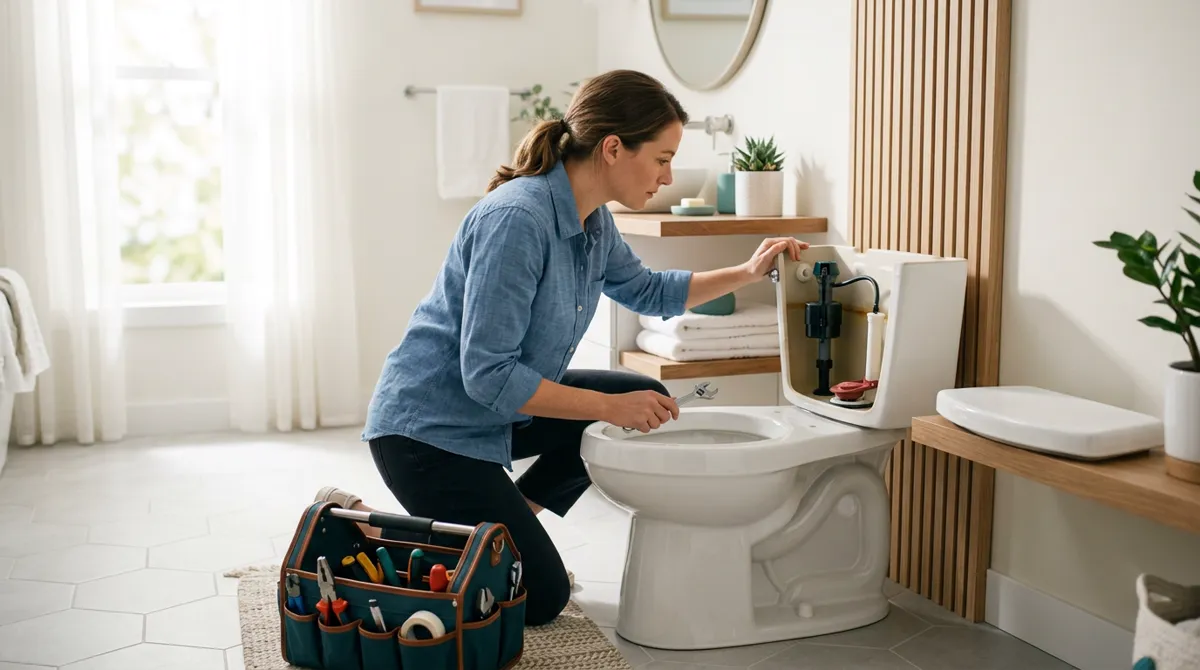
Most toilet problems come down to a handful of cheap parts and ten minutes of work. Whether your toilet keeps running, won't flush, is gurgling and bubbling, smells like sewage, or rocks when you sit down — pick your symptom below. Each section gives you the most likely causes in order, a quick test to confirm the diagnosis, the fix, and the exact replacement part when one is needed. Where a problem genuinely needs a plumber, we say so.
Pick your symptom
Tap a symptom to jump to its diagnosis. Everything is on this page — no quiz, no email gate.
Toilet keeps running constantly
A toilet that keeps running is almost always one of three things, in this order:
- Worn flapper — the rubber seal at the bottom of the tank warps or gets crusty and stops sealing. This is the single most common cause of a running toilet.
- Fill valve not shutting off — the tall valve on the left side of the tank keeps feeding water even when the tank is full, so the extra spills down the overflow tube forever.
- Chain or float out of adjustment — a too-tight chain holds the flapper open a crack; a too-high float keeps the water level above the overflow tube.
Try the free fixes first. Take the tank lid off. If the chain from the flush handle to the flapper is taut, give it about a half inch of slack. If water is spilling into the open overflow tube, lower the float so the water stops at the tank's waterline mark, or about 1/2 inch below the top of the tube if there isn't one (turn the adjustment screw on top of a Fluidmaster-style valve counterclockwise; a Korky valve adjusts by its height instead). Those two adjustments fix a surprising share of running toilets for zero dollars.
The dye test: flapper or fill valve?
Put a few drops of food coloring in the tank and wait 10 minutes without flushing, the EPA's dye test (flush afterward so the dye doesn't stain the tank). Color shows up in the bowl → your flapper is leaking; replace it. No color in the bowl but water keeps trickling into the overflow tube → your fill valve isn't shutting off; replace that instead. Still not sure which part is which? Our flapper vs. fill valve guide sorts it out with photos.
Fix 1: Replace the flapper (10 minutes, no tools)
Shut the water off at the wall, flush to empty the tank, unhook the old flapper from the two pegs and the chain, and hook on the new one. That's the whole job — full walkthrough in how to replace a toilet flapper.
Korky 100BP Ultra High Performance 2-Inch Universal Toilet Flapper
Fits almost any standard 2-inch toilet, installs in minutes with no tools, and its chlorine-resistant rubber stops a running toilet for years instead of months.
$8–$14 · rated 4.8/5
Check price on Amazon →What size flapper? A 30-second check
First, the honest shortcut: pull out your old flapper and look for a size stamp — many are marked 2" or 3" right on the rubber. If there's no stamp, look at the flush valve opening (the hole the flapper covers at the bottom of the tank):
You need a 2-inch flapper — the standard size. Korky says most toilets use a 2-inch flapper, including most made before 2000. The Korky 100BP above is a 2-inch flapper, so it's the right fit. Double-check your old flapper's size stamp before ordering if you can.
You need a 3-inch flapper — a larger size Korky says has become popular since 2000. Our 2-inch pick above will NOT fit, so don't order it. See our best toilet flappers guide for the right 3-inch options, and confirm against your old flapper's size stamp first.
Not sure even after looking? The flapper guide covers both sizes and the odd proprietary ones.
Fix 2: Replace the fill valve (15–20 minutes, adjustable wrench)
If the dye test cleared the flapper but water keeps hissing into the overflow tube, the fill valve is done. Shut off the water, drain the tank, unscrew the supply line and lock nut, and swap in the new valve — step by step in how to replace a toilet fill valve.
Fluidmaster 400AH PerforMAX Universal High Performance Toilet Fill Valve
Fluidmaster's PerforMAX valve: its height adjusts from 10 to 15 inches to fit most tanks, Fluidmaster rates it for twice the bowl refill on toilets using 1.6 gallons per flush or less, and it carries a 7-year warranty.
$11–$18 · rated 4.8/5
Check price on Amazon →Want to compare before you buy? Our best toilet fill valves guide covers the other Fluidmaster and Korky valves, including one made for TOTO tanks.
Want the whole repair in one place? Read how to fix a running toilet.
Toilet running intermittently (the phantom flush)
If your toilet runs on and off by itself — a short refill at random times, often most noticeable at night — that's the classic phantom flush, and it has one overwhelmingly likely cause: a slow flapper leak. The worn flapper lets tank water seep into the bowl so gradually you never hear it. When the level drops far enough, the fill valve kicks on to top the tank back up. That short refill is the "flush" you keep hearing.
Confirm it with the dye test: a few drops of food coloring in the tank, wait 10 minutes without flushing. Color in the bowl = leaking flapper. It's the same test as above, and with a toilet running intermittently it comes back positive almost every time.
A leaking flapper isn't just annoying — the EPA says an old or worn one can silently leak thousands of gallons a year, and that quietly inflates your water bill. The fix is the same 10-minute flapper swap covered in how to replace a toilet flapper. If the dye test is clean and it still cycles, work through flapper vs. fill valve to rule out a fill valve that's losing its seal.
Check price on Amazon →
Korky 100BP 2-inch flapper — $8–$14, rated 4.8/5. Check your size with the finder above first.
Toilet won't flush — or the flush is weak
A toilet not flushing at all and a weak toilet flush are usually the same problem at different stages. Most likely causes, in order:
- A clog — a full clog means the toilet won't flush and the bowl fills; a partial clog means water swirls weakly and drains slow.
- Low water level in the tank — not enough water to power the flush.
- Mineral-clogged rim jets — the little holes under the rim scale up with hard water, so less water enters the bowl with less force.
Fix 1: Plunge it right
Use a flange (beehive-style) plunger, not a flat sink plunger — it needs to seal the drain opening. Push down slowly to seat it, then pull and push with force 10–15 times, keeping the seal. Full technique in how to unclog a toilet. No plunger in the house? Try these no-plunger methods first.
Korky 99-4A Beehive Max Toilet Plunger
Its beehive-shaped head seals both old round drains and newer low-flow bowls, so one plunger clears clogs on whatever toilet you own.
$15–$20 · rated 4.8/5
Check price on Amazon →Fix 2: Deeper clog? Use a toilet auger
If plunging won't clear it, the clog is past the trap — usually something that shouldn't have been flushed. A toilet auger (closet auger) snakes 3 feet into the drain and either breaks the clog up or hooks it out, and the vinyl guard keeps the cable from scratching the porcelain. Our picks and how to use one: best toilet augers.
RIDGID 59787 K-3 Toilet Auger (3-Foot, Bulb Head)
A buy-it-once pro tool with a stiff half-inch cable and a vinyl guard that clears the clogs a plunger can't without scratching the bowl, backed by a lifetime warranty.
$45–$55 · rated 4.8/5
Check price on Amazon →Fix 3: Raise a low tank water level — free
Take the lid off. If the tank has a waterline mark, the water should reach it; if not, aim for roughly 1/2 inch below the top of the overflow tube, the level Fluidmaster and Korky both specify. If it's well below that, the flush never gets its full push. Raise the float until the level hits the line. On a Fluidmaster-style valve, turn the adjustment screw on top clockwise. A Korky valve has an internal float, so you raise the valve's height instead. On an older valve with a float ball on a rod, Kohler's service instructions for some of its toilets say to bend the rod to set the level. If the screw can't raise it far enough, Fluidmaster's instructions say you may have to lengthen the valve itself. The screw adjustment is free and quick; resetting a valve's height means shutting off the water and lifting the valve out. Our guide to adjusting a toilet float walks through each float type.
Fix 4: Clear mineral-clogged rim jets
Hold a small mirror under the rim: if the jet holes are white and crusted, hard-water scale is choking the flush. Apply a clinging bowl cleaner under the rim, let it sit, and scrub the holes with a stiff brush (a bent wire or old toothbrush helps for stubborn scale). Our picks are in best toilet bowl cleaners.
Clorox Toilet Bowl Cleaner, Clinging Bleach Gel (Cool Wave, 24 oz)
A few dollars gets a thick bleach gel that clings under the rim and kills germs, so it stays on the jets while you scrub.
$4–$8 · rated 4.7/5
Check price on Amazon →Toilet gurgling or bubbling
A toilet bubbling or gurgling means air is being pulled or pushed through the water in the bowl — and air only moves like that when something downstream is partially blocked. Three causes, from least to most serious:
- Partial clog in the toilet's own drain — the most common and the one you can fix yourself.
- Blocked vent stack — the pipe through your roof that lets air into the drain system; leaves or a nest can block it.
- Main sewer line blockage — roots, grease, or a collapsed section on the line that serves the whole house.
The one-minute diagnostic: run the sink or tub, or flush another toilet, and listen. If other fixtures gurgle too — or the tub backs up when you flush — the problem is your main line or vent, not this toilet. If only this toilet gurgles, it's almost certainly a partial clog in its drain.
Only this toilet? Plunge it first; if the gurgle persists, run a toilet auger through the trap — a partial clog that survives plunging usually gives up to the auger. See best toilet augers for technique. The RIDGID K-3 above is the one we recommend. Check price on Amazon →
Multiple fixtures gurgling? Call a plumber — and we mean that. A main line or vent blockage needs a camera inspection, a roof-access vent clearing, or a motorized drain machine. There's no part we could sell you that fixes it, and DIY attempts on a main line usually just delay the real repair. A drain-cleaning visit typically costs far less than the water damage from a sewage backup.
Toilet smells like sewage
When a bathroom smells like sewage, the smell is sewer gas escaping somewhere it shouldn't. Three causes, in order of likelihood:
- A dried-out trap in a rarely used bathroom. The water sitting in the bowl (and in the floor drain, if there is one) is the seal that blocks sewer gas. In a guest bath that sits unused for weeks, that water evaporates and gas drifts in. The fix is free: flush the toilet, run every faucet for a minute, and pour a quart of water down any floor drain. If the smell fades in a day, that was it — flush weekly to keep the seal.
- A failed wax ring under the toilet. The wax ring seals the toilet base to the drain flange. When it fails you'll often notice the smell is strongest near the floor, water seeping around the base, or a toilet that rocks. Fixing it means pulling the toilet, scraping the old wax, and setting a new ring — a hands-and-knees job that's doable if you're confident, but there's no shame in paying a plumber for it. If you're replacing it, our best toilet wax rings guide compares traditional wax rings with wax-free seals, and our wax ring replacement guide walks through the job step by step.
- Biofilm in the tank or under the rim. Bacteria film builds up in the tank and rim jets and gives off a musty-sewage odor even when the plumbing is sound. Scrub the tank walls and under the rim with a clinging bleach gel — see best toilet bowl cleaners for what actually works. Check price on Amazon →
Smell strongest at the base, plus water stains or rocking? Jump to the rocking section — a bad wax ring often causes both.
Toilet rocking or wobbling
A toilet rocking when you sit down is worth fixing promptly — every rock works the wax ring seal underneath, and a broken seal means leaks and sewer smell. The good news: no purchase needed from us for this one. In order:
- Tighten the closet bolts — gently. Pop the plastic caps at the base and snug each nut a quarter turn at a time, alternating sides. Stop at snug. Porcelain cracks before the bolt strips — over-tightening is how people turn a wobble into a new toilet.
- Shim an uneven floor. If the bolts are snug and it still rocks, the floor isn't flat under the base. Plastic toilet shims (a hardware-store item, a few dollars) slide under the low side; trim the excess. Korky doesn't recommend caulking around the base, because caulk can hide a leak; if you do caulk, leave the back open so water has a way out and a future leak shows on the floor.
- Been rocking a long time? Assume the wax ring has taken damage. If you smell sewage near the floor or see water at the base, the ring needs replacing — that means pulling the toilet, so call a plumber if that's outside your comfort zone. It's a common, inexpensive service call.
While you're down there: a wobbly seat is a different (and easier) fix — see how to fix a loose toilet seat.
When to skip the DIY and call a plumber
- Multiple fixtures gurgle or back up — main sewer line or vent problem; needs pro equipment.
- Sewage smell plus water seeping at the toilet base — failed wax ring; pulling a toilet is a fair DIY job, but a cheap service call if you'd rather not.
- Repeated clogs in the same toilet — could be a flushed object stuck in the trap or a failing drain line; an auger attempt is worth one try first.
- Water on the floor you can't trace — work through finding where a toilet is leaking first; a cracked tank or bowl means replacement, not repair.
Everything else on this page — flappers, fill valves, clogs, water level, rim jets, bolts, and shims — is a genuine do-it-yourself fix with basic tools and cheap parts.
Sources
The dye test and leak figures on this page come from the EPA. The water-level, fill-valve, caulking and PerforMAX details follow these manufacturers' instructions and catalog.
- EPA WaterSense — Fix a Leak Week (toilet dye test and flapper leaks)
- Fluidmaster — 400A Fill Valve Installation Instructions (PDF)
- Korky — How to Replace a Toilet Fill Valve
- Korky — Anatomy of a Toilet
- Korky — What Size Toilet Flapper Do I Need?
- Kohler — Toilet Troubleshooting Guide (PDF)
- Kohler — Siphon Vortex Low Profile One-Piece Toilets Service Instructions (PDF)
- American Standard — How do I adjust the water level in my tank?
- Korky — How to Install a Toilet (caulking around the base)
- Fluidmaster — Retail Catalog, PerforMAX 400AH specifications (PDF)
Frequently asked questions
Why does my toilet keep running?
Most often it's a worn flapper — the rubber seal at the bottom of the tank stops sealing and water leaks into the bowl nonstop. Confirm it with a dye test: a few drops of food coloring in the tank, wait 10 minutes without flushing, and any color in the bowl means the flapper leaks. If the flapper tests clean but water keeps trickling into the overflow tube, replace the fill valve instead. Check the chain and float first, though — a too-tight chain or too-high float is a free two-minute fix.
Why does my toilet run on and off by itself?
That's the phantom flush, and it means a slow flapper leak. Tank water seeps into the bowl until the level drops enough for the fill valve to kick on and refill — that short random refill is the sound you hear. A dye test confirms it, and a new flapper fixes it in about ten minutes. Left alone, the EPA says, a worn flapper can silently leak thousands of gallons a year.
Why won't my toilet flush, or why is the flush so weak?
A full or partial clog is the most common cause — plunge first with a flange-style plunger, and use a toilet auger if plunging fails. If there's no clog, check the tank water level: it should reach the tank's waterline mark, or about 1/2 inch below the top of the overflow tube if there's no mark, and raising the float is free. Weak swirl with a full tank often means the rim jets under the bowl's edge are crusted with mineral scale — a clinging bowl cleaner and a stiff brush restore the flow.
Why is my toilet gurgling or bubbling?
Gurgling means air is moving through the drain where it shouldn't — a sign of a partial blockage. If only the toilet gurgles, it's usually a partial clog in its own drain: plunge, then auger. If other fixtures gurgle too, or the tub backs up when you flush, the blockage is in your main sewer line or vent stack — that's a plumber job, not a DIY one.
Why does my toilet smell like sewage?
In a rarely used bathroom, the water seal in the bowl and floor drain evaporates and lets sewer gas in — flush the toilet and run the taps, and the smell usually clears in a day. If the smell is strongest near the floor or the toilet rocks, suspect a failed wax ring under the toilet, which means pulling the toilet to reseal it. A musty odor from the tank or rim is usually biofilm and scrubs away with a clinging bleach cleaner.
Is a rocking toilet a big deal?
It becomes one. Every rock grinds at the wax ring that seals the toilet to the drain, and a broken seal leaks water and sewer gas. Snug the closet bolts a quarter turn at a time, alternating sides — stop when snug, because over-tightening cracks porcelain. If it still rocks, slide plastic shims under the low side. If it's been rocking for months, have the wax ring checked.
Do I need a 2-inch or 3-inch toilet flapper?
Check your old flapper first — many have the size stamped on the rubber. Otherwise look at the flush valve opening in the bottom of the tank: about the size of a baseball or orange means 2-inch, the standard size: Korky says most toilets use it, including most made before 2000. Closer to a softball or grapefruit means 3-inch, a size Korky says has become popular since 2000. Buying the wrong size is the top reason a brand-new flapper still leaks.