
Unclog a toilet without a plunger
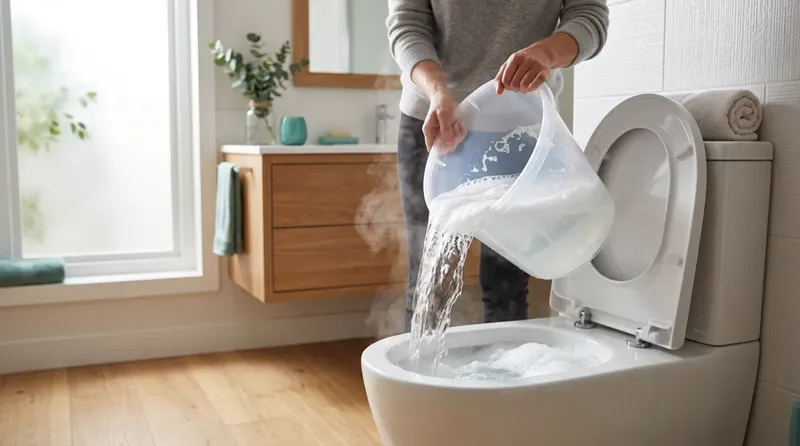
A clogged toilet with no plunger in sight feels like an emergency, but it usually isn't one. Most everyday clogs are soft blockages, like too much toilet paper or waste, and they respond well to a few simple things you almost certainly already have in your kitchen or laundry room.
Below are five plunger-free methods, ordered from gentlest to most hands-on. Start with the easiest one, give it time to work, and only move up if the water level hasn't dropped. One important rule up front: don't pour boiling water into the bowl. American Standard advises against it, because the heat may make the ceramic expand rapidly and fracture, which can cause an injury or a leak.
What you'll need
- Liquid dish soap
- A bucket or large pot for hot (not boiling) water
- Baking soda and white vinegar
- A wire coat hanger plus an old rag or towel
- A toilet brush
- Rubber gloves (optional, but recommended)
Step by step
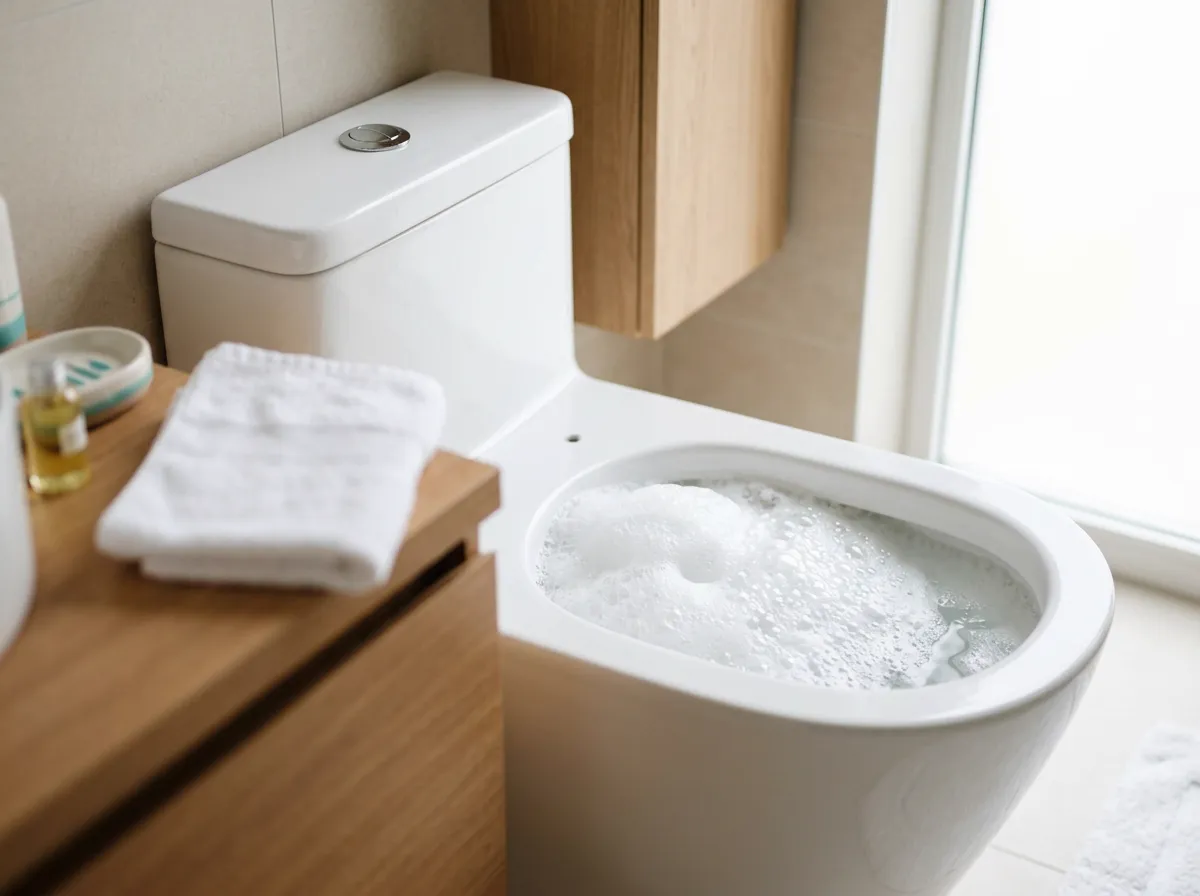
- Method 1: Hot water and dish soap. Squirt about half a cup of liquid dish soap into the bowl, then pour in about a gallon of hot tap water from waist height. Bemis's how-to says to wait 15 to 20 minutes before you try flushing. The soap lubricates the blockage and the weight of the water often pushes it loose.
- Method 2: Baking soda and vinegar. Pour one cup of baking soda into the bowl, then slowly add two cups of white vinegar so it doesn't fizz over the rim. Let the bubbling reaction work for 20 to 30 minutes, then flush or follow with a bucket of hot water to clear softened debris.
- Method 3: A wire coat hanger snake. Unwind a wire coat hanger into a long straight piece, then wrap one end in an old rag secured with tape so it won't scratch the porcelain. Gently feed the padded end into the drain and push and twist against the clog to break it apart. Stop if you feel a hard object, since forcing it can damage the bowl.
- Method 4: The toilet brush trick. Push the bristle end of a toilet brush down into the drain opening and pump it up and down quickly. The brush acts like a makeshift plunger, creating enough pressure to dislodge a soft clog. Expect some splashing, so go slowly and keep a towel handy.
- Method 5: Enzyme cleaner for stubborn organic clogs. Pour an enzyme-based drain or septic cleaner into the bowl, following the product's dosage instructions. Enzymes eat away at organic matter like waste and paper, so this works best for clogs left to sit overnight. It will not break down hard objects, toys, or wipes.
- Give it time, then flush carefully. After any method, wait until the water level visibly drops before testing a flush. If it's draining, flush once to confirm the line is clear. If the bowl is still full, do not flush again, as that can cause an overflow.
Tips & warnings
- Fill the bucket from the hot tap, not the kettle: American Standard warns against pouring boiling water onto a ceramic toilet.
- If the bowl is already near the rim, bail out a cup or two of water first so your additions have room and you avoid an overflow.
- Skip chemical drain cleaners made for sinks. They can splash, release fumes, and damage toilet components and septic systems.
- Soft clogs from paper or waste respond to these methods. A hard object like a toy or toothbrush usually needs to be physically removed or a real auger.
- If nothing works after a couple of tries, stop and call a plumber. Repeated forcing or flushing can turn a small clog into a flooded bathroom.
Frequently asked questions
Will hot water and dish soap really unclog a toilet?
Yes, for most soft clogs. The soap lubricates the blockage and the hot water helps break it down so it can slide through. Bemis's how-to says to give it 15 to 20 minutes before flushing. Use hot tap water, never boiling.
Why can't I just pour boiling water in?
American Standard doesn't recommend it. Boiling water may make ceramic expand fast enough to crack, and a cracked bowl can hurt someone or start leaking. Hot water from the tap is what the soap method calls for.
Does baking soda and vinegar actually work on toilets?
It can help with mild, organic clogs. The fizzing reaction loosens softened debris, especially when followed by hot water. It is gentle, so it may not clear a heavy blockage on its own.
What if none of these methods work?
If the clog won't budge after a few attempts, there may be a hard object stuck or a deeper line issue. Stop flushing to avoid an overflow and call a plumber rather than risk damage.
Sources
- American Standard — Can I use boiling water for cleaning ceramics such as toilets?
- Bemis (ToiletSeats.com) — How to unclog a toilet without a plunger (half a cup of dish soap, a gallon of hot water, wait 15–20 minutes)