
How to clean toilet bowl stains
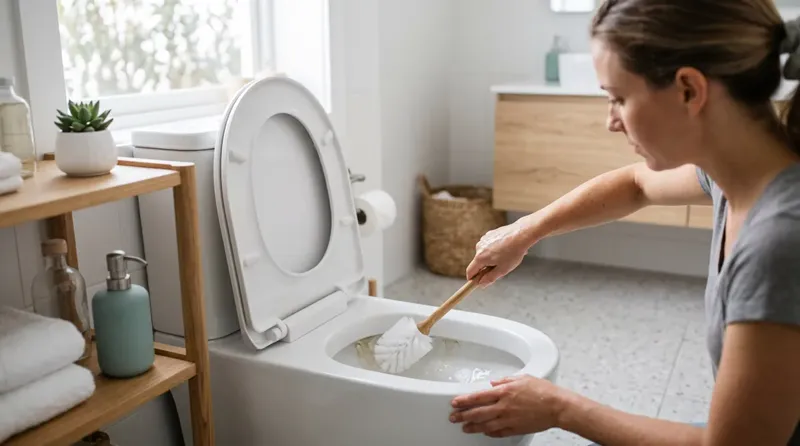
Those stubborn brown, orange, or chalky-white rings in your toilet bowl usually aren't dirt at all. They're mineral deposits left behind by hard water. Limescale (calcium and magnesium) shows up as white, gray, or chalky buildup, while rust stains (iron in your water) leave orange or reddish-brown streaks. The good news: with the right product for the right stain, you can lift almost all of them without replacing the toilet.
The key is to dissolve the minerals with chemistry first, then use gentle abrasion only if needed. Below is a safe, step-by-step routine that starts mild and works up to tougher tools, plus what removes what so you don't waste time on the wrong fix.
What you'll need
- White vinegar (1-2 cups) for limescale and general mineral buildup
- Borax powder for tougher rings and rust paste
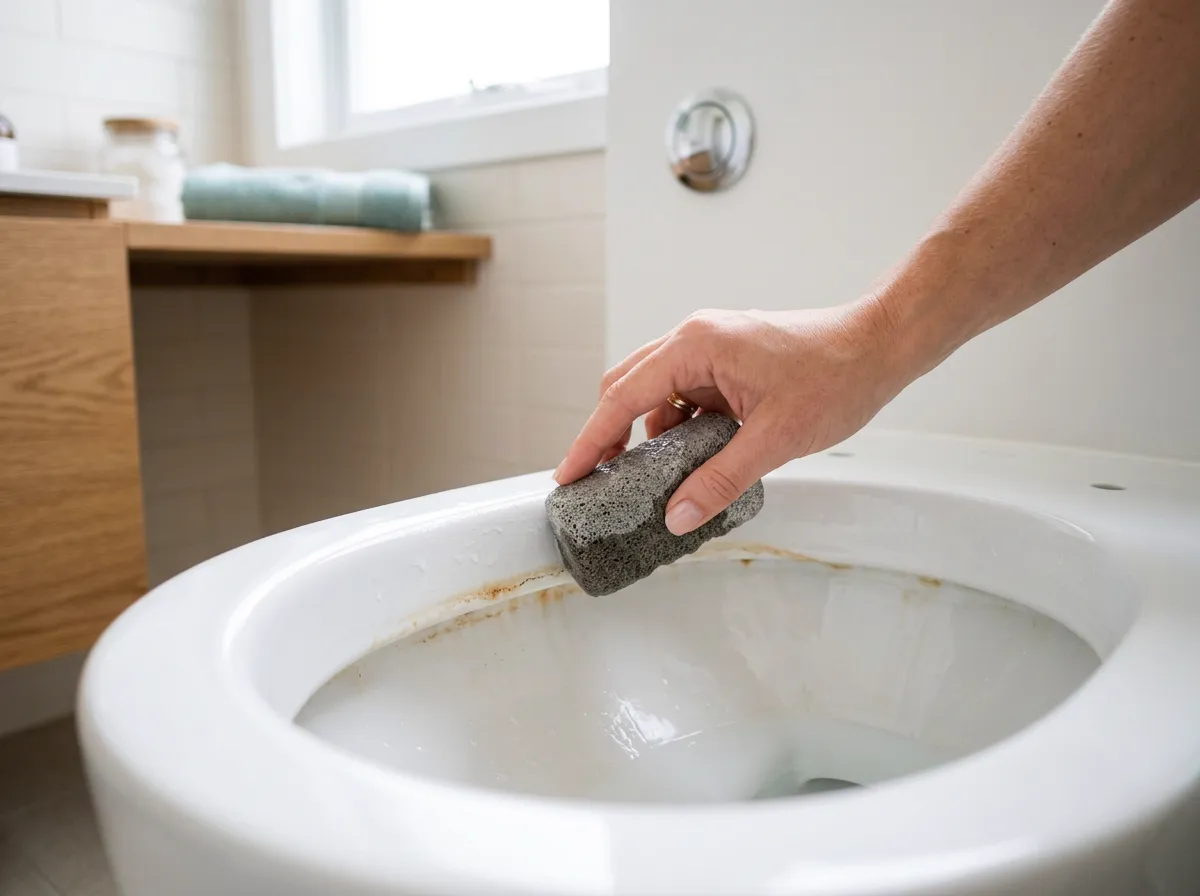
- A wet pumice stone (porcelain-rated, for the hardest deposits only)
- A stiff toilet brush or non-scratch scrub pad
- Rubber gloves and old rags or paper towels
- A commercial limescale or rust remover (CLR-type) as a backup for heavy stains
Step by step
- Lower the water level first. Turn off the toilet's shut-off valve and flush, or use a small cup to bail water out of the bowl. This exposes the stain ring so your cleaner sits directly on it instead of being diluted.
- Start with a white vinegar soak (best for limescale). Pour 1-2 cups of white vinegar over the stained areas and let it sit for at least 30 minutes; for heavy limescale, leave it 3-4 hours or overnight. Vinegar's mild acid dissolves calcium and mineral buildup so it scrubs off easily.
- Scrub with a toilet brush, then re-check. After the soak, scrub firmly with your toilet brush or a non-scratch pad and flush. Light to moderate hard-water rings often disappear at this stage. If faint shadows remain, move on to borax.
- Use a borax paste for tougher rings and rust. Mix borax with enough white vinegar to make a thick paste, apply it directly to remaining stains, and let it sit 20-30 minutes before scrubbing. The borax-plus-vinegar combo is especially good for orange rust stains that vinegar alone won't fully lift.
- Try a wet pumice stone for the most stubborn deposits. Only on porcelain (never on enameled, plastic, or composite bowls), wet both the stone and the bowl, then rub gently with light pressure on the hardened stain. The stone and surface must stay wet the entire time, or you risk scratching the glaze.
- Reach for a commercial cleaner if needed. For baked-in rust or heavy limescale that won't budge, use a labeled limescale or rust remover (such as a CLR-type product) exactly per its instructions. These are stronger acids, so ventilate the room and wear gloves.
- Rinse, flush, and prevent the next ring. Turn the water back on, flush a few times to clear all cleaner residue, and wipe the rim. A weekly vinegar swish or a regular brush-out keeps minerals from re-cementing into a stain.
Tips & warnings
- NEVER mix bleach with vinegar, borax, or any acid-based or rust remover. The combination releases toxic chlorine gas. Pick one approach, rinse fully, and ventilate before switching products.
- Match the product to the stain: vinegar and borax handle white/chalky limescale; rust (orange/red) usually needs a borax-vinegar paste or a dedicated rust remover, since plain vinegar often isn't enough.
- Use a pumice stone on porcelain only, and keep both the stone and the bowl soaking wet at all times. A dry stone, or one used on the wrong surface, will permanently scratch the finish and make future stains worse.
- Let chemistry do the work before you scrub. Longer soak times mean far less elbow grease and far less risk of damaging the glaze with aggressive abrasion.
- Always wear gloves and open a window when using stronger acids or commercial cleaners, and never leave acidic cleaners sitting overnight on metal toilet parts, which can corrode.
Frequently asked questions
What's the difference between limescale and rust stains in a toilet?
Limescale is calcium and magnesium from hard water and looks white, gray, or chalky. Rust is iron in your water supply and looks orange or reddish-brown. Limescale responds well to vinegar; rust usually needs a borax-vinegar paste or a dedicated rust remover.
Will a pumice stone scratch my toilet?
Not if you use it correctly. A pumice stone is safe on glazed porcelain when both the stone and the bowl are kept wet and you use light pressure. Used dry, on the wrong material, or with hard scrubbing, it can scratch the glaze, so always treat it as a last resort after soaking.
Why can't I just mix bleach with vinegar to clean faster?
Because mixing bleach with vinegar (or any acid) creates toxic chlorine gas that can seriously harm your lungs. The same goes for mixing bleach with ammonia. Use one cleaner at a time, rinse it away completely, and ventilate the bathroom before using anything else.
How do I keep the stains from coming back?
Hard-water stains return because minerals keep settling and hardening. A quick weekly vinegar swish, regular brushing, and fixing any slow leaks or constantly running water all slow buildup. If your water is very hard, a water softener reduces the minerals at the source.