
How to remove a toilet seat
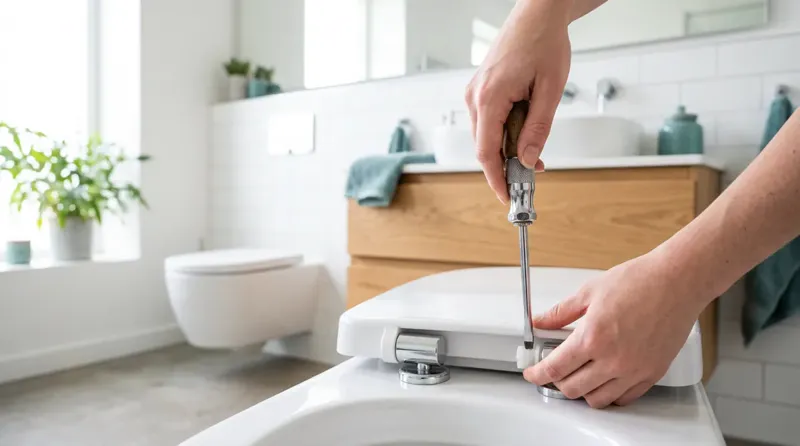
Removing a toilet seat is one of the easiest bathroom jobs there is. Whether you're swapping in a new seat, upgrading to a bidet seat, or just cleaning the hard-to-reach spots around the hinges, the whole process usually takes under ten minutes with tools you already own.
The thing that usually slows people down is a stuck or corroded bolt. Below we'll walk through the standard removal step by step, then show you exactly how to free a bolt that won't budge — ending with the safe "last resort" hacksaw method if nothing else works. If you can't find a nut under the rim at all, you most likely have a top-fix seat, which comes off entirely from above. That gets its own section further down, and the FAQ covers the release hinges on TOTO, Kohler and American Standard seats.
Replacing it? See our top toilet seats.
See our picks →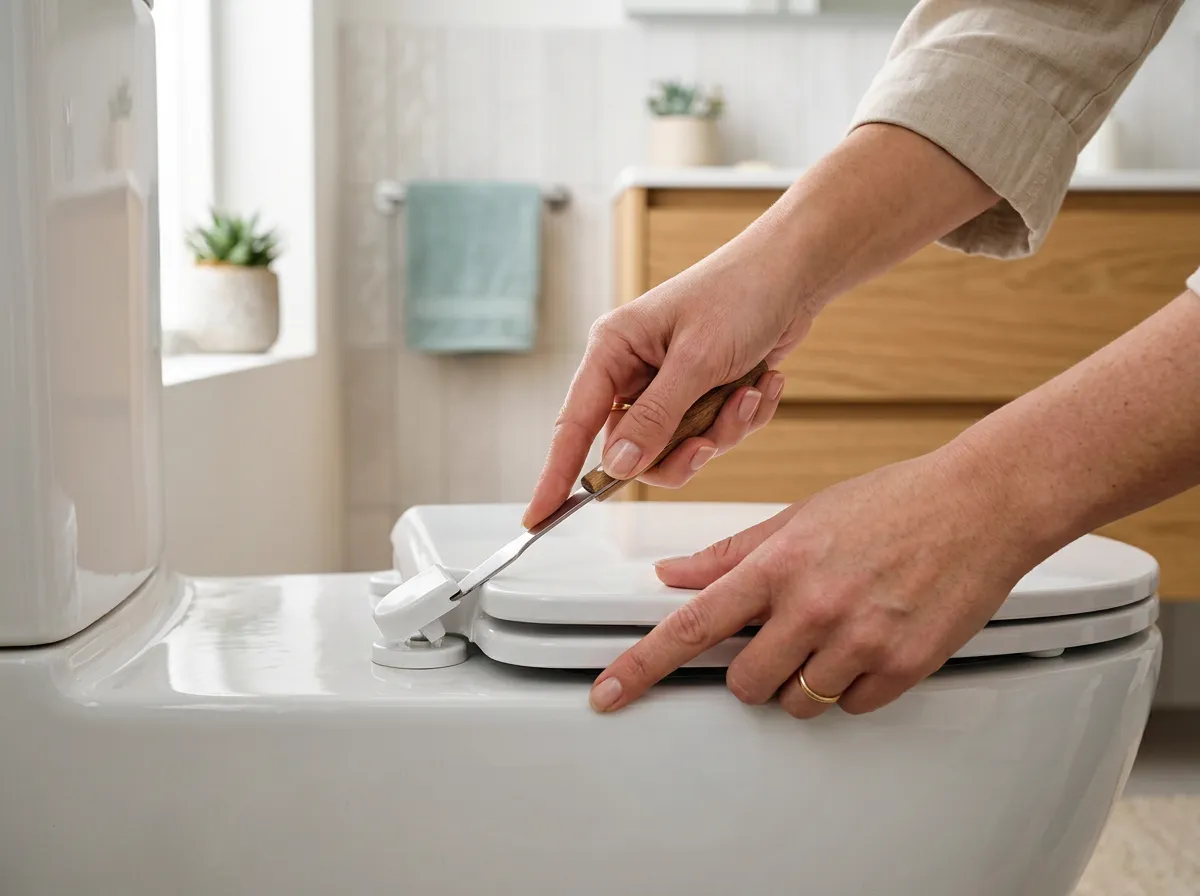
What you'll need
- Flathead screwdriver (for prying open the bolt caps)
- Phillips or flathead screwdriver (to hold the bolt from on top)
- Allen (hex) key, for top-fix seats that use one
- Adjustable wrench or slip-joint pliers (to grip the nut underneath)
- Penetrating oil or white vinegar (for rusted/stuck bolts)
- Hacksaw or mini hacksaw — last resort only
- Old towel or rag plus safety glasses
Step by step
- Find and pop open the bolt caps. Look at the back of the seat near the tank for two small plastic caps, covers, or flip-up lids that hide the bolts. Most lift straight up or flip open like a tiny hatch; if one is stuck, gently slide a flathead screwdriver under the edge and pry until it pops. Some newer seats hide the bolts under a sliding cover that pushes back toward the tank instead.
- Identify the bolt-and-nut setup. Once the caps are open you'll see a bolt head on top of each hinge. Underneath the bowl rim, directly below each bolt, is a matching nut — plastic on most modern seats, metal on older ones. Plastic hardware almost never corrodes and usually unscrews by hand. If there's no nut under the rim, or the underside is closed off by a skirt, you most likely have a top-fix seat; the top-fix section below covers it.
- Hold the bolt and loosen the nut. Place a screwdriver in the bolt head on top so it can't spin. Reach under the bowl, grip the nut with your wrench or pliers, and turn it counter-clockwise. Holding the top while turning the bottom is the trick that breaks most bolts free.
- Unscrew the bolt fully and lift off the seat. Keep turning until the nut spins all the way off, then pull the bolt up and out from the top. Repeat on the second hinge. With both bolts removed, lift the seat straight up and away from the bowl.
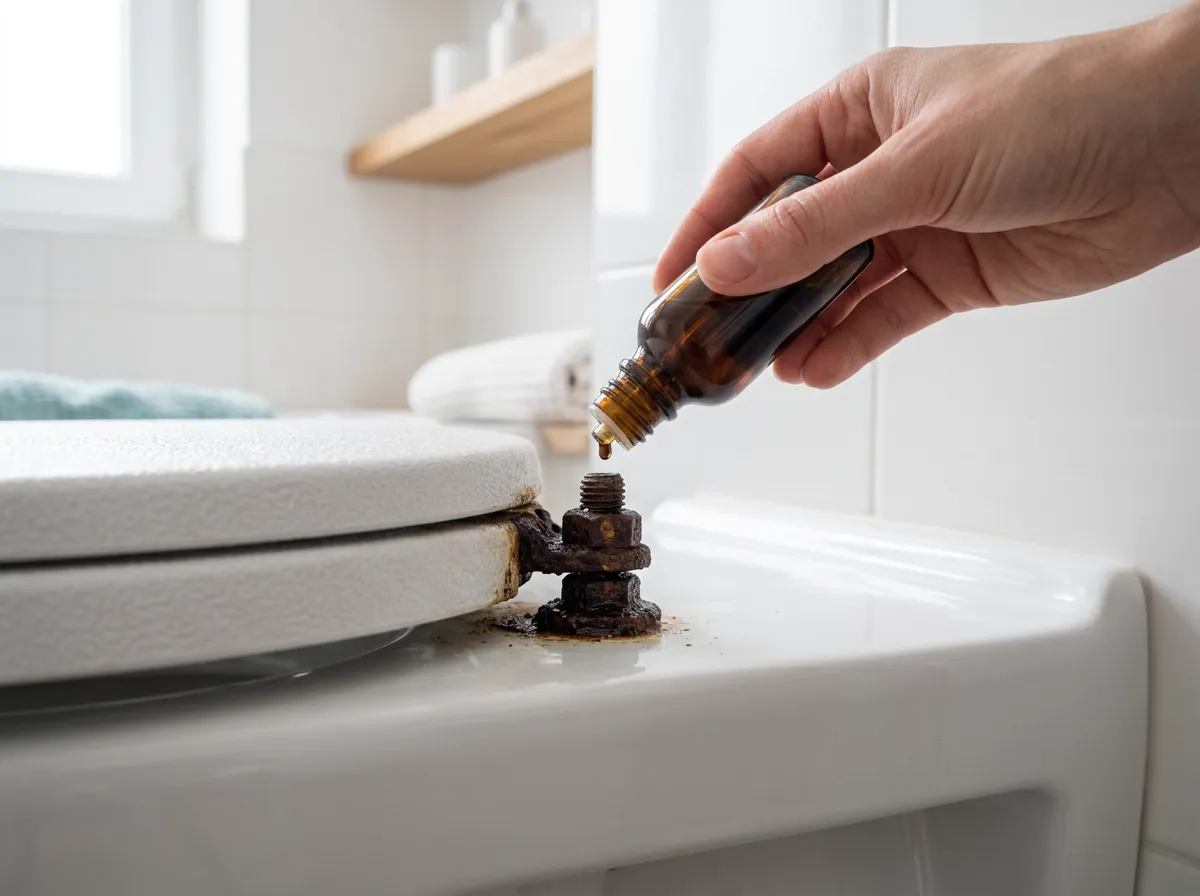
- Stuck or corroded? Soak it first. If a metal bolt won't turn, spray penetrating oil (or pour white vinegar) around both the bolt head and the nut underneath. Let it soak 10–15 minutes so it can work into the rusted threads, then try the wrench again. A second soak often does the trick where the first didn't.
- Add leverage and break the rust. After soaking, clamp the nut firmly with locking pliers or vise-grips and apply steady pressure rather than sudden jerks, which can crack the porcelain. Lightly tapping the wrench handle while you turn can also shock the corrosion loose. Re-apply oil and wait again if it still resists.
- Last resort: cut the bolt with a hacksaw. If the bolt is rusted solid and simply will not turn, slip a thin towel under the saw to protect the bowl and cut through the bolt where it meets the underside of the rim. Use slow, steady strokes and wear safety glasses; once the bolt is severed, the seat lifts right off and the leftover pieces pull free by hand.
Top-fix seats: how hidden fixings work
A top-fix seat, often described as having hidden fixings, is fastened entirely from above, so it goes on and comes off without anyone reaching under the bowl. That is what makes it workable on a skirted toilet, where a smooth side panel closes off the underside (see our guide to bidet seats on skirted toilets). American Standard's manual 760237-100 calls its version top mount: a black rubber plug sits in each seat hole with its flange above the rim, and a screw goes down through the hinge into it. TOTO's SoftClose manual 0GU543 uses anchors in the bowl's holes, screws and washers tightened with a flathead screwdriver, and stick-on bracket covers. Kohler's K-4711 guide notes that some toilets have threaded inserts already fitted, so no nut is needed, and Roca's UK guide fits plugs into the holes at the back of the bowl, then tightens the bolts with an Allen key. One caution: tightening from the top doesn't always mean nothing is underneath. A Bemis installation sheet (1B5990322B) still has you turn a nut onto each bolt from below before you finish from above.
How to remove a top-fix seat with no access underneath
Work from the top down. First, release the seat if it has a quick-release hinge; the brand FAQs below say what each manufacturer's instructions have you press or turn. That leaves the hinges or mounting plate on the bowl. Next, take off the hinge cover or the caps over the screw heads; on the TOTO SoftClose seat in manual 0GU543, those are stick-on bracket covers. Then unscrew each fixing from above with the tool it was fitted with, usually a screwdriver or an Allen key, and lift the hinges away. None of these manufacturers documents taking the plugs or anchors out. Don't push them down into the hole: American Standard's manual says not to let its plug fall through, and TOTO's warns that an anchor pushed all the way through can be lost. Kohler's folding anchors (sheet 1427583) open out below the rim, so don't expect those to lift out like a rubber plug. When you fit the replacement, follow its own instructions for plugs or anchors, since the systems differ.
Tips & warnings
- Check for a quick-release first. Kohler's Quick-Release and ReadyLatch hinges, the push buttons on American Standard's Traditional Slow-Close & Easy Lift-Off seat and the main-unit removal button on TOTO's WASHLET SW3084 let you release the seat for cleaning while the fixings stay on the bowl. On the WASHLET, unplug it first, as TOTO's manual instructs; the hose and power cord stay connected, so lift it only as far as they allow.
- Protect the porcelain: never force a wrench so hard that it could slip and chip or crack the bowl — steady pressure beats brute force every time.
- For plastic nuts that just spin in place without loosening, grip the nut with pliers underneath while pulling up on the bolt from the top, or carefully trim the plastic with a utility knife.
- Spray penetrating oil and walk away — the most common mistake is not giving it enough time. Ten to fifteen minutes of soaking saves a lot of struggle.
- Keep the saw away from the porcelain. When using a hacksaw, only the bolt should touch the blade; a folded towel underneath guards the bowl from accidental scratches.
- Snap a quick photo of the hinge before you remove anything — it makes installing the new seat or bidet far easier.
Frequently asked questions
My toilet seat has no visible screws — where are they?
They're hidden under small caps at the back of the seat near the tank. Pry the caps open with a flathead screwdriver (or slide them back, depending on the model) and the bolts will be underneath. If there's no nut under the rim, you most likely have a top-fix seat with hidden fixings, which comes off entirely from above: release any quick-release hinge, lift off the hinge cover or caps, and unscrew each fixing with a screwdriver or Allen key. The top-fix section on this page covers the plugs and anchors those screws go into.
How do you remove a TOTO toilet seat?
It depends on which TOTO seat you have: the WASHLET SW3084 lifts off its bolted-down base plate for cleaning once you unplug it and press the main unit removal button, a SoftClose seat fitted with manual 0GU543 unscrews entirely from above, and the SoftClose in TOTO's 2006 manual 0GU036-1 has plastic nuts under the rim. On the WASHLET, the manual's order is to unplug the power plug, then pull the main unit toward you while pressing the button and lift it up. Don't pull hard: the water supply hose and power cord stay attached, so this doesn't take the seat off the toilet. To remove a bidet seat for good, see our renter-friendly bidets guide. Manual 0GU543 covers fitting only, so work in reverse: lift the stick-on bracket covers and back the two screws out with a flathead screwdriver. Don't push the anchors down, since TOTO warns one pushed all the way through can be lost. On the 0GU036-1 seat, push the tab under the hinge case with a fingernail or pen to open the bolt covers, then follow the standard steps above.
How do you remove a Kohler toilet seat?
Check the hinge first, because Kohler uses more than one system. On Quick-Release seats, Kohler's sheets say to open the hinge covers and pull the seat straight ahead; the hinges stay on the bowl, so to take them off too, undo their bolts or screws. On ReadyLatch seats, a quarter turn of the locking mechanisms lets the seat lift up off the bowl. Kohler's standard-seat sheets show either bolts with nuts under the rim or folding anchors with screws tightened from above, so use the standard steps or the top-fix section. Kohler's K-4711 bidet seat installation guide has you press a release button and slide the seat forward off its mounting plate while you adjust its position in step 4, which comes before the water hose and power cord are connected. On an installed seat both are still attached, so don't pull the seat away from them; to take a bidet seat off for good, see our renter-friendly bidets guide.
How do you remove an American Standard toilet seat?
On American Standard's Traditional Slow-Close & Easy Lift-Off seat, sold with quick-release hinges, the installation manual (760237-100) gives the release: open the seat and cover, push both inside buttons, and pull the seat and cover upward off the hinges. The hinges stay on the bowl; to take them off, remove the hinge cover and the screws beneath it. In the top-mount version those screws go into black rubber plugs in the bowl's holes, and the manual warns not to let a plug fall through. In the bottom-mount version, hold the winged nut under the rim while you turn the screw from above. The manual lists the models it covers, so check yours matches; if your seat has no buttons or hinge cover, use the standard steps above.
What's the easiest way to remove a rusted toilet seat bolt?
Soak it. Spray penetrating oil or white vinegar on both the bolt and the nut, wait 10–15 minutes, then hold the bolt steady on top while turning the nut counter-clockwise underneath. Most rusted bolts give way after one or two soaks.
Will I damage my toilet if the bolt won't come off?
Not if you go slow. The main risk is cracking the porcelain by yanking too hard, so use steady pressure, not sudden force. If it truly won't turn, cutting the bolt with a hacksaw (towel underneath, safety glasses on) removes it without harming the bowl.
Are plastic toilet seat bolts easier to remove than metal ones?
Yes — plastic bolts and nuts don't corrode, so they usually unscrew by hand or with light pliers. Metal bolts are the ones that rust and seize up, which is why older seats are harder to remove.
Sources
- Kohler — Installation Instructions for Quick-Release and Standard Toilet Seats, bolt-and-nut hardware (doc 1425834-2, PDF)
- Kohler — Installation Instructions for Quick-Release and Standard Toilet Seats, folding-anchor hardware (doc 1427583-2, PDF)
- Kohler — ReadyLatch Toilet Seat Collection guide (PDF)
- Kohler — Installation Guide, Bidet Toilet Seat K-4711 (doc 1054179-2-E, PDF)
- TOTO USA — SoftClose Toilet Seat Installation Manual (doc 0GU543, PDF)
- TOTO USA — SoftClose Toilet Seat Installation Manual (doc 0GU036-1, PDF)
- TOTO USA — WASHLET Instruction Manual, SW3084 / SW3084T40 (doc D07869, PDF)
- American Standard — Toilet Seat Top and Bottom Mounts Installation Instructions (760237-100 Rev. 3, PDF)
- American Standard — Traditional Slow-Close & Easy Lift-Off Elongated Toilet Seat
- Bemis — Installation Instructions, sheet 1B5990322B (PDF)
- Roca UK — How to replace your toilet seat