
Flapper vs Fill Valve: Which Is Making Your Toilet Run?
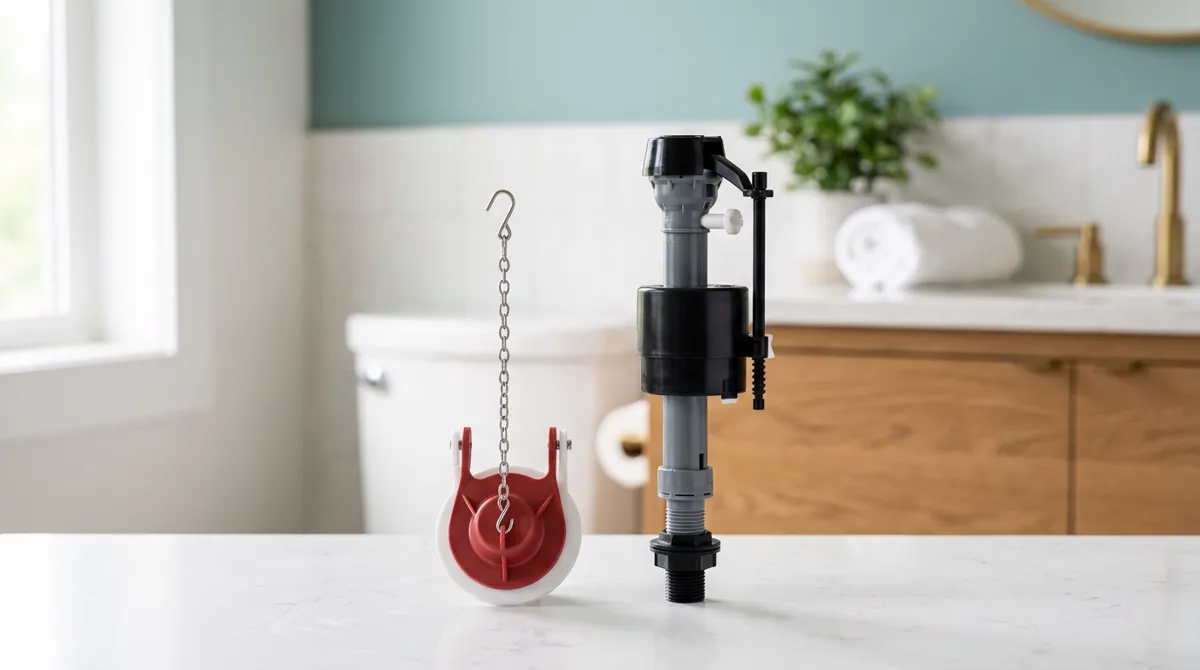
If your toilet keeps running, a leaking flapper is the usual cause, and a fill valve is most of the rest. Quick test: drop dye in the tank and don't flush. If any color shows up in the bowl after 10 minutes, replace the flapper ($5-$15). If the bowl stays clear but water keeps running, the fill valve is the problem ($10-$30).
These two parts fail in different ways, so the sounds they make are different too. A bad flapper usually gives you a quiet, on-again-off-again refill, the classic "phantom flush" where the tank tops itself up every so often for no reason. A bad fill valve tends to run constantly, hiss, or push water up and into the overflow tube until it drains away. Once you know which pattern you're hearing, the fix is fast and cheap.
This guide walks you through the dye test, the float-lift test, and how to read the water level against the overflow tube so you can tell the two apart with confidence, then shows what each repair actually costs.
Which part is it? Symptoms at a glance
| Symptom | Likely cause | Typical fix |
|---|---|---|
| Phantom flush — tank refills on its own every few minutes | Flapper leaking | Replace the flapper ($5-$15) |
| Dye in the tank bleeds into the bowl without flushing | Flapper not sealing | Clean or replace the flapper |
| Constant running or hissing that never stops | Fill valve won't shut off | Flush debris out of the valve, or replace it ($10-$30) |
| Water trickling into the overflow tube | Water level too high | Lower the water level; clean or replace the valve if it still spills |
Fix it: see flappers & fill valves.
See our picks →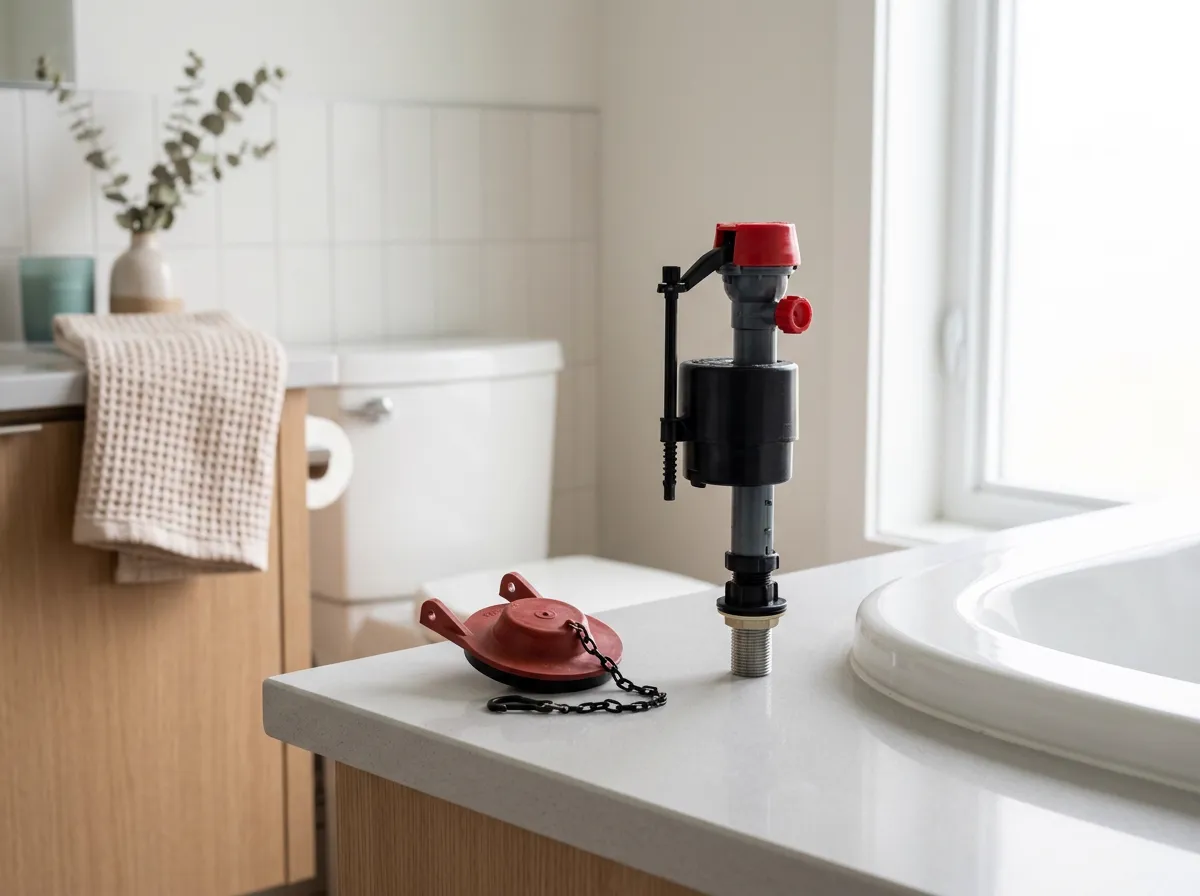
Quick Background: What Each Part Does
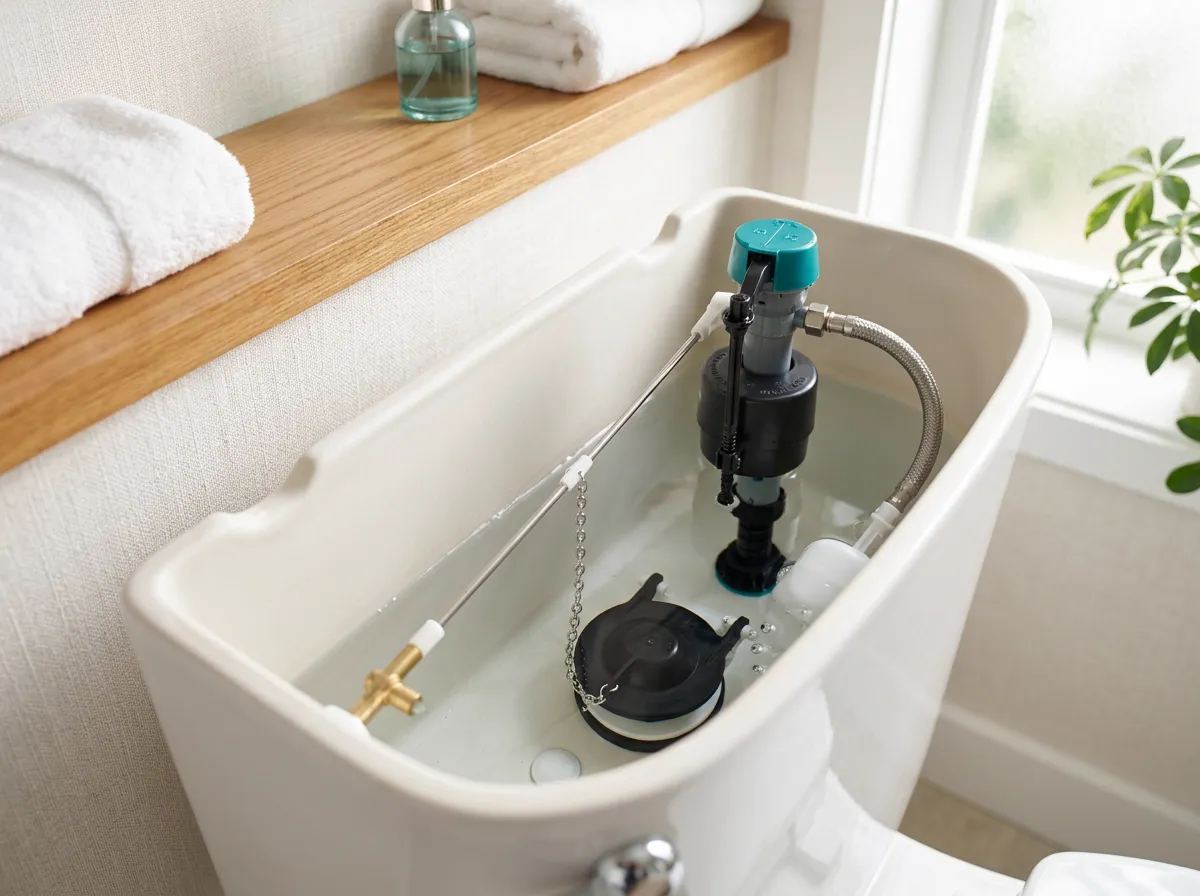
Two parts control the water in your tank. The flapper is the rubber seal at the bottom of the tank that lifts when you flush and drops back to hold water in. The fill valve is the tall tower on the left side that refills the tank after a flush and shuts off when it's full. A flapper failure lets water leak DOWN into the bowl. A fill valve failure lets water keep coming IN and never shut off. Knowing which direction the water is escaping is the whole game.
Flapper Symptoms: The Phantom Flush
A worn or warped flapper no longer seals tightly, so water slowly seeps from the tank into the bowl. As the tank level drops, the fill valve kicks on to top it back up, then shuts off, then repeats. That's the "phantom flush" or "ghost flush": the toilet seems to refill itself now and then when nobody touched it, running briefly each time. The tell-tale pattern is intermittent, not constant. You may also notice the bowl water rippling slightly between flushes.
Fill Valve Symptoms: Constant Run and Hissing
A failing fill valve can't fully shut off, so it keeps running continuously or makes a steady hissing or trickling sound that never stops. The other classic sign: water rising past the fill line and spilling into the overflow tube (the open vertical pipe in the center of the tank), then draining straight down into the bowl. If you hear nonstop running plus water trickling into that center tube, the fill valve, or the float setting that controls it, is your culprit, not the flapper.
How to Tell Them Apart
Step 1 - Dye test: Take the tank lid off, drop in a few drops of food coloring or a dye tablet, and DON'T flush. Wait 10 minutes, the EPA's test time. If any color appears in the bowl, your flapper is leaking; flush afterward so the dye doesn't stain the tank. Step 2 - If the bowl stays clear, look at the water level. It should sit at the tank's waterline mark, or about 1/2 inch below the top of the overflow tube if there isn't one, the level Fluidmaster and Korky both specify. If water is at or above the top of that tube and draining in, the problem is the fill valve or float. Step 3 - Float-lift test, on a valve with a visible float cup or float arm: gently lift the float while the water is running. If the water stops, the float just needs lowering (a free adjustment). If it keeps running with the float raised, the valve isn't shutting off. Fluidmaster and Kohler both have you clean debris out of the valve before replacing it. Korky's valves use an internal float, so on those, Korky has you lower the valve's height setting to bring the water level down.
What Each Fix Costs
Flapper: the cheapest fix in plumbing. A replacement flapper runs $5-$15 at any hardware store and takes about 5-10 minutes with no tools, just shut off the supply valve, flush to empty the tank, unhook the old one, and clip on the new one. Fill valve: a new universal fill valve runs $10-$30 and takes 15-30 minutes (you'll shut off and disconnect the supply line, so keep a towel handy). If you'd rather hire it out, HomeAdvisor's 2026 cost guide puts a running-toilet repair at $100 to $400, and says labor makes up 60% to 75% of a toilet repair bill.
Buy the Right Part the First Time
For the flapper, match the size to your flush valve opening. Korky says most toilets made before 2000 take a standard 2-inch flapper and some made since then take a large 3-inch one; an opening about the size of an orange or baseball is 2-inch, one closer to a grapefruit or softball is 3-inch. Snap a photo of the old one or take it to the store. For the fill valve, a universal adjustable-height model fits the vast majority of standard toilets, so you rarely need a brand match. If both parts are old or you're already in the tank, a combined flapper-plus-fill-valve repair kit ($20-$40) saves a second trip.
Tips & warnings
- Always shut off the water at the supply valve (the small knob on the wall behind the toilet) and flush to empty the tank before swapping any part.
- If a brand-new flapper still fails the dye test, check the flush-valve seat it closes on. Korky says to clean mineral deposits or debris off that seat so the flapper can seal, and to replace the flush valve if the seat is cracked, warped or damaged.
- If you keep replacing fill valves, look at your water. Korky says calcium, sediment and other debris can collect inside a fill valve and slow the refill, and a Korky valve can be opened and rinsed out instead of replaced.
- The EPA says an old or worn flapper can silently leak thousands of gallons a year, so even a phantom flush is worth fixing fast.
Frequently asked questions
How do I know if it's the flapper or the fill valve without a plumber?
Run the dye test: add food coloring to the tank, wait 10 minutes without flushing. Color in the bowl means the flapper leaks. If the bowl stays clear but the toilet still runs, it's the fill valve or a float set too high. Lift the float while it's running; if that stops it, just lower the float, if not, clean or replace the fill valve.
Why does my toilet flush by itself every few minutes?
That's a phantom (or ghost) flush, and it's usually a leaking flapper or flush valve seal. Tank water trickles into the bowl, the level drops, and the fill valve briefly turns on again. Replacing whichever part is worn will normally fix it, according to Korky; a new flapper is $5-$15. Confirm with the dye test before buying.
What does it mean if water is running into the overflow tube?
If water keeps trickling into the center overflow tube, the tank is overfilling. Either the float is set too high (free fix: adjust it down so the water stops at the tank's waterline mark, or about 1/2 inch below the tube's top if there isn't one) or the fill valve won't shut off. Kohler's advice is to lower the water level first, then clean or replace the valve ($10-$30) if water still spills over.
Is it cheaper to replace the flapper or the fill valve?
The flapper is cheaper and easier: $5-$15 and 5-10 minutes with no tools. A fill valve is $10-$30 and 15-30 minutes. If your toilet is older and both parts are worn, a combined repair kit ($20-$40) is often the smarter buy.
Should I replace both parts at once?
Not always, but it makes sense when both are getting old. The EPA says to replace a flapper at least every five years, and Korky puts a fill valve's typical life at 5 to 7 years, depending on your water. The dye and float tests tell you which part is failing now; if the other is close to that age, doing both at once saves a second trip into the tank.
Sources
- EPA WaterSense — Fix a Leak Week (toilet dye test and flapper leaks)
- EPA WaterSense — Residential Toilets (toilet leaks and flappers)
- Fluidmaster — 400A Fill Valve Installation Instructions (PDF)
- Korky — How to Replace a Toilet Fill Valve
- Kohler — Toilet troubleshooting guide (PDF)
- Fluidmaster — Toilet running constantly
- Korky — How to fix a running toilet
- Korky — How to fix a slow-filling toilet tank
- Korky — QuietFILL Platinum fill valve (internal float)
- Korky — What size toilet flapper do I need?
- HomeAdvisor — How much does toilet repair cost? (2026)