
How to Fix a Running Toilet
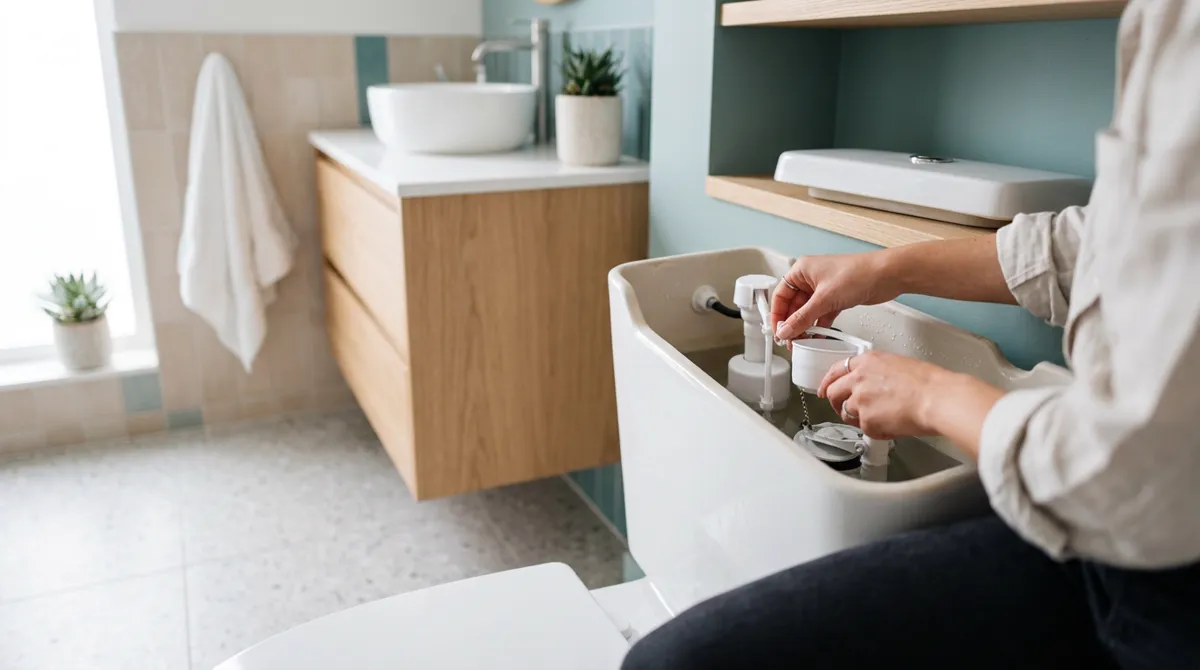
A running toilet is almost always caused by a worn flapper or a misadjusted fill valve. Start by adding a few drops of food coloring to the tank; if any color shows up in the bowl after 10 minutes without a flush, replace the flapper. If the tank water rises into the overflow tube, lower the float or replace the fill valve.
That constant hiss or random "phantom flush" is also wasting water: the EPA says an old or worn flapper can silently leak thousands of gallons a year, quietly inflating your bill. The good news is that the three usual culprits, the flapper, the fill valve, and the float, are all cheap, beginner-friendly parts you can swap with basic hand tools. This guide walks you through diagnosing which one is to blame, then fixing it step by step.
Need a new flapper? See our top picks.
See our picks →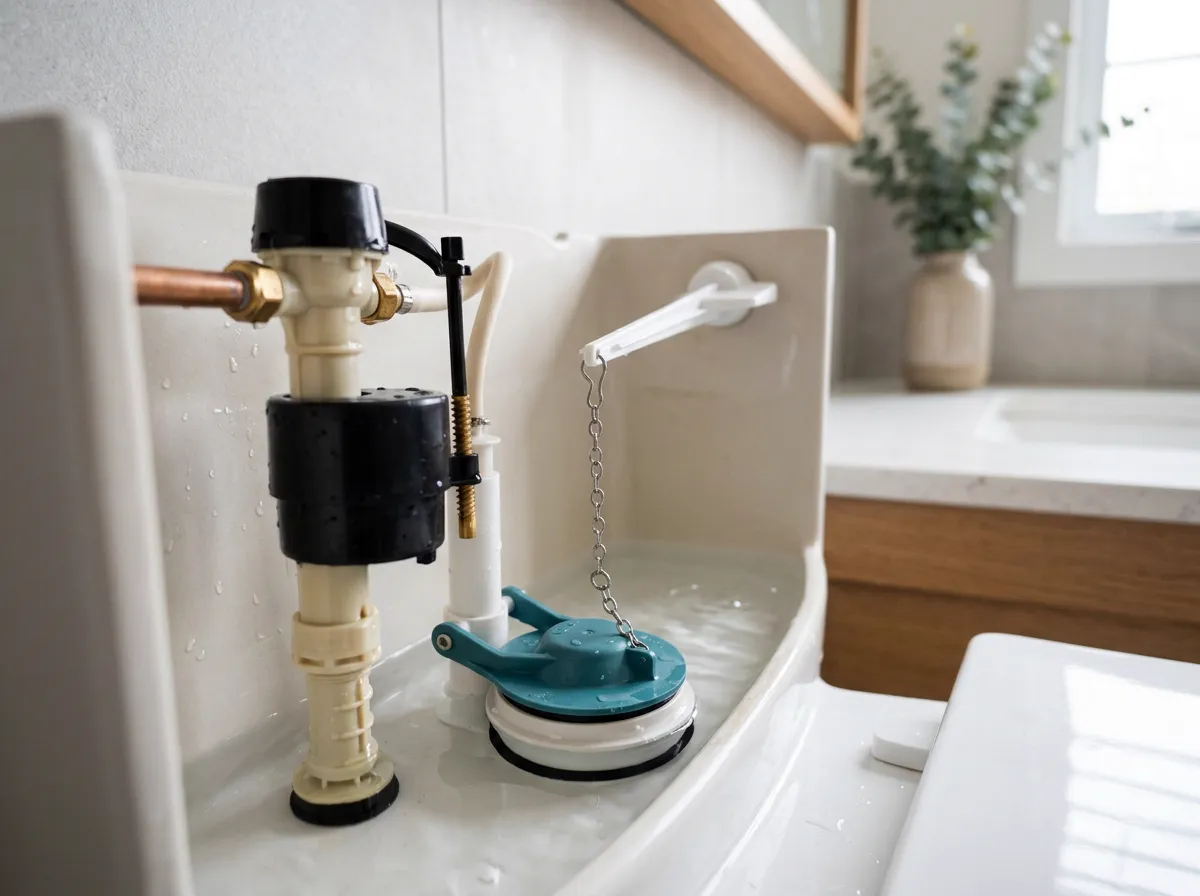
What you'll need
- Replacement flapper sized to your toilet (universal 2" or 3" — check your model)
- Universal adjustable fill valve (if replacement is needed)
- Adjustable wrench or channel-lock pliers
- Sponge and small bucket or towels
- Food coloring (for the dye test)
Step by step
- Diagnose the cause with a dye test. Lift off the tank lid and set it aside flat. Add a few drops of food coloring to the tank water and wait 10 minutes without flushing, the EPA's dye test. If any color shows up in the bowl, your flapper isn't sealing. If you instead see water trickling into the central overflow tube, the float is set too high or the fill valve is failing. This tells you exactly which part to fix. Flush when you're done so the dye doesn't stain the tank, as the EPA advises.
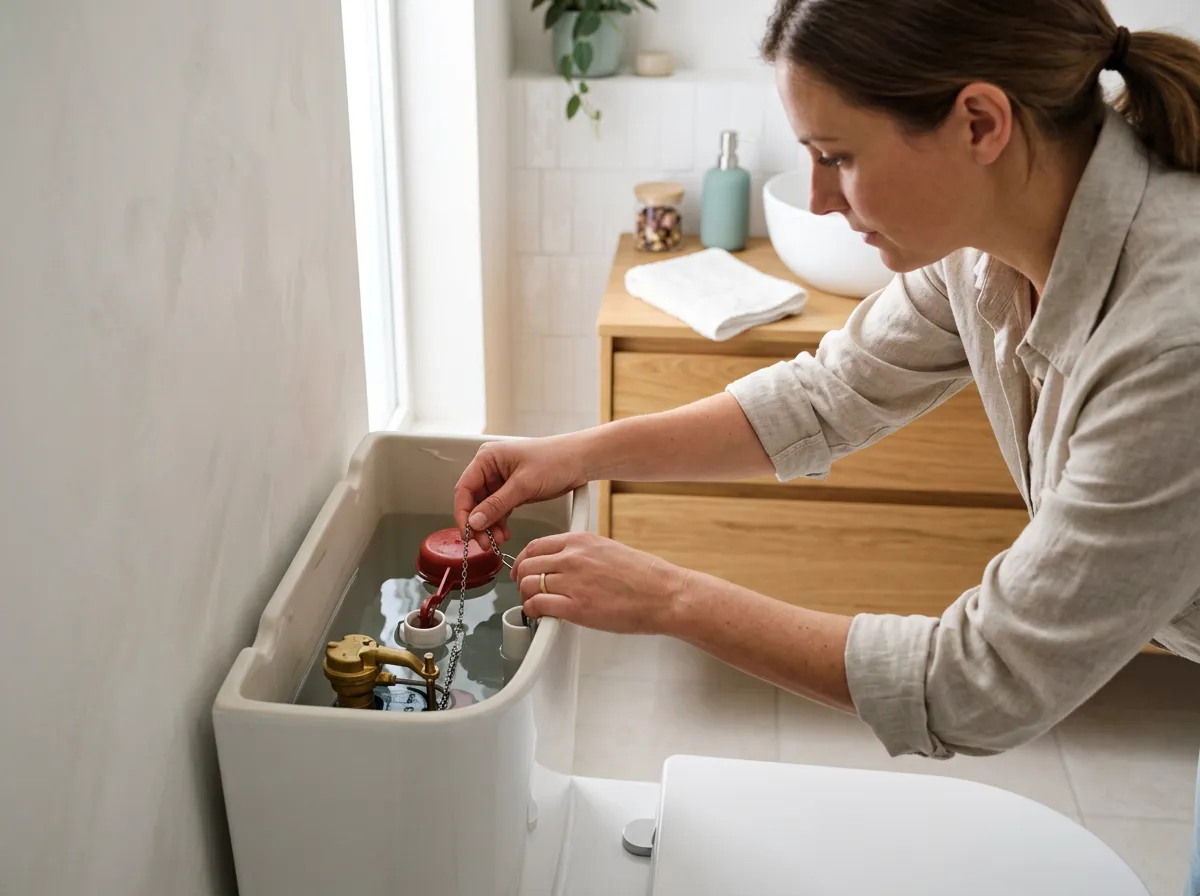
- Inspect and replace the flapper. Turn off the water at the shutoff valve below the tank, flush to empty, and sponge out the rest. Press the flapper — if it's stiff, warped, slimy, or cracked, it's worn out. Unhook it from the pegs on the overflow tube and detach the chain. Snap on a matching new flapper, reconnect the chain, turn the water back on, and run the dye test again to confirm the seal.
- Check and adjust the chain. The chain linking the flush handle to the flapper must have just a little slack — about a half inch. Too long and it slips under the flapper, holding it open so water runs nonstop. Too short and the flapper can't drop fully closed. Reposition the chain clip to a different hole on the handle arm until the flapper seats flat and the slack is right.
- Adjust the float and water level. If your tank has a waterline mark, the water should stop at it; if it doesn't, aim for roughly 1/2 inch below the top of the overflow tube, the level Fluidmaster and Korky both specify. If the water reaches the top of the overflow tube, it spills in and the valve never shuts off. On a float-cup valve with an adjustment screw on top, like the Fluidmaster 400A, turn the screw counterclockwise to lower the level or clockwise to raise it. Korky valves have an internal float, so you change their level by resetting the valve's height, which means turning off the water and taking the valve out as in step 5. On an older valve with a float ball on a rod, Kohler's service instructions for some of its toilets say to bend the rod to set the level; if the valve still won't hold the level, replace it (step 5). Flush, refill, and recheck the level. Our guide to adjusting a toilet float covers each float type in more detail.
- Replace the fill valve if it still runs. If the flapper seals and the water level is set right but the tank keeps running or hissing, the fill valve is at fault. Debris stuck inside the valve can keep it from shutting off, so Fluidmaster and Kohler both list clearing it out as a fix to try: with the water off, remove the valve's cap and flush out the valve body as its instructions describe (Fluidmaster's has you hold a cup upside down over the open valve and turn the water on and off a few times). If it still runs, replace it: shut off the water, flush, and sponge the tank dry. Disconnect the supply line and unscrew the locknut under the tank, then lift out the old valve. Set the new valve's height before you install it, standing it in the tank to check and lifting it out to adjust or lock it, so its critical-level (CL) mark sits 1 inch above the top of the overflow tube, the position Fluidmaster and Korky both give (our fill-valve guide walks through it for each brand). Then drop it in and hand-tighten the locknut only. Reconnect the supply line, clip the refill tube to the top of the overflow tube rather than pushing it down inside, and turn the water on.
- Set the new fill valve and final-test. Adjust the float (on a Korky, the height you set before installing it sets the level) so it shuts off cleanly with the water at the tank's waterline mark, or about 1/2 inch below the top of the overflow tube if there isn't one. Flush a few times and listen — the tank should refill, then go completely silent. Run one more dye test to confirm no color shows up in the bowl after 10 minutes. If it's quiet and the dye stays put, your toilet is fixed.
Tips & warnings
- Replacing the flapper and fill valve together as a kit is the most reliable one-time fix — both parts wear out on a similar timeline, so doing both prevents a repeat repair. If it's the fill valve you're buying, our best toilet fill valves guide compares the universal Fluidmaster and Korky valves and a TOTO-specific one.
- Take your old flapper to the hardware store, or note your toilet's brand and model (stamped inside the tank). Flappers come in 2" and 3" sizes, and the wrong size won't seal.
- Hard-water mineral buildup on the flush valve seat can stop a brand-new flapper from sealing. Wipe the seat clean with a cloth or fine sponge before installing.
- Hand-tighten the fill valve's plastic locknut; Fluidmaster and Korky both say hand-tight only, and Fluidmaster warns that overtightening can crack the valve or the tank. Hand-tighten the supply-line nut too, with no tape or sealant, as Korky says; if it drips once the water is on, Fluidmaster says to turn it just enough to stop the leak.
- If your fill valve keeps failing within months, your home's water pressure may be too high; a pressure check or regulator can protect future parts.
Frequently asked questions
How do I fix a running toilet?
Find the cause first with the EPA's dye test: put a few drops of food coloring in the tank and wait 10 minutes without flushing. If color shows up in the bowl, the flapper isn't sealing, so turn off the water at the shutoff valve and replace it, and check the flush chain for excessive slack, as Kohler's troubleshooting guide advises. If the bowl stays clear but water spills into the overflow tube, lower the float so the water stops about 1/2 inch below the top of the overflow tube, the level Fluidmaster and Korky give. If the fill valve still won't shut off, clear debris from it as Fluidmaster's instructions describe, and replace the valve if it keeps running.
Why does my toilet randomly run for a few seconds (phantom flush)?
A phantom flush means water is slowly leaking from the tank into the bowl, so the fill valve briefly kicks on to top off the tank. The cause is almost always a flapper that no longer seals tightly. Replacing the flapper, and cleaning the flush valve seat it rests on, fixes it.
Should I replace just the flapper or the whole fill valve?
Start with the dye test. If color leaks into the bowl, replace the flapper first — it's the cheapest, most common fix. If the toilet still runs after a good flapper and correct float setting, replace the fill valve. Many people do both at once for a lasting repair.
How much water does a running toilet waste?
The EPA says an old or worn flapper can make a toilet flush on its own or silently leak thousands of gallons a year. A fill valve spilling into the overflow tube wastes water for as long as it runs. Either way it shows up on your water bill, so it's worth fixing promptly.
Do I need a plumber to fix a running toilet?
Usually not. Replacing a flapper, adjusting a float, or swapping a fill valve are beginner-friendly jobs that need only basic hand tools. Call a plumber only if the tank is cracked, the shutoff valve won't close, or the problem persists after replacing both parts.
Sources
- Fluidmaster — 400A Fill Valve Installation Instructions (PDF)
- Korky — How to Replace a Toilet Fill Valve
- Korky — 528 QuietFILL Fill Valve Instructions (PDF)
- Korky — Anatomy of a Toilet
- Kohler — Toilet Troubleshooting Guide (PDF)
- Kohler — Siphon Vortex Low Profile One-Piece Toilets Service Instructions (PDF)
- American Standard — How do I adjust the water level in my tank?
- EPA WaterSense — Fix a Leak Week (toilet dye test and flapper leaks)