
Where Does Bidet Water Come From?
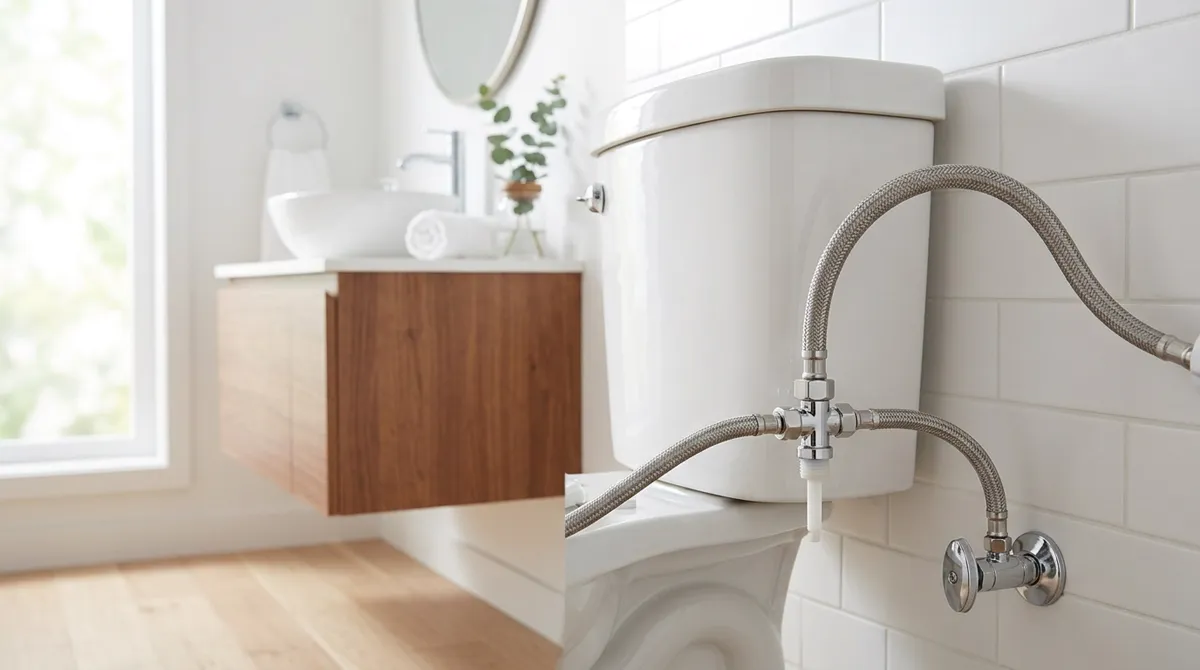
Bidet water comes from the same clean, drinkable cold water line that fills your toilet tank and your bathroom sink. A small T-valve splits that fresh supply, sending one path to the toilet and one to the bidet. It is never recycled or pulled from the toilet bowl, so the water touching you is just as clean as your tap.
If that sounds surprising, it is because the bidet sits right on the toilet, so people assume the two share water. They don't. The toilet bowl is a one-way drain. The bidet taps the supply side of your plumbing, the same potable water that feeds your kitchen, your shower, and the glass by your sink.
Below, we break down exactly how the water gets there, where warm water comes from on heated models, and why the spray nozzle stays clean between uses.
See the bidet seats we recommend.
See our picks →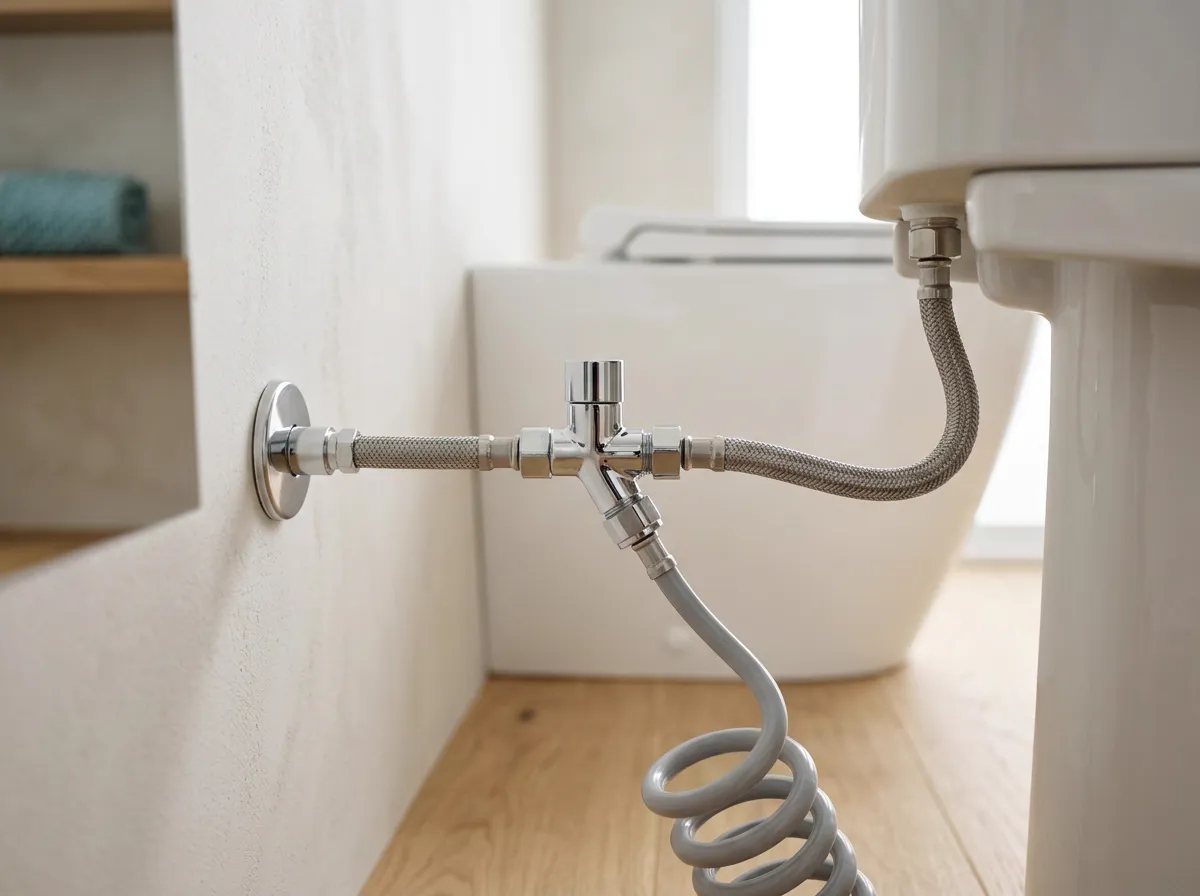
Where the water actually comes from
Your bathroom has a fresh-water supply line running to the toilet. This is treated, drinkable (potable) cold water from the same municipal or well source that feeds every other faucet in your home. When you add a bidet seat or attachment, the installer connects a small T-shaped valve (a T-adapter) to that existing line. The T splits the flow: one branch keeps filling your toilet tank, and the other feeds the bidet. So the bidet draws from the supply side of your plumbing, the same place your sink gets its water. Nothing is diverted from the tank's used water or the bowl.
Is it toilet bowl water? No, and here is why
The toilet bowl is part of the drain, not the supply. Water flows one direction through a toilet: clean water in from the supply line, waste water out to the sewer. There is no path for bowl water to travel backward into the bidet. Modern fixtures are also built with backflow protection, which physically prevents used water from being sucked back into your clean lines. In short, the water that sprays you is the same fresh water you would drink from the tap, not water that has touched the bowl.
Cold water vs. warm water bidets
Basic bidets and most attachments use cold water straight from that supply line, which many people find perfectly comfortable. If you want warm water, there are two common ways to get it. Some models tap your bathroom's hot water line (like the one under your sink) and blend it, just like a faucet does. Most modern electric bidet seats skip the hot line entirely and heat the cold supply water themselves using a built-in heater. Either way, the starting water is still that same clean potable supply.
How heated bidet seats make warm water
Electric bidet seats use one of two heating systems. A tank (reservoir) heater stores a small amount of pre-warmed water, so warmth is instant, but a long wash can cool off after about 30 seconds until the tank reheats. A tankless (on-demand) heater warms the water as it flows past a heating coil, giving you endless warm water, though the first second or so may be room temperature before it kicks in. Many seats also let you dial the exact temperature you want. None of this changes the water source; the heater simply warms the fresh supply water on its way to the nozzle.
How the nozzle stays clean
The spray nozzle does not sit out in the open or touch you, and it does not touch the bowl. On most quality bidets it tucks behind a guard when not in use, and many models run a self-cleaning rinse before and after every wash. The nozzle extends, gets rinsed with fresh water flowing over and through it, then retracts. Higher-end models add features like a nozzle that oscillates during cleaning or even UV sterilization. This keeps fresh residue off the spray tip between uses.
What the spray feels like and why people switch
Because the water is the same clean supply that feeds your sink, a bidet leaves you feeling cleaner than paper alone, with no harsh wiping. You control the pressure and (on warm models) the temperature, so it is gentle and adjustable. Once people understand the water is fresh and potable, the last hesitation usually disappears. It is closer to washing your hands under a tap than anything to do with the bowl.
Tips & warnings
- Self-cleaning rinses the nozzle, but it is not a full deep clean. Wipe the nozzle down manually every 2 to 4 weeks to prevent mineral buildup and keep the spray steady.
- If warm water matters to you and you do not have a hot line near the toilet, choose an electric seat with a built-in heater rather than a hot-water-line model.
- Tank heaters give instant warmth but can cool during a long wash; tankless heaters give endless warm water with a brief room-temperature start. Pick based on how you like to wash.
- A bidet uses your existing cold supply line, so most installs need no plumber and no new water source, just the included T-adapter.
Frequently asked questions
Where does bidet water come from?
Bidet water comes from the same clean, drinkable cold water line that fills your toilet tank and bathroom sink. A small T-valve on the toilet's supply line splits that fresh water, sending one path to the tank and one to the bidet. It is never taken from the toilet bowl, which is a one-way drain. Heated seats warm that same supply water on its way to the nozzle.
Is bidet water clean and safe?
Yes. Bidet water comes from the same fresh, potable supply line that feeds your sink, shower, and toilet tank. It is the same water you would drink from the tap, so it is safe to use on sensitive areas.
Does the bidet use water from the toilet bowl?
No, never. The toilet bowl is a one-way drain. The bidet connects to the clean supply line on the other side of the toilet, and backflow protection prevents any used water from reaching it. Bowl water cannot enter the bidet.
Where does the warm water on a heated bidet come from?
It is the same cold supply water, just heated on the way to the nozzle. Some bidets blend in your bathroom's hot water line, but most modern electric seats heat the cold supply themselves with a built-in tank or tankless heater.
Do all bidets have warm water?
No. Basic bidets and most attachments spray cold supply water, which many people find comfortable. For warm water you need either an electric bidet seat with a built-in heater or a model connected to a hot water line.
Does the bidet nozzle touch anything dirty?
No. The nozzle does not touch you and never touches the bowl. It tucks behind a guard when idle, and most models self-rinse with fresh water before and after each use. A quick manual cleaning every few weeks keeps it in top shape.