
DIY bidet attachment: can you build one?
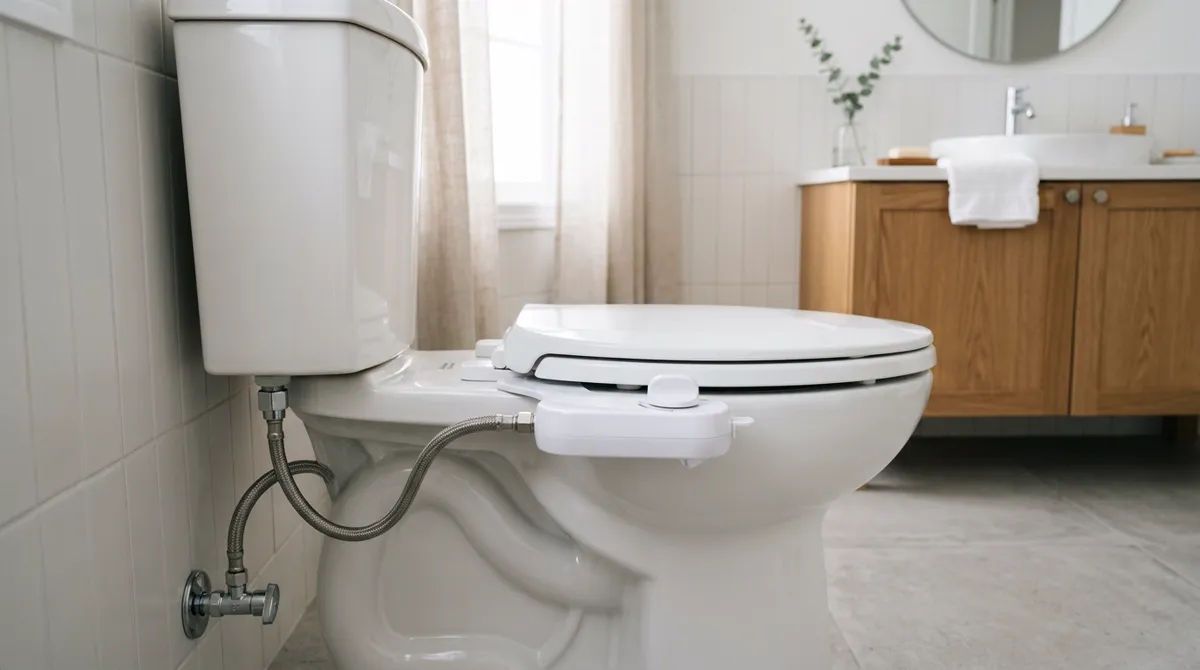
Yes, you can build a bidet attachment. Mechanically it isn't difficult: you put a T-adapter on the toilet supply line, run a hose from it, and put a sprayer on the end of the hose. People do this with kitchen-sink sprayers, hardware-store hand showers, and lengths of tubing from the garage. Nothing about the plumbing is exotic, and if your only question is whether water will come out, the answer is yes.
The problem is the component homemade rigs usually leave out, because most people don't know it exists. Your toilet's supply line carries potable water — the same water in your kitchen tap. A bidet nozzle sits inches from a toilet bowl. Connect those two things without any backflow protection and you've built what the EPA calls a cross-connection: a connection between a non-potable source and potable water that can let contamination enter your plumbing through backflow. Manufactured attachments handle this with a small check valve buried in the inlet — LUXE, for example, sells that valve as a replacement part and describes it plainly, saying it acts as a check valve and prevents water from flowing back into the supply, and that it comes pre-installed inside the inlets of its NEO, NEO Plus and Whift bidets.
So the honest version of this guide isn't "don't touch it, call a plumber." It's narrower than that. Below: the four things people actually build, how backflow really happens and why it isn't hypothetical, why the cost math rarely works out, the one form of DIY bidet that carries no plumbing risk whatsoever, and — if you're going to build one anyway — the short list of things you genuinely cannot skip.
Skip the parts run — a finished attachment already includes the part most builds forget.
See our picks →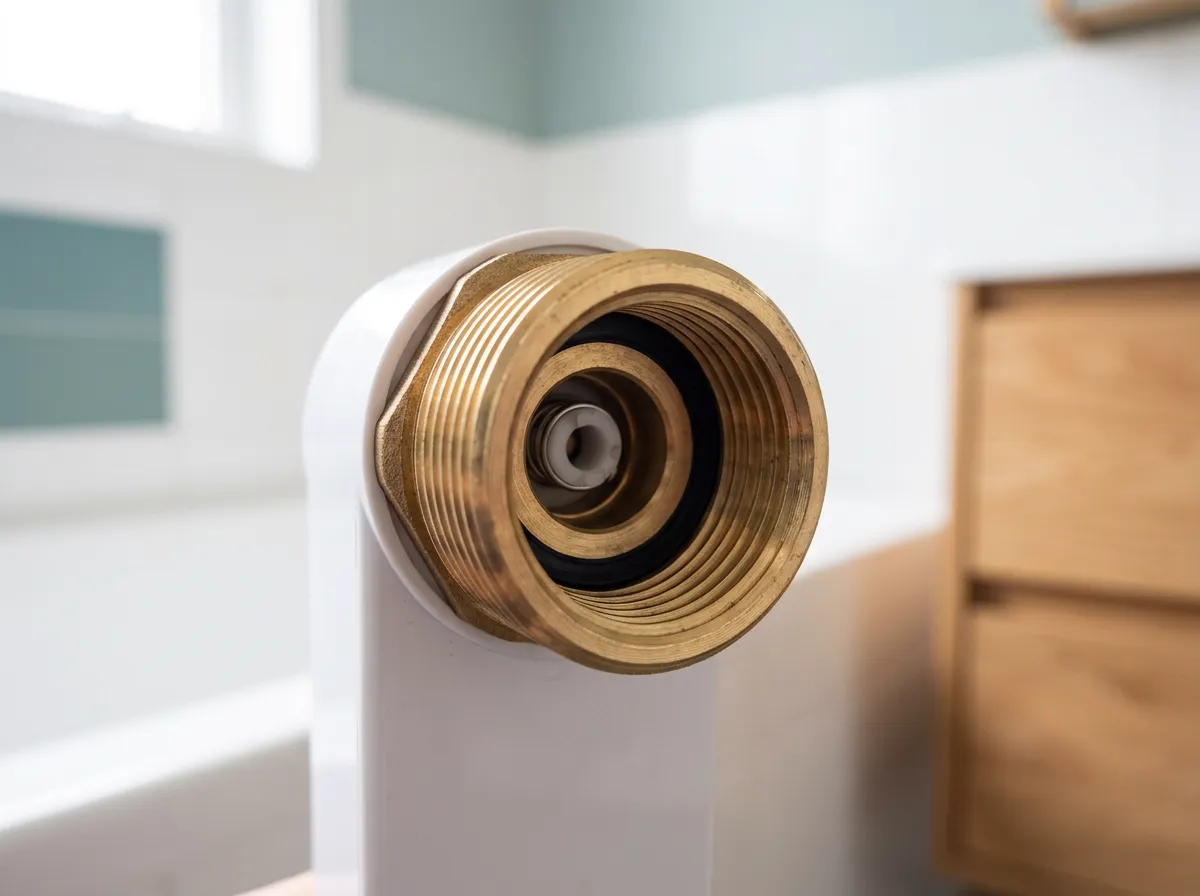
What people actually mean by a 'DIY bidet attachment'
Four builds cover nearly all of it, and the most common is a kitchen-sink sprayer or utility sprayer teed off the toilet supply with a T-adapter, mounted on a hook beside the toilet. Second is a hardware-store hand shower or shattaf on a flexible hose — essentially a homemade handheld sprayer. Third is the improvised version: a length of garden hose or vinyl tubing and whatever nozzle was in the drawer. Fourth is a squeeze bottle or peri bottle, which is a genuinely different category, because it never touches your plumbing at all. The motive is usually one of two things — saving money, or using parts already in the garage — and both are reasonable instincts. The first three builds are where they go wrong, and it's worth being specific about why rather than hand-waving about safety.
The part homemade rigs leave out: backflow protection
Mainstream bidet attachments are generally built with a small check valve where water enters the unit. You never see it and the marketing rarely mentions it, which is exactly why homemade builds omit it — not to save money, but because nobody knows to look. LUXE's part page is unusually clear about the job: it acts as a check valve and prevents water from flowing back into the supply, and it ships pre-installed inside the inlets of their NEO, NEO Plus and Whift models. It's also sold as an inexpensive replacement part, which tells you something — the piece doing the protective work is one of the cheapest things in the box. We haven't verified this across every brand, so if you already own an attachment, check its manual rather than assuming. And a single check valve is no guarantee: the EPA's own manual lists reliance on inadequate protection, such as a single valve or other mechanical device, among the reasons dangerous cross-connections exist at all.
How backflow actually happens — and why it isn't hypothetical
Backflow needs two things: a connection, and a pressure reversal. The EPA defines backflow as any unwanted flow of used or non-potable water back into the potable water distribution system, and the version that matters in a house is backsiphonage — backflow resulting from negative pressures in the distributing pipes of a potable supply. The causes are ordinary: a main break, a crew cutting into a main up the street, heavy hydrant draw during a fire. The EPA's manual documents where that can lead. In a Pennsylvania city in December 1980, an exterminating company was mixing pesticides in a tank truck using water from a garden hose, with the hose end submerged in the tank. A workman cutting into a six-inch main nearby drained the lines, and the resulting backsiphonage pulled chlordane and heptachlor back through that hose into the system, contaminating services to roughly seventy-five apartments. That was pesticide and a submerged hose, not a bidet — a nozzle in open air is a lower hazard — but what carries over is the unprotected connection and the pressure drop somebody else caused.
Model code already treats this hazard pattern seriously
You don't need a bidet-specific rule to see where a homemade rig sits. ICC guidance on protecting water supply describes an air gap as the most effective and dependable means of preventing backflow, and states that hose bibbs, wall hydrants, sill cocks and other openings with a hose-threaded connection must be protected by an atmospheric, pressure, or permanently attached hose connection vacuum breaker. Don't read that as a rule naming your build — most toilet supply tees aren't garden-hose threaded, and the requirement carries its own exceptions. Read it as the hazard pattern the code is chasing: an open end that can end up in contaminated water, on a line that can go negative. That guidance addresses hose connections generally rather than bidets, and adopted codes vary by jurisdiction — yours is the one that governs. What isn't ambiguous is the direction, and an unprotected homemade rig is not something an inspector is likely to approve.
Pressure, heat and materials — three more ways homemade rigs fail
Backflow is the serious one, but it isn't the only one. First, pressure: everything downstream of a T-adapter sits at full line pressure continuously, not just when you're using it. Commercial bidet hoses are braided and built for that; a garden hose or a length of vinyl tubing is not, and the failure mode is a burst line in a bathroom nobody is standing in. Second, heat: if you tee a sprayer off the hot side to get warm water, you have unmoderated water-heater temperature at the nozzle with nothing tempering it — a real burn risk, and worst for children and anyone with reduced sensation. Third, materials: components intended for drinking-water systems are sold and labeled as such, and a garden hose is not one of them. If you wouldn't drink from it, think carefully before plumbing it into the line you do drink from.
The cost math rarely favors building your own
This is the part that quietly settles most DIY plans. A basic cold-water non-electric attachment generally runs about $30 to $60, with the wider category spanning roughly $30 to $120 for dual-nozzle and warm-water versions, while handheld sprayers and portable bottles typically fall around $10 to $40. Now price the build honestly: a metal T-adapter, a braided supply hose rated for constant pressure, a sprayer, proper backflow protection, and something to mount it with. We haven't costed every possible combination, and a well-stocked garage changes the arithmetic — but those parts can easily approach the price of a finished unit. What the finished unit adds beyond parts is the rest of it: a warranty, fit engineering, and a body actually designed to sit under a toilet seat. DIY earns its place when homemade is cheaper or better, and here it's often neither.
The DIY that's genuinely fine: a bottle, not a plumbing job
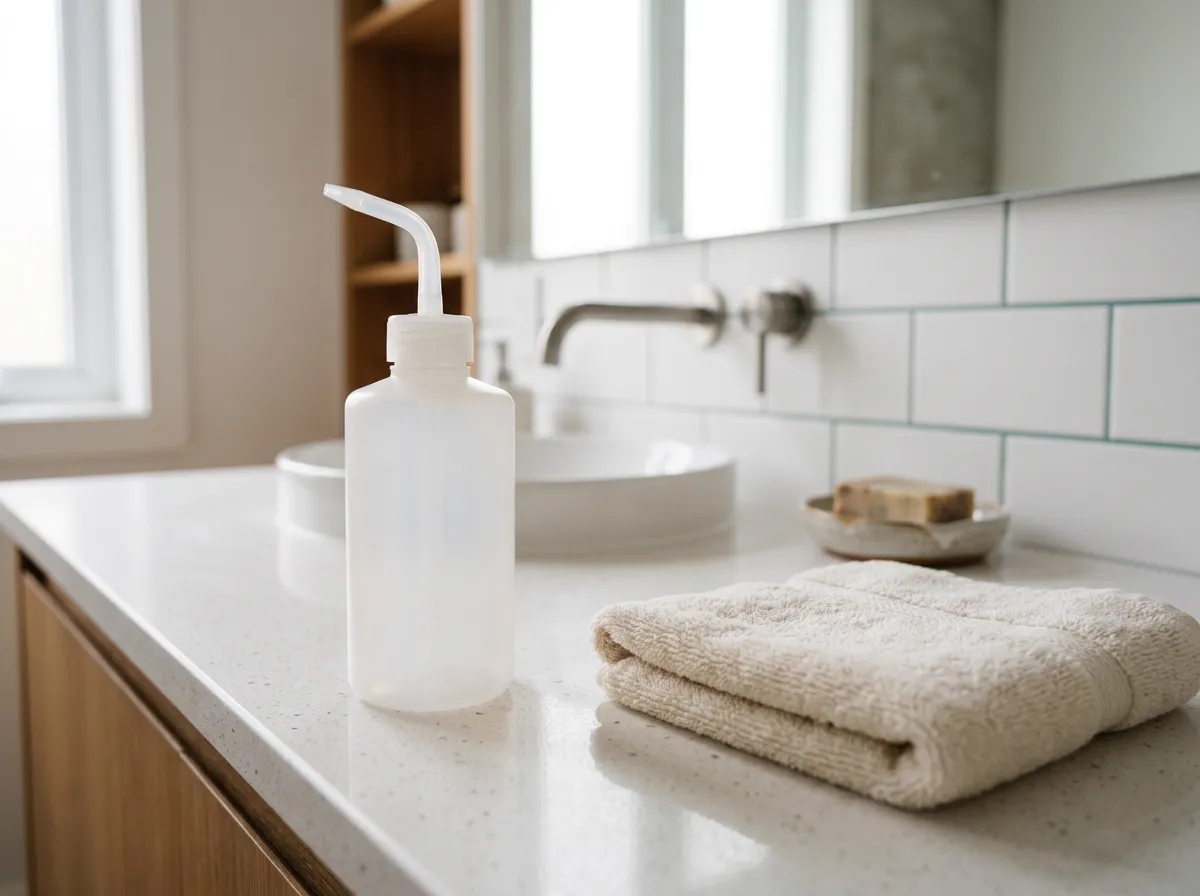
There's one homemade approach with no plumbing risk at all, and it deserves more respect than it gets: a squeeze bottle or peri bottle. Because it never connects to your water supply, there is no cross-connection, no backflow question, no code issue, and nothing that can burst at two in the morning. You fill it at the sink and use it. It's the standard tool handed to people recovering from childbirth, it travels well, it's the right answer in a rental where you'd rather not touch the plumbing, and it's a cheap way to find out whether you even like using water before spending on hardware. Purpose-made portable bidets do the same job with a better nozzle and a bottle designed for the angle, and they sit at the bottom of the price range anyway.
If you're going to build one anyway
Plenty of people will, so here's the honest short list rather than a lecture. The non-negotiable one: fit backflow protection approved for this kind of connection under your local code — a device listed for the application, not a generic garden-hose part. Use components sold for potable water and a braided supply hose built for continuous pressure, not garden parts and vinyl tube. Stay on the cold side unless you're fitting a real tempering valve, add a dedicated shut-off, and check every joint daily for a week, because slow weeps are how bathroom floors rot quietly. Before you start, your local building department or water utility can tell you what backflow protection is actually required at a fixture like this, and a licensed plumber can verify the connection — that call costs nothing. And know going in that your build may not comply with local code, and that homemade plumbing is an awkward thing to explain to an insurer after water damage.
Tips & warnings
- The protective component is a check valve at the inlet — manufactured attachments generally build it in, and it's one of the cheapest parts in the box.
- Backflow needs a pressure drop, and pressure drops are ordinary — a main break or a crew working up the street, with no warning to you.
- Everything downstream of a T-adapter sits at line pressure 24/7. Garden hose and vinyl tubing are not built for that.
- Never tee a homemade sprayer off the hot line without a tempering valve — that's water-heater temperature straight to the nozzle.
- A squeeze bottle is the one DIY bidet with zero plumbing risk, because nothing ever touches your supply line.
- Your local building department or water utility will tell you what backflow protection a fixture like this needs — that call is free.
Frequently asked questions
Can you make a DIY bidet attachment?
You can — the plumbing is simple. A T-adapter on the toilet supply line, a hose, and a sprayer will produce a working bidet, and people build them from kitchen sprayers, hand showers and spare tubing. The reason it's a bad idea is a component homemade builds usually leave out: backflow protection. Mainstream attachments generally include a small check valve at the inlet that stops water traveling back toward your supply, which matters because a bidet nozzle sits inches from a toilet while the line feeding it carries the same potable water as your kitchen tap. Without that protection you've created a cross-connection, and if household pressure drops — a main break, a crew working upstream — flow can reverse. Add the cost of doing it properly and a finished attachment, typically $30 to $60 for a basic model, often costs about what the parts do.
Is a homemade bidet safe?
Not as commonly built. The specific hazard is backflow into your drinking water. The EPA defines a cross-connection as a connection between a non-potable source and potable water that can let contamination enter through backflow, and the usual trigger in a house is backsiphonage — a drop in supply pressure, often from a break or work upstream, with no warning to you. A manufactured attachment addresses this with a built-in check valve. A homemade rig usually has nothing. There are secondary risks too: hoses not rated for constant line pressure can burst, and a sprayer teed off the hot side delivers unmoderated water-heater temperature to a sensitive area. A build that includes proper backflow protection, potable-rated components and a braided pressure-rated hose addresses most of this — but at that point you've spent attachment money on a homemade attachment.
What is a backflow preventer, and does a bidet need one?
A backflow preventer is a device that lets water flow toward the fixture but not back toward the supply. On bidet attachments it's typically a small check valve sitting inside the water inlet. LUXE's part page describes theirs exactly that way — it acts as a check valve and prevents water from flowing back into the supply — and says it comes pre-installed inside the inlets of its NEO, NEO Plus and Whift models. So yes, a bidet connection needs backflow protection, and many mainstream attachments already include it, though it's worth confirming in your own model's documentation rather than assuming. The reason it matters is position: the nozzle sits near a toilet bowl, so the water at the open end of the line is not water you want traveling back toward your kitchen tap if pressure reverses.
Can I use a garden hose or a kitchen sprayer as a bidet?
It's the most common DIY plan and the weakest one. A garden hose isn't sold or labeled as a potable-water component, and it isn't designed to hold household line pressure continuously the way a braided supply hose is — anything downstream of your T-adapter is pressurized all the time, not only when in use. A kitchen sprayer is at least built for indoor supply pressure, but on its own it still has no backflow protection, no mounting designed for a toilet, and no thermal protection if you've teed it off the hot line. If the appeal is the handheld format specifically, purpose-built handheld bidet sprayer kits bundle the hose, mounting and T-valve and typically fall in the $10 to $40 range — check the listing for backflow protection, since that's the part that actually matters.
Is it cheaper to build a bidet or buy one?
Buying is usually competitive or cheaper, which surprises people. Basic non-electric attachments generally run about $30 to $60, and the category broadly spans roughly $30 to $120 once you add dual nozzles or warm water. Handheld sprayers and portable squeeze bottles typically fall in the $10 to $40 range. A DIY build still needs a metal T-adapter, a pressure-rated braided hose, a sprayer, backflow protection and mounting hardware — and those can easily approach the same money for something with no warranty, no fit engineering and no design work behind it. If you already have most of the parts the arithmetic changes, so price your own build before assuming it saves anything. DIY wins when homemade is cheaper or better; for bidet attachments it's often neither, mostly because the manufactured versions are already inexpensive.
What's the cheapest safe way to try a bidet?
A portable squeeze bottle or peri bottle, usually at the bottom of the $10 to $40 range that portables occupy. It never connects to your plumbing, so there's no cross-connection, no backflow risk, no burst-hose risk and no code question at all — you fill it at the sink and use it. It's the tool routinely given to people recovering from childbirth, it works in a rental where you don't want to touch anything, and it's the honest way to find out whether you like washing with water before spending on hardware. If you decide you do, a basic non-electric attachment is the natural next step and installs in about 15 to 30 minutes with an adjustable wrench and no plumber.
Will a DIY bidet violate plumbing code?
Quite possibly, though the answer depends on where you live, since adopted plumbing codes vary by jurisdiction and your local code is the one that governs. What's clear is the direction. ICC guidance on protecting water supply describes an air gap as the most effective and dependable means of preventing backflow, and states that hose bibbs, wall hydrants, sill cocks and other openings with a hose-threaded connection must be protected by a vacuum breaker. A homemade sprayer teed into a supply line with its open end beside a toilet presents that same hazard pattern — though most toilet supply tees aren't garden-hose threaded, so it isn't automatically the same fitting, and the requirement carries its own exceptions. The authoritative answer is a phone call: your local building department or water utility can tell you what's required at a fixture like this, and it's far cheaper to ask first than to discover it during a home sale.
Sources
- EPA — Cross-Connection Control Manual (definitions, backsiphonage case histories)
- EPA — Drinking water distribution system tools and resources (cross-connection and backflow definitions)
- ICC — CodeNotes: Backflow Preventers and Protection of Water Supply
- LUXE Bidet — backflow prevention valve (official part page)