
Bidet leaking? How to fix it
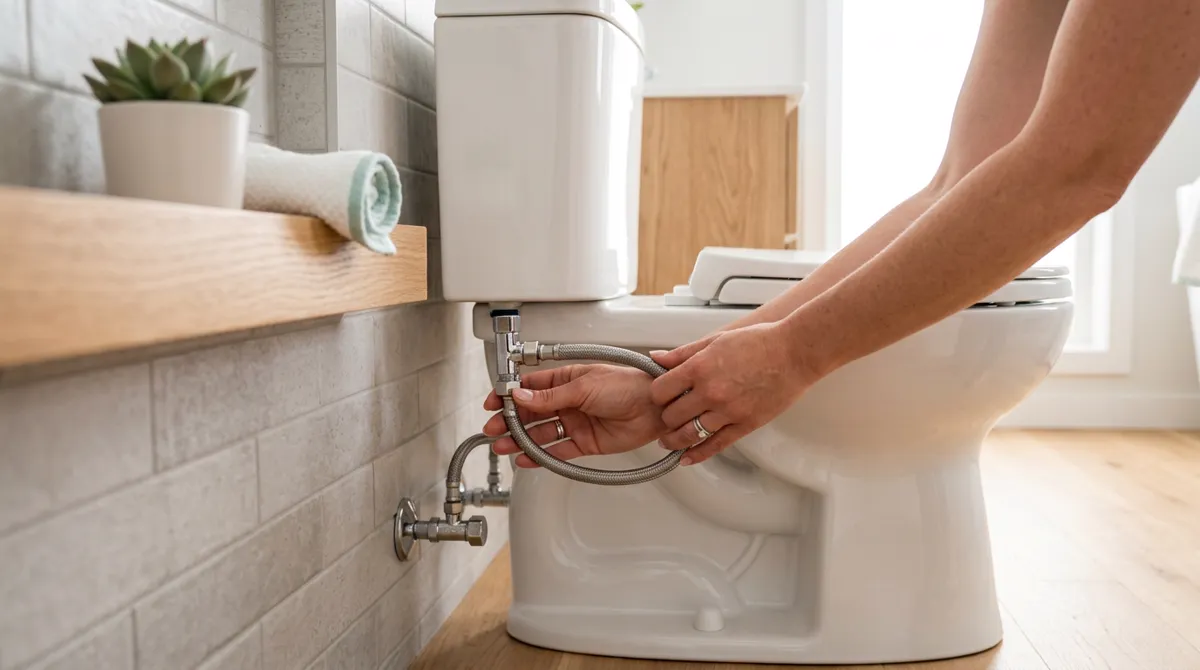
A leaking bidet feels alarming — water where water shouldn't be, next to a floor you'd rather not replace — but the honest news is that almost every bidet leak is one of five problems, four of which you can fix in under fifteen minutes with a towel and your hands. Bidet attachments and seats have exactly three water joints: where the T-valve meets the toilet's fill valve, where the supply hose meets the T-valve, and where the hose meets the unit itself. Leaks overwhelmingly happen at one of those three joints, not inside the unit.
Before anything else, do the two-minute diagnosis: dry every connection with a towel, then flush the toilet and run the bidet once while watching each joint. The first place a new droplet forms is your leak. This matters because people routinely replace a whole bidet over what turns out to be a rubber washer that fell out during installation, or a plastic nut that was tightened with a wrench when it needed a hand.
This guide walks the five causes in the order of how often they actually happen: a missing or misseated rubber washer, cross-threaded or over-tightened fittings, a worn T-valve, a cracked hose, and — least common — a genuine internal failure. It finishes with the one leak you should not try to fix, and how to keep the next install from leaking at all.
Brand-specific leak fixes: TUSHY and Brondell
| Brand | What the maker says causes leaks | What the maker says to do |
|---|---|---|
| TUSHY (Classic, Spa attachments) | The black rubber gasket not sitting correctly in the mega adapter or hose ends; adapter threads cross-threaded or stripped during installation; rarely, a hose or unit that needs replacing | Seat the gasket, re-thread the connection so the threads line up, tighten fully but don't over-tighten, then do the towel check after an hour. TUSHY asks owners to contact its install team for a replacement adapter or part |
| Brondell (Swash S1400, S1000, S1200 seats) | The T-valve washer not installed; Teflon tape not applied during installation | Shut the water off, check the washers aren't damaged or missing, clean off old tape, apply 1–2 layers of new Teflon tape to the leaking fitting and turn the water back on slowly. A leak from the bidet itself goes to Brondell support |
Leak traced to a worn-out unit? See what we'd replace it with.
See our picks →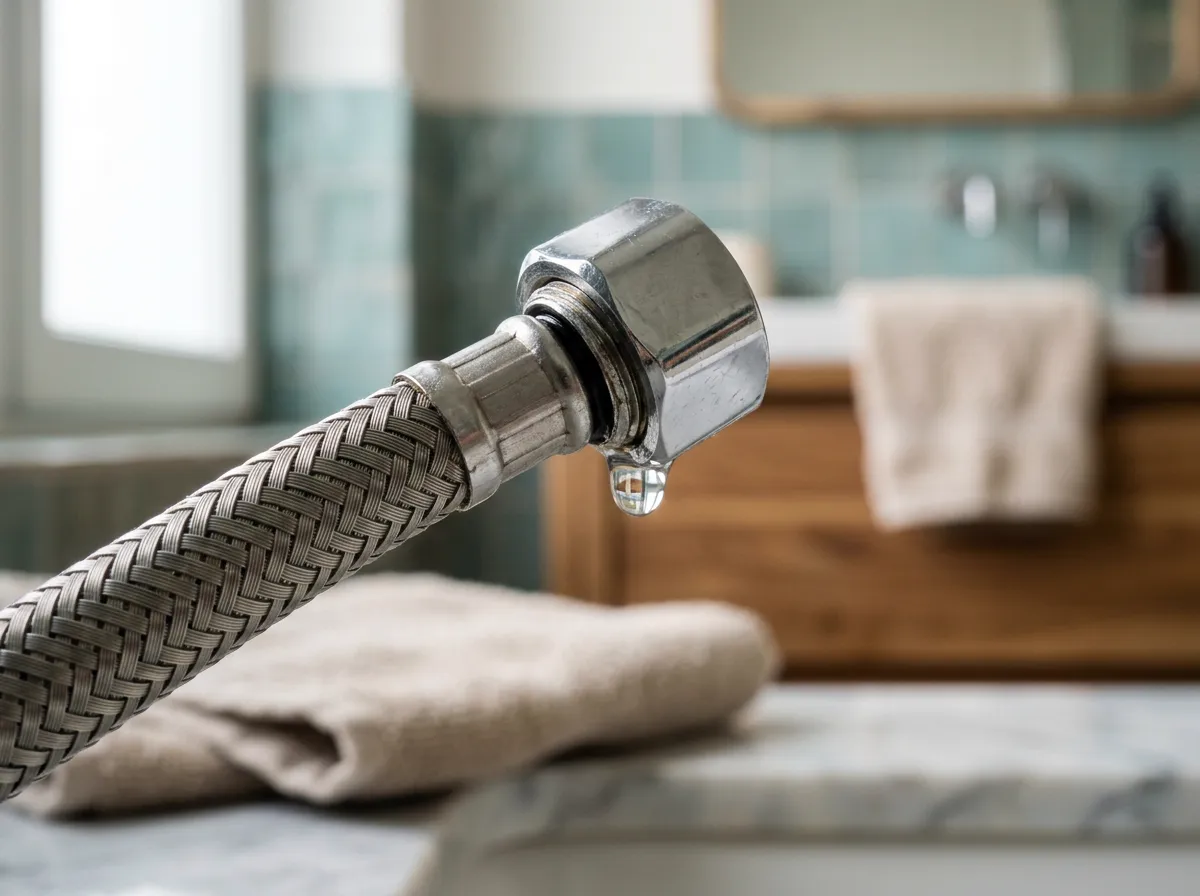
Step by step
- Shut the water off. Turn the toilet's shut-off valve clockwise until it stops, then flush to drain the tank and line.
- Dry everything. Towel-dry the shut-off valve, the T-valve, both ends of every hose and the underside of the bidet, so old water can't mislead you.
- Reopen slowly and watch. Open the valve a little at a time and watch each joint in order: shut-off valve, T-valve, hose ends, then the unit body. The first bead of water marks the leak.
- Test the spray. If nothing drips at rest, run a wash. A leak that only appears while spraying is downstream of the T-valve, at the bidet's hose connection or the unit itself.
- Fix that one joint. Shut the water again, undo only the leaking connection, and check the rubber washer is present and flat and the threads start straight. Hand-tighten, then reopen and recheck.
- Do the one-hour check. TUSHY's installation manual suggests leaving a towel or bowl under the connections and checking back after an hour, because slow leaks are not always visible right away.
First: shut the water and find the actual leak
Turn the toilet's shut-off valve (the oval knob on the wall or floor behind the toilet) clockwise until it stops, then flush to drain the line. Now dry every connection thoroughly with a towel — a leak you can't locate is usually just water tracking along a hose and dripping somewhere far from its source. Reopen the valve slowly and watch each joint in order: shut-off valve, T-valve at the fill inlet, hose connections, then the unit body. The first bead of water is your culprit. If water only appears when the bidet is actually spraying, the problem is downstream of the T-valve; if it drips constantly, it's at the T-valve or the shut-off itself.
Cause 1: A missing, folded, or misseated rubber washer
This is the single most common bidet leak, and it usually shows up either right after installation or right after the water is turned back on following any plumbing work. Every threaded water connection on a bidet needs its rubber washer sitting flat inside the nut — and washers routinely fall out unnoticed during install, fold over as the nut is threaded, or get doubled up by accident. Shut the water off, unthread the leaking connection, and look inside: the washer should be flat, centered, and singular. If it's missing, check the floor and the packaging; most units ship with spares. If it's deformed or flattened with age, replace it — hardware stores carry standard bidet/washing-machine washers for about a dollar. Never rely on thread tape to substitute for a missing washer on these compression-style fittings; it's the washer that seals, not the threads.
Cause 2: Over-tightened or cross-threaded plastic fittings
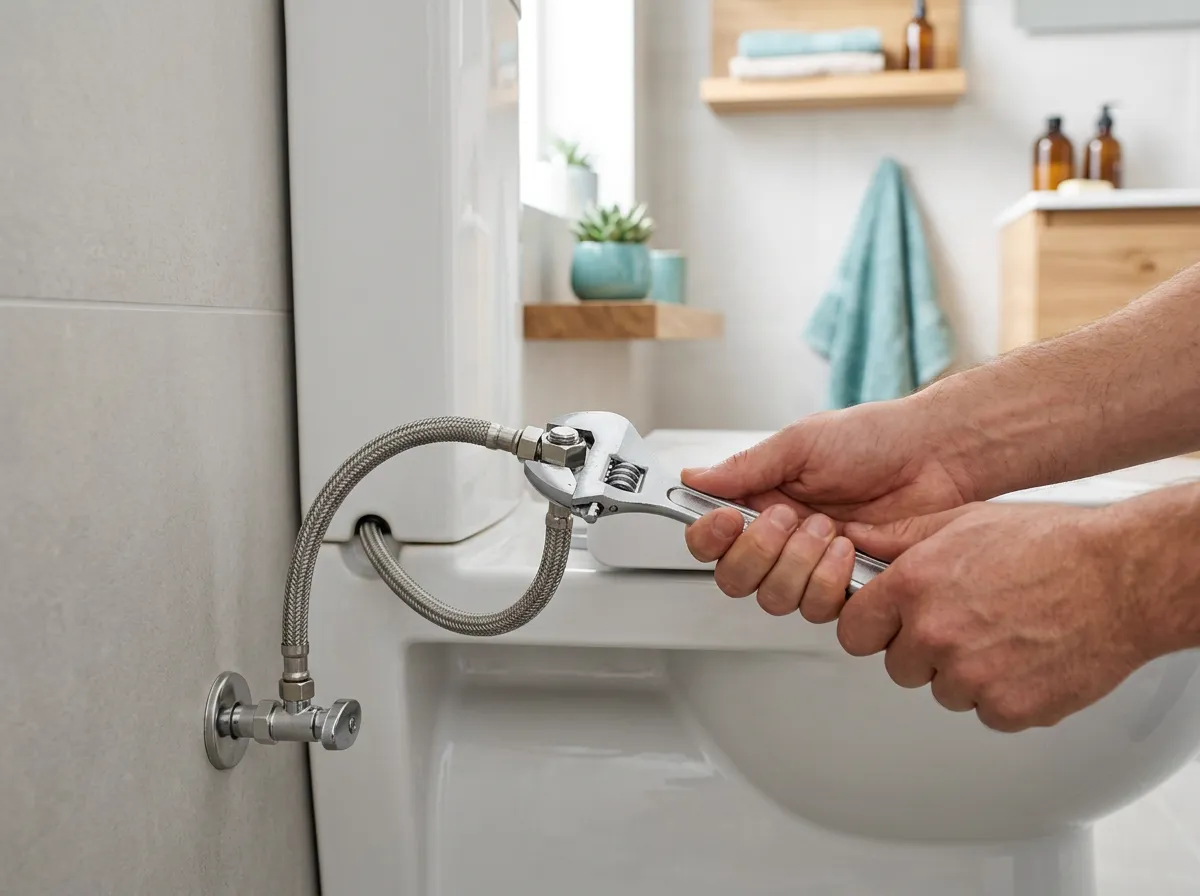
The counterintuitive one: bidet leaks are caused by too much tightening about as often as too little. T-valves and hose nuts on most bidets are plastic, and a wrench can crack the nut or distort the washer seat, creating a slow drip that gets worse as you keep cranking. The rule is hand-tight plus at most a quarter turn. If a connection leaks at hand-tight, back it off completely and re-thread it — a cross-threaded start (where the nut goes on crooked) will never seal no matter how hard you turn. You should feel a clean, easy spin for the first few turns; resistance from the very first turn means it's crossed. A cracked plastic nut or T-valve can't be repaired; replacements cost $10–$15 and take ten minutes to swap.
Cause 3: The T-valve itself is worn or cheap
The T-valve — the three-way fitting that splits your toilet's water line to feed the bidet — is the hardest-working part of the system and the most common part to genuinely fail. Symptoms: a constant weep from the valve body (not the connections), a control lever that drips when the bidet runs, or moisture at the seam of the valve casing. Budget bidets often ship with thin plastic T-valves that fatigue after a couple of years of household water pressure. The fix is a straight swap: shut off the water, unthread the three connections, thread on a new valve with the washers seated, hand-tighten. If you're replacing one anyway, a metal-bodied T-valve ($12–$20) is a permanent upgrade over the plastic part that failed.
Cause 4: A cracked or perished hose
Bidet supply hoses live a hard life — pressurized constantly, flexed at install, sometimes kinked against the porcelain. A hose leak shows as moisture along the hose body or at the crimped metal ends, not at the threaded nuts. Braided stainless hoses rarely fail; smooth plastic ones do, typically at the crimp. There is no repair worth doing on a cracked hose — tape fixes on a pressurized line fail, usually at 2 a.m. Replace it with a braided stainless hose of the same fitting size (typically 1/2" to 7/8" for the toilet side), about $8–$12.
Cause 5: The unit body itself is leaking
If water comes from the bidet's casing, the nozzle housing, or underneath an electric seat — with all connections bone-dry — the internal valve or heater tank has failed. On a $30–$50 attachment, this is the end: internal parts aren't serviceable and a new unit costs less than the time to attempt it. On an electric seat, stop using it and unplug it first — water plus electronics is not a DIY situation — then check your warranty before doing anything else. Bio Bidet covers its better seats for 3–5 years, Brondell for 3 (declining), and most failures inside those windows are claimable if you bought from an authorized dealer. This is exactly the scenario where the warranty paperwork you kept pays off.
The leak you should NOT fix yourself
If the leak is at the shut-off valve on the wall — the oval-handled valve that predates your bidet — stop. That valve is part of your home's plumbing, not the bidet, and if it's weeping at the stem or the wall joint, working on it with the house water live can turn a drip into a flood. Shut off water at the house main before touching it, or call a plumber; replacing an angle stop is a $150-ish visit and cheap insurance. The tell: the leak was there (or started) independent of whether the bidet runs.
Stopping the next leak before it starts
Three habits prevent nearly all of this. Check every washer is seated flat before threading any nut — thirty seconds that prevents the number-one leak. Tighten plastic fittings by hand only, plus a quarter turn if a connection weeps; never with a wrench. And after any install or fix, do a paper-towel test: wrap each joint in a dry paper towel, run the bidet, and check the towels an hour later. A slow weep that a glance would miss soaks a paper towel unmistakably. Do the same check again the next day — some leaks only appear once fittings settle under sustained pressure.
Tips & warnings
- Dry every joint before diagnosing — water travels along hoses and drips far from the actual leak.
- Hand-tight plus a quarter turn is the maximum for plastic fittings. A wrench cracks them.
- Keep the spare washers that came in the box; a lost washer is the most common leak of all.
- Upgrading a failed plastic T-valve? Buy metal — $15 ends the problem permanently.
- Electric seat leaking from the body: unplug it first, then check warranty before touching anything else.
- Paper-towel-wrap each joint after any fix and check it the next day — slow weeps hide from a quick glance.
Frequently asked questions
Why is my bidet leaking at the T-valve?
Three possibilities, in order of likelihood: the rubber washer inside one of the T-valve's connections is missing, folded, or misseated; a plastic nut was cross-threaded or cracked by over-tightening; or the valve body itself has worn out. Shut off the water, unthread each connection, and check the washers first — that's the fix more than half the time and costs nothing. If the valve body itself weeps with all washers seated and nuts hand-tight, replace the valve; a metal-bodied T-valve costs $12–$20 and takes ten minutes.
Why is my Tushy or Brondell bidet leaking?
Both brands point to the same few causes. TUSHY's manual names a black rubber gasket that isn't sitting correctly in the mega adapter, adapter threads that were cross-threaded or stripped, and only rarely a hose or unit that needs replacing. Brondell's help center for its Swash seats names a T-valve washer that wasn't installed and missing Teflon tape. Shut the water off, reseat or check the washer, re-thread the connection straight and hand-tighten, then turn the water on slowly. A leak from inside or underneath the unit is a warranty call to the brand, not a DIY fix.
How do I fix a bidet leak without calling a plumber?
Shut the toilet's water off, dry every joint, turn the water back on slowly, and watch where the first droplet forms. Then: reseat or replace the rubber washer at that joint (the most common fix), re-thread any crooked nut by hand, or swap the failed part — T-valves, hoses, and washers are all $1–$20 hardware-store items that connect hand-tight. The only bidet-adjacent leak that genuinely needs a plumber is the wall shut-off valve itself, because working on it requires shutting water at the house main.
Can I use plumber's tape (Teflon tape) to stop a bidet leak?
It depends on the brand, so check your manual first. Many bidet fittings are compression-style connections that seal with a rubber washer rather than the threads, and tape on those threads can stop the washer seating flat; the first fix for a washered joint is a properly seated washer and hand-tightening. Some makers do call for tape, though: Brondell's troubleshooting for its Swash seats tells owners to apply 1–2 layers of new Teflon tape to a leaking T-valve or hose fitting after checking the washers. Where your maker specifies tape, follow it; where it doesn't, fix the washer before reaching for tape.
Why did my bidet start leaking after months of working fine?
A leak that appears on a working installation is usually one of three things: a rubber washer that has compressed and hardened with age (replace it, about a dollar), a plastic T-valve fatiguing under constant household water pressure (replace with metal, $12–$20), or a supply hose cracking at its crimped ends (replace with braided stainless, $8–$12). Water pressure spikes — after utility work in your area, for example — can also push a marginal joint over the edge. All three are ten-minute swaps.
Is a leaking bidet dangerous with an electric bidet seat?
Treat it seriously. If the leak is at the hose or T-valve connections, it's just water — fix it as you would on any attachment. But if water is coming from under the seat or out of the unit body, unplug the seat before anything else and stop using it. Electric seats are built with sealed electronics and plug into GFCI-protected outlets precisely for this scenario, so real shock incidents are rare — but a unit leaking internally has failed and should go through warranty, not back into service.
When should I replace the bidet instead of fixing the leak?
Replace when the leak comes from the unit body itself rather than a connection. On a $30–$50 attachment, internal failure ends the discussion — parts aren't available and a new unit is cheaper than an afternoon of fighting it. On an electric seat, check the warranty first: Bio Bidet's better seats carry 3–5 years of full coverage and Brondell covers 3 years on a declining schedule, so a body leak inside that window is a claim, not a purchase. Out of warranty, a seat over ~6 years old that leaks internally has had its lifespan; put the repair money toward a current model.
Sources
- Bio Bidet — official troubleshooting guide
- TUSHY — Classic 3.0 installation manual: leak check (gasket seated in the mega adapter, aligned threads, don't over-tighten, towel check after an hour) and troubleshooting table
- Brondell Help Center — S1400/S1000/S1200 troubleshooting: leaking (T-valve washer, Teflon tape, leaks from the bidet itself)