
The best bidet toilet seats for 2026
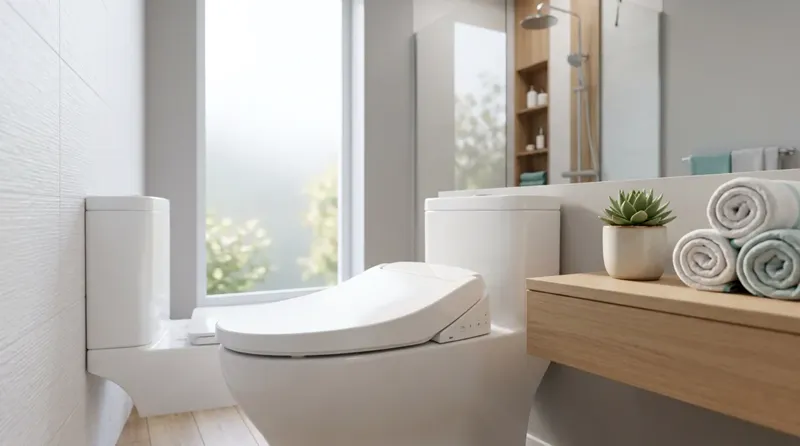
The best bidet toilet seat for most people is the Alpha Bidet JX2 ($369–$399): tankless endless warm water, a self-cleaning stainless wand, a wireless remote, and a 3-year warranty, sold in both round and elongated fits. The TOTO Washlet S5 is the premium step-up, the TOTO A2 and TUSHY Cloud cover tighter budgets, and the Bio Bidet Slim Zero handles bathrooms with no outlet for under $90. Everything below is the fit, heating, and electrical detail that decides which seat is right for your toilet.
A bidet toilet seat replaces your existing toilet seat and connects to the same water line that already feeds your toilet. No contractors, no plumber in most cases — just a T-valve, a wrench, and a nearby electrical outlet if you are buying an electric model. That simplicity is one reason the U.S. market has grown steadily: the install barrier is low, the hygiene upside is real, and the toilet paper savings add up over a few years.
The category splits into two broad types. Electric seats ($200 and up) give you heated water, a heated seat, a warm-air dryer, and a remote or side panel to control spray position and pressure. Non-electric seats (typically under $100) deliver a cold-water wash only, powered entirely by your home's water pressure. They are a legitimate starting point — but they are not what most buyers mean when they ask about bidet seats, and they are not what this guide covers in depth. Still weighing a seat against attachments, sprayers, or a full smart toilet? Our best bidets roundup ranks every type first.
What follows covers everything that actually matters when choosing an electric bidet seat: how water is heated, how to confirm your toilet shape and measure for fit, what the electrical requirements look like, which features are worth the price bump, and what you can safely skip. We have organized it so you can read straight through or jump to the section most relevant to your situation.
| # | Pick | Price | Rating | |
|---|---|---|---|---|
| 1 | Best overall Alpha Bidet JX2 The seat that wins on coverage per dollar — tankless warm water, stainless wand, remote, and a 3-year warranty under $400. |
$369–$399 | ★★★★★ 4.5 | Check price |
| 2 | Best value Brondell Swash 1400 Full luxury feature set — stainless nozzles, endless warm water, two-user remote — at a mid-tier price, with one minor cold-start quirk. |
$440–$550 | ★★★★☆ 4.0 | Check price |
| 3 | Best premium TOTO Washlet S5 TOTO's tankless workhorse — endless warm water and passive self-cleaning, no smart-toilet commitment required |
$668–$780 | ★★★★★ 4.5 | Check price |
| 4 | Best feature-loaded Bio Bidet BB-2000 Bliss Packs hybrid heating, stainless 3-in-1 nozzle, and vortex wash into the mid-$400s — more features per dollar than nearly anything in its class. |
$469–$549 | ★★★★★ 4.5 | Check price |
| 5 | Best entry-level electric TOTO Washlet A2 (SW3004) Genuine TOTO quality at the entry price — but the tank heater and no dryer show where corners were cut. |
$230–$280 | ★★★★☆ 3.5 | Check price |
| 6 | Best warm-water under $400 TUSHY Cloud Electric Bidet Seat Tankless warm water + dryer at $359 — the value ceiling for electric bidet seats |
$359 | ★★★★☆ 4.0 | Check price |
| 7 | Best non-electric seat Bio Bidet Slim Zero No outlet needed, dual nozzles, under $90 — the honest pick for plug-free bathrooms. |
$79–$89 | ★★★★☆ 3.5 | Check price |
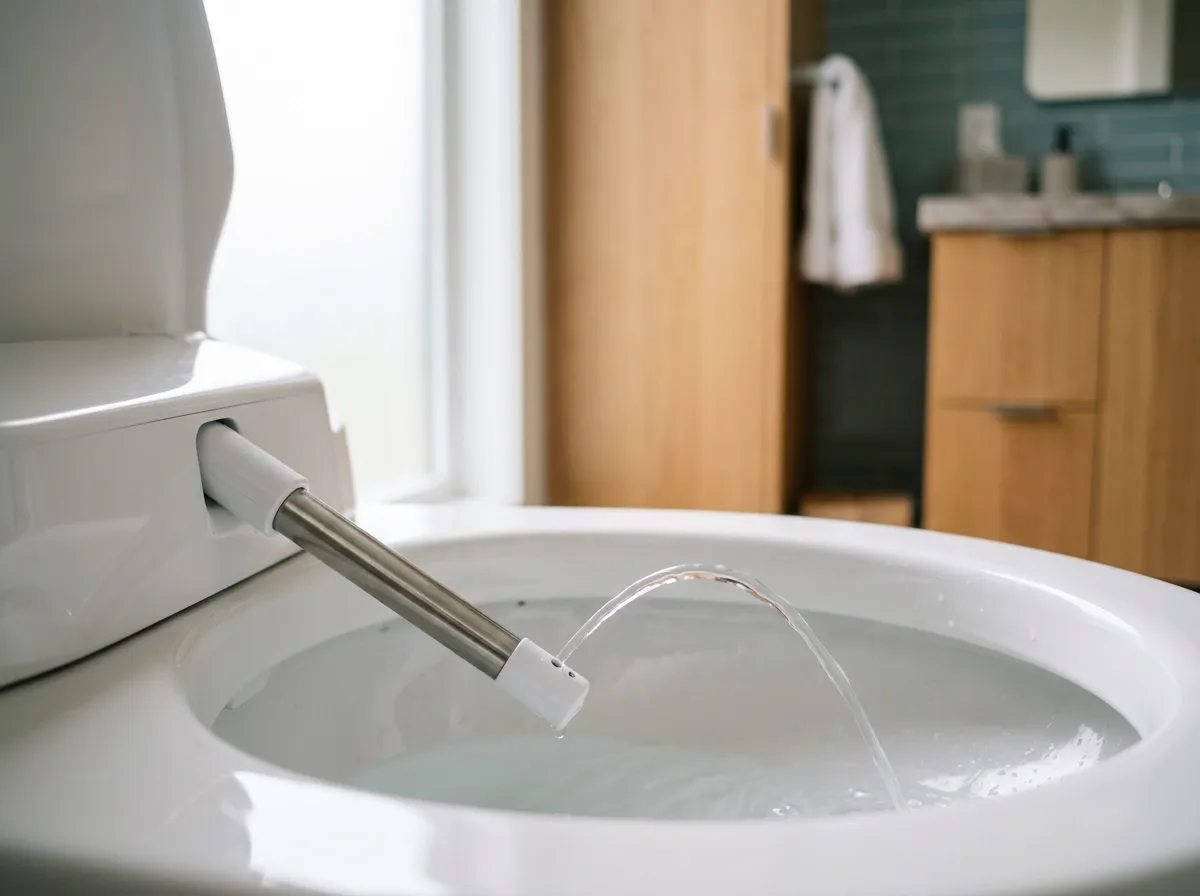
Alpha Bidet JX2
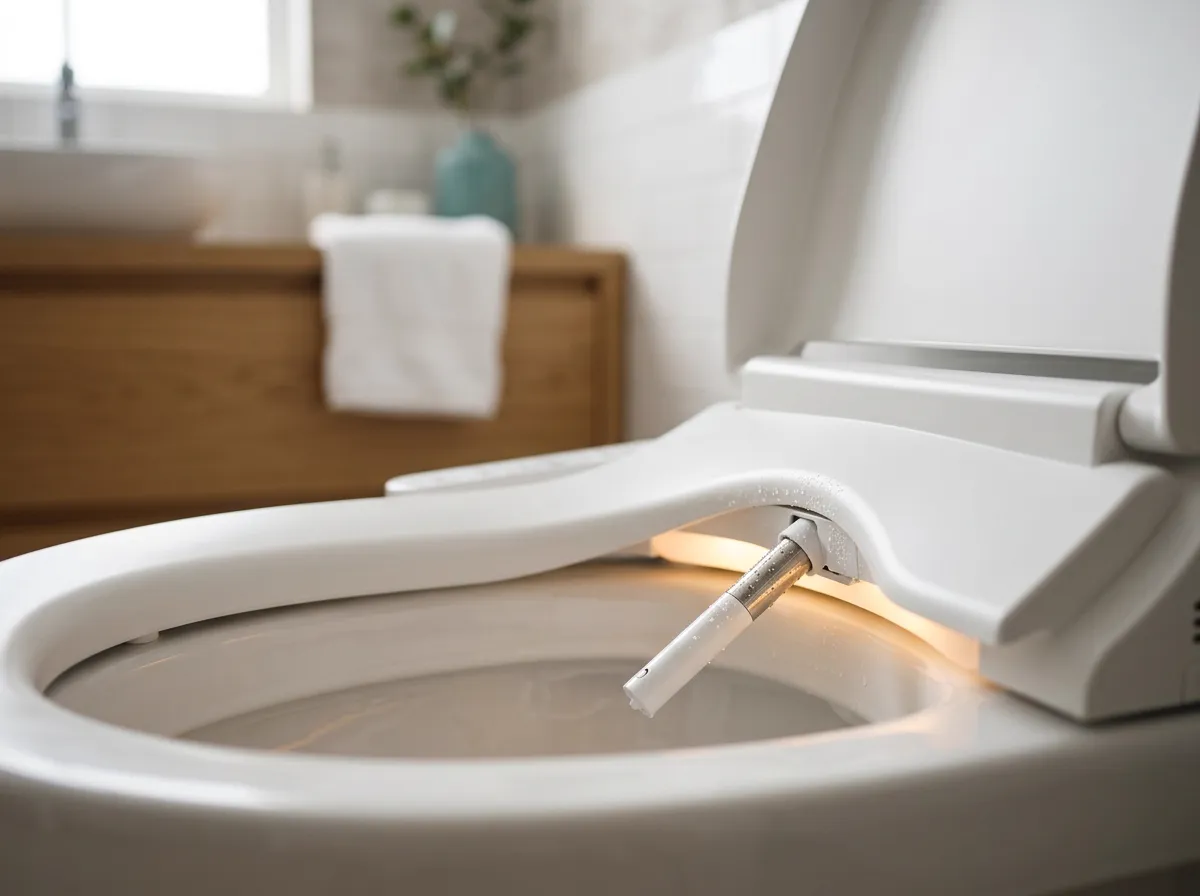
Key features: Tankless (coil/instant) water heater — endless warm water, no tank to run cold · Stainless steel self-cleaning nozzle with oscillating spray and removable tip · Warm air dryer adjustable up to 122°F · Bowl mist pre-wets bowl before use to reduce waste adhesion · Heated seat adjustable 89°F–100°F · Wireless remote control with wall-mount bracket · 3-year manufacturer warranty; weight capacity 300 lbs
Pros
- Tankless heating keeps the wash warm as long as you run it — unlike the tank-based Washlet A2 below, there's no 30-second warm-water cutoff
- Near-silent motor operation; one of the quieter seats in this price range
- Self-cleaning stainless wand with a removable tip — the easiest nozzle to maintain among our picks under $400
- Bowl mist feature meaningfully reduces bowl sticking and cleans faster
- Sittable lid rated to 300 lbs — practical for small bathrooms
- DIY installation in roughly 20 minutes; no app pairing required
- A fixture at the top of independent editorial seat rankings for years running
Cons
- Drying is the weak spot: budget a minute-plus under the warm-air dryer and keep a little paper within reach
- Wireless remote has no backlight, making nighttime adjustments awkward
- On round bowls the footprint runs compact, and a few round-toilet owners report splash reaching the rim
- The 4-foot cord dictates outlet placement — you effectively need a GFCI on the right-rear wall
- As with most tankless designs, the first instant of spray can arrive cool before the heating coil catches up
Who it's for: Buy the JX2 if you want one seat that covers every electric-seat fundamental — endless warm water, heated seat, adjustable stainless wand, remote, 3-year warranty — at the bottom of the mid-tier price band. Of the seven seats in this guide, it's the strongest all-rounder for a first serious bidet seat.
Brondell Swash 1400
Key features: Dual stainless-steel nozzles (posterior + feminine) with NozzleClean+ self-cleaning · Ceramic-core tankless heater — endless warm water, no tank refill wait · 7 adjustable nozzle positions + oscillation mode · 4-level heated seat and 4-level warm air dryer · Wireless programmable remote with 2 saved user presets · Cool blue LED nightlight; carbon block deodorizer (replaceable every 6 months) · 3-year tiered warranty; available in round and elongated, white and biscuit
Pros
- Dual stainless-steel nozzles are more durable and hygienic than plastic alternatives at this price
- Tankless heating delivers truly endless warm water — no running out mid-use
- Seven nozzle positions plus oscillation gives finer control than most seats under $600
- Two programmable user presets on the remote reduce re-adjusting every time
- Slow-close seat, quick-release hinge, and hidden cord pocket give it a premium feel
- Strong owner loyalty: multiple reviewers report buying a second unit for another bathroom
- 3-year tiered warranty provides better post-purchase coverage than many competitors
Cons
- Residual cold-water burst at the start of each wash — unheated water sits in the line between sessions; lasts roughly one second but is noticeable, especially on front wash
- Air dryer is slow and rarely achieves complete dryness; most users still reach for paper
- Remote uses CR2032 coin batteries — harder to source and more expensive than standard AAA
- Front feminine nozzle does not extend far enough forward for all body types
- No filter-change indicator for the deodorizer cartridge; requires a calendar reminder at six months
Who it's for: Buyers who want a full-featured luxury bidet seat with stainless-steel nozzles, endless warm water, and a programmable remote at a price well below the $700-plus tier.
TOTO Washlet S5
Key features: Instantaneous tankless water heating — continuous warm water, no cold cutoff · PREMIST auto-mists bowl before each use to reduce waste adhesion · EWATER+ electrolyzed water cleans wand after every use · Wireless remote with personalized memory for up to 4 users · Heated seat (82–97°F), warm air dryer (95–140°F, 3 settings), and automatic deodorizer · Oscillating and pulsating rear spray plus front cleanse; adjustable position and pressure · SoftClose lid, night light, energy-saver mode; 1,271W power draw (GFCI outlet required)
Pros
- Tankless heating delivers genuinely endless warm water — no depleting tank, no cold surprise mid-use
- EWATER+ and PREMIST together handle passive hygiene without extra effort from the user
- Four-user personalized memory on the wireless remote is a feature that used to require stepping up to the S7
- Fits both round and elongated bowls; installs in 15–30 minutes with no special plumbing
- 19% slimmer profile than prior generation — cleaner look on the back of the bowl
- TOTO's parts and service network is broader than most bidet-seat brands in North America
Cons
- No auto open/close lid — that feature requires stepping up to the S7A at roughly double the price
- EWATER+ sanitizes the wand only, not the bowl surface (S7 handles both)
- Only 3 dryer temperature settings versus 5 on the S7
- Pressure-based seat sensor produces a faint click when sitting down — some users notice it
- One-year warranty is short for a $700 seat; competing brands like Brondell offer three years at a lower price
- User memory function reportedly saves fewer custom settings than the feature suggests
Who it's for: Buyers who want TOTO's build quality and true tankless heating in a bidet seat without committing to a full smart-toilet system, and who do not need an auto-opening lid.
Bio Bidet BB-2000 Bliss
Key features: Hybrid heating system — instant warm water throughout wash, no tank to drain · 3-in-1 stainless steel nozzle: rear, feminine, and vortex wash modes · Oscillating nozzle with 5 position adjustments and pulse/massage modes · Wireless remote with LCD display plus side panel backup controls · Heated seat adjustable to 105°F; warm air dryer; carbon deodorizer · Occupancy sensor prevents accidental spraying; slow-close lid · 3-year full warranty; fits both elongated and round toilets
Pros
- Instant, unlimited warm water — no cold burst mid-wash like tank-heated seats
- Stainless steel nozzle is more durable and hygienic than plastic alternatives
- Vortex wash mode provides noticeably stronger pressure than most competitors
- Remote is well-sized and single-hand operable; side panel is a useful backup
- Fits both round and elongated toilets — broader compatibility than many seats in this class
- 3-year warranty is longer than most competitors at this price point
- Straightforward installation under 30 minutes for most users
Cons
- No automatic lid open/close — a feature found on pricier TOTO and Kohler models
- About 8 seconds between pressing the wash button and water appearing — some users find this slow
- Air dryer requires extended sitting time and can smell without using deodorizer simultaneously
- No user memory presets — each person adjusts settings manually every time
- Requires a nearby GFCI outlet; electrical work adds cost if none exists
- Remote icons are not labeled with text — occasional confusion for new users
Who it's for: Homeowners who want a full set of premium bidet features — hybrid heating, vortex wash, stainless nozzle, remote control — without stepping up to TOTO or Kohler pricing.
TOTO Washlet A2 (SW3004)
Key features: Tank (reservoir) water heater — 30–60 sec of warm water per cycle · Rear cleanse + front cleanse with oscillating spray option · Heated seat with 3 temperature settings · Side-arm control panel with illuminated buttons · Self-cleaning wand (rinses before and after each use) · Built-in deodorizer with air filter · SoftClose seat and lid; seat-presence sensor prevents accidental spray
Pros
- Genuine TOTO quality at the brand's lowest price point — materials and nozzle mechanics are noticeably better than most budget seats
- Oscillating spray provides broader coverage without requiring user adjustment
- Seat-presence sensor is a practical safety feature missing on many no-name competitors
- Built-in deodorizer handles odors passively with no user action needed
- SoftClose lid prevents slamming; quick-release seat makes cleaning straightforward
- Compact side-arm controls are simple enough for any household member to operate without a manual
Cons
- Tank heater gives only 30–60 seconds of warm water — a long wash cycle will run cold
- No warm air dryer, so toilet paper is still needed for drying
- No remote control — the side arm is less convenient for users with limited mobility
- Elongated only — no round bowl version available
- No user memory presets; settings reset after each use
- Appears to be end-of-line inventory; long-term parts availability is uncertain
Who it's for: Someone who wants a reliable electric bidet from a proven brand at a sub-$280 price and has an elongated toilet — and can live without an air dryer or remote.
TUSHY Cloud Electric Bidet Seat
Key features: Tankless (Ceramic Core) instant warm water — no tank, no cold-water lag · Heated seat with 4 temperature levels + Eco Mode · Warm-air dryer with 4 heat levels · UV sterilization of stainless steel nozzle after each use · Oscillating wash with 2 settings and 180° spray coverage · Side-panel sidearm controls (no remote) · Soft-close lid and seat; integrated night light; internal water filter
Pros
- Tankless heating delivers truly instant warm water at $359 — most competitors at this price still use a tank reservoir
- Heated seat and dryer included without stepping up to a premium tier
- Side-panel sidearm is clearly labeled with indicator lights — easier to learn than a remote
- UV auto-sterilization after each use is a genuine hygiene differentiator at this price
- Straightforward 10-minute DIY install; no plumber needed
- Widely cited as a best-value electric seat pick in 2026 editorial roundups
Cons
- Elongated only — round-toilet households cannot use this seat
- Dryer is noticeably slower than the TOTO C2 and lacks variable fan speed (the Cloud+ adds that for more money)
- No remote control — the sidearm works well but can be awkward for some users; remote requires upgrading to Cloud+
- No built-in deodorizer (Cloud+ has one)
- Requires a grounded GFCI outlet within 4 feet of the toilet; older bathrooms may need an electrician
- Air pump on higher pressure settings produces audible noise
Who it's for: Anyone with an elongated toilet who wants instant warm water, a heated seat, and a dryer without spending more than $400 — and prefers a hands-on side panel over a remote.
Bio Bidet Slim Zero
Key features: Non-electric: water pressure only, no outlet needed · Retractable dual nozzle — posterior and feminine wash · Side lever control with adjustable water pressure · Slow-close seat and lid (no-slam) · Battery-powered night light (2 AA batteries, 2 brightness levels) · Available in round and elongated fits · 1-year limited warranty; includes brass T-valve and all hardware
Pros
- No electricity required — installs anywhere with a water supply shutoff valve
- Low-profile slim design sits close to the bowl like a standard seat
- Dual nozzles cover both posterior and feminine wash in one unit
- Slow-close lid prevents slamming
- Battery night light is a useful touch at no electrical cost
- DIY install in roughly 15–30 minutes with included hardware
- Available in both round and elongated fits
Cons
- Seat mounting plate can shift laterally during use if not perfectly centered — a recurring complaint across Amazon and Home Depot reviews
- Lever lacks a firm click-stop at the off position, causing drips if not positioned exactly right
- Water pressure ramps abruptly from very low to very high with little middle range — some users find the upper range uncomfortable
- Nozzle spray angle sits nearly horizontal, which some users find poorly positioned compared to angled nozzles on pricier seats
- No heated seat, warm water, or dryer — all require electricity
- White only; no beige or biscuit option
Who it's for: Renters, RV owners, or anyone who wants a full toilet-seat bidet without running an outlet — willing to accept manual water-only operation at a sub-$90 price.
Watch: hands-on guidance
What matters before you buy
- Water heating type: tankless vs. reservoir vs. hybrid. This is the single biggest functional difference between seats in the same price range. A reservoir (tank) model keeps a small amount of water pre-heated, so the spray is warm immediately — but the warm supply runs out in roughly 30 seconds, and the tank needs about 5 minutes to reheat. Fine for one person, noticeable in a multi-person household. A tankless (on-demand) model heats water continuously while you wash, delivering warm water for as long as you run it — though the first half-second may feel slightly cool as the heater responds. Tankless seats are also thinner and slightly more energy-efficient at steady state. They cost more upfront. A hybrid design bridges the two: a smaller tank provides immediate warmth while a heating element sustains it. For most buyers, tankless is the better long-term investment if the budget allows; reservoir is a reasonable choice for a single-user bathroom where sessions are short.
- Heated seat and warm-air dryer. A heated seat is a feature you do not notice in summer and genuinely appreciate in winter. Most seats let you dial the temperature across a range of roughly 86–104°F, and many include an eco mode that cools the seat when the toilet has not been used for a while. The warm-air dryer is slower than using paper — a full dry typically takes 1–2 minutes — but it reduces how much paper you need and is worth having on any seat you plan to use as a daily driver. Dryer strength varies considerably by model; budget seats often have weaker airflow that requires finishing with a small piece of paper regardless.
- Nozzle type, self-cleaning, and spray modes. Nozzle material matters for durability and hygiene, not for the feel of the spray itself — water pressure, temperature, and aeration determine that. Stainless-steel nozzles resist scratching and are easier to wipe clean than plastic; they also speak to overall build quality. Every electric bidet seat includes an automatic self-rinse cycle that flushes the wand before and after use, which handles day-to-day sanitation. For deeper cleaning, a manual extend button lets you expose the nozzle and wipe it down. Beyond material, look for nozzle position adjustment (front-to-back, not just pressure), an oscillating or pulsing spray mode, and separate posterior and feminine nozzles if multiple people with different needs will use the seat.
- Fit: round vs. elongated, and measuring your toilet. Bidet seats are sold in round and elongated versions. They are not interchangeable. Measure from the center of the two bolt holes at the back of the bowl to the front lip: roughly 16.5 inches is round, roughly 18.5 inches is elongated. Also check that the bolt holes are between 5.5 and 7.5 inches apart, and that there is at least 1.5 inches between the bolt holes and the tank. If your toilet has an unusual French-curve design, a D-shaped bowl, a very compact footprint, or a high-arc lid, verify the brand's compatibility guide before ordering — not every seat fits every toilet.
- Controls: wireless remote vs. side panel. About 90% of electric bidet seats sold today use a wireless remote, which can be wall-mounted on either side of the toilet. Remotes keep the seat looking clean, work for left- or right-handed users, and are easier to read if mounted at eye level — an advantage for elderly users or anyone with limited mobility. The downside: remotes need batteries, can be misplaced, and add a learning curve. Side-panel controls are physically attached to the right side of the seat, so they can never be lost and never need batteries. They are simpler and cheaper, but they protrude 3–4 inches from the seat, look bulkier, and can be awkward for larger users or in tight bathrooms. If the wall to the right of your toilet is very close, measure before assuming a side-panel seat will fit comfortably.
- Electrical outlet requirements. Every electric bidet seat requires a 3-prong grounded, GFCI-protected outlet within about 4 feet of the toilet — the power cord is that length. The NEC requires GFCI protection on all bathroom receptacles, so any outlet installed to code already qualifies. Tank-style seats draw up to roughly 600W at peak; tankless seats draw up to roughly 1,400W. Neither requires a dedicated circuit if nothing else heavy is running on the same breaker, but a tankless seat on a busy shared 15-amp circuit may trip the breaker occasionally. If your bathroom has no outlet near the toilet — common in older construction — budget $150–$300 for an electrician to add one before you buy the seat. Using an extension cord is not recommended and voids the warranty on most seats.
- Price tiers and what you actually get. Under $200: Non-electric attachments or very basic electric seats with cold-water wash only or minimal heating. Worth considering as a first step, not as a long-term daily driver. $200–$400: Entry electric seats with heated seat, warm-air dryer, and basic reservoir heating. Models like the Alpha iX Pure and Tushy Cloud live here. Solid for a guest bathroom or a buyer on a budget. $400–$700: Mid-range where the experience improves meaningfully — tankless heating, stainless-steel nozzles, wireless remote, user memory presets. The TOTO Washlet C5 (around $410) is a consistent top recommendation in this band. $700–$1,500+: Premium features like auto open/close lid, EWATER+ bowl misting, advanced user-memory profiles, and sleeker form factors. The TOTO S7A sits at the top of this band. The jump from $400 to $1,400 is real money for features that are genuine conveniences — not requirements.
How we ranked these
This guide is built from manufacturer specification sheets, large-sample owner review data across major retail platforms, and editorial roundups from category-specialist review sites. We test these seats ourselves, and where we cite a measurement it comes from the manufacturer's published documentation. Where sources conflict, we weighted findings that were consistent across multiple independent reviewers and corroborated by owner reviews at scale. No brand paid for placement. Price ranges reflect current U.S. retail as of mid-2026 and will shift over time — always confirm current pricing before buying.
Frequently asked questions
What is the best bidet toilet seat?
The best bidet toilet seat overall is the Alpha Bidet JX2 ($369–$399): tankless heating gives it endless warm water, the stainless self-cleaning wand is easy to maintain, it comes in round and elongated fits, and the 3-year warranty beats most seats near its price. Step up to the TOTO Washlet S5 ($668–$780) for four-user memory and TOTO's parts network, or down to the TOTO Washlet A2 ($230–$280) if you can live without a dryer. For bathrooms with no outlet near the toilet, the non-electric Bio Bidet Slim Zero (under $90) is the honest pick. Before choosing any of them, confirm two things: your bowl shape (round vs elongated, measured bolt-holes-to-front-lip) and a GFCI outlet within about 4 feet.
What is the best bidet seat for a modern bathroom?
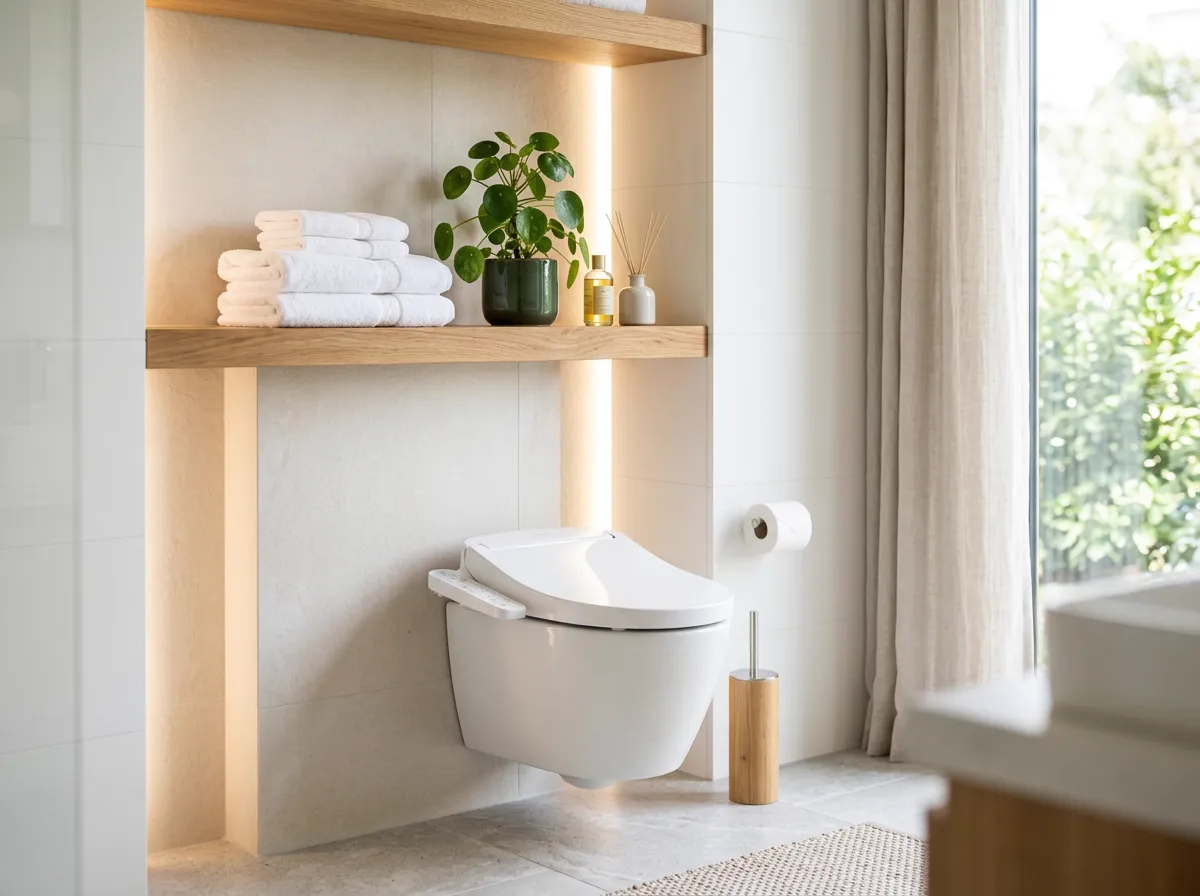
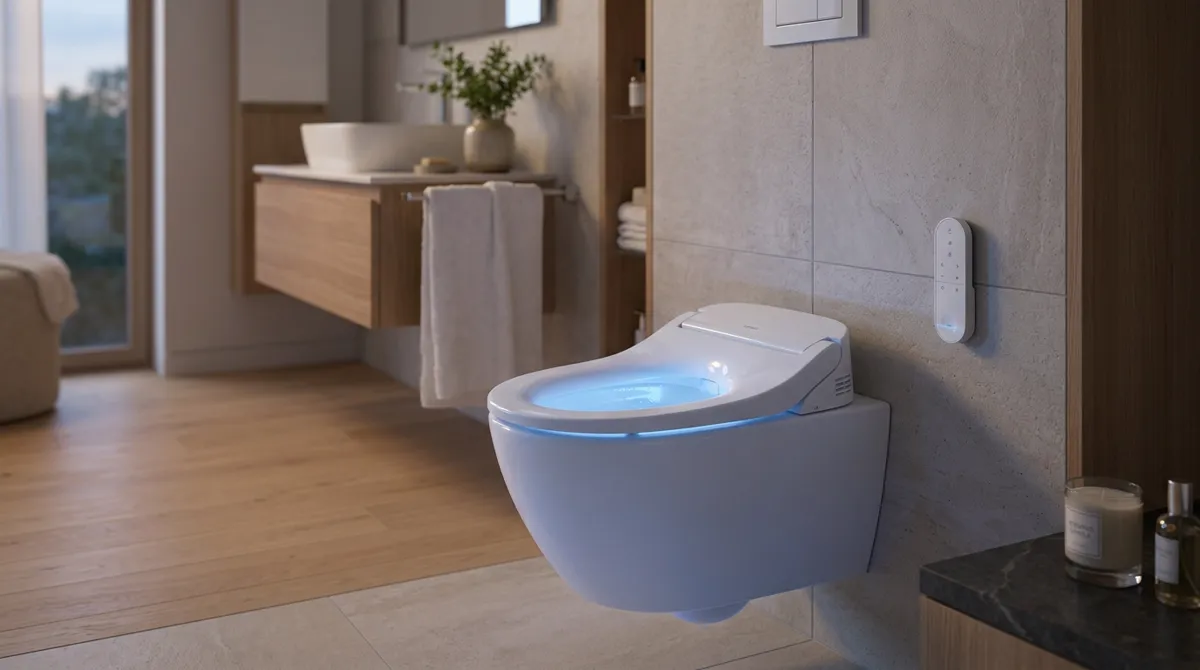
For a modern bathroom the TOTO Washlet S5 is the one to beat — it has the slimmest profile of any seat we researched, hides the controls on a wireless remote instead of a bulky side panel, and its skirted design conceals the hardware so it reads as part of the toilet rather than an add-on. If you want that look for less, the Alpha Bidet JX2 ($369–$399) is close on profile and also remote-controlled. The Bio Bidet Slim Zero is the pick if you want the cleanest silhouette possible and can live without electricity, heated water, and a dryer. What makes a seat look modern is mostly three things: a low-profile body rather than a tall hump at the back, a remote instead of a side control arm, and tankless heating, which lets the unit stay slim because there is no reservoir to house.
Which bidet seat looks best on a contemporary or minimalist toilet?
Look for a tankless seat with a wireless remote and a skirted body. Reservoir models need room for a hot-water tank, which forces a taller, bulkier rear housing that stands out against a sleek one-piece toilet. Tankless seats like the TOTO Washlet S5, Alpha Bidet JX2, and Brondell Swash 1400 heat water on demand and can therefore sit much lower. Side-panel controls are the other giveaway — a control arm juts out from the right side of the seat, while a remote mounts on the wall or tucks away entirely. Finally, check the color: seats ship in white and biscuit, and a white seat against a biscuit toilet is more noticeable than any design detail.
Do I need an electrician to install a bidet seat?
Not necessarily — but you do need a GFCI-protected, 3-prong grounded outlet within about 4 feet of the toilet. The National Electrical Code requires GFCI protection on all bathroom receptacles. If your bathroom already has one behind or beside the toilet, most people install the seat themselves in under an hour using only a wrench and a screwdriver. If there is no outlet nearby — which is common in older bathrooms — you will need an electrician to add one. Budget $150–$300 for that work. Non-electric bidet seats sidestep this entirely since they run on water pressure alone, though they lack heated water, a warm-air dryer, and a heated seat.
Round or elongated — how do I know which to buy?
Measure from the center of the two bolt holes at the back of the toilet to the very front lip of the bowl. About 16.5 inches means round; about 18.5 inches means elongated. You can also check your toilet's model number — the manufacturer specs will confirm the shape. Never put a round seat on an elongated bowl or vice versa: the seat will hang over the front edge or leave a gap at the back, and the nozzle will not line up correctly. When in doubt, most bidet brands sell the same model in both shapes at the same price.
How hard is installation?
For a bathroom that already has a GFCI outlet nearby, installation is straightforward DIY: turn off the water supply, remove the existing toilet seat, attach the bidet seat's mounting plate, connect the T-valve to the fill line, and plug in the unit. The whole job typically takes 20–45 minutes and requires no special tools beyond a wrench. The main gotcha is outlet placement — the power cord is about 4 feet long and exits from the right rear of the seat, so the outlet needs to be on the right-side wall or directly behind the toilet. An extension cord is not recommended and some manufacturers void the warranty if one is used.
Tankless vs. reservoir warm water — which is better?
Both work, but they feel different. A reservoir (tank) model stores a small amount of pre-heated water, so the spray is warm the instant it starts — but warm water lasts only about 30 seconds before cooling down, and the tank takes roughly 5 minutes to reheat fully. That is fine for light use but noticeable in households where two or more people use the seat back-to-back. A tankless (on-demand) model heats water continuously with a heating coil, so the warm spray lasts as long as you need it — though the first half-second may feel slightly cool before the heater catches up. Tankless models are thinner, generally more energy-efficient at steady state, and cost more upfront. For most buyers upgrading to their first electric seat, either works well; households with heavier use or users who do longer wash cycles will notice the tankless advantage more.
Are bidet seats actually worth the money?
For most people, yes — particularly if you factor in toilet paper costs over several years. A family of four spending $80–$100 a year on toilet paper can cut that by 50–75% after switching, which means a $400 electric seat pays for itself in roughly 5–6 years on paper savings alone, and sooner if you count comfort and hygiene benefits. Water-based cleaning is gentler on sensitive skin and more thorough than dry wiping — which is why bidet-style washing is standard in post-surgical and wound-care settings. Non-electric bidet attachments (which go under your existing seat) recoup their cost in months, not years, though they lack heated water and a dryer. The honest caveat: if you are ambivalent about the idea, start with a $40–$80 non-electric attachment before committing to a $300–$1,400 electric seat.
How do I clean the nozzle?
Every electric bidet seat includes an auto-rinse cycle that flushes the nozzle before and after each use — most run automatically when you activate a wash and again when you stop. For deeper cleaning, there is usually a manual nozzle-extend button that lets you expose the wand and wipe it with a damp cloth or a mild vinegar solution. Stainless-steel nozzles are easier to wipe clean and do not scratch or stain the way plastic does, which is worth noting if you are comparing models at a similar price. Avoid bleach or abrasive cleaners on any nozzle material. Most manufacturers recommend a manual cleaning once a week or every couple of weeks depending on use. The self-rinse alone is adequate for day-to-day sanitation.
Will the water pressure be strong enough?
For nearly all homes on municipal water, yes. Electric bidet seats pull directly from your home's cold-water supply, and the seat's internal pump or flow regulator adjusts the spray to the pressure range the nozzle is designed for. Most seats let you adjust pressure across 5–10 settings. The only common issue is in homes with unusually low water pressure (below about 15 psi), where the spray may feel weak at lower settings — but that is rare and easy to check by observing your existing toilet's fill rate. Non-electric bidet attachments rely entirely on supply pressure with no internal pump, so they can feel harsh in high-pressure homes; a pressure-adjusting valve on the T-connector solves this.
What extras are actually useful vs. just marketing?
Worth paying for: a warm-air dryer (reduces paper use significantly, though most dryers take 1–2 minutes to fully dry), a heated seat (genuinely appreciated in cold climates or cold seasons), nozzle position adjustment (lets different users dial in placement without fussing each time), and a wireless remote with user memory presets if more than one person uses the toilet regularly. Nice but not essential: a night-light (useful in kids' bathrooms or if you use the toilet at night without turning on the light), a deodorizer (activated-carbon filter that pulls air through the seat — measurably reduces odor, though results vary), and auto-open/close lid (found on premium seats like the TOTO S7A; convenient but not a reason to double the budget on its own). Skip: seats marketed on 'ionic silver' or 'UV' nozzle sterilization as a primary selling point — the self-rinse plus periodic manual cleaning covers hygiene adequately without those features.
Is a "bidet toilet lid" the same as a bidet toilet seat?
Yes. "Bidet toilet lid," "toilet lid bidet," and "toilet seat and bidet" all describe the same product: a bidet seat that replaces your existing toilet lid and seat as one integrated unit and mounts to the same bolt holes your old seat used. The lid, seat, and wash nozzle come as one piece. So if you're shopping for a bidet toilet lid, everything on this page applies — it's the same category under a different name.
Related guides & comparisons
- Best bidet seats under $300
- Best bidet seats for round toilets
- Best luxury & smart bidet seats
- TOTO Washlet vs Brondell Swash
- Alpha JX2 vs TOTO Washlet S5
- Bidet seat vs attachment
- How to install a bidet seat
- How to use a bidet
- Best bidet attachments
- Best smart toilets
- Best bidets (every type)
- Bidet toilets: every way to get one
Sources
- Alpha Bidet — Alpha JX2 Bidet Seat (specifications: tankless heater, stainless nozzle, 89–100°F seat, dryer to 122°F, 3-year warranty, 4 ft 3-prong cord)
- Alpha Bidet — Fitment Guide: Is My Toilet Compatible? (18.5 in elongated, 16.5 in round, measured from the bolts)
- Brondell — Swash 1400 Luxury Bidet Toilet Seat (dual stainless nozzles, ceramic-core on-demand heating, seven nozzle positions, 2-user remote, 3-year tiered warranty)
- TOTO — WASHLET S5 Elongated Bidet Seat, SW3446 (tankless profile 19% slimmer, PREMIST, EWATER+, memory for four users)
- TOTO — WASHLET S5 Round Bidet Seat, SW3445 (confirms the S5 is sold for round bowls as well as elongated)
- TOTO — WASHLET S5 specification sheet, SW3446 (instantaneous water heater, 1271 W, heated seat 82–97°F, dryer 95–140°F in three settings, one-year limited warranty)
- TOTO — WASHLET A2 specification sheet, SW3004 (elongated only, arm control panel, oscillating spray, SoftClose seat, no warm-air dryer listed, GFCI outlet of 120 V 10 amps, 4 ft 3-prong cord)
- Bio Bidet by Bemis — BB-2000 Bidet Toilet Seat, BLISS Collection (stainless nozzle with rear, front and vortex wash, wireless remote, seat sensor, full 3-year warranty, round or elongated)
- Bio Bidet by Bemis — Slim Zero Bidet Seat (dual nozzle, adjustable water pressure, side controls, battery-powered night light, round and elongated, 1-year limited warranty)
- TUSHY — Cloud by TUSHY heated bidet seat (Ceramic Core instant warm water, UV light with retractable stainless nozzle, 4-temperature dryer, elongated only, grounded 3-prong GFCI outlet required)