
Bidet seat vs bidet attachment
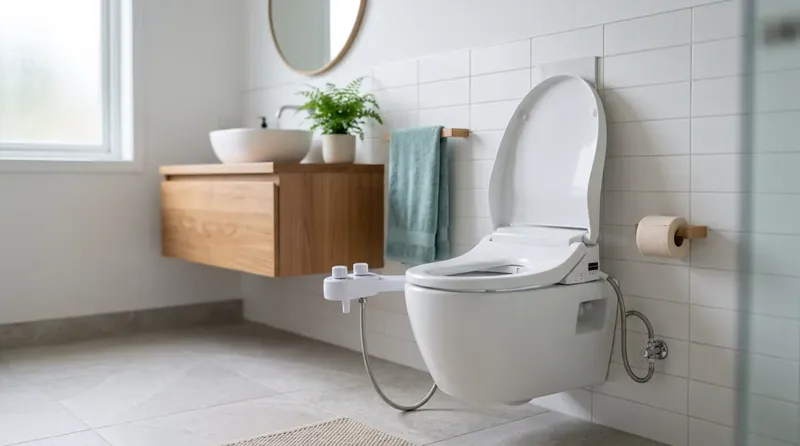
If you've decided a bidet makes sense for your bathroom, the next question is almost always the same: do you buy a full electric seat or just a simple attachment? On the surface they do the same thing — direct a water stream where toilet paper used to do the work. But the two products are built on completely different assumptions about what you're willing to spend, what your bathroom can support, and how much comfort matters to you day to day.
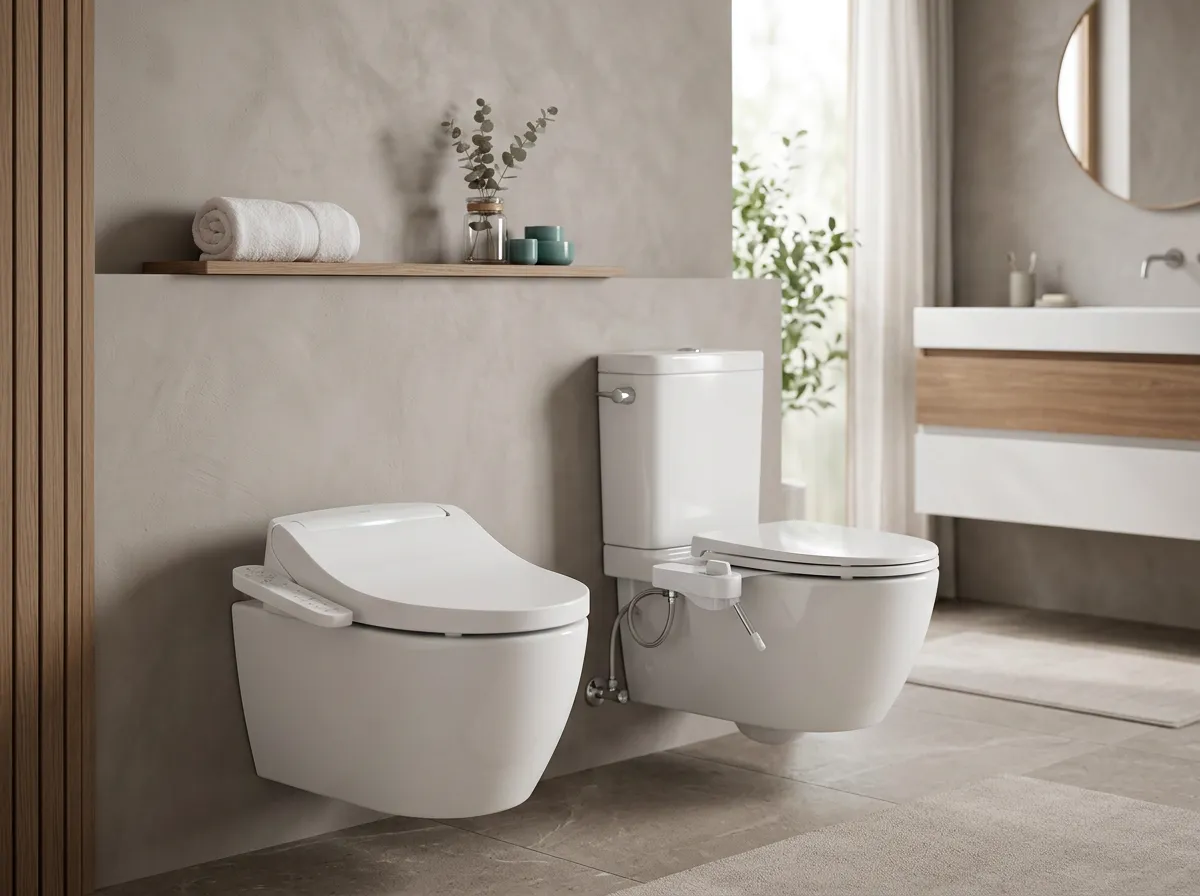
An electric bidet seat replaces your existing toilet seat entirely. It connects to your water supply and to a wall outlet, and it adds features like warm water, a heated seat, a warm-air dryer, and adjustable pressure — all controlled by a remote or side panel. Prices start around $200, most mainstream models cost $300 to $600, and TOTO's WASHLET S7A lists at about $2,000. A non-electric bidet attachment, by contrast, slides under your existing seat and usually taps only the toilet's cold water supply. No outlet needed, no seat swap. Most models sell for about $30 to $150. The cleaning function is real, but seat heat and drying are off the table, and warm water is limited to models that tee into the hot line under a nearby sink.
Neither option is objectively better for every household. A non-electric attachment washes as effectively as an electric seat does, and many owners stick with one long-term without complaints. An electric seat delivers a noticeably more comfortable experience, especially in colder months, but it asks more of your budget and your bathroom's wiring. The comparison below breaks down the real differences so you can decide which trade-offs you can live with.
| Electric bidet seat | Non-electric bidet attachment | |
|---|---|---|
| Typical price range | $200–$2,000 (most $300–$600) | $30–$150 |
| Water temperature | Warm water via internal heater — adjustable | Supply-line temperature, no heating element; a few models tee into the sink's hot line for warm water |
| Seat experience | Replaces existing seat; often heated, slow-close lid | Mounts under existing seat; slight profile gap may be noticeable |
| Air dryer | Yes — warm-air dryer included on most models | No — pat dry with a small amount of toilet paper |
| Installation | About 10–30 min by makers' estimates; requires a nearby grounded GFCI outlet | 10–15 min; T-valve to cold water supply, no outlet needed |
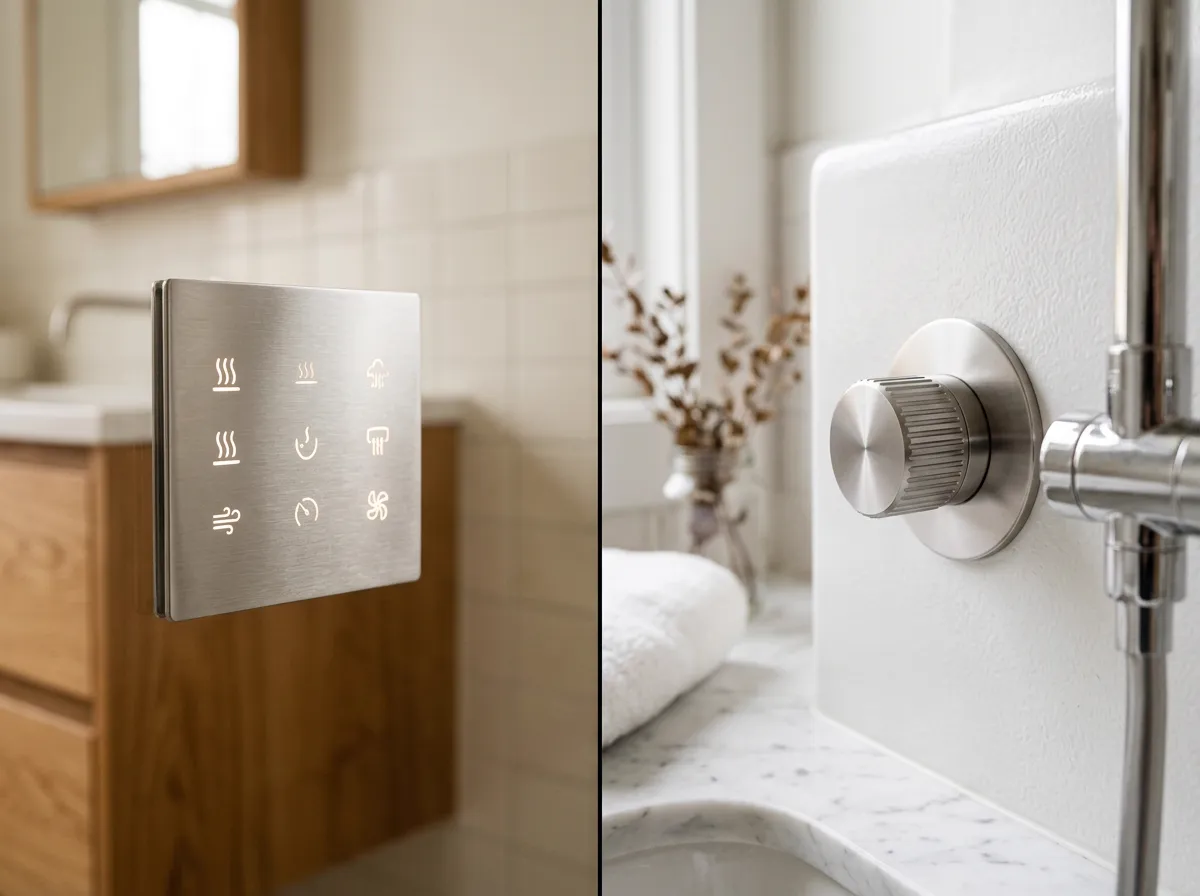
| Controls | Wireless remote or side panel; adjustable pressure, nozzle, temp | Manual knob or lever; pressure takes practice to dial in |
| Cleaning effectiveness | Effective; warm water + oscillating nozzle aids comfort | Effective; direct pipe pressure is strong — can be harsh at first |
| Electricity use | Plugged in around the clock; about $20–$65 a year in BidetKing's worked example, depending on use and power-saving settings | None — fully passive |
When to choose each
Choose an electric bidet seat if you want warm water and a heated seat as part of your daily routine — especially in a cold climate or an unheated bathroom. A warm-air dryer can cut the paper you use for drying, but expect to keep buying some: a bidet reduces toilet paper use rather than ending it. Buy the seat for comfort, not to save money, because toilet-paper savings won't repay several hundred dollars on any timeline worth planning around; our toilet paper savings guide shows how to run your own numbers. Most installations are straightforward as long as a GFCI outlet is already near the toilet.
Choose a non-electric bidet attachment if your budget is tight, you're renting, or your bathroom has no outlet near the toilet. The cleaning function is the same — you're giving up comfort features, not hygiene. Cold water feels jarring at first for most people, but many owners report they adjust within a week or two. It's also a smart low-commitment entry point: spend $40, confirm you'll actually use a bidet regularly, then upgrade later if you want more.
Our verdict
Frequently asked questions
Do I need an electrician to install an electric bidet seat?
Usually not, as long as you already have a grounded GFCI outlet within reach of the toilet — the power cord on most seats is about 4 feet long, according to BidetKing. If no outlet exists near your toilet, you'll need an electrician to add one before the seat can be installed.
Will a bidet attachment make my toilet seat feel uneven?
It can. Attachments add a thin layer of hardware under the existing seat, which can create a slight tilt depending on your toilet's rim shape. Most owners don't find it a problem in practice, but it's worth checking that your seat has enough clearance before buying.
Can I get warm water with a non-electric attachment?
A few non-electric attachments include a hot-water T-valve that connects to the supply line under a nearby sink. Warm water does reach the nozzle, but it cools as it travels through the hose, so the temperature is inconsistent. Electric seats with internal heaters deliver steady warm water reliably.
How much electricity does an electric bidet seat use?
Not much. BidetKing's 2014 worked example puts an electric seat at about $65 a year for a family of four with the seat and water set on high around the clock and power saving off, and closer to $20 a year with fewer users and power saving on. Your figure scales with your local electricity rate. A non-electric attachment uses no electricity at all.
Are non-electric attachments as hygienic as electric seats?
The cleaning function is comparable. Both direct a focused water stream, and neither is inherently more sanitary than the other. The main difference is comfort and convenience, not cleanliness.
Which type is easier to move when I change apartments?
The non-electric attachment wins here. It installs and uninstalls in under 15 minutes with no tools beyond a wrench, and it requires no outlet. An electric seat is also removable but heavier and depends on having an outlet at the new location.