
Handheld Sprayer vs Bidet Seat
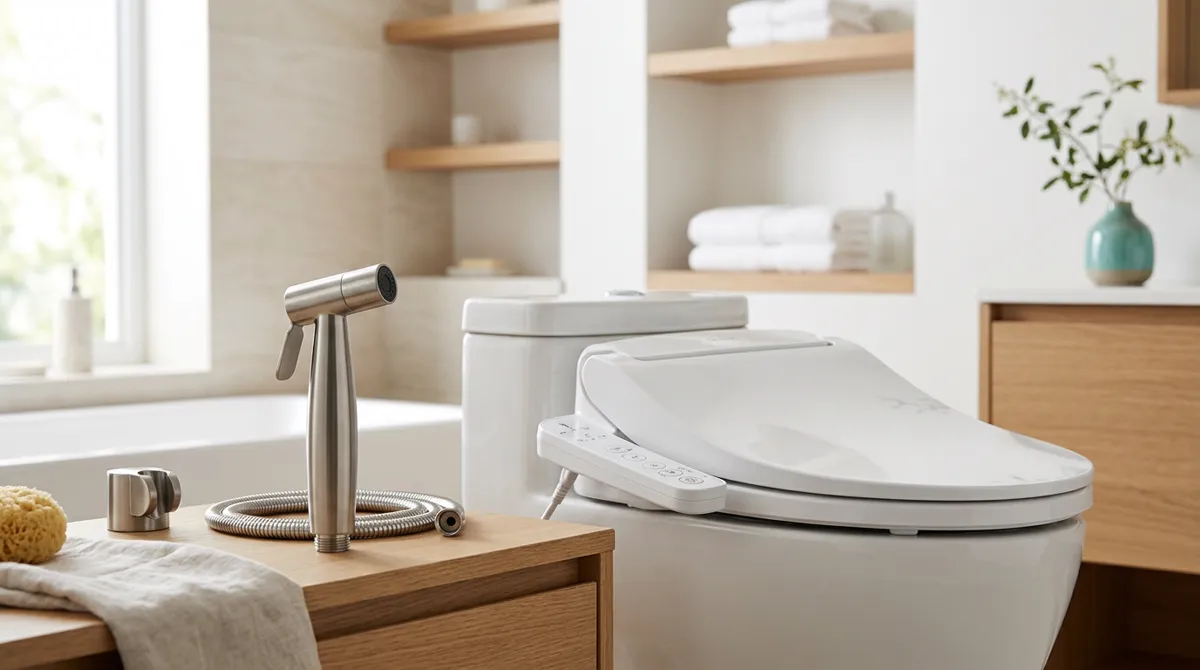
Both of these clean you with water instead of paper, but they go about it in opposite ways. A handheld bidet sprayer is a manual spray gun on a hose that you aim yourself, mounted next to the toilet for around $30 to $60. An electric bidet seat replaces your toilet seat entirely, connects to a wall outlet, and does the washing for you with a built-in nozzle, warm water, a heated seat, and usually a warm-air dryer — typically for $200 to $1,000. One is about control and versatility; the other is about comfort and being hands-free.
The right pick comes down to what you value and what your bathroom can support. If you want pinpoint control, extra uses like rinsing cloth diapers, and the lowest possible price, the handheld is the obvious choice. If you want warm water, a heated seat, and a wash that happens at the touch of a button — and you have an outlet near the toilet — the electric seat is in a different comfort league. The table below lays out the real trade-offs.
| Handheld Bidet Sprayer | Electric Bidet Seat | |
|---|---|---|
| Price | $30–$60 for a complete kit | $200–$1,000 depending on features |
| Cleaning control | You aim it by hand — pinpoint control over angle and spot | Fixed nozzle with adjustable position and pressure presets |
| Warm water | Cold by default; warm only if you tap a hot line | Steady warm water from an internal heater, fully adjustable |
| Hands-free vs manual | Fully manual — you hold and trigger the sprayer | Hands-free — nozzle washes and retracts on its own |
| Extra uses | Cloth diapers, peri-care, pets, cleaning the toilet and tub | Personal washing only — it's built into the seat |
| Install | ~10 min; T-valve to supply line, no outlet needed | 20–40 min; needs a grounded GFCI outlet near the toilet |
When to choose each
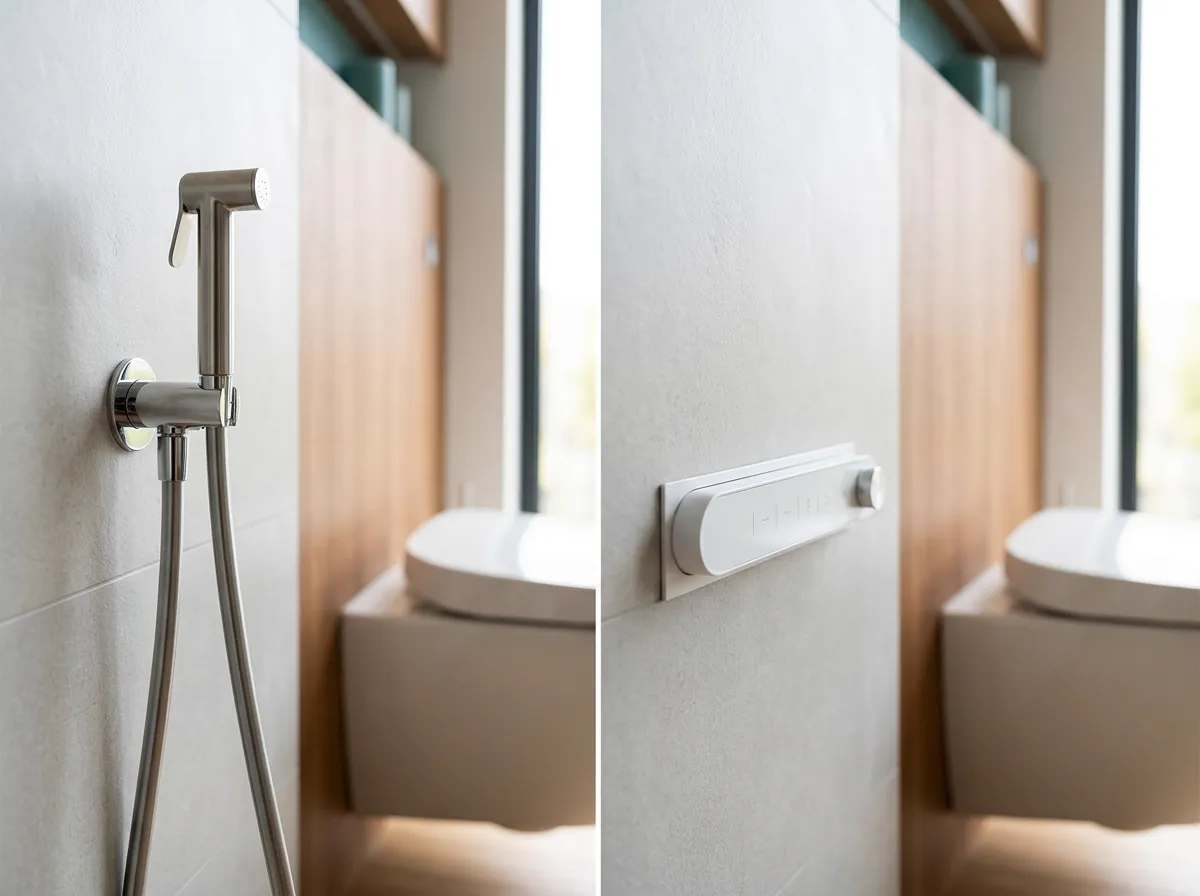
Choose a handheld sprayer if you want maximum control and versatility for the least money. It's the better tool any time you need to aim the stream precisely — peri-care after childbirth, washing someone with limited mobility, or cleaning sensitive skin — and it's the only one of the two that doubles as a cloth-diaper sprayer, a pet rinser, and a toilet-and-tub cleaner. It's also the right call for renters and for bathrooms with no outlet near the toilet, since it needs no electricity and installs in about ten minutes with no permanent changes.
Read the full review →Choose an electric bidet seat if comfort and convenience are what you're after and you have an outlet near the toilet. Warm water on demand, a heated seat, and a hands-free wash that finishes with a warm-air dryer are features owners rarely give up once they have them — especially in cold climates. It costs several times more and asks for some wiring, but for daily personal use by able-bodied adults, it's a noticeably nicer everyday experience than holding a sprayer.
Read the full review →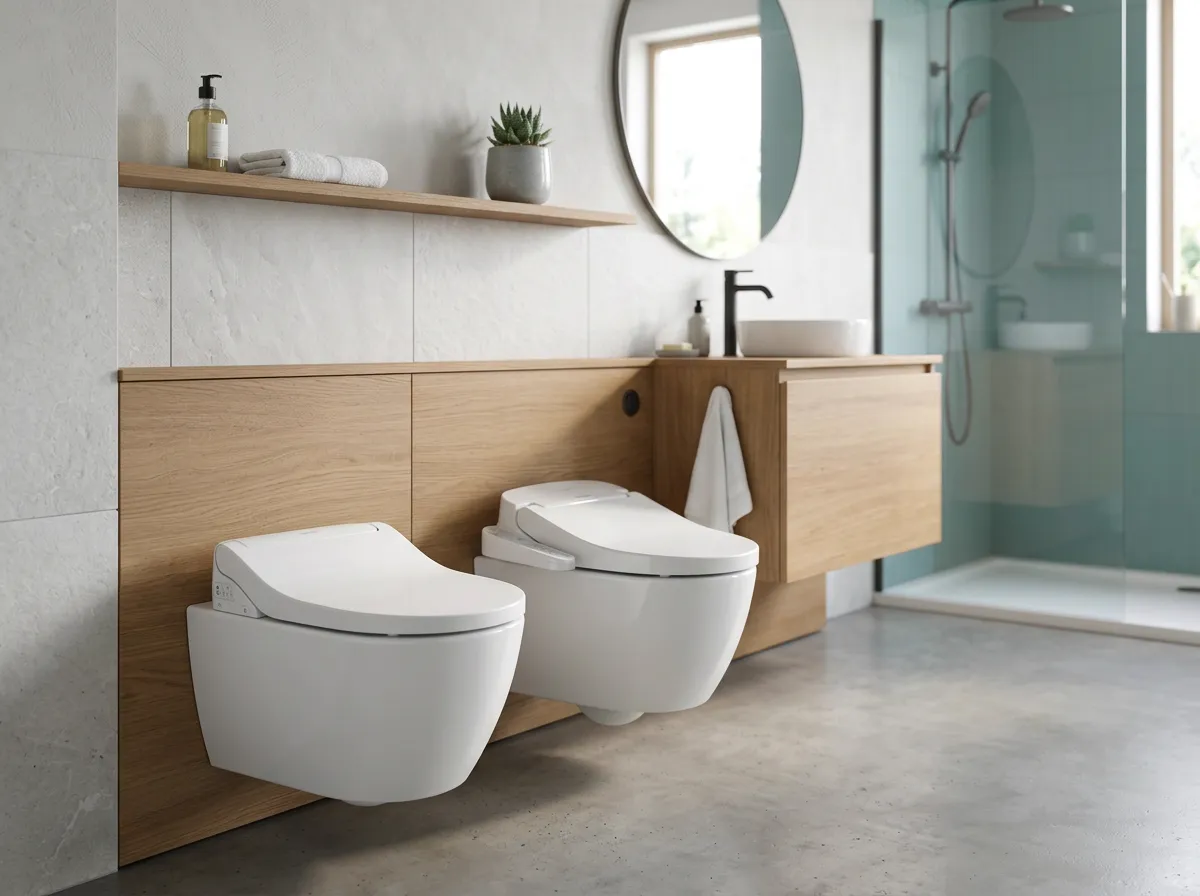
Our verdict
Frequently asked questions
Does a handheld clean as well as an electric seat?
For getting clean, yes — both use a focused water stream, and neither is inherently more hygienic. The differences are comfort and effort: the seat gives you steady warm water and washes hands-free, while the handheld gives you cold water (by default) and requires you to aim it. You're paying the seat's premium for comfort and convenience, not for a deeper clean.
Can I use a handheld sprayer for things an electric seat can't?
That's the handheld's biggest edge. Because it's on a flexible hose and you control it, people use it to rinse cloth diapers, for gentle postpartum peri-care, to wash pets or muddy paws, and to clean the toilet bowl, tank exterior, and even the tub. An electric seat only washes the person sitting on it — it can't do any of those extra jobs.
I want warm water but can't afford an electric seat — what are my options?
Look for a handheld kit with a warm-water or dual-temperature T-valve that taps a nearby sink's hot line. It gives you a warm wash with no electricity and no outlet, for far less than an electric seat. The catches are that a hot line has to be within hose reach and the temperature can drift a little, but it's a real middle-ground option between a cold handheld and a heated seat.