
Bidet Toilets: Every Way to Get a Toilet With a Bidet
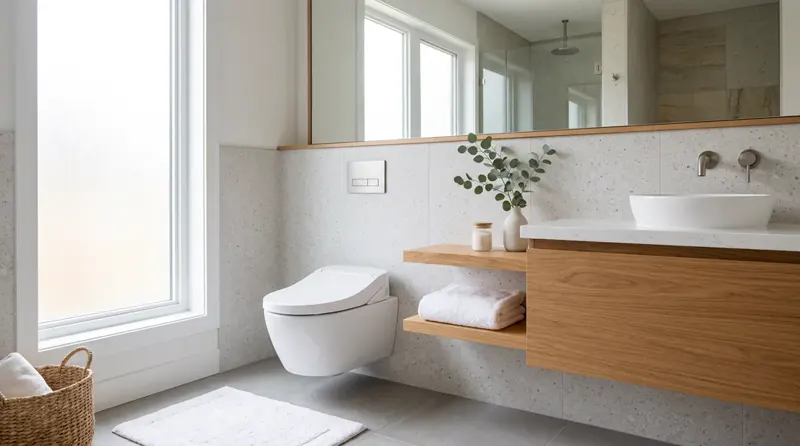
A "bidet toilet" is simply a toilet with a bidet built in — it sprays a stream of water to clean you after you go. In the U.S. there are three ways to get one, from cheapest to most premium: (1) clip a non-electric bidet attachment under your existing seat (about $30–$150), (2) swap your seat for a bidet toilet seat (about $80 for a basic non-electric seat, up to about $2,000 at list price for a high-end electric one), or (3) replace the whole fixture with an integrated bidet toilet (about $550 to over $10,000 for electric models). For most homes an electric bidet toilet seat is the sweet spot: you keep the toilet you already own and still get warm water, a heated seat and, on many models, a warm-air dryer.
Worth clearing up a common mix-up: in Europe a "bidet" is often a separate porcelain basin next to the toilet. In North America, when people search for a "bidet toilet" or a "toilet with a bidet," they almost always mean one of the three all-in-one options above — the water sprayer is part of the toilet itself, not a second fixture. This guide covers all three so you can match the right one to your bathroom and budget.
Below we break down how each approach works, what it costs, how hard it is to install, and exactly who each one is right for — then point you to our researched product picks for whichever path fits you.
See our top integrated bidet toilets
See our picks →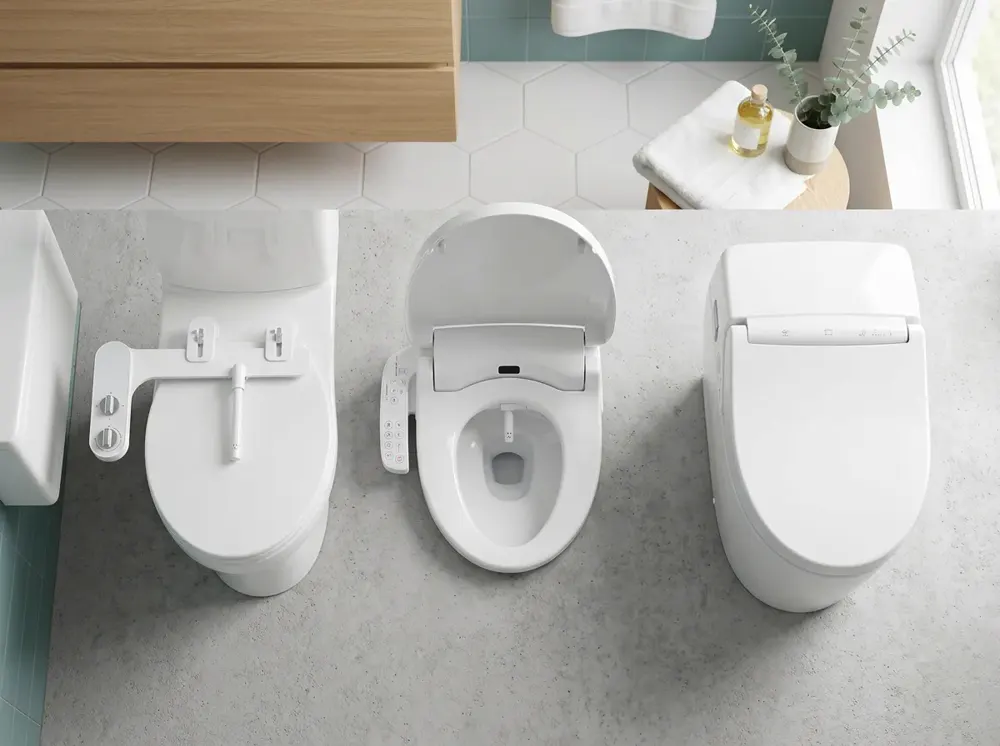
What counts as a "bidet toilet"?
Any toilet that can spray water to clean you counts. That includes a plain toilet with a bidet attachment tucked under the seat, a toilet wearing a bidet seat, and a purpose-built integrated unit where the bidet electronics are baked into the toilet from the factory. The differences that matter to you as a buyer are cost, whether you need warm water and a dryer, and how much installation the option requires. It is not an all-or-nothing decision — you can start with an inexpensive attachment today and move up to a full seat or unit later.
Option 1: Bidet attachment — the cheapest way in
A bidet attachment is a thin plate that mounts between your existing toilet and its seat and adds a retractable spray nozzle, controlled by a small dial on the side. It taps your toilet's existing water line with a T-valve, so there's no electricity and no plumber; TUSHY, for example, quotes 10 minutes or less for its Classic 3.0. Basic models are cold-water only and start around $30. Warm-water versions borrow hot water from the supply under a nearby sink rather than heating it, and cost about $60 to $150. Attachments are the fastest, cheapest way to find out whether bidet washing is for you, and they are ideal for renters since they leave no permanent changes. The trade-offs: no heated seat, no warm-air dryer, and a colder spray in winter on cold-water models. See our researched picks in the best bidet attachments guide.
Option 2: Bidet toilet seat — the best choice for most homes
A bidet toilet seat replaces your existing seat entirely — the lid, seat, and wash nozzle come as one unit that bolts to the same holes. This is the category most people mean by "bidet toilet," and it is where the value lives. Electric seats plug in to heat the water and the seat, and add, depending on the model, a warm-air dryer, a self-cleaning nozzle and a remote. They start around $200 and most mainstream models cost about $300 to $600; at the top, TOTO's WASHLET S7A carries a list price of about $2,000, before the showroom discounts TOTO advertises. Non-electric seats cost about $80 to $200 and run on your home's water pressure alone. They have no heated seat or dryer, and the wash is at tap temperature unless the model connects to the hot line under your sink, as TUSHY's Oasis does. You keep the toilet you already own and install the seat yourself (makers quote roughly 10 to 30 minutes), though electric models need a grounded, GFCI-protected outlet within reach of the cord (see the installation section below). Our bidet cost guide breaks the prices down by type. Start with our best bidet toilet seats roundup, or the under-$300 and round-toilet guides if those fit your situation.
Option 3: Integrated bidet toilet — one seamless unit
An integrated bidet toilet builds the bidet into the toilet at the factory, so there is no seam between seat and bowl and no visible add-on. This is the premium tier — think TOTO NEOREST, Woodbridge, Kohler Veil, and the Japanese-style smart toilets. Budget electric models such as HOROW's T16 cover warm water and a heated seat. The top-end units add much more: TOTO lists an automatic open/close lid, bowl pre-misting, electrolyzed-water cleaning of the wand and bowl, a warm-air dryer, a night light and memory settings for four users on its NEOREST LS. High-end bidet seats such as TOTO's WASHLET S7A list those same features, so you don't need a new toilet to get them. The catch is cost and installation. Prices climb steeply: budget electric models start in the mid-$500s, the big bidet brands' units cost roughly $1,600 to $2,700, and TOTO's NEOREST LS lists above $10,000; our cost guide has examples at each level. They need a nearby GFCI outlet, and because you're replacing the whole fixture most people have a pro set them; TUSHY says its Eau requires professional installation. A few non-electric one-piece models skip the outlet: HOROW's T30 costs about $500 but washes with cold water only and has no heated seat. See our best smart toilets roundup for the researched integrated picks.
Which should you choose?
If you just want to try a bidet or you rent, start with an attachment — it's cheap and reversible. If you own your home and want the full experience (warm water, heated seat, dryer) without replacing your toilet, a bidet toilet seat is the right call for the vast majority of buyers, and it's what we recommend most often. Only step up to an integrated unit if you're already remodeling the bathroom, building new, replacing an old toilet anyway, or you specifically want the seamless look and top-tier features and have the budget for professional installation. Put simply: attachment to test the water, seat for the best value, integrated unit for a remodel or a premium upgrade. Don't choose a tier on toilet-paper savings: paper spending varies too much between households for a universal figure, and our toilet paper savings breakdown shows how to run the payback from your own spend, which tends to favor a cheap attachment and leave a premium seat as a comfort buy.
Installation and electrical basics
Attachments and seats tap the cold-water supply line that already feeds your toilet, using an included T-valve, so they need no new plumbing; warm-water non-electric models also run a hose to the hot-water line under a nearby sink. Integrated units take the supply line like any other toilet. The one requirement that trips people up is electricity: anything that heats its own water, or has a heated seat or a dryer, needs a grounded, GFCI-protected outlet on the wall behind the toilet. Converting an outlet that is already there is the cheap case and running new wire costs more; our bidet cost guide has the electrician and plumber figures. Non-electric attachments and seats skip this entirely since they run on water pressure alone, including warm-water models that draw from the sink. Integrated units add one more wrinkle. Because you're swapping the whole fixture, you'll also reset the wax ring and confirm your rough-in: the distance from the finished wall, not the baseboard, to the center of the drain. If a toilet is still in place, HOROW's measuring guide says to pop off the bolt caps at its base and measure to the center of a closet bolt, since the bolts sit on the centerline of the drain flange. HOROW's T16 and Brondell's Coit are both built for a 12-inch rough-in, which HOROW calls the standard, but measure yours before ordering; our rough-in calculator walks you through it. That extra work is why most buyers hire a plumber for this tier, and an electric smart toilet may need the outlet work on top.
3 ways to get a bidet toilet — compared
| Approach | Upfront cost | Install | Warm water, dryer, heated seat? | Best for |
|---|---|---|---|---|
| Bidet attachment (mounts under your seat) | $30–$150 (non-electric) | About 10 min by TUSHY's estimate; no outlet | Cold water on basic models; warm-water models tap the sink's hot line. No dryer or heated seat | Trying a bidet cheaply; renters |
| Bidet toilet seat (replaces your seat) | About $80–$2,000 at list price (non-electric $80–$200; electric from about $200) | About 10–30 min by makers' estimates; electric needs a GFCI outlet | Warm water and heated seat on electric models; dryer on many | Most people — keep your existing toilet |
| Integrated bidet toilet (one-piece unit) | About $550–$10,000+ for electric models | Plumber usually; electric models need a nearby outlet | Warm water and heated seat on electric models; pricier units add auto lid, dryer and bowl self-cleaning | Remodels, new builds, premium buyers |
Tips & warnings
- Not sure you'll like a bidet? Try a non-electric attachment first (from about $30). If you like it, move up to a seat or unit; you'll have lost almost nothing.
- Before buying any seat or attachment, confirm your bowl shape: round (~16.5 in from seat bolts to front lip) or elongated (~18.5 in). They are not interchangeable.
- Check for a GFCI outlet near the toilet before you buy anything electric. If there isn't one, the electrician's bill belongs in your budget from the start.
- "Smart toilet" and "Japanese toilet" usually mean the integrated tier, but "Washlet" is TOTO's brand name for its bidet seats, not a whole toilet. Our Japanese toilets guide sorts out the names.
Frequently asked questions
What is a bidet toilet?
A bidet toilet is any toilet that sprays water to clean you after using it. That can be a regular toilet with a bidet attachment under the seat, a toilet fitted with a bidet seat, or a one-piece integrated unit with the bidet built in from the factory. All three do the same core job — the difference is cost, features (warm water, heated seat, dryer), and how much installation is involved.
Is a bidet toilet the same as a smart toilet?
Not quite. A smart toilet is one type of bidet toilet — specifically the premium integrated kind with electronic features like an auto-open lid, tankless warm water, and self-cleaning. But a plain toilet with an inexpensive bidet attachment or a bidet seat is also a "bidet toilet" without being a smart toilet. So every smart toilet is a bidet toilet, but not every bidet toilet is a smart toilet.
How much does a toilet with a bidet cost?
It depends entirely on the approach. A non-electric bidet attachment runs about $30 to $150. Bidet toilet seats span about $80 to $2,000 at list price. Non-electric ones cost about $80 to $200; the electric kind, which heats the water and the seat, starts near $200, and most sit between $300 and $600. Electric integrated bidet toilets start around $550 and pass $10,000 at list price at the top of TOTO's range; a few non-electric one-piece models, such as HOROW's T30 at about $500, cost a little less but wash with cold water only. Most people get the full warm-water experience for $300 to $600 with an electric bidet seat on their existing toilet.
Do you need an electrician for a bidet toilet?
Only for electric models. Seats and toilets that heat their own water, or have a heated seat or a dryer, need a grounded, GFCI-protected outlet within reach, and bidet seat cords usually run only about 4 feet. If you don't have one, expect roughly $130 to $300 if an electrician is changing an existing outlet to GFCI, and more if new wire has to be run through the wall. Non-electric attachments and seats need no electricity at all, including warm-water models that draw from the sink's hot line.
Do bidet toilets need special plumbing?
Attachments and bidet seats do not — they connect to your toilet's existing cold-water line with an included T-valve, no new plumbing. Models with warm water but no plug borrow it from the sink's hot supply through a second hose. Integrated units do involve more work because you're replacing the entire fixture, so you'll reset the wax ring and match the rough-in distance; most people hire a plumber for that tier.
Are bidet toilets worth it?
For most people, yes, though mainly for comfort and cleanliness rather than savings. Cleveland Clinic names a cleaner clean as the main benefit of a bidet, notes that washing avoids the chafing and tiny cuts wiping can cause, and, based on limited research, calls bidets generally safe and effective as a hygiene aid. You'll also buy less toilet paper, but how much less depends on your household: work from your own spend and assume about half if you still dry with paper. That makes a cheap attachment easy to justify on cost; buy a premium electric seat for comfort, not payback. If you're unsure, start with an inexpensive attachment and move up to a seat or an integrated unit if you like it.
Sources
- LUXE Bidet — NEO 110 non-electric attachment (price)
- TUSHY — Classic 3.0 attachment (price, install time)
- LUXE Bidet — NEO 320 non-electric warm-water attachment (price, sink hot-water connection)
- TUSHY — Spa 3.0 warm-water attachment (price, sink access required)
- Bio Bidet — BB-300 non-electric bidet seat (listed price)
- Brondell — Swash EcoSeat S101 non-electric bidet seat (price)
- TUSHY — Oasis warm-water non-electric bidet seat (price, sink-line warm water)
- Bio Bidet — BB-500 Series electric bidet seat (sale and regular price)
- Brondell — Swash SE400 electric bidet seat (price)
- TUSHY — Cloud heated bidet seat (price, install time)
- Bio Bidet — BB-2000 Bliss electric bidet seat (price, setup time)
- TOTO — WASHLET S7A bidet seat (MSRP list price, showroom discount off list, auto lid and EWATER+ features)
- HOROW — T16 smart toilet with heated bidet (price, features, 12-inch rough-in)
- HOROW — T30 non-electric bidet toilet (price, cold-water wash, no outlet needed)
- TUSHY — Eau smart toilet (price, professional installation required)
- Brondell — Coit integrated smart bidet toilet (price, 12-inch rough-in)
- Bio Bidet — Discovery DLX smart bidet toilet (price)
- TOTO — NEOREST LS dual flush toilet (MSRP list price, features)
- BidetKing — Bidet toilet seat electrical outlet FAQ
- Bob Vila — How much does a GFCI outlet cost to install? (existing-outlet swap vs. new outlet)
- HOROW — Toilet rough-in measurement guide (finished wall to flange or closet-bolt center)
- TOTO USA — WASHLET bidet seats (WASHLET is TOTO's bidet seat; WASHLET+ pairs it with a TOTO toilet)
- Cleveland Clinic — Why using a bidet is sanitary and safe