
How to clean a bidet nozzle
The bidet nozzle is the part doing the actual work, and it lives in the least glamorous location in your home — so 'how do I keep it clean' is the most reasonable question in bidet ownership. The reassuring context first: nozzles are designed for this environment. They retract behind a guard or gate when not in use, they sit above and behind the spray zone rather than in it, and the water passing through them is the same clean supply-line water that feeds your sink — not toilet water. Health systems that have looked at bidets, including Cleveland Clinic, treat them as a safe and hygienic aid when reasonably maintained.
'Reasonably maintained' is a small job: a monthly wipe of the nozzle, plus a periodic check of the inlet filter or strainer. What you can put on mineral scale depends on your model, and the makers disagree. LUXE suggests vinegar for the nozzles on its NEO attachments, but TOTO, Brondell and Bio Bidet all rule out acid cleaners on their electric seats, and TOTO's warranty excludes damage from them. Scale is worth staying ahead of either way: Brondell's president told Consumer Reports that nozzle heads can clog with sediment or buildup, especially in very hard water.
This guide covers the routine wipe-down for electric seats and non-electric attachments, how to deal with mineral scale without breaking your manual's rules, what the 'self-cleaning nozzle' feature genuinely does and doesn't do, and the cleaning products that damage nozzles — a list topped by the bleach spray most people reach for first.
Nozzle beyond saving? See the seats with stainless self-cleaning nozzles.
See our picks →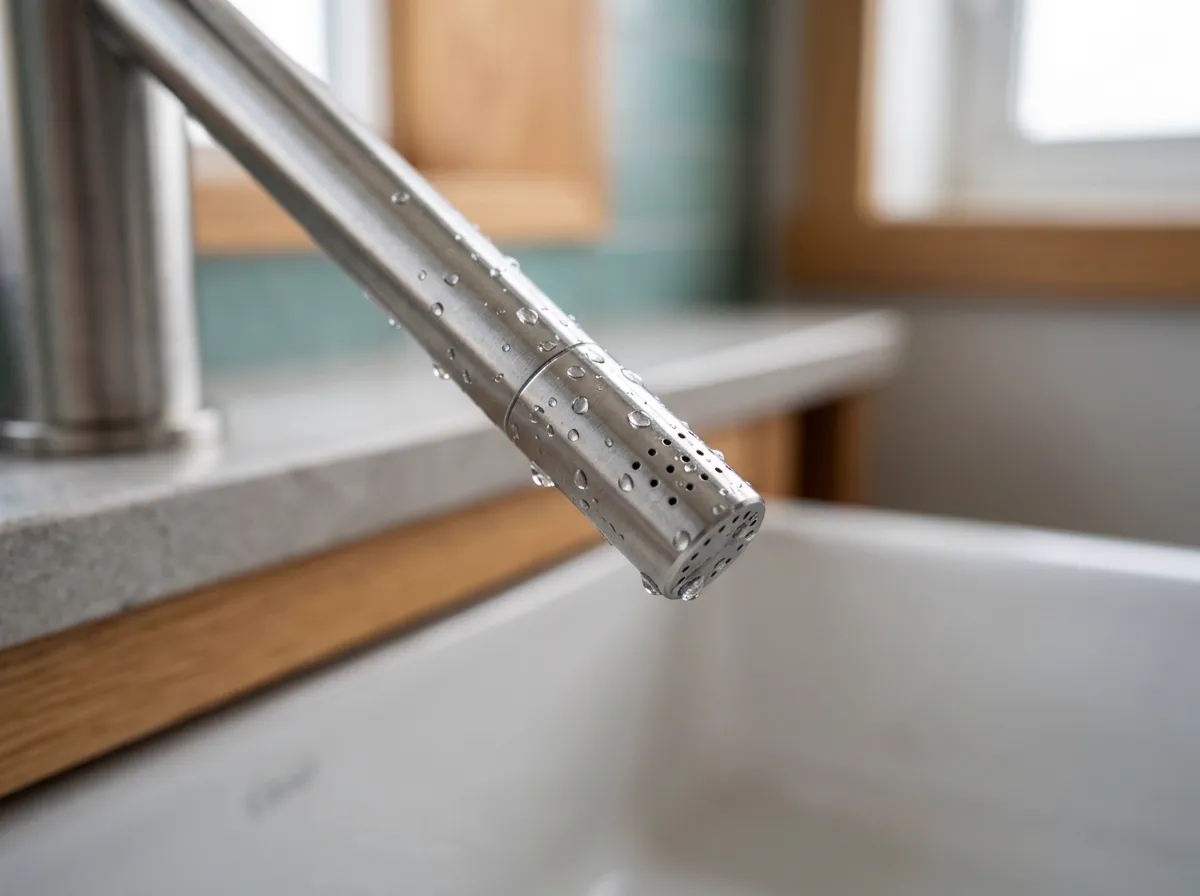
What self-cleaning nozzles actually do (and don't)
Nearly every electric seat advertises a self-cleaning nozzle, and it's worth knowing what you bought: the unit rinses the nozzle's exterior with fresh water before and after each use, and a 'nozzle clean' button extends it and runs a longer rinse. That's genuinely useful — it flushes residue before it dries — but it's a rinse, not a scrub. It doesn't remove mineral scale, and it can't clean what a wipe can. Premium seats add more: TOTO's EWATER+ mists the nozzle with electrolyzed water for extra sanitizing, and stainless-steel nozzles (Alpha, Brondell's better models) resist buildup better than plastic. Treat self-cleaning as the daily automation and your monthly wipe as the actual cleaning.
The monthly wipe-down: electric seats
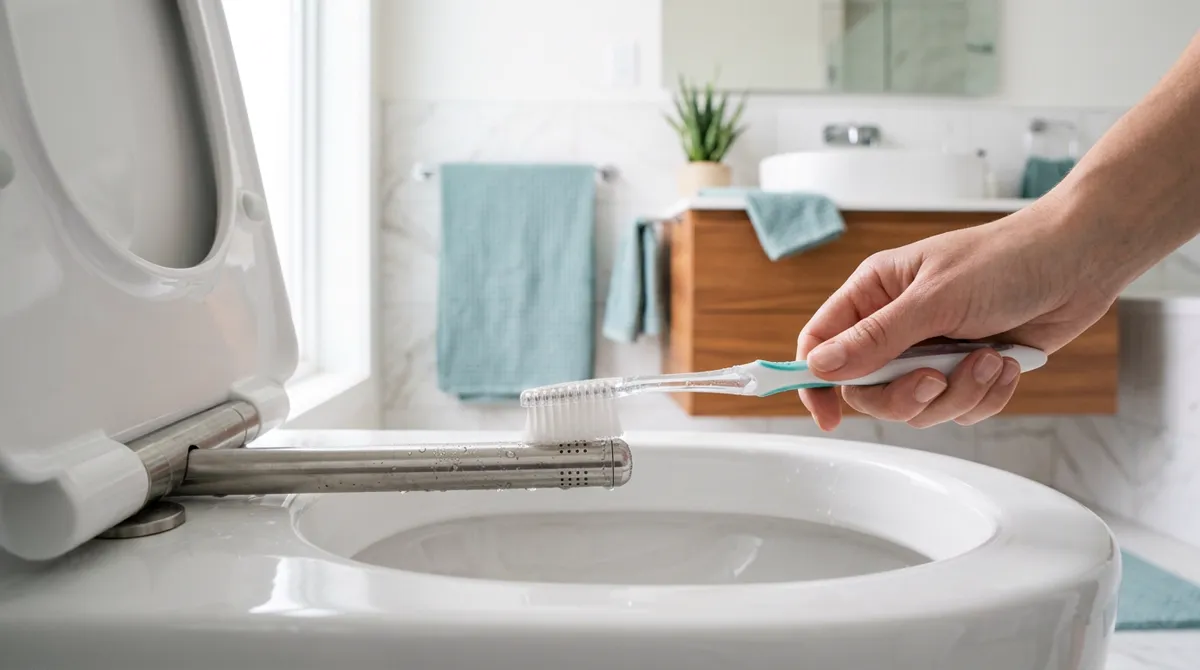
Extend the nozzle with the nozzle-clean button, or with the button combination your manual lists (Alpha's JX2, for example, extends it when you hold REAR/STOP and POWER SAVING together for five seconds). Then follow your manual on what touches it. TOTO's S5 and S7A manuals say to wipe the wand with a soft, wet cloth, and Consumer Reports' advice for nozzles is the same: a soft, wet cloth, no detergents. Brondell's SE400 manual and Bio Bidet's BB-2000 manual say to clean the nozzle gently with a soft cloth or toothbrush. Get the spray holes and the seam where the nozzle retracts, then retract it with the stop button or let the seat retract it. If your seat has no way to extend the nozzle, check the manual rather than pulling it out by hand: TOTO warns that pulling, pushing or pressing the wand with excessive force can damage it.
The monthly wipe-down: attachments and non-electric seats
Attachments make it easier. LUXE's NEO models have a Nozzle Clean mode on the dial that runs fresh water over the nozzles, and LUXE suggests running it periodically; on models with a guard gate, the gate can be opened by hand to reach the nozzles. Consumer Reports suggests checking whether your attachment's nozzle pulls out gently, so you can clean the nozzle hole with an old toothbrush. Wipe the nozzle with a soft, damp cloth, run water through for a few seconds, and give both nozzles the same treatment on a dual-nozzle model. Since attachments sit under the seat in the splash zone, also wipe the guard plate and the underside of the unit, where grime builds up more than on the retracting nozzle.
Descaling: what your model's manual allows
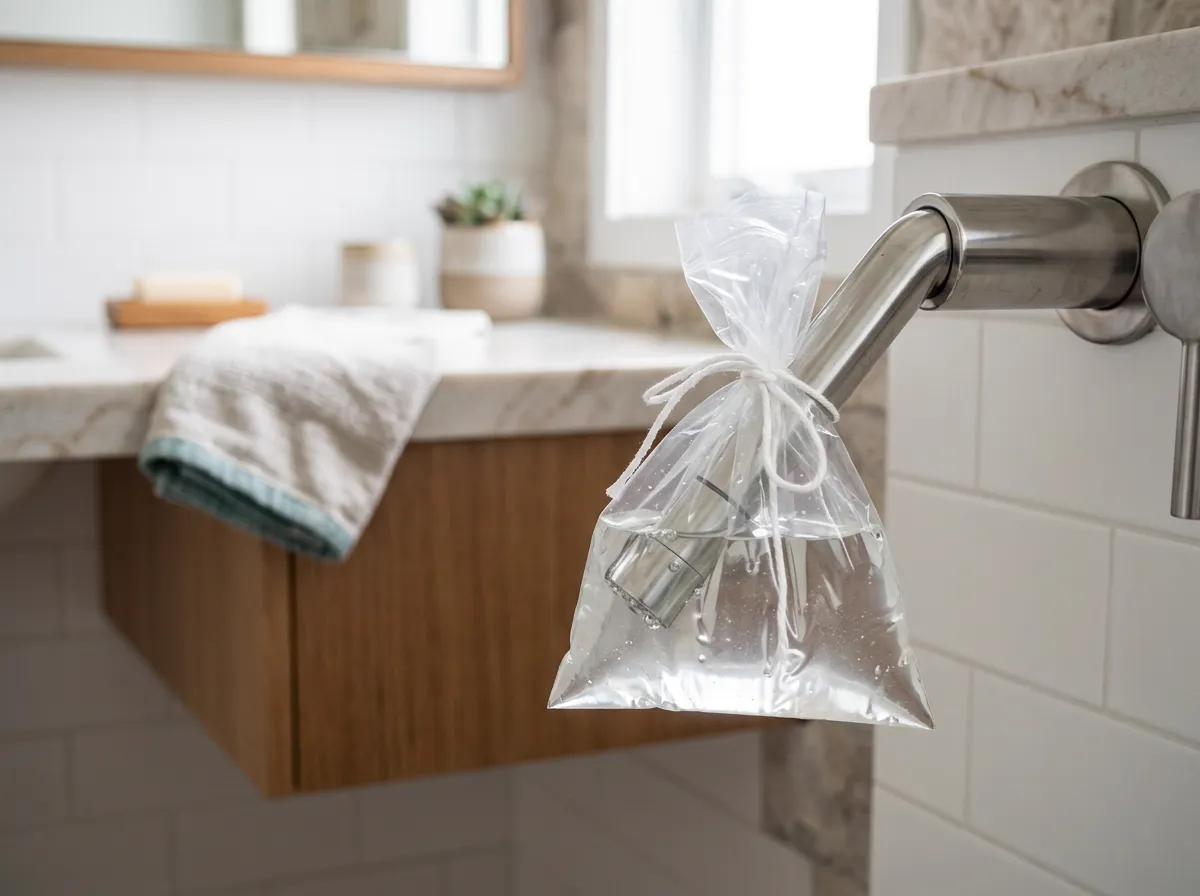
If the spray pattern has gone ragged, crooked or weak, scale or sediment may be narrowing the holes. What you can use on it depends on the model. For a LUXE attachment, LUXE's own advice is to occasionally wrap the nozzles in paper towels soaked in vinegar and gently move them up and down, which it says loosens them and removes hard-water deposits. For an electric seat, don't reach for vinegar: TOTO's WASHLET manuals call for a soft, wet cloth on the wand and a diluted pH-neutral kitchen detergent on the plastic parts, and TOTO's warranty excludes damage from acid cleaners; Brondell's SE400 manual rules out acidic chemicals, and Bio Bidet's BB-2000 manual says only neutral detergents are permitted. On those seats, run the nozzle-clean cycle, clean the nozzle the way the manual describes, and clean the inlet filter or strainer. Brondell's troubleshooting for low spray pressure starts with the same steps: clean the mesh filter, check the supply valve is fully open, and clean the nozzles. Consumer Reports adds that in hard water an inline bidet filter between the hose and the seat can help; it puts the cost at $20 to $30 and says to replace it every six months. If the spray is still weak after that, contact the manufacturer. For any other brand, read the manual before any acid touches the unit.
The products that ruin nozzles: bleach, abrasives, and 'strong' cleaners
The instinct to hit the nozzle with bleach is a bad one. Brondell's president told Consumer Reports that excessive amounts of chlorine-based products can weaken the rubber O-rings and gaskets until they fail and leak inside the unit, and Consumer Reports' advice is to stay away from bleach and abrasive powders. The manuals go further. TOTO's WASHLET manuals rule out toilet cleaner, household cleaner, benzene, paint thinner, powdered cleanser and nylon scrubbing brushes on the plastic parts, and TOTO's warranty excludes damage from bleach, alkali, acid, powder and other abrasive cleaners. Brondell's SE400 manual rules out thinner, benzene, acidic chemicals and chloride or hydrochloric acid detergents and says not to scrub, and Bio Bidet's BB-2000 manual says only neutral detergents are permitted. What they allow is short: water on a soft cloth for the nozzle, and a mild or pH-neutral detergent for the body of the seat (Brondell names dish soap, Simple Green or Windex). Vinegar is where they split: LUXE suggests it for its attachments' nozzles, while the electric-seat makers above rule out acids. Clean the porcelain with whatever you like, but wipe up any bowl cleaner that splashes onto the seat, as TOTO and Bio Bidet both instruct.
Don't forget the rest of the unit
The nozzle gets the attention, but the surrounding areas do more for day-to-day hygiene. Monthly, wipe: the nozzle guard/gate and the recess it retracts into (cotton swabs work well in the slot), the underside of an electric seat where it overhangs the bowl, the seat hinges, and the gap between unit and porcelain. Electric seats with quick-release buttons slide off their mounting plate entirely — do that every couple of months and clean the plate area underneath, which is where the genuinely neglected grime lives. Attachments: wipe the body and control dials, and check the hose connections for weeping while you're down there — a two-second glance that catches leaks early.
How often, all together
The full schedule is light. Daily: nothing, because electric seats rinse the nozzle before and after each use. Monthly: the nozzle clean your manual describes, which is the interval TOTO's manuals give for wand cleaning and the one Consumer Reports recommends even on seats with a nozzle-wash feature, plus a wipe of the guard, underside and hinges. Every few months to once a year: check and rinse the inlet filter or strainer; Brondell says to check its seat's filter at least once a year, and Bio Bidet told Consumer Reports every few months. On a LUXE attachment in hard water, this is also when to do the vinegar wrap LUXE suggests. Every couple of months on electric seats: quick-release the seat and clean the mounting area. That is the whole routine, in exchange for a nozzle that sprays straight.
Tips & warnings
- Read your manual's cleaning page before you buy a cleaner: TOTO, Brondell and Bio Bidet rule out acid cleaners such as vinegar on their electric seats, while LUXE suggests vinegar for its attachments' nozzles.
- Use the self-clean button to extend the nozzle for cleaning — don't yank a nozzle that's resisting.
- Keep bleach and chlorine sprays off the unit: Brondell's president told Consumer Reports that chlorine-based products can weaken the rubber O-rings and gaskets until they leak.
- A soft cloth or soft toothbrush is as hard as it gets: TOTO rules out nylon scrubbing brushes, and Brondell says not to scrub.
- Quick-release the seat every couple of months — the mounting plate area underneath is where real grime hides.
- Weak spray? Clean the nozzles and the inlet filter before assuming the seat is failing; Brondell's low-pressure troubleshooting starts with exactly those.
Frequently asked questions
How do I clean a bidet nozzle?
Extend the nozzle with your seat's nozzle-clean button or setting, then wipe it gently with a soft, wet cloth, covering the spray holes and the seam where it retracts, and let it retract. That is what TOTO's WASHLET manuals and Consumer Reports describe; Brondell and Bio Bidet also allow a soft toothbrush. Do it about once a month, and check the inlet filter or strainer as well. What you use on mineral scale depends on the model: LUXE suggests wrapping its attachments' nozzles in vinegar-soaked paper towels, but TOTO, Brondell and Bio Bidet rule out acid cleaners on their electric seats, and TOTO's warranty excludes damage from them. Never use bleach or abrasives.
Are bidet nozzles sanitary?
Yes, by design. The nozzle retracts behind a guard when not in use, sits above and behind the spray zone rather than in it, and sprays clean supply-line water — the same water that feeds your bathroom sink, not toilet water. Most electric seats rinse the nozzle automatically before and after every use, and health systems including Cleveland Clinic regard bidets as a safe, hygienic aid. The honest caveat is that 'self-cleaning' is a rinse, not a scrub — a monthly wipe is what keeps the nozzle genuinely clean long-term.
Can I use bleach or Clorox wipes on a bidet nozzle?
No. Brondell's president told Consumer Reports that chlorine-based products can weaken the rubber O-rings and gaskets until they fail and leak inside the unit, and TOTO's warranty excludes damage from bleach, alkali, acid and abrasive cleaners. Stick to what your manual allows, which is usually water on a soft cloth for the nozzle and a mild or pH-neutral detergent for the body of the seat. Use stronger products on the porcelain bowl only, and wipe up anything that splashes onto the seat, as TOTO and Bio Bidet both instruct.
How do I descale a bidet nozzle in a hard water area?
Check your manual first, because the makers disagree. For a LUXE attachment, LUXE suggests occasionally wrapping the nozzles in paper towels soaked in vinegar and gently moving them up and down to loosen them and remove hard-water deposits. For TOTO, Brondell and Bio Bidet electric seats, skip vinegar: their manuals rule out acid cleaners, and TOTO's warranty excludes damage from them. On those, run the nozzle-clean cycle, clean the nozzle as the manual describes, and clean the inlet filter or strainer. Consumer Reports adds that an inline bidet water filter can help in hard water; it puts the cost at $20 to $30 and says to replace it every six months. If the spray stays weak after that, contact the manufacturer.
How often should I clean my bidet nozzle?
About once a month by hand. That is the interval TOTO's WASHLET manuals give for wand cleaning, and Consumer Reports recommends a monthly manual clean even on seats with a nozzle-wash feature. The daily work is already automated: electric seats rinse the nozzle before and after each use. Check the inlet filter or strainer too; Brondell says at least once a year, and Bio Bidet told Consumer Reports every few months. Add a wipe of the guard, seat underside and hinges to the monthly session and you have covered the routine.
My bidet nozzle won't retract or extend — what do I do?
First run the self-clean cycle a few times — it often clears a sticky retraction. If the nozzle moves but sluggishly, scale or grime in the retraction slot is the usual cause: clean the slot with a soft toothbrush and water, working around the extended nozzle. If it's fully stuck, check for debris in the guard gate, and on electric seats try a power cycle (unplug 30 seconds). A nozzle that stays stuck after cleaning has a failed motor or gear on an electric seat — a warranty claim, not a DIY repair — while on a $30–$50 attachment a seized nozzle generally means replacement time.
Sources
- Consumer Reports — how to clean a bidet seat or attachment
- Cleveland Clinic — is using a bidet healthy?
- TOTO — WASHLET S5 instruction manual (wand cleaning with a soft wet cloth; pH-neutral kitchen detergent for plastic parts; warranty excludes bleach, alkali and acid cleaners)
- TOTO — WASHLET S7A instruction manual (same cleaning rules and warranty exclusions; do not pull, push or press the wand with excessive force)
- Brondell — Swash SE400 user manual (nozzle and mesh-filter cleaning; no acidic chemicals; low-spray troubleshooting)
- Bio Bidet — BB-2000 user manual (nozzle cleaning; only neutral detergents; no acid chemical detergents)
- Alpha Bidet — JX2 user manual (button combination to extend the nozzle for manual cleaning)
- LUXE Bidet — First experience guides (Nozzle Clean mode, guard gate, vinegar wrap for hard-water deposits on NEO attachments)