
Bidet spray weak? Fix low pressure
A bidet that sprays like it's tired is one of the most common ownership complaints — and one of the most misdiagnosed. People assume the pump is dying or the unit is worn out, when the truth is that most bidets don't have a pump at all: attachments and non-electric seats run entirely on your home's water pressure, and most electric seats regulate pressure rather than create it. Which means weak spray is nearly always a restriction somewhere between the wall and the nozzle — and restrictions can be found and cleared.
The causes sort into a neat diagnostic order, from most to least likely: a T-valve or shut-off valve that isn't fully open, a clogged inlet filter, mineral scale in the nozzle holes, a kinked hose, the unit's own pressure setting, genuinely low household pressure, and — rarely, on electric seats only — an actual internal fault. Work the list in order and you'll find it; the first three cover the overwhelming majority of cases.
One distinction narrows it fast: did the spray weaken gradually or suddenly? Gradual decline over weeks or months is scale or a slowly clogging filter. A sudden drop overnight is a valve someone bumped, a kinked hose, or debris knocked loose in the line — often right after plumbing work in your home or utility work on your street.
Bidet genuinely underpowered? See the strong-spray picks.
See our picks →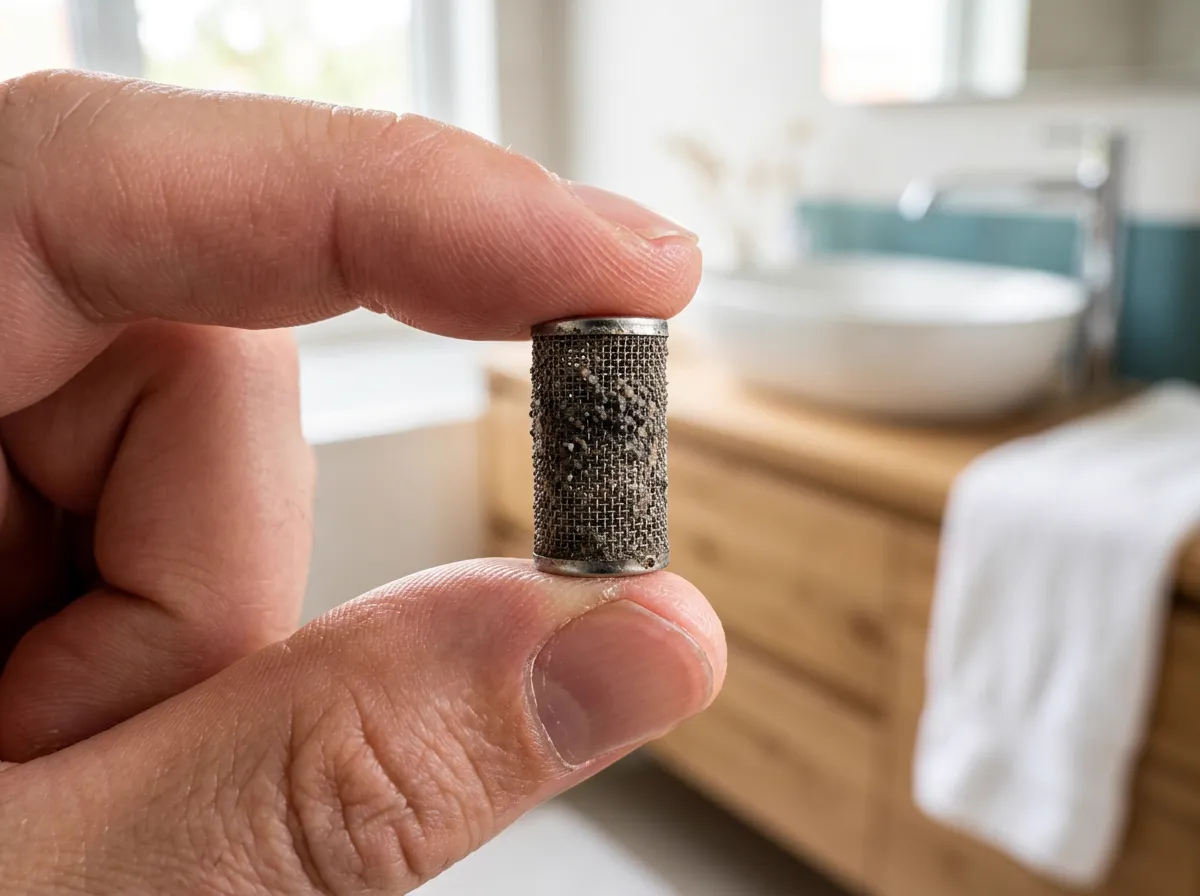
Check 1: Is every valve actually fully open?
Start embarrassingly simple, because this is the most common cause: the T-valve behind the toilet and the wall shut-off both need to be fully open, and both get bumped — by cleaning, by a toilet brush caddy, by the last person who worked on the toilet. Many T-valves also have a small control dial that doubles as a pressure limiter, and it creeps toward closed. Open the wall valve counterclockwise until it stops, then check the T-valve's dial is at maximum. If your bidet went weak suddenly, you've probably just fixed it. While you're there, confirm the toilet still refills at normal speed after a flush — if the toilet is also slow, the restriction is upstream of the bidet and the bidet is innocent.
Check 2: The inlet filter is clogged (the one nobody knows exists)
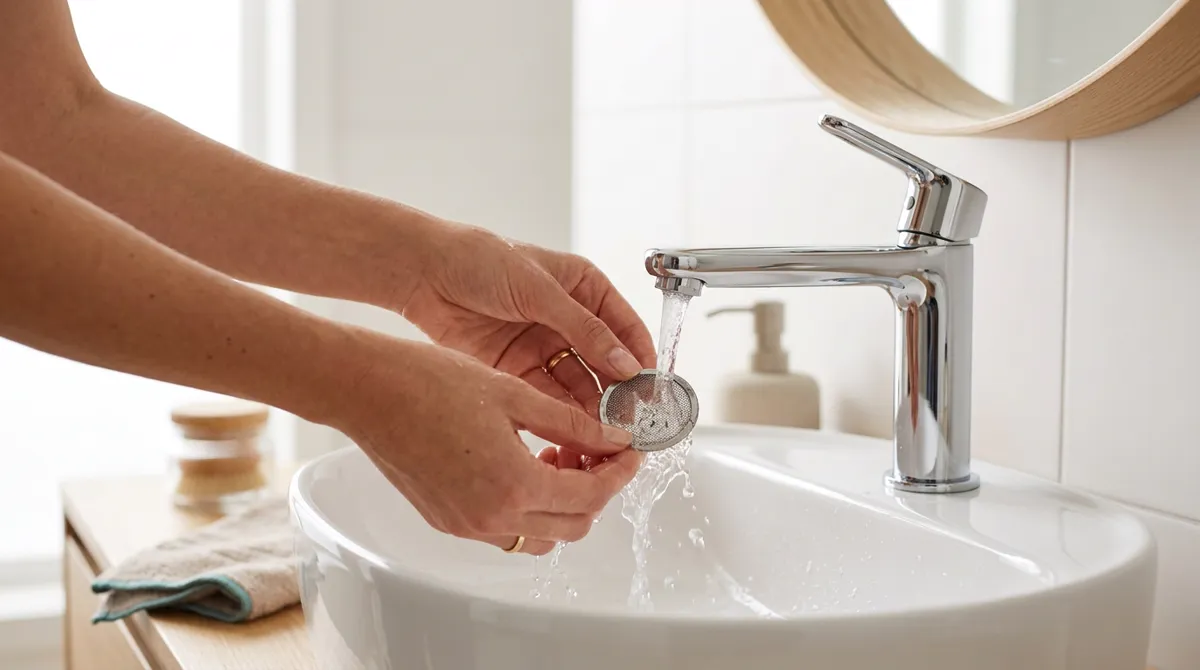
Most bidet seats and many attachments have a small mesh filter where the water hose enters the unit, there to catch sediment before it reaches the internals. Nobody tells you about it, so nobody cleans it, and after a year or two of catching grit it chokes the flow — the classic gradual-decline pattern. Shut off the water, disconnect the hose at the unit, and look into the inlet: the filter is a small mesh screen or thimble, sometimes removable with fingers, sometimes needing needle-nose pliers. Rinse it under a tap, brush it with an old toothbrush, and reinstall. If your home is on well water or you've had utility work recently, check it twice a year — sediment events after line work are exactly what clogs these.
Check 3: Mineral scale is choking the nozzle
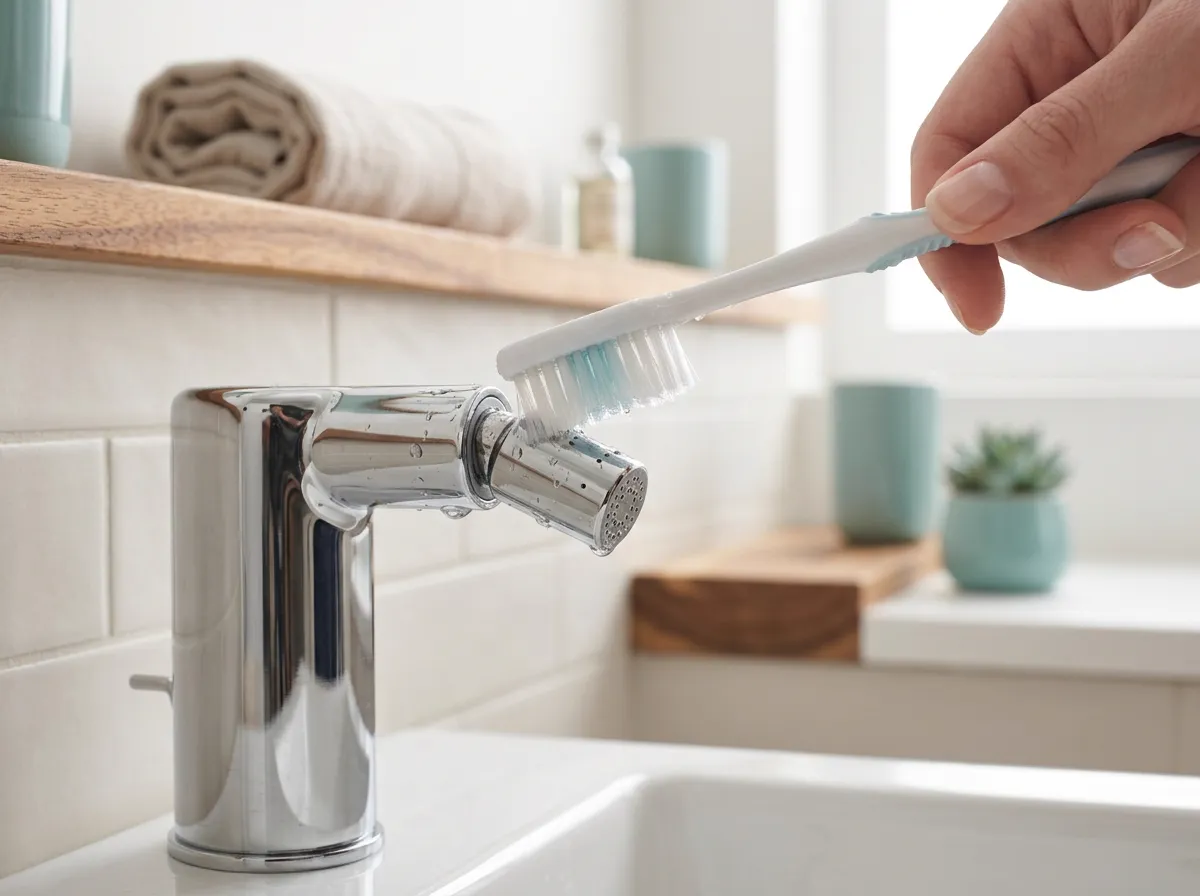
If you're in a hard-water area — most of the US is — calcium and magnesium deposits slowly close down the nozzle's spray holes the same way they crust a showerhead. The signature: pressure that declined over months, a spray pattern that's gone ragged or crooked, or some holes visibly dead. The fix is a descale, not a replacement: extend the nozzle (most units have a self-clean or nozzle-clean mode that presents it), and either wipe it with a cloth soaked in white vinegar or, better, secure a small bag of vinegar around the nozzle for 30–60 minutes, then clear each hole with a soft toothbrush and run the spray to flush. Our full nozzle-cleaning guide covers the details and the don'ts — the short version is no bleach, no abrasives, no metal picks.
Check 4: The hose is kinked or pinched
Bidet hoses run in tight quarters and get pinched — against the porcelain, under the seat's mounting plate, behind a cleaning caddy pushed too close. A pinched hose can halve flow while looking almost normal at a glance. Trace the full run from T-valve to unit with your fingers, feeling for flattened sections and hard bends. Re-route so the hose curves gently with no contact pressure against tank or bowl. A hose that's taken a permanent kink (it has a visible crease that springs back when bent) should be replaced — the crease is a weak point that restricts now and cracks later; braided stainless replacements are $8–$12 and don't kink.
Check 5: The unit's own pressure setting
Less silly than it sounds. On electric seats, pressure settings get changed by guests, cleaning sessions, or a remote sat on — and some seats quietly reduce maximum pressure in eco mode or when the water heater is struggling to keep up with a too-long wash. Cycle the pressure setting to maximum and test. On attachments with dual dials, confirm you're turning the pressure dial, not the nozzle-position or temperature dial — the dials are unlabeled on some budget units and it's a common mix-up. If maximum pressure now feels like it used to, the mystery was never mechanical.
Check 6: Your household water pressure is genuinely low
If the bidet is weak and the shower is also underwhelming and faucets fill pots slowly, the bidet is the symptom, not the disease. Test properly: a $10 pressure gauge threads onto an outdoor spigot or the washing machine bib. Healthy household pressure is 40–80 PSI; non-electric bidets start feeling feeble below about 40. Causes range from a failing pressure regulator (the bell-shaped fitting near your main shut-off, a plumber job) to a partially closed house main to municipal supply issues. One useful data point for your plumber: if pressure is fine at fixtures near the main but weak in the bathroom, the restriction is in the branch line, not the regulator.
Check 7 (electric seats only): an internal fault
If an electric seat still sprays weakly after every check above — valves open, filter clean, nozzle descaled, hose clear, settings at max, household pressure verified — then the internal water valve, diverter, or pump-assist has genuinely degraded. This is the least common outcome and the one you can't fix at home; sealed internals aren't user-serviceable and opening the casing voids most warranties. Check your warranty status first: Bio Bidet's better seats carry 3–5 years and this failure mode is squarely covered. Out of warranty on a seat under ~$300, replacement beats repair on cost; on premium seats, manufacturers like TOTO and Bio Bidet do sell service and parts through their support lines, and a quote costs nothing.
A note on tankless seats and 'weak' warm water
One pattern that isn't a fault: tankless (on-demand) electric seats intentionally moderate flow so the heater can keep the water warm continuously — max pressure with max temperature on a tankless seat can feel gentler than a cold-water attachment blasting at full line pressure. If your tankless seat sprays noticeably harder on cooler settings, that's the heater budgeting, not a defect. Some models also reduce pressure automatically near the end of a long warm wash. If the trade bothers you, drop the temperature one notch before concluding the pressure is inadequate.
Tips & warnings
- Sudden weakness = a valve, kink, or debris. Gradual decline = filter or scale. Diagnose by the timeline first.
- The inlet filter is the most-missed fix — most owners never learn it exists. Clean it yearly; twice yearly on well water.
- If the toilet also refills slowly, the problem is upstream of the bidet — check the wall valve and house pressure.
- Descale the nozzle with vinegar, never bleach or metal tools — bleach attacks the seals and picks scratch the ports.
- A $10 pressure gauge on the outdoor spigot settles the 'is it my house?' question in two minutes. 40–80 PSI is healthy.
- On tankless electric seats, high temperature moderates pressure by design — test on cool before blaming the unit.
Frequently asked questions
Why is my bidet water pressure so weak?
In order of likelihood: a T-valve or wall shut-off that isn't fully open, a clogged inlet filter where the hose meets the unit, mineral scale closing the nozzle's spray holes, a kinked supply hose, the unit's own pressure setting turned down, or genuinely low household water pressure. Most bidets have no pump — they run on your home's line pressure — so weak spray is almost always a restriction you can find and clear rather than a part wearing out. Sudden weakness points to a valve or kink; gradual decline over months points to the filter or scale.
How do I fix low water pressure on my bidet?
Work the checks in order. Open the wall shut-off and T-valve fully — both get bumped. Then shut the water, disconnect the hose at the unit, and rinse the small mesh inlet filter most units hide there; a sediment-choked filter is the most common gradual cause. Next descale the nozzle with white vinegar and a soft toothbrush if you're in a hard-water area. Check the hose for kinks and re-route it. Finally, confirm the unit's own pressure setting is at maximum. Those five steps resolve the overwhelming majority of weak-spray complaints without spending anything.
Why did my bidet suddenly lose pressure overnight?
Sudden loss means something changed, not something wore out. The usual suspects: someone partially closed the T-valve or wall valve (cleaning day is the classic culprit), the hose got pinched against the toilet, or debris shook loose into the line and lodged in the inlet filter — very common right after plumbing work in your home or utility work on your street. Check the valves first, then the hose run, then pull and rinse the inlet filter. If the toilet itself also refills slowly, the problem is upstream of the bidet entirely.
Do bidet attachments have a pump?
No. Non-electric attachments and seats are driven entirely by your household water pressure — the dial on the unit only opens and closes a valve. That's why a healthy attachment can feel strong in one house and feeble in another: it's reflecting the plumbing, not its own quality. Electric seats regulate and sometimes assist pressure, but they also depend on decent line pressure to work with. If your household pressure is below about 40 PSI, a non-electric bidet will always feel weak, and the real fix is the house plumbing — typically a failing pressure regulator.
How often should I clean my bidet's filter and nozzle?
The inlet filter: once a year on municipal water, twice a year on well water, and immediately after any plumbing or utility work that could shake sediment into your lines. The nozzle: a monthly wipe-down using the unit's self-clean mode, plus a vinegar descale once or twice a year in hard-water areas — more often if you see the spray pattern going ragged. Those two habits prevent the two most common causes of gradually weakening spray and take about ten minutes combined.
When does weak bidet pressure mean I need a new bidet?
Only after everything else checks out: valves fully open, inlet filter cleaned, nozzle descaled, hose unkinked, pressure setting at max, and household pressure verified at 40+ PSI with a gauge. On a non-electric attachment that still sprays weakly after all that, the internal valve has worn — and at $30–$50 for a new unit, replacement is the rational call. On an electric seat, check warranty first (3–5 years on better models covers this), and get a repair quote from the manufacturer before replacing a premium seat. But be honest with the checklist first — most 'dead' bidets are a clogged filter.