
How to clean a toilet tank
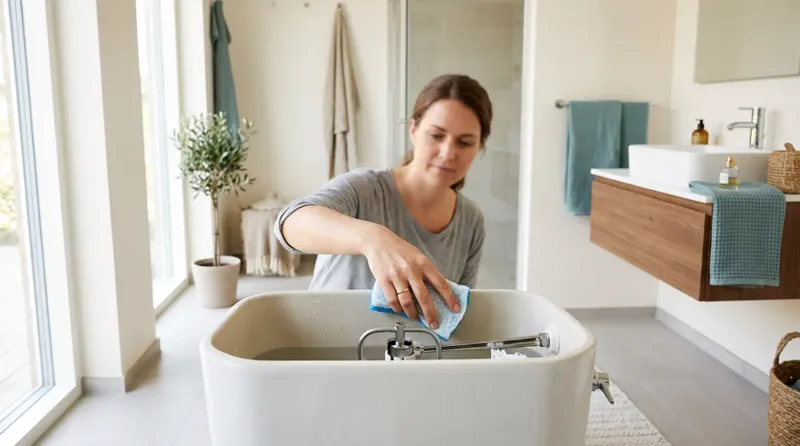
A toilet tank works in the dark, so most people never look inside until something goes wrong. Over time, hard water leaves chalky mineral buildup, rust stains, and even mold or mildew on the tank walls and parts. Left alone, that grime can clog the flush valve, stain your bowl, and shorten the life of the moving parts inside.
The good news: cleaning a toilet tank is a simple 30-minute job you can do a couple of times a year with white vinegar and a little patience. This guide walks you through draining the tank, soaking away mineral buildup, scrubbing safely around the rubber parts, and refilling, without harsh chemicals that quietly destroy your seals.
What you'll need
- White distilled vinegar (up to 3 gallons for a full soak)
- Rubber gloves
- Plastic-bristle scrub brush (an old toothbrush helps for tight corners)
- Sponge, old towels, or a turkey baster to soak up leftover water
- A bucket (optional, for catching drips)
- Baking soda (optional, for stubborn stains)
Step by step
- Shut off the water and empty the tank. Find the shut-off valve on the wall or floor behind the toilet and turn it clockwise until it stops. Then hold the flush lever down to drain as much water as possible out of the tank.
- Soak up the water left at the bottom. Even after flushing, an inch or two of water usually stays behind. Use a sponge, old towels, or a turkey baster to remove it so the vinegar isn't diluted and can do its job.
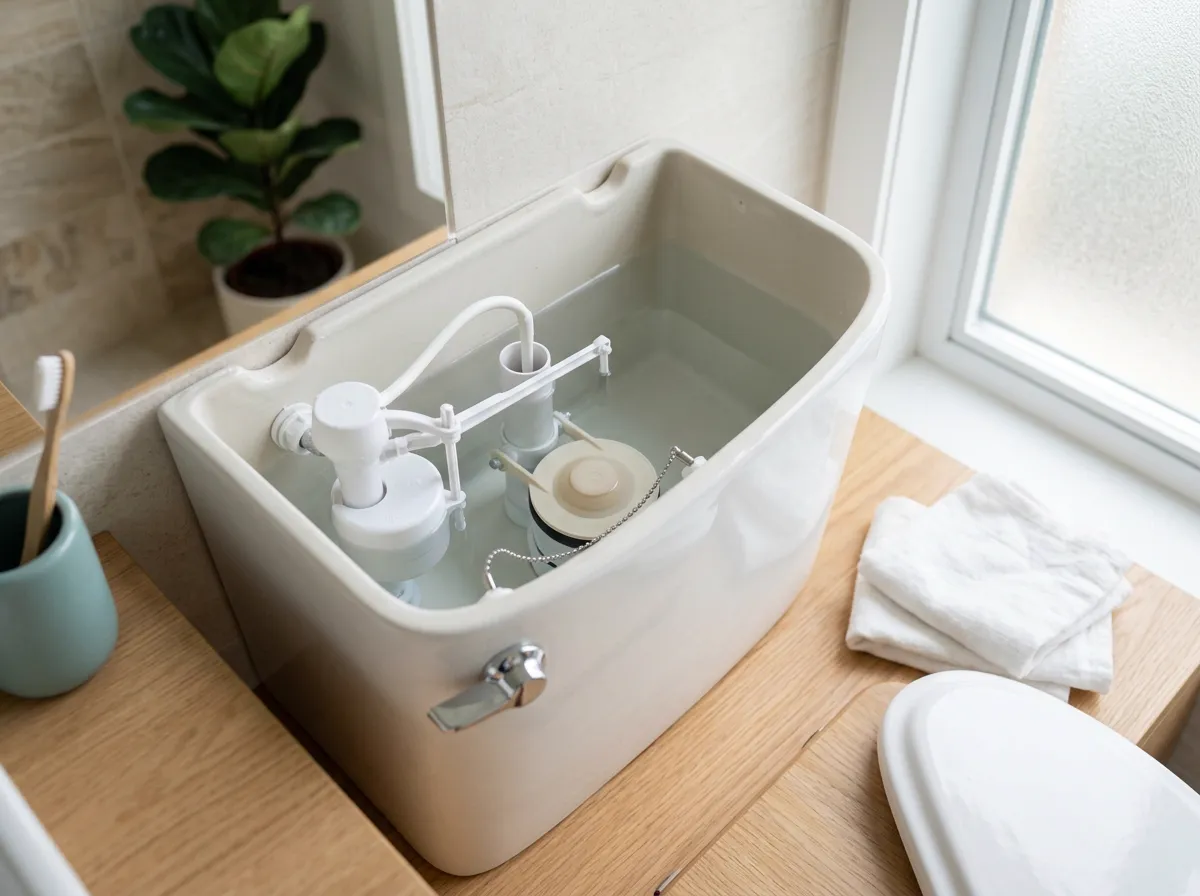
- Take a quick look at the parts. Lift off the lid and set it somewhere safe (it's heavy and breaks easily). Glance at the rubber flapper, the fill valve, and the chain so you'll recognize the parts to be gentle around in the next steps.
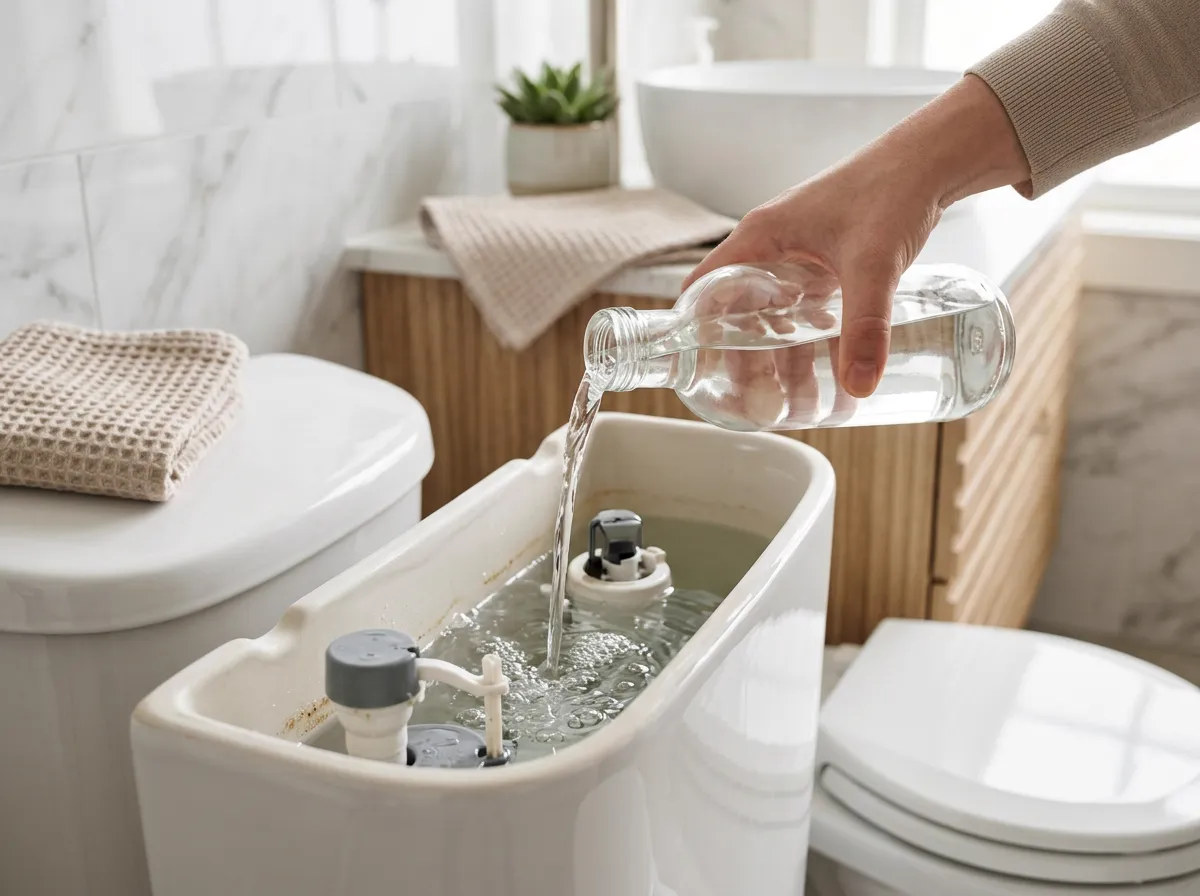
- Fill the tank with vinegar and let it soak. Pour white vinegar in until it sits about an inch below the rim, fully covering the mineral-stained walls. Let it soak for 8 to 12 hours (overnight is easiest) so the acid can dissolve the hard-water buildup. For heavier stains, sprinkle baking soda first and let it fizz with the vinegar.
- Drain the vinegar and scrub gently. Hold the flush lever to drain the vinegar, then scrub the walls and corners with a plastic-bristle brush. Work carefully around the rubber flapper and gaskets, scrubbing only lightly there, since you want to remove grime without nicking or stretching the seals.
- Turn the water back on and rinse. Turn the shut-off valve counterclockwise to let the tank refill. Once it's full, flush two or three times to rinse out any vinegar and loosened debris before putting the lid back on.
- Check the flapper seal before you finish. Watch one full flush-and-refill cycle to make sure the flapper seats fully and the water stops running. If you hear water trickling after the tank fills, the flapper may need adjusting or replacing, an easy, inexpensive fix.
Tips & warnings
- Skip drop-in bleach tablets in the tank. The concentrated chlorine slowly eats the rubber flapper, washers, and seals, often causing leaks or a full flush-valve replacement within six months. Major brands like Kohler, TOTO, and American Standard won't cover that damage under warranty.
- If you like the convenience of drop-in cleaners, put them in the bowl, not the tank, where they never touch the seals and flush away cleanly.
- Vinegar is the safe choice because it dissolves minerals and kills bacteria without harming rubber or plastic parts, unlike straight bleach or harsh bathroom cleaners.
- Never use a wire brush, steel wool, or abrasive pad inside the tank. They scratch the porcelain and can tear the soft rubber components.
- Clean the tank about twice a year, or more often if you have hard water, to keep minerals from building up enough to jam the flush mechanism.
Frequently asked questions
How often should I clean my toilet tank?
Twice a year is plenty for most homes. If you have hard water and see chalky mineral buildup, or notice musty odors or staining, clean it every three to four months.
Will vinegar damage the rubber parts in my tank?
No. White vinegar is gentle on the rubber flapper, gaskets, and plastic fill valve while still dissolving mineral deposits and killing bacteria. It's one of the few cleaners safe to soak the whole tank in.
Why are bleach tablets bad if they keep the toilet clean?
They sit in the tank releasing concentrated chlorine 24/7, which breaks down the rubber flapper and seals far faster than normal. That leads to running toilets and leaks, and the damage isn't covered by most manufacturer warranties. Use bowl cleaners instead.
Can I use baking soda with the vinegar?
Yes. For stubborn stains, sprinkle baking soda on the tank walls before adding vinegar. The fizzing reaction helps lift grime, and both ingredients are safe for the tank's parts.