
Is a Bidet Cleaner Than Toilet Paper?
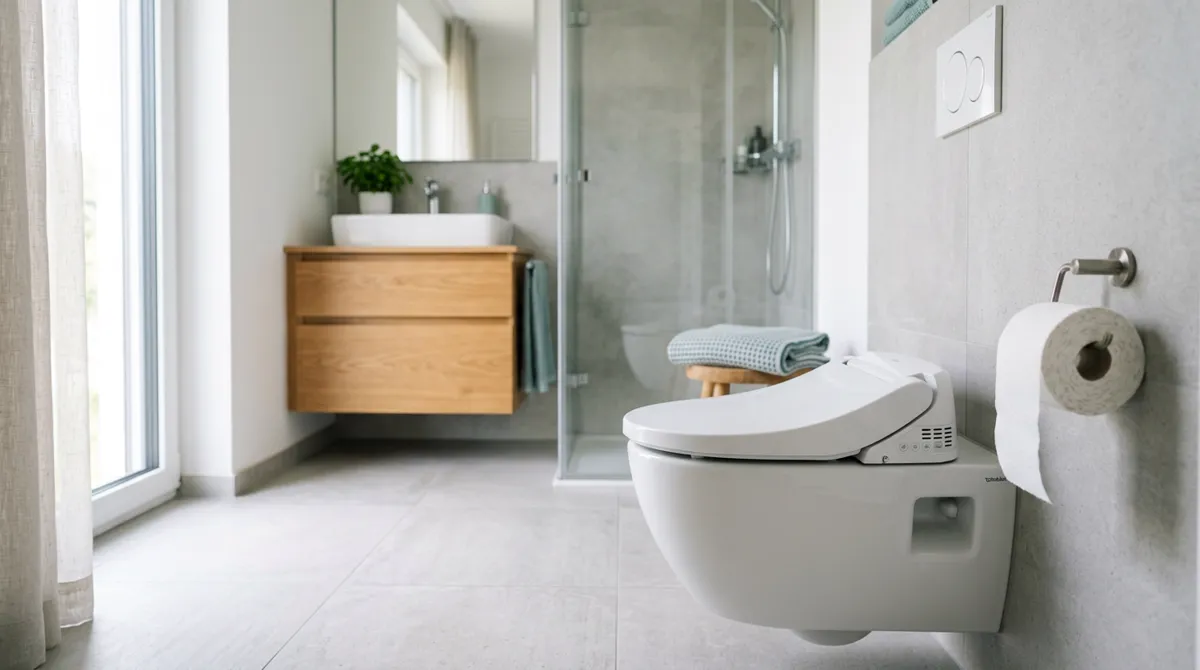
A bidet is generally cleaner and more sanitary than toilet paper alone. Water rinses away more fecal residue than dry wiping, and it keeps your hands away from the mess. A 2022 Sanyo-Onoda University study found bidet users had 7 to 10 times fewer bacteria on their hands than paper-only users. Bidets are not proven to prevent UTIs.
That said, "cleaner" comes with conditions. The biggest health benefits show up in two places: how much residue gets removed, and how gentle the cleaning is on irritated skin. Both Cleveland Clinic (2023) and Healthline (2021) agree water generally beats dry paper for both.
The catch is that a dirty nozzle or improper aim can introduce its own problems. Used and maintained correctly, a bidet is the more hygienic choice for most people. This article is for general information and is not medical advice.
What the research suggests
| Finding | Source | Takeaway |
|---|---|---|
| Water removes more residue than dry wiping | Cleveland Clinic / Healthline | Bidets clean more thoroughly than paper alone |
| Bidet users showed fewer bacteria on hands after use | 2022 study (Sanyo-Onoda University) | Less hand contamination than wiping |
| Bidets are not proven to prevent UTIs | Medical consensus | Use for hygiene and comfort, not as treatment |
Ready to switch? See our top bidet picks.
See our picks →
Does water actually clean better than wiping?
Yes, for most people. Dry toilet paper smears residue rather than rinsing it away, and it often takes several passes to feel clean. A targeted stream of water flushes the area instead. Cleveland Clinic (March 2023) states bidets are "arguably more sanitary" because water removes fecal matter more effectively than paper alone. Think of it the way you would clean any other part of your body: you would rinse with water, not scrub with a dry napkin. The result is usually a more thorough clean with far less effort.
What the hand-bacteria study actually found
The most-cited evidence comes from Sanyo-Onoda City University in Japan, published in the Journal of Water and Health (2022). Researchers had 32 nursing students wipe with four layers of toilet paper while wearing double gloves, then measured the bacteria left on the outer glove. After using the bidet, 31 of 32 volunteers (96.8%) showed a sharp drop in bacteria on their hands, roughly 7 to 10 times fewer than wiping alone. The takeaway is not just that your bottom is cleaner; it is that less fecal bacteria ends up on your hands and fingernails when water does the work.
Gentler on skin, hemorrhoids, and sensitive days
Repeated dry wiping causes friction. Cleveland Clinic notes that wiping can lead to chafing and tiny cuts, which a gentle water rinse avoids. This matters most for people dealing with hemorrhoids, anal fissures, postpartum recovery, IBS flares, or anyone with sensitive skin. A warm, soft stream cleans without the rubbing that makes irritated skin worse. Many users also find a bidet more comfortable than medicated wipes, which can contain alcohol or fragrances that sting.
The honest limit: bidets do NOT prevent UTIs
This is where marketing claims outrun the science. There is no solid evidence that bidets prevent urinary tract infections, and improper use may raise risk. Cleveland Clinic warns that water should flow front to back, just like wiping, and that high pressure or a bad angle can push water and bacteria where it does not belong. A bidet is meant to clean the outside of the body, not the inside. A 2010 study cited by Healthline even found that habitual bidet use was linked to disrupted vaginal bacteria in some women. Use it gently, aim correctly, and do not treat it as a medical device.
Nozzle hygiene: the part nobody talks about
A bidet is only as clean as its nozzle. A 2017 study of a Japanese university hospital, published in the Journal of Hospital Infection, found that 254 of 292 bidet nozzles (about 87%) were contaminated with bacteria, including E. coli on roughly 12% of them. The fix is simple. Most modern bidet seats have a self-cleaning nozzle that rinses before and after each use, and retractable nozzles that stay tucked away when not in use. Wipe the nozzle down regularly, and in shared or hospital settings, factor cleaning into a routine. A well-maintained nozzle removes the main downside.
So is it worth switching?
For everyday home use, the evidence leans clearly toward a bidet being cleaner, gentler, and lower-mess than toilet paper alone. You get more residue removed, fewer bacteria on your hands, and less skin irritation, with the bonus of cutting paper use. The honest caveats are narrow: it will not prevent infections, it must be aimed front to back, and the nozzle needs to stay clean. Many people keep a little paper or a towel for drying. For most households, the upsides outweigh the small learning curve.
Tips & warnings
- Always direct the water front to back, just like wiping, to avoid moving bacteria toward the wrong areas.
- Choose a seat with a self-cleaning, retractable nozzle and still wipe it down regularly.
- Start with low pressure and a warm setting; high pressure is not better and can irritate.
- Pat dry with a small towel or a single square of paper. A bidet replaces most paper, not always all of it.

Frequently asked questions
Is a bidet more sanitary than toilet paper?
Generally, yes. Water rinses away more fecal residue than dry paper, and it keeps your hands cleaner. A 2022 Sanyo-Onoda University study found bidet users had 7 to 10 times fewer bacteria on their hands than people who used paper alone. Cleveland Clinic also calls bidets arguably more sanitary, as long as the nozzle is kept clean and the water is aimed front to back.
Do bidets prevent UTIs?
No. There is no reliable evidence that bidets prevent urinary tract infections, and using one incorrectly may increase risk. Cleveland Clinic advises aiming the water front to back and using gentle pressure, since a bidet is designed to clean the outside of your body, not push water inside. If you get frequent UTIs, talk to a doctor rather than relying on a bidet.
Are bidet nozzles dirty?
They can be if neglected. A 2017 study of a Japanese hospital found about 87% of bidet nozzles carried bacteria, including E. coli on roughly 12%. Modern bidet seats fight this with self-cleaning, retractable nozzles that rinse before and after use. Wipe the nozzle down regularly and the risk drops sharply.
Is a bidet better for hemorrhoids or sensitive skin?
Often, yes. Dry wiping causes friction that can chafe and create tiny cuts, which makes hemorrhoids and fissures worse. Cleveland Clinic notes that a gentle water rinse avoids that irritation. Use a warm, low-pressure setting and pat dry instead of rubbing.
Do I still need toilet paper if I have a bidet?
Usually just a little, mainly for drying. Many people use a towel or a single square of paper to dry off after rinsing, which cuts paper use dramatically. The water does the cleaning; the paper or towel only handles drying.
Sources
- Healthline — Are bidets sanitary?
- Cleveland Clinic — Is using a bidet healthy?
- NIH / PMC — The dermatologists' case for the bidet