
Bidet seat on a skirted toilet
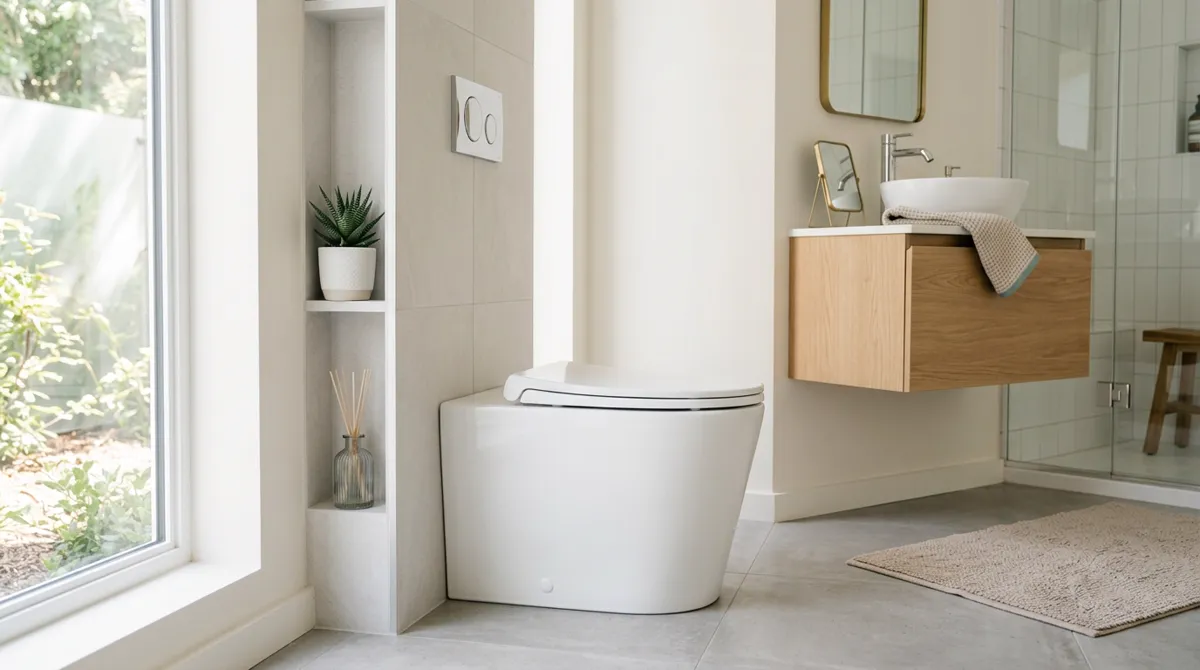
A skirted toilet — the modern kind with a smooth, seamless panel running down to the floor instead of the exposed S-curve of the trapway — makes people nervous about bidets, and the worry is understandable. That clean skirt hides two of the exact things a bidet seat needs to connect to: the mounting bolt holes under the back of the bowl, and the water fill valve behind the tank. If you can't reach them, how does anything attach? It's a fair question, and it's why so many product pages hedge on skirted compatibility.
The honest answer is reassuring: a skirted toilet almost never rules out a bidet seat. It just changes how two connections get made, and both are solved by inexpensive adapters that many bidets already include in the box. The seat mounts from the top instead of from underneath, and the water is tapped at the wall shut-off instead of at the concealed fill valve. Neither is a plumbing job, and neither requires a special 'skirted-only' bidet — most standard electric seats and attachments work fine once you have the right two parts.
What follows is the whole compatibility picture: why the standard bolt-from-below method doesn't work on a skirt, what top-mounting hardware is and how it fixes that, the water-supply access problem and its two solutions, the three measurements that actually decide fit, and the handful of toilet types — one-piece, French-curve, wall-hung, and fully integrated smart toilets — where the answer gets more complicated. If you want the step-by-step once you've confirmed fit, our how-to-install-a-bidet-seat guide covers the process.
Know it'll fit? See the bidet seats worth buying.
See our picks →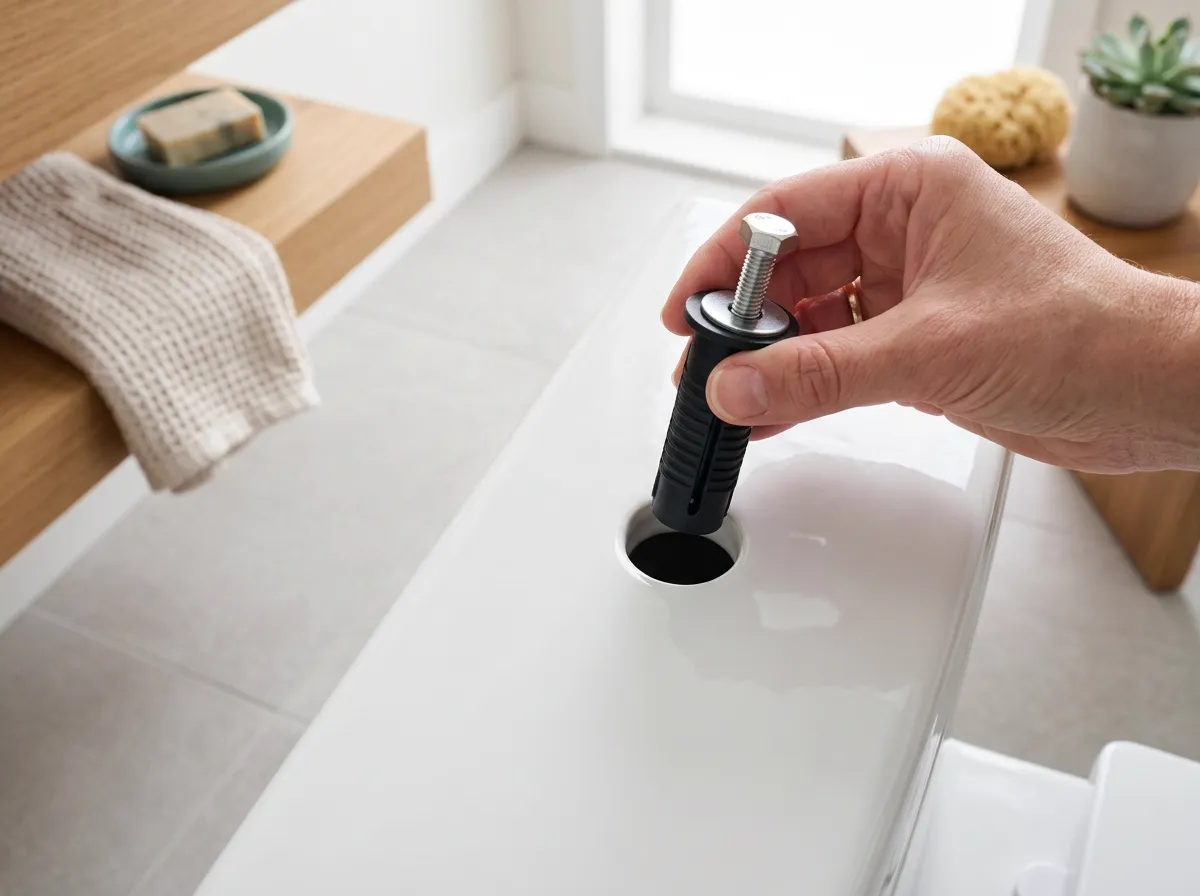
First, what "skirted" actually hides
A skirted (or concealed-trapway) toilet wraps the base in a flat, continuous side panel so you don't see the winding trapway — it looks sleeker and it's much easier to wipe down. Both Alpha Bidet and Premier Bidets describe the same trade-off in their fit guides: that skirt conceals not just the trapway but also the toilet's fill valve, tucked behind the tank. For a bidet seat, those two hidden things are precisely the two you need access to — the seat's mounting holes at the back of the bowl, and the water line feeding the tank. A skirted toilet isn't incompatible; it's just enclosed, and the whole job is about reaching around the enclosure at two points.
Problem 1: the seat can't bolt on the normal way
On a conventional two-piece toilet, a seat (bidet or plain) is held by two bolts that drop through the holes at the back of the bowl and get a nut threaded on from underneath, where the bowl overhangs. That underside is open and reachable. On a skirted toilet it isn't — the skirt seals off the underside of the bowl, so there's nowhere to put your hand and no way to spin a nut onto a bolt from below. BidetKing puts it plainly: the underside of the bowl is inaccessible, so the typical nut-and-bolt hardware won't work. This is the single most common reason people think a bidet 'won't fit' a skirted toilet — the seat itself is fine, it's the fastening method that's blocked.
The fix: top-mounting hardware
The solution is hardware that tightens entirely from above, so you never reach under the bowl. BidetKing and Alpha Bidet describe the same design: a pair of rubber sleeves (expansion sleeves) drop into the bowl's mounting holes, and screws thread down into those sleeves and are tightened from the top with a screwdriver — as the screw tightens, the rubber sleeve expands and grips the inside of the hole, anchoring the seat with no access needed underneath. Many bidets include a top-mounting kit for exactly this case, and TOTO Washlets are noted to come with their own top-mounting bolts. If your chosen seat only ships with standard bottom-mount bolts, a universal top-mounting kit is a cheap add-on part — not a reason to pick a different bidet.
Problem 2: you can't reach the water supply
The second hidden connection is the water. A standard bidet install puts a T-valve (a T-shaped adapter that splits water off to the bidet) at the toilet's fill valve, under the tank. On a skirted toilet that fill valve is concealed and the space behind the tank is often too tight to work in — BidetKing describes the fill valve as effectively inaccessible on many skirted models. So the standard install point is blocked, the same way the standard mounting point was. Again, this doesn't stop the bidet from working; it just moves where you make the connection to somewhere you can actually reach.
The fix: tap the water at the wall instead
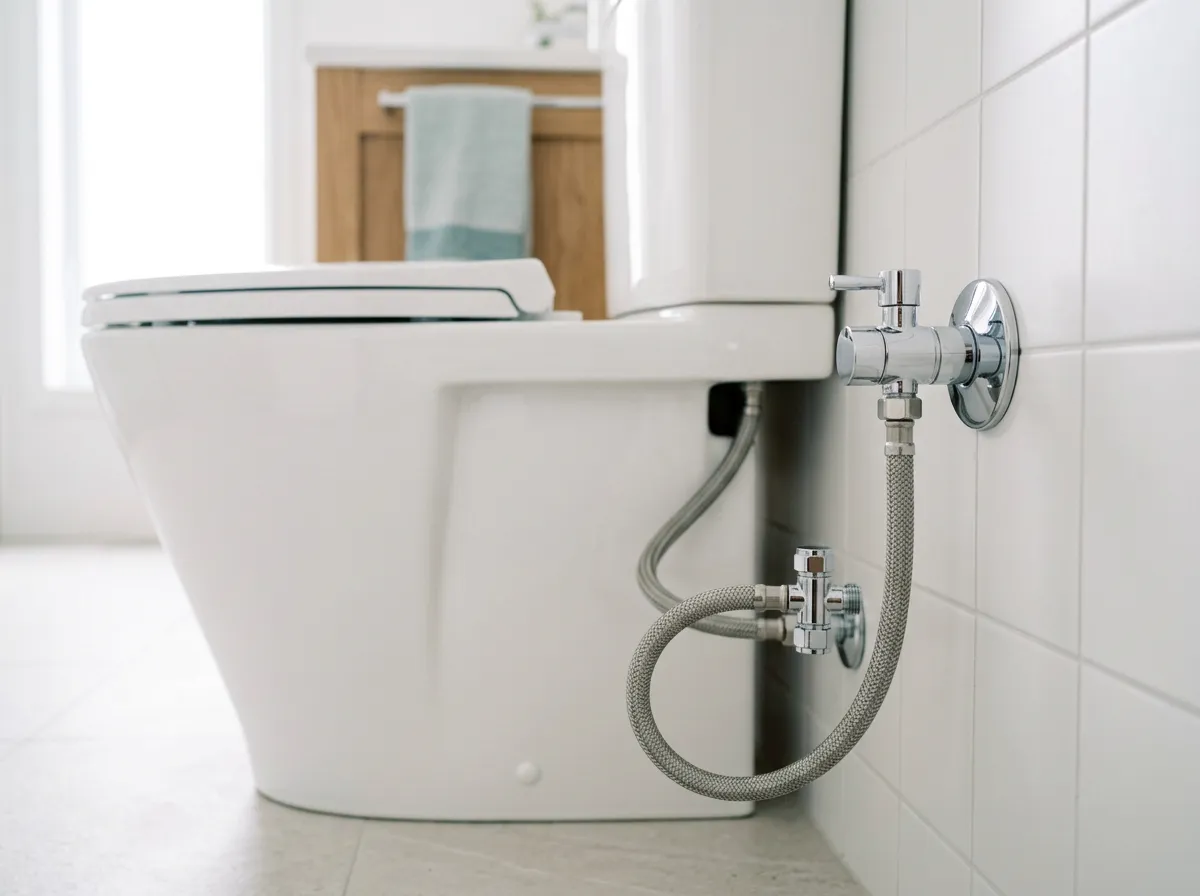
There are two clean workarounds, and you only need one. The more common is a different T-valve that installs down at the wall shut-off valve rather than up at the toilet's fill valve — Alpha Bidet and Premier Bidets describe a version with 3/8-inch compression threads (male on top, female on bottom) that sits between your supply hose and the wall shut-off, with a 1/2-inch variant for 1/2-inch shut-offs. That puts the tap point out in the open below the tank. The alternative BidetKing offers is a simple extension hose that connects to the concealed fill valve and extends the standard 7/8-inch connection out to where you can reach it. Either way it's a hand-tight adapter, not a plumbing modification — the same reversible, no-pipes-cut install our do-you-need-a-plumber-for-a-bidet guide describes for ordinary toilets.
Measure before you buy: the three numbers that decide fit
Skirt or no skirt, a bidet seat still has to physically fit the bowl, and three measurements settle it. First, mounting-hole spacing: the two bolt holes at the back are a standard 5.5 inches (155 mm) apart on the vast majority of toilets, which is what bidet seats are built for — measure yours to confirm. Second, bowl length from the mounting holes to the front edge: Premier Bidets gives roughly 16.5 inches for a round bowl and 18.5 inches for an elongated one, and bidet seats are sold in round and elongated versions, so match the shape. Third — and this one matters more on skirted and modern toilets — rear clearance: a bidet seat's control housing sits at the back and needs roughly 1 to 2 inches of clear space between it and the tank or the wall. Our how-to-measure-a-toilet-seat guide walks all three with a tape measure.
The near-cousins: one-piece, French-curve, and wall-hung toilets
Skirted often gets lumped in with a few other 'awkward' shapes, but they fail for different reasons. A one-piece toilet, where tank and bowl are a single molded unit, frequently has a curved transition where the tank meets the bowl — Premier Bidets notes this can crowd the back of the seat, so the rear-clearance measurement above is the one to check carefully. A French-curve toilet has a wavy, S-shaped rim profile that can make a flat seat seat unevenly, so look specifically for a bidet described as compatible with that contour. Wall-hung toilets have no floor-standing base and often an in-wall concealed tank, which changes both the mounting and the water access — that's the case most likely to warrant a professional, as our plumber guide explains. None of these are skirted problems exactly; they're separate fit checks that skirted buyers sometimes also need.
When a skirted toilet genuinely can't take a retrofit bidet seat
The one real dead end isn't a skirted toilet at all — it's a fully integrated smart toilet, an all-in-one unit (like a TOTO Neorest) where the washing function is built into the fixture and there's no removable seat to swap. You can't retrofit a bidet seat onto something that already is one; there's nothing to bolt to. Beyond that, be honest about effort versus reward: if your skirted toilet has almost no gap to the wall, an extremely short bowl, or a genuinely unusual rim, a bidet attachment (which clamps under the existing seat and is thinner) may fit where a bulky electric seat won't — see our bidet-seat-vs-attachment comparison. But for a standard skirted two-piece toilet, the answer is simply yes, with a top-mounting kit and a wall-shutoff T-valve.
Tips & warnings
- A skirted toilet doesn't need a special bidet — it needs a top-mounting kit and a wall-shutoff T-valve, both cheap and often included.
- The seat fastens from the top: rubber sleeves drop into the bolt holes and screws tighten from above, so you never reach under the sealed bowl.
- Tap the water at the wall shut-off (a 3/8-inch T-valve) or use an extension hose off the concealed fill valve — either reaches what the skirt hides.
- Measure three things: bolt-hole spacing (usually 5.5 in / 155 mm), bowl length (~16.5 in round, ~18.5 in elongated), and 1–2 in of rear clearance for the housing.
- Check the gap between the tank and the wall — skirted and one-piece toilets are where the seat's rear control housing runs out of room.
- A fully integrated smart toilet (all-in-one) can't take a retrofit seat — there's nothing to bolt to. A skirted two-piece almost always can.
Frequently asked questions
Will a bidet seat fit a skirted toilet?
In almost all cases, yes. A skirted toilet doesn't require a special bidet — it requires two inexpensive adapters that solve the two things the skirt hides. Because the underside of the bowl is sealed off, the seat mounts with top-mounting hardware: rubber sleeves drop into the bolt holes and screws tighten from above with a screwdriver, so you never reach underneath. And because the fill valve is concealed behind the tank, you tap the water either with a T-valve that installs at the wall shut-off instead of the fill valve, or with an extension hose off the concealed valve. Many bidets include a top-mounting kit, and both parts are cheap add-ons if not. The only real check left is fit: confirm the bolt holes are the standard 5.5 inches apart, match the bowl shape (round vs elongated), and make sure there's 1 to 2 inches of clearance behind the seat for its control housing.
Why won't a normal bidet seat's bolts work on a skirted toilet?
Because a standard seat is held by bolts that get a nut threaded onto them from underneath the back of the bowl — and on a skirted toilet, the skirt panel seals off that underside, so there's no way to reach a nut up under there. The bidet seat itself is compatible; it's only the fastening method that's blocked. The fix is top-mounting hardware, which anchors the seat entirely from above: expansion sleeves sit inside the mounting holes and screws tighten down into them from the top, gripping without any access below. If your seat didn't come with a top-mounting kit, it's an inexpensive universal part rather than a reason to buy a different bidet.
How do you connect the water on a skirted toilet if the fill valve is hidden?
You move the connection point to somewhere reachable. The usual approach is a T-valve designed to install at the wall shut-off valve — it has 3/8-inch compression threads and sits between your existing supply hose and the shut-off, so you're working in the open space below the tank rather than reaching up to the concealed fill valve. The alternative is an extension hose that attaches to the hidden fill valve and extends the standard 7/8-inch connection out to an accessible spot. Either is a hand-tight fitting with a rubber seal — no pipes are cut and nothing is permanent, exactly like a normal bidet install.
Do I need a special bidet made for skirted toilets?
No. Most standard electric bidet seats and non-electric attachments work on skirted toilets once you have a top-mounting kit and a wall-shutoff T-valve (or extension hose). Those adapters are what make it skirted-compatible, not the bidet model itself. Some bidets — TOTO Washlets, for example — already include top-mounting bolts in the box, which simplifies it further. So rather than searching for a 'skirted bidet,' pick the seat you want on its merits, then confirm it either includes or can accept a top-mounting kit and that you can source the right T-valve for your shut-off size.
How much clearance does a bidet seat need behind a skirted toilet?
Plan on roughly 1 to 2 inches of clear space between the back of the bidet seat and the tank or wall, because the seat's controls and water mechanism live in a housing at the rear that extends beyond a plain seat. Skirted and one-piece toilets are exactly where this gets tight, since their tanks often sit closer to the bowl or the wall. Before buying, measure from the mounting-bolt holes straight back to the tank and confirm there's room; also confirm the bowl length (about 16.5 inches to the front on a round bowl, 18.5 on an elongated one) and the standard 5.5-inch bolt-hole spacing. Getting these three numbers right is what prevents a return.
Can I put a bidet on a one-piece or wall-hung toilet too?
Usually on a one-piece, sometimes not on a wall-hung. A one-piece toilet is a single molded tank-and-bowl unit, and its main quirk is a curved transition at the back that can crowd the bidet seat's rear housing — so the rear-clearance measurement is the one to watch, but most one-piece toilets take a bidet seat fine, often using the same top-mounting hardware as a skirted toilet. Wall-hung toilets are the harder case: with no floor base and frequently an in-wall concealed tank, both the mounting and the water connection can sit behind the wall panel, which is the situation most likely to need a plumber. Fully integrated smart toilets are the true exception — they already have washing built in and have no removable seat to replace.
Sources
- BidetKing — installing a bidet toilet seat on a skirted toilet
- Alpha Bidet — installing a bidet on a skirted toilet
- Premier Bidets — bidet toilet seat compatibility guide
- BidetKing — top mounting hardware for skirted and concealed-trapway toilets