
Are toilet seats universal?
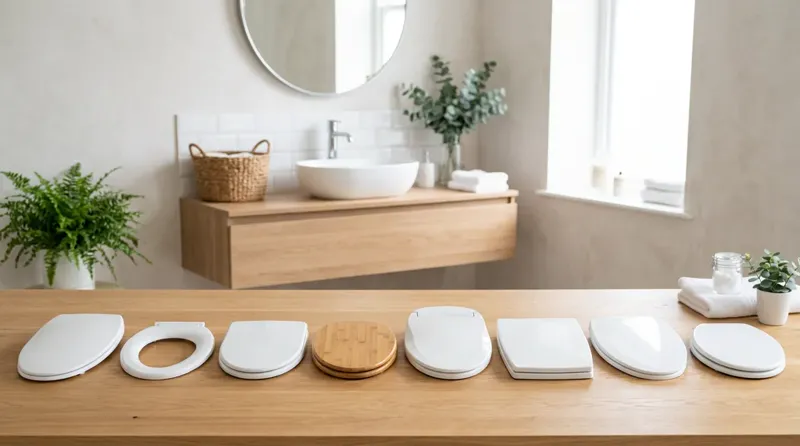
Walk down the toilet seat aisle at any home improvement store and you will see the words "universal fit" on a surprising number of boxes. The short answer to whether toilet seats are actually universal is: mostly, but not entirely. The vast majority of residential toilets sold in the United States follow a small set of standard dimensions, which means seats from different brands will swap in and out without trouble — as long as you match the right bowl shape. Where things go sideways is when you have a one-piece designer toilet, an imported European bowl, or a unit with a French-curve profile at the back.
The key measurements that determine fit are three numbers: bolt spread, length, and width. In North America, the bolt spread — the center-to-center distance between the two rear mounting holes — is standardized at 5.5 inches under ANSI A112.19.2, which covers the overwhelming majority of toilets you will encounter. Length and width vary based on bowl shape, with round bowls running about 16.5 inches long and elongated bowls running about 18.5 inches. Once you know those numbers for your bowl, finding a compatible seat from any major brand is straightforward.
This guide explains what drives compatibility, what the real exceptions are, and how to measure your toilet in about five minutes so you never buy the wrong seat twice. It also covers materials and hinge types so you can make a choice you will be happy with for years, not just weeks.
Ready to pick one? See our top toilet seats.
See our picks →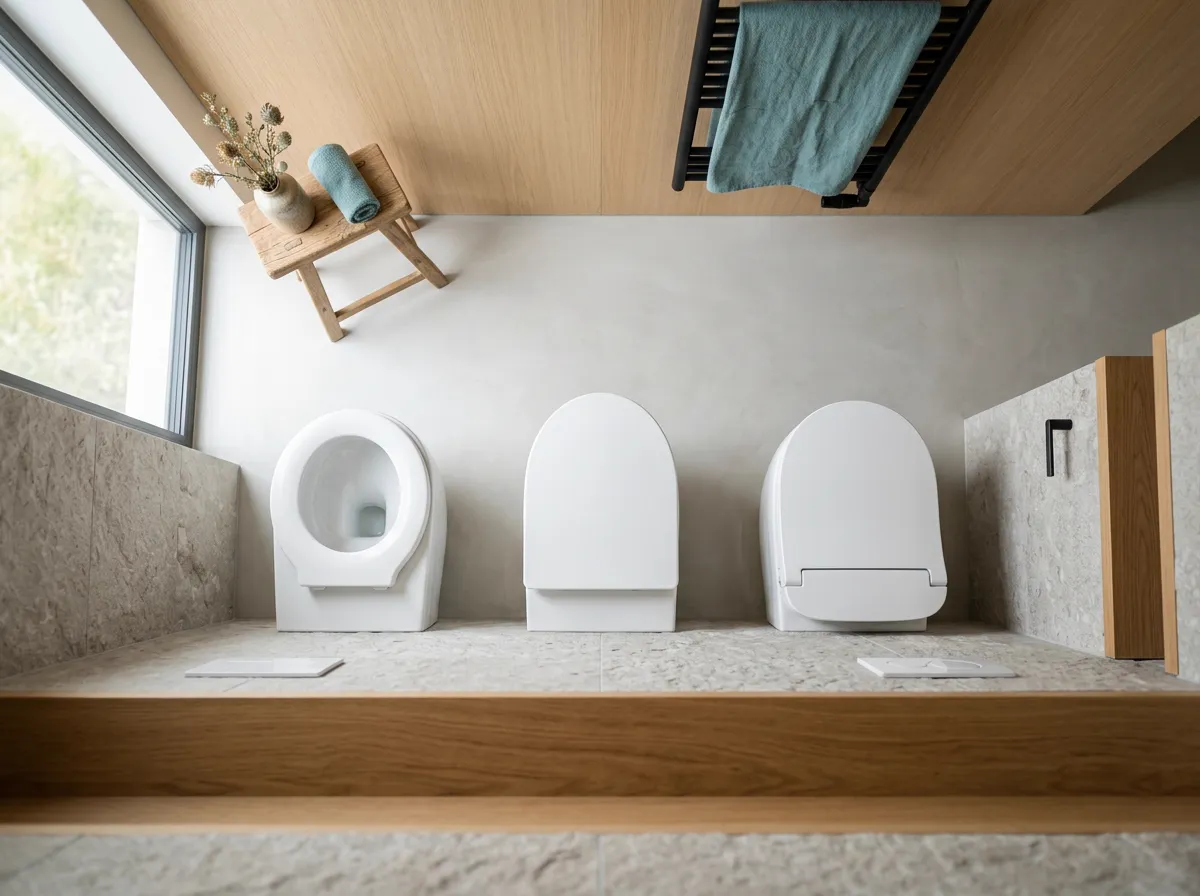
Round vs. Elongated: The Most Important Distinction
Before anything else, identify whether your bowl is round or elongated — this single factor rules out more mismatches than anything else. Round bowls measure roughly 16.5 inches from the bolt holes to the front rim. Elongated bowls measure roughly 18.5 inches. Both shapes are typically about 14 to 14.5 inches wide at their widest point, so width alone will not tell you which you have. A round seat placed on an elongated bowl will sit too far back and leave an uncomfortable gap at the front. An elongated seat on a round bowl will hang over the front edge, which looks wrong and can crack under uneven load. Neither pairing is safe or functional long-term. Always match seat shape to bowl shape — round to round, elongated to elongated. If you are not sure which shape your bowl is, measure the length as described in the measuring section below. You can also stand over the bowl and look straight down: round bowls look nearly circular; elongated bowls have a noticeable oval or teardrop shape.
The Standard 5.5-Inch Bolt Spread
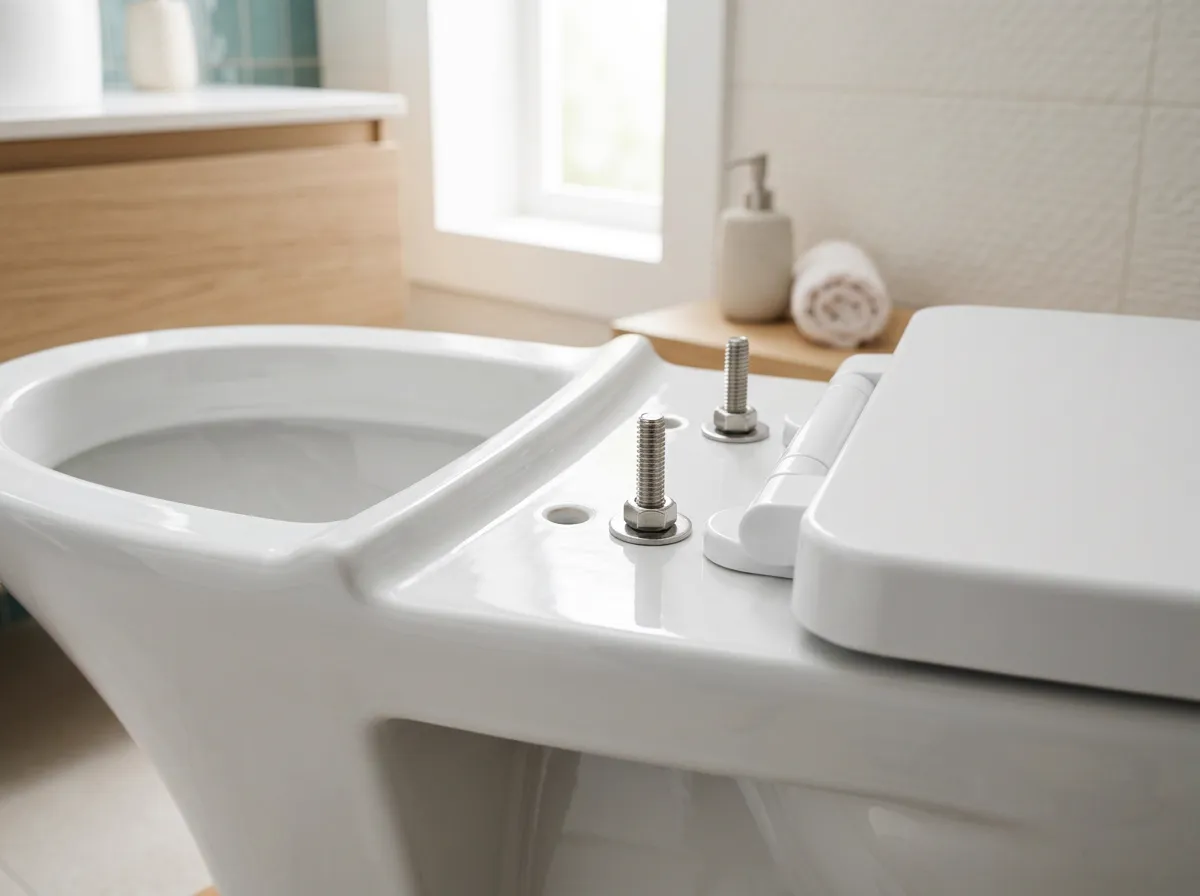
The two mounting bolts at the back of the bowl accept the seat's hinge assembly. In the United States, the center-to-center distance between those bolt holes is standardized at 5.5 inches (approximately 14 cm) under ANSI A112.19.2. This standard covers virtually every major domestic toilet brand — Kohler, American Standard, Toto's mainstream two-piece lines, Mansfield, Gerber, and others. European toilets and some older American models sometimes use a 6- to 6.5-inch bolt spread, which is one reason a seat purchased abroad or salvaged from an older renovation may not line up correctly. If you are replacing a seat on a toilet installed before the 1980s, or on an imported toilet, measure the bolt spread before purchasing. Most replacement seats are designed for the 5.5-inch standard. When a package says 'fits most toilets,' it is referencing this standard. That claim is accurate for the typical American bathroom but should not be taken as a guarantee on atypical hardware.
Brand Interchangeability: Where It Works and Where It Does Not
For two-piece toilets from mainstream brands, cross-brand seat replacement works reliably. A Kohler seat will fit an American Standard bowl of the matching shape, and vice versa, because both conform to the same bolt spread and bowl outline standards. This is genuinely good news if you want to upgrade from a builder-grade plastic seat to a soft-close model from a different brand — you almost certainly can. The exceptions cluster around a few specific situations. First, high-end one-piece toilets — particularly from Toto — often use proprietary seat designs. Toto's Washlet bidet seats, for example, integrate directly with specific Toto bowl profiles and use manufacturer-matched mounting hardware. Substituting an off-brand seat on these units may technically fit the bolt holes but can leave gaps, rock, or fail to seal correctly. Second, toilets with integrated tank-and-bowl designs, comfort-height specialty units, or units with decorative shrouding around the base sometimes have seat attachment geometry that differs from the open-back standard. When in doubt, look up the toilet model number (usually stamped inside the tank) and confirm seat compatibility against that model's documentation before purchasing.
D-Shaped, Square, and French-Curve Exceptions
D-shaped bowls — flat at the back, curved at the front — are standard in many European and modern-design bathrooms. They require D-shaped seats sold specifically for that profile. Attempting to fit a round or elongated American-style seat on a D-shaped bowl will produce an obvious mismatch: gaps at the back corners, potential rocking, and hinge hardware that does not properly bridge the flat rear edge. Square and angular bowls are less common but exist in contemporary designer lines. These almost always require a seat sold by the same manufacturer, because no universal shape standard covers non-circular, non-oval bowl profiles. French-curve toilets — one-piece units where the rear of the bowl curves dramatically upward and inward toward the tank — present a specific compatibility problem for bidet seats and some specialty seat designs. The deep curve leaves very little flat surface near the mounting bolts, which can cause bidet seats to sit at an angle or prevent the hinge covers from closing flush. Standard seats generally still fit on French-curve bowls, but bidet seat manufacturers (including Bio Bidet and Brondell) specifically call out deep French-curve units as incompatible with their products. If you have one of these toilets, verify bidet compatibility before purchasing.
Materials: Plastic, Molded Wood, and Duroplast
Most toilet seats sold today fall into three material categories, and each has meaningful trade-offs. Polypropylene (PP) plastic is the most common material in budget and mid-range seats. It resists moisture and is easy to clean. The trade-off is that standard PP can feel thin and lightweight, and lower-end seats may discolor or crack within a few years in heavy-use bathrooms. Molded wood (also called enameled wood) is made from compressed wood fiber finished with a painted or lacquered surface. These seats feel warmer to the touch than plastic and are favored for their appearance. The downside is that bare wood is porous; if the enamel chips or cracks, moisture infiltrates and the seat can warp, swell, or grow mold over time. Molded wood seats in humid bathrooms tend to have shorter lifespans than plastic. Our best wooden toilet seats roundup covers what to look for in a wood seat. Duroplast (urea-formaldehyde resin) is a dense thermoset plastic that combines the look of painted wood with better moisture resistance and scratch resistance than standard PP. It is stiffer, heavier, and holds up better over time. Many European-brand seats use duroplast. It costs more than basic PP but is generally considered the most durable choice for everyday bathrooms. Hinge material matters too. Plastic hinges are the most common and generally fine for standard use. Stainless steel or zinc-alloy hinges are more durable, resist corrosion better, and are worth specifying if the seat will see heavy use or high-humidity conditions.
Soft-Close and Quick-Release Hinges
Soft-close hinges are the single most impactful upgrade available on toilet seats. They use a dampening mechanism to lower the seat slowly and silently instead of letting it slam. The benefits are practical: reduced noise, less wear on the porcelain rim, and no cracked lids from impact over years of use. Soft-close seats cost more than standard seats but the difference — typically $20 to $50 more — is usually worth it in a frequently used bathroom. Quick-release hinges allow the seat to snap off the mounting posts without tools for thorough cleaning around and under the hinge area. This is a hygiene feature more than a comfort one, but it matters in bathrooms where deep cleaning is a priority. Many mid-range and premium seats now combine both soft-close and quick-release functions in the same hinge design. Neither soft-close nor quick-release technology affects compatibility with the bowl — these features live entirely in the seat's hinge assembly and do not change the bolt spread or seat footprint.
How to Measure Your Toilet for a Replacement Seat
Take three measurements from the bare bowl — remove the existing seat first for accuracy. 1. Bolt spread: Measure center-to-center between the two rear mounting holes. If it is 5.5 inches, you are on the standard. If it differs, note the exact measurement and confirm that measurement is listed in the replacement seat's specs. 2. Length: Measure from the midpoint between the two bolt holes straight forward to the front edge of the porcelain rim. Round is approximately 16.5 inches; elongated is approximately 18.5 inches. Do not measure the old seat — measure the bowl rim itself, because an incorrectly sized seat may have been the wrong size for years without anyone catching it. 3. Width: Measure across the widest point of the rim. Most bowls fall between 14 and 14.5 inches here. Width matters mainly as a sanity check; the length and bolt spread do most of the work of confirming fit. Those three numbers — bolt spread, length, width — are everything you need on the package or spec sheet. If all three match, the seat will fit. If you are shopping online, almost all major seat listings include these three numbers in the product specifications.
Tips & warnings
- Match shape before brand: round-to-round and elongated-to-elongated is non-negotiable. A two-inch length difference is immediately obvious and uncomfortable.
- Measure the bowl, not the old seat. If the previous owner installed the wrong size, measuring the old seat will just repeat the mistake.
- Do not overtighten the mounting bolts on a porcelain bowl. Snug is enough — over-torquing can crack the vitreous china around the mounting holes, which is an expensive repair. Hand-tighten until secure, then a quarter-turn more.
- If your toilet is a one-piece unit or was manufactured outside the United States, look up the model number (stamped inside the tank lid or on the back of the bowl near the floor) and confirm seat compatibility before buying.
- Bidet seats and bidet attachments have additional compatibility requirements beyond standard seat fit — check the manufacturer's compatibility list specifically if you have a French-curve or compact one-piece toilet.
Frequently asked questions
What does 'universal fit' actually mean on toilet seat packaging?
It means the seat is designed to fit the standard 5.5-inch bolt spread used on most American two-piece toilets. It does not mean the seat fits every toilet ever made. You still need to confirm your bowl shape (round vs. elongated) matches the seat shape on the box.
Can I put an elongated seat on a round toilet to get more room?
No — it will overhang the front of the bowl and rock or flex under weight. The seat is also unsupported at the front, which accelerates hinge wear and can crack the seat. Always match seat shape to bowl shape.
Will a seat from one brand fit a toilet from a different brand?
Usually yes, for standard two-piece toilets from major American brands. Kohler, American Standard, Toto two-piece lines, Mansfield, and Gerber all conform to the same bolt spread and bowl outline standards. One-piece toilets and high-end lines are more likely to require a manufacturer-matched seat.
How do I know if my toilet is round or elongated without measuring?
Stand directly over the bowl and look straight down. If it looks roughly circular, it is round. If it looks like an oval or teardrop that is noticeably longer than wide, it is elongated. When in doubt, measure the length from the bolt holes to the front rim: under 17 inches is round, over 17.5 inches is elongated.
Are there toilets that require a seat only sold by the manufacturer?
Yes. Toilets with proprietary one-piece designs, integrated bidet systems (like Toto Washlet-ready bowls), D-shaped European profiles, and square or angular designer bowls often require seats sold or specified by the original manufacturer. When in doubt, search the toilet model number and check the manufacturer's seat compatibility page.
What is the difference between soft-close and standard hinges, and is it worth upgrading?
Standard hinges let the seat fall freely — that is the slam you hear in the middle of the night. Soft-close hinges use a built-in dampener to lower the seat slowly and silently. The upgrade typically costs $20 to $50 more and extends seat life by reducing impact. Most people who switch say it is one of the easiest home upgrades worth making.