
Bidet without an outlet
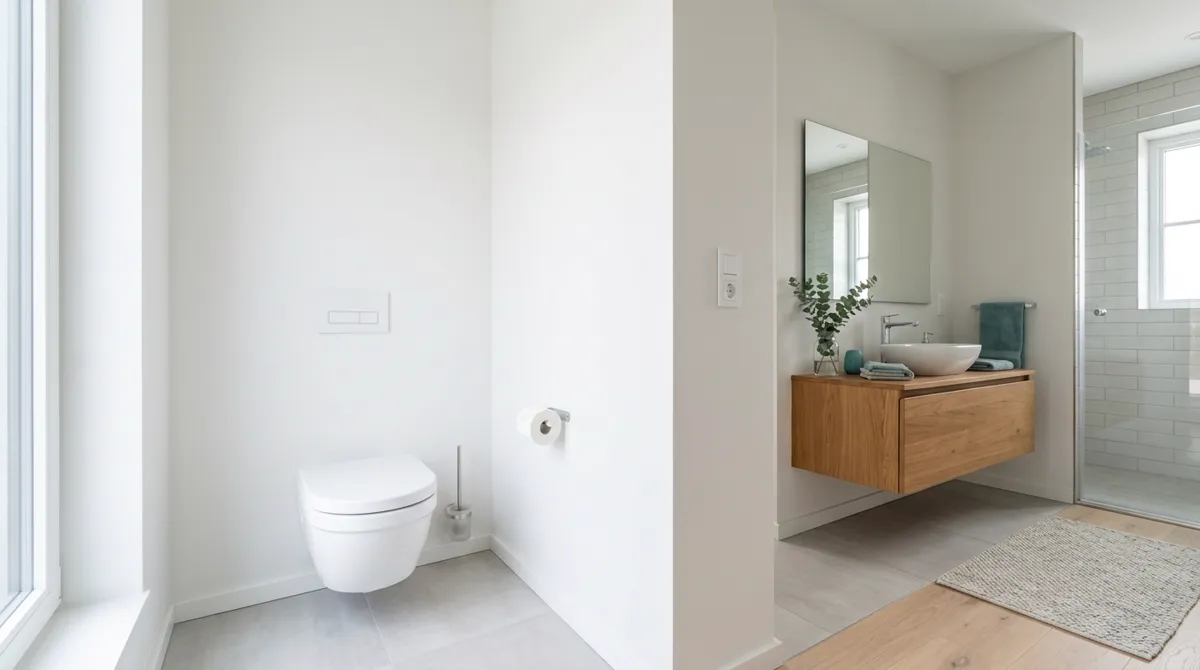
Almost every bathroom in America has an outlet, and almost none of them are near the toilet. That's not an oversight — it's the code doing exactly what it was written to do. The National Electrical Code requires at least one receptacle within three feet of the outside edge of the bathroom sink, so that's where builders put one, and that's usually where they stop. The toilet sits four, six, eight feet away across the room with bare wall behind it.
Then you go shopping for a bidet seat and discover the cord is about four feet long, exits the right side of the seat on most models, and is meant to reach an outlet immediately behind the toilet. The gap between what you have and what the seat needs is the single most common reason people abandon a bidet purchase halfway through the research.
The good news is that the gap is easy to close, and only one of the four ways to close it involves an electrician. Non-electric attachments — the best-selling category in the country — never touch an outlet at all. A smaller class of non-electric units gets you genuinely warm water by plumbing to your sink's hot line instead of heating it electrically. Handheld sprayers sidestep the question entirely. And if you truly want a heated seat with a dryer, adding a receptacle is a real but bounded expense. Here's how to pick, and what each route actually costs you in money and hassle.
Going non-electric? See the attachments that do it well.
See our picks →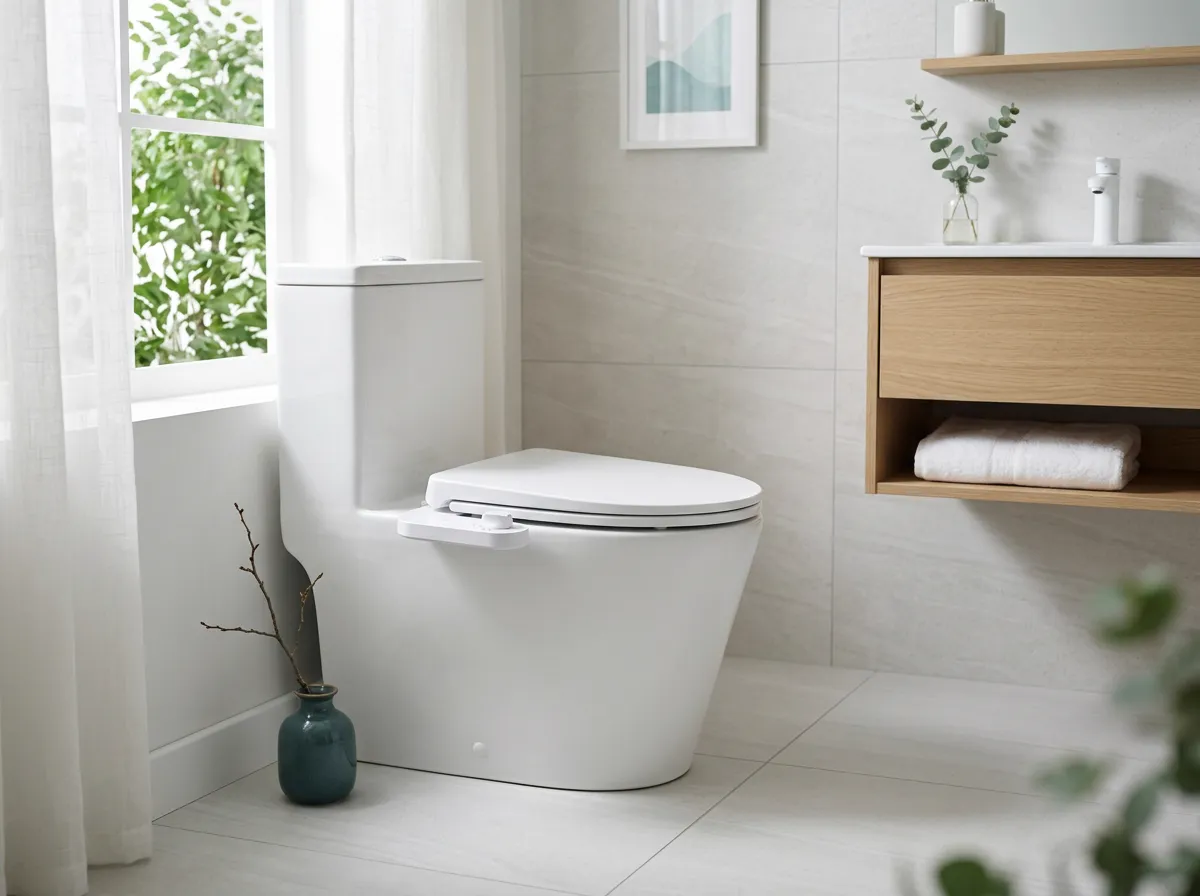
First, understand why the outlet isn't there
NEC 210.52(D) requires at least one receptacle outlet within 3 feet of the outside edge of each bathroom sink. It says nothing about the toilet. Builders install to the code minimum, so in the overwhelming majority of homes the only bathroom outlet is on the vanity wall, and there's no wiring in the wall behind the toilet at all. This matters for planning: your problem is almost never "the outlet is broken" or "the outlet is the wrong type" — it's that there is no circuit back there. Knowing that up front tells you an electrician would be running new wire, not swapping a device, which is the difference between a small job and a bigger one. It also explains why this is so universal: it isn't your house being unusual, it's every house.
Option 1: A non-electric bidet attachment (what most people should do)
Non-electric attachments mount between your existing toilet seat and the bowl, tee off the toilet's own supply line, and run entirely on household water pressure. No pump, no heater, no cord — so the outlet question never comes up. Installation is a T-valve, a hose, and two bolts, typically 15 to 30 minutes with an adjustable wrench, and it's fully reversible, which matters if you rent. The trade is real and worth naming: a basic attachment sprays cold tap water. In summer that reads as refreshing; in an unheated bathroom in February it's a genuine shock the first few times. Most people acclimate within a week or two, and a large share never upgrade. If the cold is a dealbreaker for you, keep reading — options 2 and 4 solve it in different ways.
Option 2: A warm-water bidet with no electricity, plumbed to your sink
A smaller category of non-electric attachments delivers genuinely warm water by taking two supplies instead of one: the toilet's cold line, plus a tee off the hot side of your bathroom sink's shut-off. A mechanical mixing valve on the attachment blends them, and a lever controls the temperature. No electricity, no outlet, real warm water. The catch is the install — you're running a braided hose from under the vanity to the toilet, which means either along the baseboard or through the vanity cabinet wall, and adding a tee to a live hot line. Bio Bidet notes this approach means routing a water line through the cabinet or floor and carries an increased risk of leaks, which is why they don't sell one. Take that seriously: it's a legitimate solution, but it's the option most likely to go wrong in an amateur install, and it's a poor fit for renters. There's also a lag — the water is only as warm as what's sitting in the pipe, so the first several seconds run cool while hot travels from the water heater.
Option 3: A handheld sprayer or a portable bidet
A handheld bidet sprayer — a shower-head-style wand on a hose, mounted beside the toilet — is a fully non-electric answer that some people prefer outright, not as a compromise. It tees off the same toilet supply line, gives you complete control over aim and pressure, and doubles for rinsing cloth diapers, litter boxes, and the bowl itself. The trade is that you're aiming it manually, which is a learning curve and a splash risk for the first week. Portable travel bidets — squeeze bottles with an angled nozzle — are the other end of the spectrum: no install at all, fill them at the sink with water at whatever temperature you like, and warm water is trivially solved. They're genuinely useful for travel, for a guest bathroom, or as a cheap test of whether you like bidets at all before committing to anything plumbed; Brondell's GoSpa squeeze bottles run about $12 to $25. In an RV or camper, our RV bidet guide covers which of these options actually fit.
Option 4: Have an electrician add a GFCI receptacle
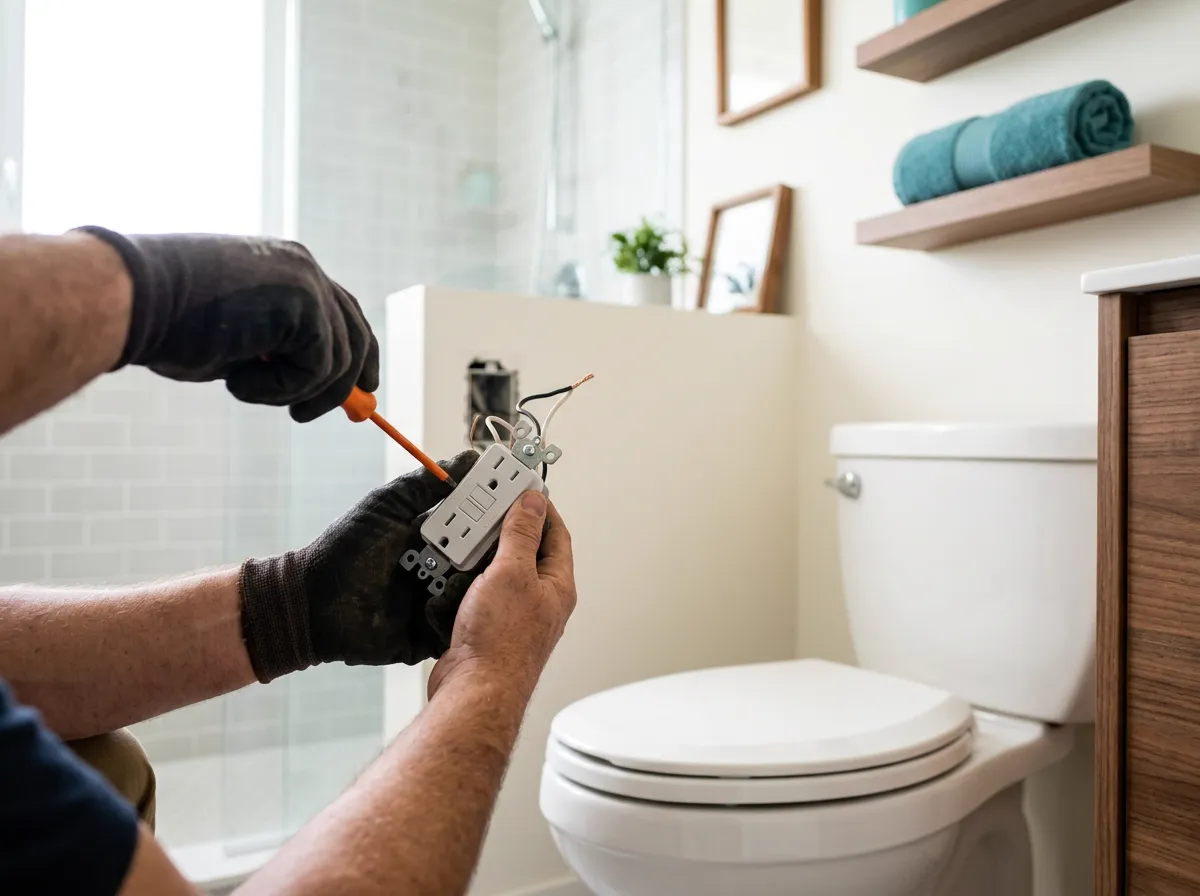
If you want a heated seat, a warm-air dryer and a remote, there's no way around a real outlet — those features need meaningful power. BidetKing says bidet seats need a GFCI-protected, three-prong grounded outlet of at least 15 amps; tank models draw up to about 600W and tankless models up to about 1400W, though only during the few minutes a day they're actually running. Whether the seat needs a circuit of its own depends on the model. BidetKing says most seats work fine on a shared bathroom circuit as long as no other heavy appliance runs on it at the same time, but Bio Bidet's BB-2000 manual recommends a separate circuit, warning that sharing one could trip the breaker or make the lights flicker, and Brondell's SE400 manual says not to plug the seat into an outlet or power strip already serving too many other products. Check your seat's manual, and tell the electrician what else runs on that bathroom circuit. On cost, Bob Vila, citing Angi, puts converting an existing outlet to GFCI at $130 to $300, with a national average around $210 and electrician labor at roughly $50 to $100 an hour. Behind a toilet there usually isn't an outlet to convert, so the electrician has to run wire to the spot, cut an opening in the wall and wire up a new outlet, which Bob Vila says is likely to cost more. Get the quote before you buy the seat, not after.
Why an extension cord is the wrong answer
It's the first thing everyone thinks of, and it's the one option we'd tell you to skip. The NEC's flexible-cord rules (Article 400) prohibit using cords as a substitute for a structure's fixed wiring — and running a cord permanently across a bathroom floor to a toilet is exactly that. Beyond the code question there's the practical one: you're running a cord carrying up to 1400W across the wettest floor in the house, in the spot most likely to get mopped, splashed, and stepped on, to a device that sits inches from a water supply. Power strips and cube taps make it worse, not better. If your bathroom's existing outlet isn't GFCI-protected — common in older homes — that's a separate thing worth fixing on its own merits regardless of whether you ever buy a bidet.
What you actually give up by going non-electric
Being honest about this is the whole point. Skipping the outlet costs you four things: warm water on demand, a heated seat, a warm-air dryer, and the remote and preset conveniences that come with electric seats. It does not cost you the core function — a non-electric attachment cleans just as effectively as a $600 seat, because cleaning is water and aim, not electricity. In practice the heated seat is the feature people miss most in cold climates, and the dryer is the one most people stop using within a month because it's slow. If you're weighing the gap, our bidet seat vs attachment comparison walks through it feature by feature with prices attached.
A decision shortcut
Renting, or want this done today for under $100: non-electric attachment. Own your home, cold bathroom, comfortable with plumbing or willing to hire a plumber: the sink-hot-line warm-water attachment. Want maximum control, or already have a handheld habit from another country: a handheld sprayer. Want the full heated-seat experience and the bathroom will be yours for years: get an electrician's quote for a GFCI receptacle behind the toilet, then buy the seat. And if you genuinely don't know whether you'll like a bidet, spend $12 to $25 on a portable one first — the cheapest way to answer that question is not to guess at it.
Tips & warnings
- Measure before you assume: bidet seat cords run about four feet and usually exit the right side, so the outlet has to be close and on the correct side.
- The reason there's no outlet by your toilet is code — a receptacle is only required within 3 feet of the sink. It's not a defect in your house.
- Don't solve this with an extension cord. It's a flexible-cord code violation and a genuinely bad idea in a wet room.
- Renting? Non-electric attachment or handheld sprayer only. Both are fully reversible; plumbing to the sink's hot line is not.
- Get the electrician's quote before buying an electric seat — the wire run, not the outlet itself, is what determines the price.
- A $12–$25 portable bidet is the cheapest way to find out whether you'll actually use one before you commit to any install.
Frequently asked questions
What are my options for a bidet if there's no outlet near my toilet?
You have four. A non-electric bidet attachment runs entirely on household water pressure, installs in 15 to 30 minutes with no cord at all, and costs about $30 to $150 — this is what most people should do, and the trade is cold tap water. A non-electric warm-water attachment plumbs to your bathroom sink's hot line and blends temperatures mechanically, giving you warm water without electricity, though the install is more involved and carries some leak risk. A handheld sprayer or a portable travel bidet sidesteps power entirely. Or you can hire an electrician to add a GFCI receptacle behind the toilet, which is the only route to a heated seat, warm-air dryer, and remote. What you should not do is run an extension cord across a bathroom floor.
Why isn't there an outlet near my toilet?
Because the electrical code doesn't require one there. NEC 210.52(D) requires at least one receptacle within 3 feet of the outside edge of each bathroom sink, and builders install to the minimum — so the outlet ends up on the vanity wall and there's typically no wiring at all in the wall behind the toilet. This is true in the large majority of American homes regardless of age or price. It also means that adding one is a wire-running job, not a device swap, which is the main thing driving the cost if you go that route.
Can I use an extension cord for a bidet seat?
You shouldn't. The NEC's flexible-cord rules prohibit using cords as a substitute for a structure's fixed wiring, and a cord permanently run across a bathroom to power a fixed appliance is exactly that. The practical case against it is just as strong: a bidet seat can draw up to about 1400W during a wash cycle, and you'd be routing that across the wettest floor in the house to a device sitting inches from a water supply. If you want an electric seat, have a GFCI receptacle installed properly. If that's not in the budget, go non-electric — the cleaning performance is the same.
Can you get warm water from a bidet without electricity?
Yes, but only from a specific type of unit. Non-electric warm-water attachments connect to two supplies — the toilet's cold line and a tee off the hot side of your bathroom sink's shut-off — and blend them at a mechanical mixing valve controlled by a lever on the unit. No power required. The install is the hard part: you're running a hose from under the vanity to the toilet and tapping a live hot line, which raises the risk of leaks and rules it out for most renters. There's also a delay while hot water travels from the water heater, so the first several seconds run cool. A standard single-line non-electric attachment cannot produce warm water — it sprays whatever temperature your cold supply is.
How much does it cost to add an outlet for a bidet seat?
Bob Vila, citing Angi, puts converting an existing outlet to GFCI at $130 to $300, with a national average around $210, and electrician labor at roughly $50 to $100 per hour. That is the price when there's already an outlet in the right spot. Behind a toilet there usually isn't one, so the electrician has to run wire to the location, cut an opening in the wall and wire up a new outlet, which Bob Vila says is likely to cost more; the length and difficulty of that run is what sets the price. Get a quote specific to your bathroom before you buy the seat. The seat needs a GFCI-protected, three-prong grounded outlet of at least 15 amps. Whether it also needs its own circuit depends on the model: BidetKing says most seats share a bathroom circuit fine as long as nothing else heavy runs on it at the same time, while Bio Bidet's BB-2000 manual recommends a separate circuit.
Do non-electric bidets clean as well as electric ones?
For the core job, yes. Cleaning is a function of water and aim, not electricity, and a well-made non-electric attachment delivers a strong, well-positioned stream driven by your household water pressure. What you give up is comfort and convenience features: warm water on demand, a heated seat, a warm-air dryer, oscillating and pulsing spray modes, and remote presets. Whether that gap matters is personal — in a cold climate the heated seat is the feature people miss most, while the dryer is the one most owners stop using after a few weeks. One caveat: non-electric units depend on your line pressure, so if your home runs below about 40 PSI, the spray will feel weak no matter which model you buy.
Will a non-electric bidet work in an apartment or rental?
Yes, and it's the best fit for one. A non-electric attachment mounts under your existing toilet seat and tees off the toilet's supply line using the existing shut-off — no drilling, no wiring, no permanent modification. Removing it takes about ten minutes and leaves the toilet exactly as you found it, so there's nothing for a landlord to object to and nothing to threaten a deposit. Handheld sprayers are similarly reversible, though they usually involve mounting a bracket, so check your lease on wall anchors. The one option to avoid as a renter is the warm-water attachment that plumbs to the sink's hot line — that's a modification to the bathroom's plumbing, and it's not yours to make.
Sources
- BidetKing — bidet seat electrical outlet FAQ
- BidetKing — non-electric bidet attachment features
- Bio Bidet — warm water bidet options
- NEC 210.52(D) — bathroom receptacle requirement
- EC&M — NEC Article 400, flexible cords and cables
- Bob Vila — How much does a GFCI outlet cost to install? (existing-outlet swap vs. new outlet)
- Bio Bidet — BB-2000 user manual (separate circuit recommended; extension cord only if necessary, three-prong, rated at least 10 amps, into a GFCI outlet)
- Brondell — Swash SE400 user manual (15-amp minimum; no outlet or power strip shared by too many other products)
- Brondell — GoSpa travel bidet (prices across the GoSpa portable line)