
Tankless vs reservoir bidet seats
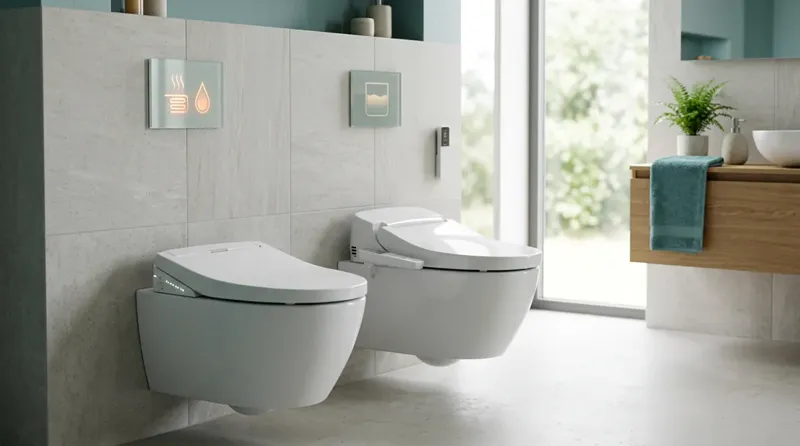
When you buy a bidet seat, one of the most practical questions is how it heats water — and for how long. Two main approaches exist: tankless (also called instant or on-demand heating) and reservoir heating (sometimes called tank-type). Both give you warm water; what separates them is how long that warmth lasts, what it costs, and how the seat fits your bathroom and budget.
Tankless models heat water the moment you press wash — a ceramic coil warms the water as it flows through, so the supply is theoretically unlimited. Reservoir models store a small tank of pre-heated water, ready the instant you need it, but that supply runs out — typically in 30 to 60 seconds — then needs several minutes to reheat. For many users, 30 to 60 seconds is plenty; for others, it is not.
Neither type is universally better. Reservoir seats have a lower price tag, mature and well-understood technology, and no perceptible warm-up lag. Tankless seats carry a higher upfront cost but pay back over time in lower standby energy use, slimmer profiles, and truly continuous warm water. The right pick depends on how long you wash, how many people share the bathroom, and what you are willing to spend.
| Tankless bidet seats | Reservoir (tank) bidet seats | |
|---|---|---|
| Warm water duration | Unlimited — heats on demand as long as you wash | Roughly 30–60 seconds before cooling; tank reheats in ~5 minutes |
| Warm-up lag | About 1 second of cool water before heat kicks in | Warm immediately — pre-heated water is ready on first use |
| Typical price range | $400–$800+ for mid- to premium models | $150–$400 for most quality seats |
| Standby energy use | Lower — heater activates only during wash | Higher — element keeps tank warm around the clock |
| Profile / bulk | Slimmer — no internal tank adds extra depth | Thicker rear due to water reservoir |
| Long-term reliability | No tank means fewer hard-water deposits and less leak risk; ceramic heater is durable | Tank is prone to mineral buildup in hard-water areas; occasional leak risk at tank seals |
| Multi-user households | No cool-down between users — consistent experience for everyone | Back-to-back users may get cooler water if tank has not reheated |
| Installation complexity | Standard GFCI outlet; some models need strong water pressure to perform well | Same GFCI outlet; generally straightforward with no pressure requirement |
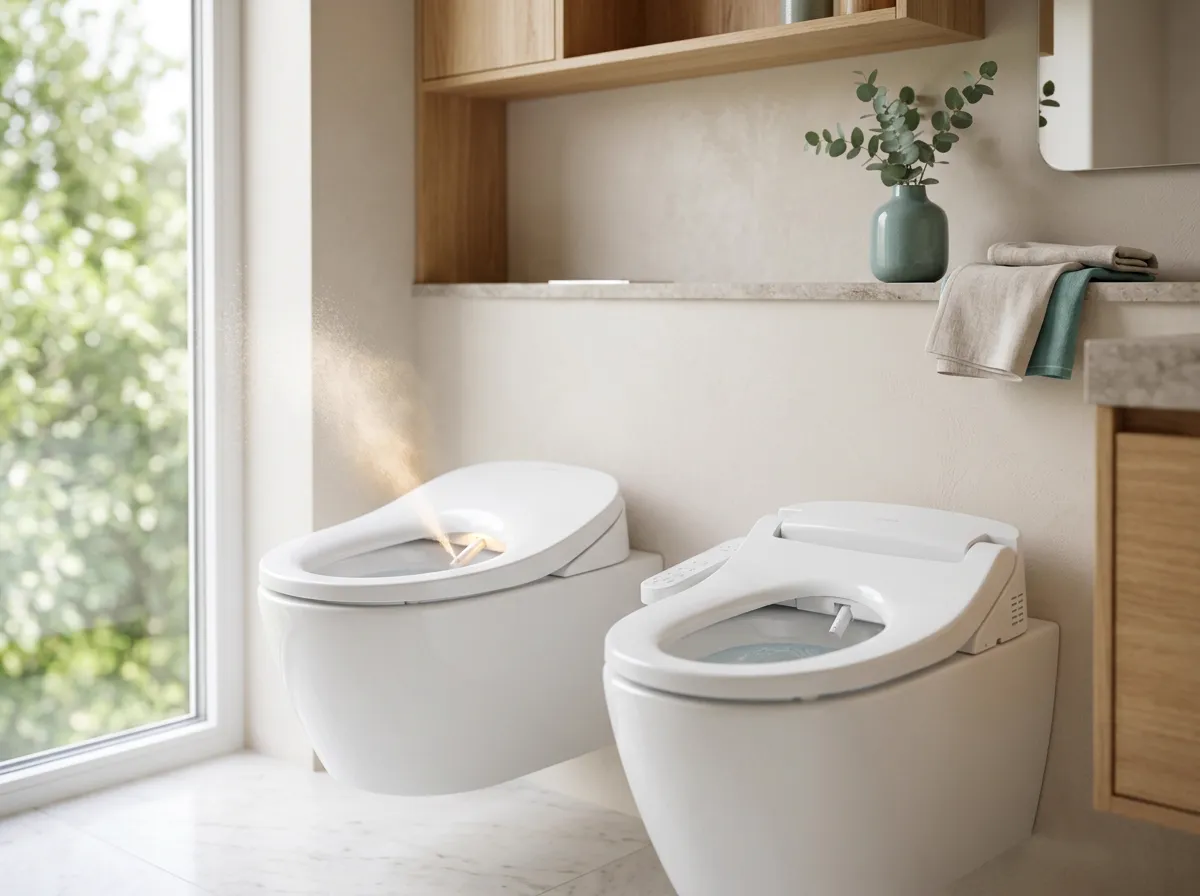
When to choose each
Choose a tankless bidet seat if you wash for longer than 60 seconds, live in a multi-person household where the toilet is used in quick succession, or simply want to avoid the annoyance of running out of warm water mid-use. The higher upfront cost is offset over time by lower standby energy draw, and the slimmer design looks cleaner on most toilets.
Choose a reservoir bidet seat if budget is your first priority or you want a proven, widely available technology with a long track record. Most users wash for well under 60 seconds, so the tank's supply is rarely a real-world limitation. The instant-warm advantage at first use and the lower sticker price make reservoir seats a genuinely smart buy for single users or smaller households.
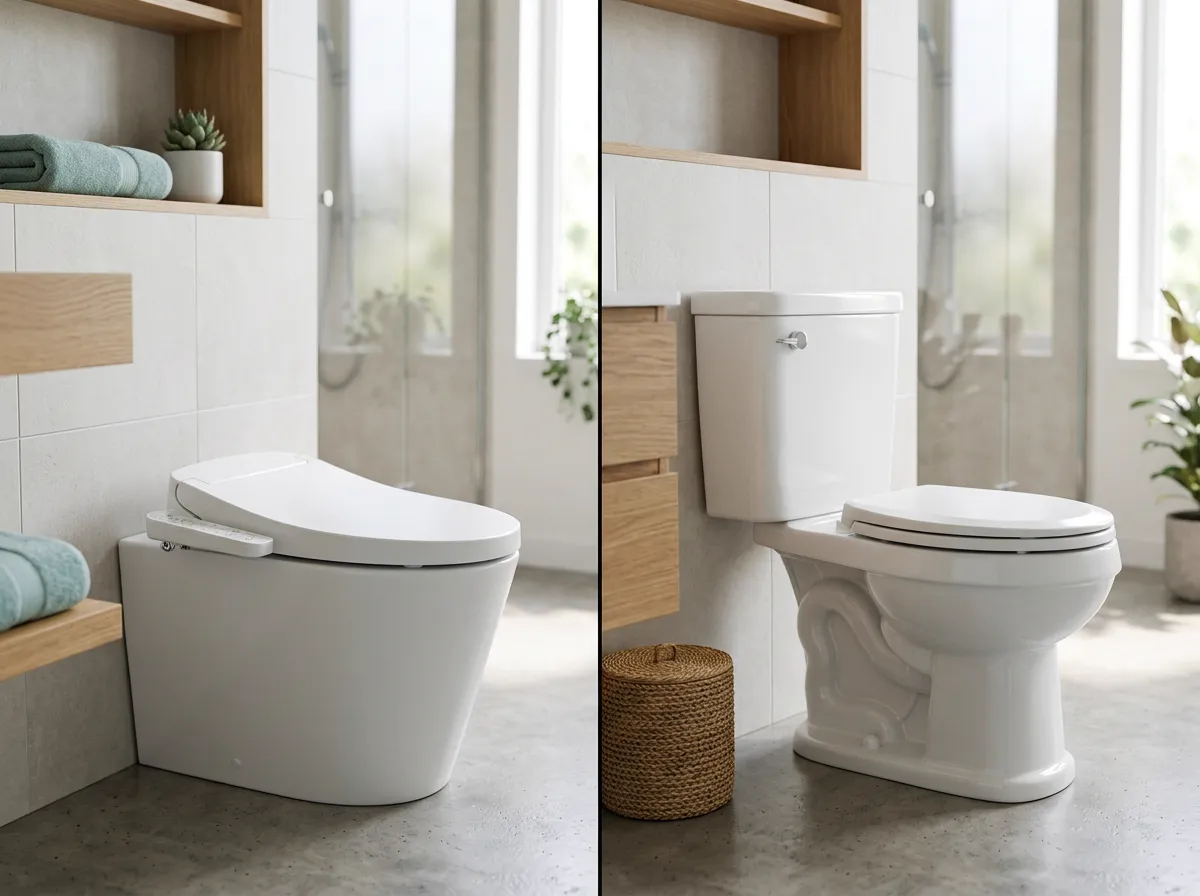
Our verdict
Frequently asked questions
Will I actually run out of warm water with a reservoir bidet seat?
Most people wash for 20 to 40 seconds, which falls comfortably within the 30-to-60-second window most reservoir tanks provide. Running out is a real possibility only for longer wash sessions or back-to-back users who do not wait for the tank to reheat.
Does a tankless bidet seat use less electricity overall?
Generally yes. A reservoir seat runs its heating element continuously to keep the tank warm, even when no one uses the bathroom for hours. A tankless heater only draws power during actual wash time, which can reduce daily energy use — though exact savings depend on how often the bidet is used.
Is the 1-second cold-water lag on tankless seats noticeable?
Owners report it as a brief, barely-perceptible coolness rather than a cold shock. The water reaches target temperature almost immediately. It is a known trade-off but not a common complaint in owner reviews.
Are reservoir seats more likely to leak than tankless models?
The internal tank does introduce one more component that can fail — particularly seal degradation over time or mineral buildup from hard water. Tankless seats eliminate that risk point. Neither type is considered unreliable, but hard-water households may see more maintenance issues with tank-type models.
Can I use a bidet seat if my home has low water pressure?
Reservoir seats are generally more forgiving of low water pressure because the internal tank handles storage. Some tankless models require adequate incoming pressure to activate the heater and produce a strong spray — check the manufacturer's minimum PSI rating before buying if your pressure is below average.
Do tankless bidet seats cost more to buy because the technology is more complex?
Yes, partly — the ceramic instant-heat element and the engineering to prevent temperature spikes add cost. The gap has been shrinking: entry-level tankless models are now available in the $300–$400 range, though the best reservoir seats still undercut them at equivalent feature levels.