
Do Smart Toilets Need an Electrician?
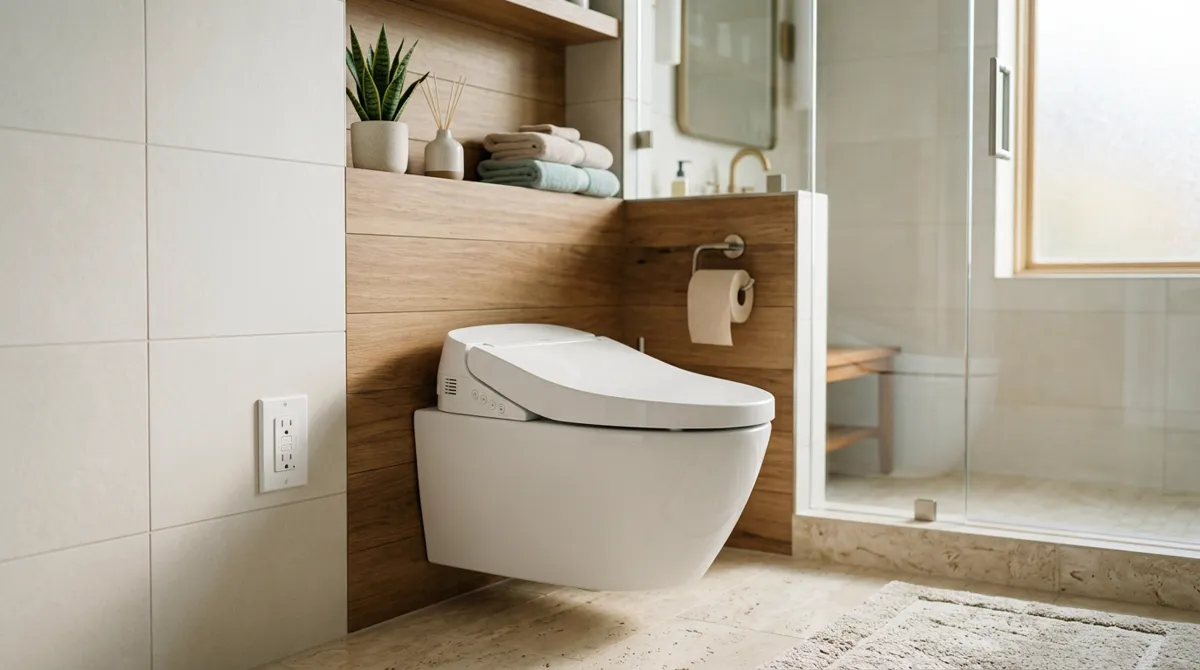
Yes, most smart toilets and integrated bidet toilets need an electrician. They run on standard 120V power and require a nearby grounded, GFCI-protected outlet. Many bathrooms have no outlet beside the toilet, so you should budget for an electrician to add one. The exceptions are non-electric and battery-powered bidets, which need no outlet at all.
Adding a GFCI outlet behind the toilet is usually a quick job, often around 30 minutes if power is already close by. Running a brand-new circuit from your panel costs more. Knowing which one you need before you buy keeps the project on budget and avoids unsafe workarounds like extension cords.
This guide walks through exactly what a typical install needs, when you can skip the electrician entirely, and rough costs so there are no surprises.
See the best smart toilets.
See our picks →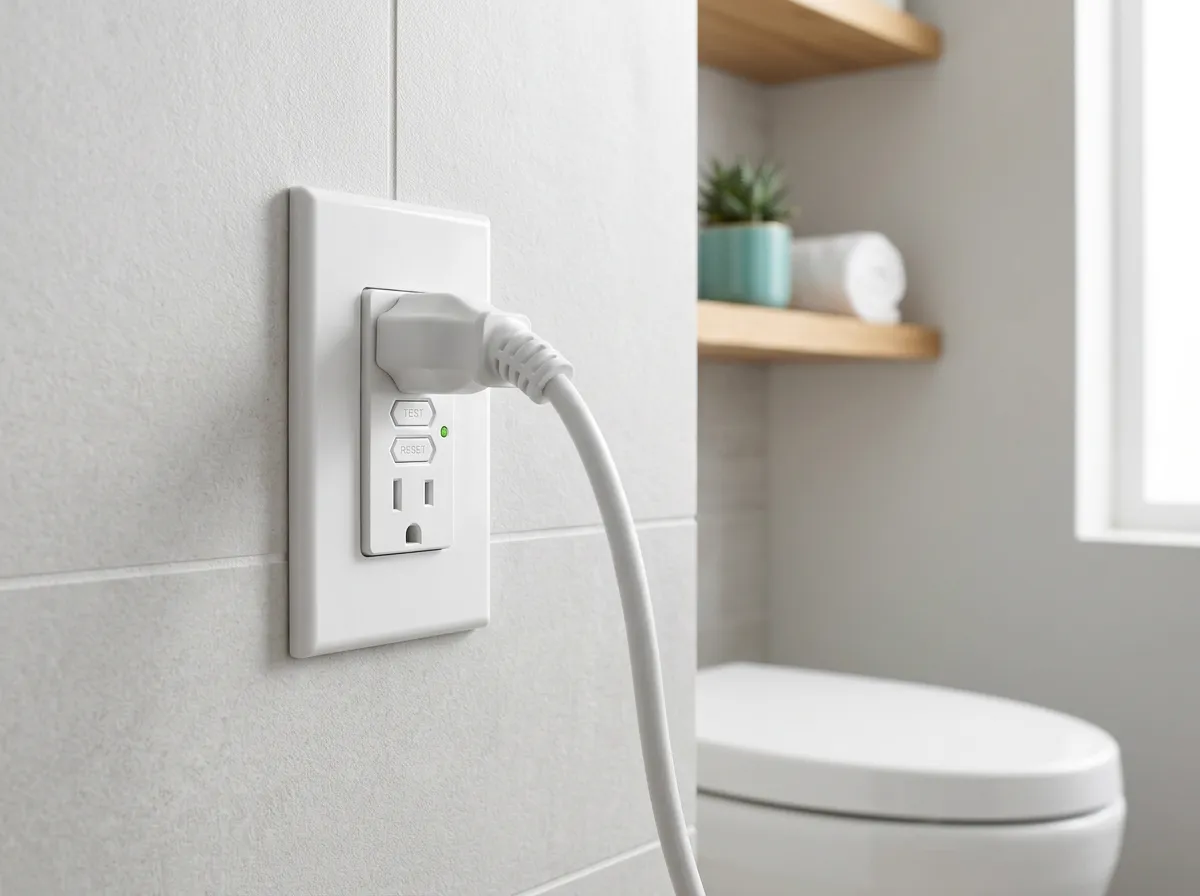
Why Smart Toilets Need Power in the First Place
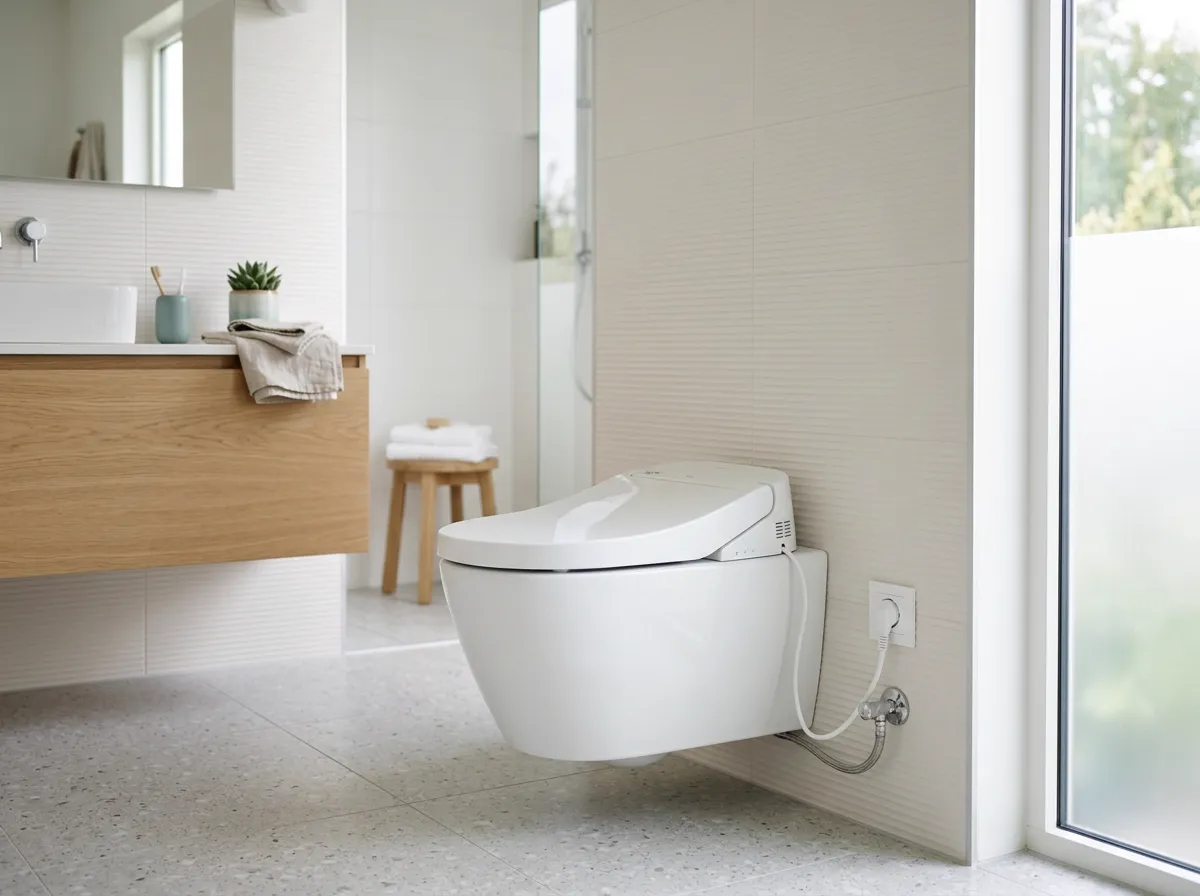
The comfort features are what draw power. Heated seats, warm water, the warm-air dryer, automatic lids, and self-cleaning nozzles all run on electricity. That is why an integrated bidet toilet (or an electric bidet seat) needs a wall outlet nearby. A plain toilet has zero electrical needs, but the moment you add these heated, automated features, you are plugging in an appliance. Almost every electric model sold in North America runs on standard 120V household power.
What a Typical Install Requires
You need a 3-prong grounded outlet that is GFCI-protected (the kind with TEST and RESET buttons, required by code for bathrooms near water). A 15-amp circuit is the minimum; a 20-amp bathroom circuit is preferred. The outlet should sit on the wall behind the toilet, roughly 6 to 12 inches off the floor, because power cords are only about 3 to 4 feet long. A dedicated circuit usually is not required, since the toilet sits idle most of the day and only draws heavy power during a short wash cycle, but some makers specify one. Kohler's K-4711 bidet seat instructions call for a dedicated 120 VAC circuit with GFCI protection of at least 15 amps, and Bio Bidet recommends running the BB-2000 on a separate circuit, so read your model's manual before planning to share. Where the manual is silent, an electrician may still recommend a dedicated line if your bathroom already has a hair dryer, heated floor, or other high-draw appliance on that circuit, to prevent tripped breakers.
The Cordless and Battery-Powered Exceptions
Not every toilet upgrade needs an outlet. Non-electric bidet attachments and seats use only your existing water-line pressure to spray. They cost about $40 to $200, need no power, and skip the electrician entirely, but you give up warm water, a heated seat, and the air dryer. Battery-powered bidets are a middle ground (roughly $50 to $300) that add a remote or self-cleaning nozzle without wiring, which makes them handy for rentals or rooms with no outlet. Keep in mind: a true heated smart toilet cannot run on batteries. Tankless models can pull up to 1400 watts during a wash cycle, far more than any battery can deliver, so anything with on-demand warm water needs to be wired in.
Rough Costs to Budget
If an electrician only needs to add or upgrade a GFCI outlet near existing wiring, expect roughly $130 to $300, with many jobs around $210. Running a brand-new dedicated circuit from your electrical panel runs more, typically $250 to $900, and climbs higher if walls have to be opened or conduit run a long distance. The smart toilet or bidet seat itself is separate: non-electric units $40 to $200, battery models $50 to $300, and electric heated seats commonly $200 to $700. Get the electrical quote before you buy the toilet so the wiring cost does not catch you off guard.
Why You Should Not Skip the Outlet
It is tempting to run an extension cord from the sink GFCI or a hallway outlet, but bathrooms are wet environments and that is exactly where shock risk is highest. A permanently installed, code-compliant GFCI outlet behind the toilet is safer, looks cleaner, and keeps you inside the maker's instructions. Kohler's installation guide for its K-4711 bidet seat says flatly not to use an extension cord with the product, and Kohler's warranty for its smart toilets and electric bidet seats does not cover damage caused by improper installation. The one-time electrician cost is small next to the safety and warranty protection it buys.
Tips & warnings
- Measure first: check whether there is already a GFCI outlet within about 3 feet of the toilet before you buy. If there is, you may not need an electrician at all.
- Confirm cord side. Cords usually exit the right rear, but some brands (like TOTO) exit the left, which changes where the outlet should go.
- Ask the electrician for a 20-amp GFCI line if your bathroom also runs a hair dryer or heated floor, to avoid nuisance breaker trips.
- If you rent or cannot add wiring, a non-electric or battery bidet gives you most of the cleanliness benefit with zero electrical work.
Frequently asked questions
Can I plug a smart toilet into a regular bathroom outlet?
Only if that outlet is a grounded, 3-prong, GFCI-protected receptacle on at least a 15-amp circuit, and it sits within the cord's 3-to-4-foot reach. Most older bathrooms either lack an outlet near the toilet or have a non-GFCI one, which is why an electrician is usually needed to add a proper, code-compliant outlet behind the toilet.
Does a smart toilet need its own dedicated circuit?
Usually no, unless the manufacturer says otherwise. The toilet idles most of the day and only draws heavy power during a short wash cycle, so it can generally share a standard bathroom circuit. Some makers do specify their own circuit: Kohler says to connect its K-4711 bidet seat only to a dedicated 120 VAC, GFCI-protected circuit, and Bio Bidet's BB-2000 manual recommends a separate one because sharing can trip the breaker or make lights flicker. If your manual doesn't ask for one, a dedicated 15-to-20-amp circuit is still worth it when your bathroom already runs high-draw appliances like a hair dryer or heated floor that could overload the line.
How much does it cost to add an outlet for a smart toilet?
Adding or upgrading a GFCI outlet near existing wiring typically runs $130 to $300 (about $210 on average) and can take as little as 30 minutes. Running a brand-new dedicated circuit from the panel costs more, roughly $250 to $900, and increases if walls must be opened or wiring run a long distance.
Is there a smart toilet or bidet that doesn't need electricity?
Yes. Non-electric bidet attachments and seats ($40 to $200) use only your water-line pressure and need no outlet, though they skip warm water, heated seats, and the air dryer. Battery-powered bidets ($50 to $300) add a few features without wiring. But any toilet with on-demand heated water needs to be plugged in, since it can pull up to 1400 watts.
Why can't I just use an extension cord?
Bathrooms are wet, high-shock-risk areas, and extension cords there are unsafe and against good practice. Kohler puts it plainly for the K-4711 seat: no extension cord with the product. The limited warranty printed in TOTO's WASHLET SW3024 manual doesn't mention extension cords, but it does exclude damage from failing to use the factory-equipped cord and plug, from a loose or faulty outlet, or from any supply other than 120V, 60Hz current from a GFI socket, so the outlet itself has to be right. A permanently installed GFCI outlet behind the toilet is the safe, code-compliant way to power the unit.
Sources
- Kohler — Installation Guide, Bidet Toilet Seat K-4711 (doc 1054179-2-E): dedicated 120 VAC GFCI-protected circuit, no extension cord (PDF)
- Kohler — Smart Toilet and Electric Bidet Seat Three-Year Limited Warranty (doc 1353523-12): improper installation not covered (PDF)
- TOTO — WASHLET SW3074 / SW3024 owner's manual, Limited Warranty clause 3(f): factory cord and plug, loose or faulty outlet and non-GFI socket exclusions (PDF)
- Bio Bidet by Bemis — Bliss BB-2000 user manual: separate circuit recommended (PDF)