
Are Smart Toilets Worth It?
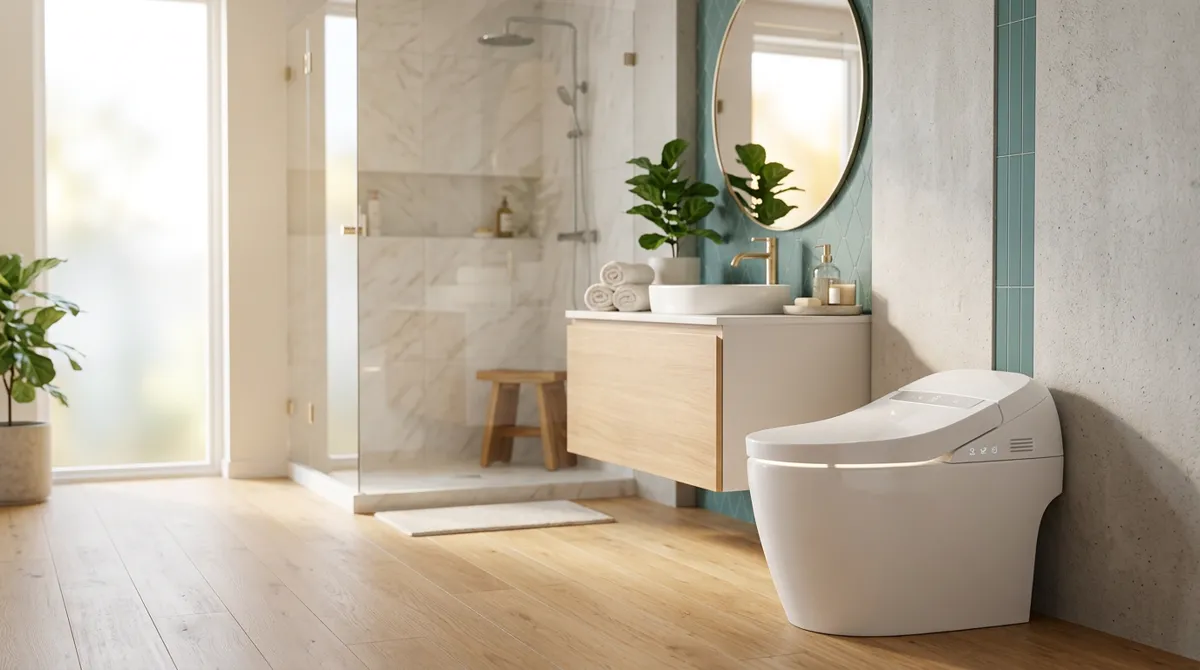
A smart toilet is worth it if you want every comfort feature in one seamless, modern unit and plan to stay in your home for years. But for most people, a bidet seat on a normal toilet delivers most of the same benefits, including warm water, heated seat, and dryer, for less money once installation is counted. A mainstream electric seat costs about $300 to $600 and goes on without a plumber, while smart toilets range from about $550 for a budget brand to five figures at list price for TOTO's NEOREST LS, and replacing the whole fixture usually means paying a plumber too. The smart toilet wins on polish, automation, and aging-in-place use. The bidet seat wins on cost, easy repair, and lower risk.
The real decision is not about features alone, because both can wash, warm, and dry you. It comes down to what you are willing to spend, how much install hassle you can handle, and what happens years from now when an electronic part fails. A smart toilet ties the bidet to the whole fixture, so one failure can mean replacing everything. A bidet seat unbolts and swaps out in minutes.
This guide breaks down the honest pros and cons side by side, covers install and electrical realities, repair and resale, and ends with a clear answer on who each option is actually right for.
Compare the best smart toilets.
See our picks →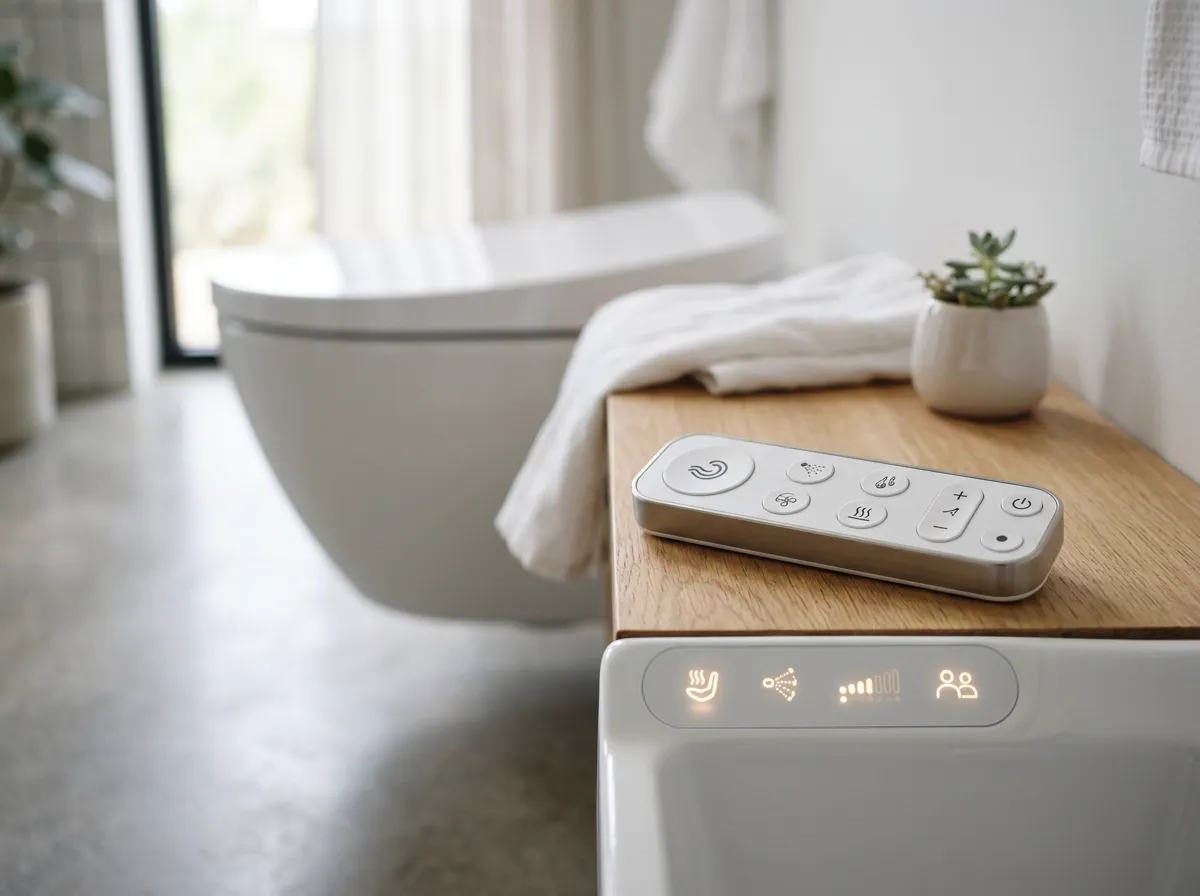
What a Smart Toilet Actually Does (vs. a Bidet Seat)
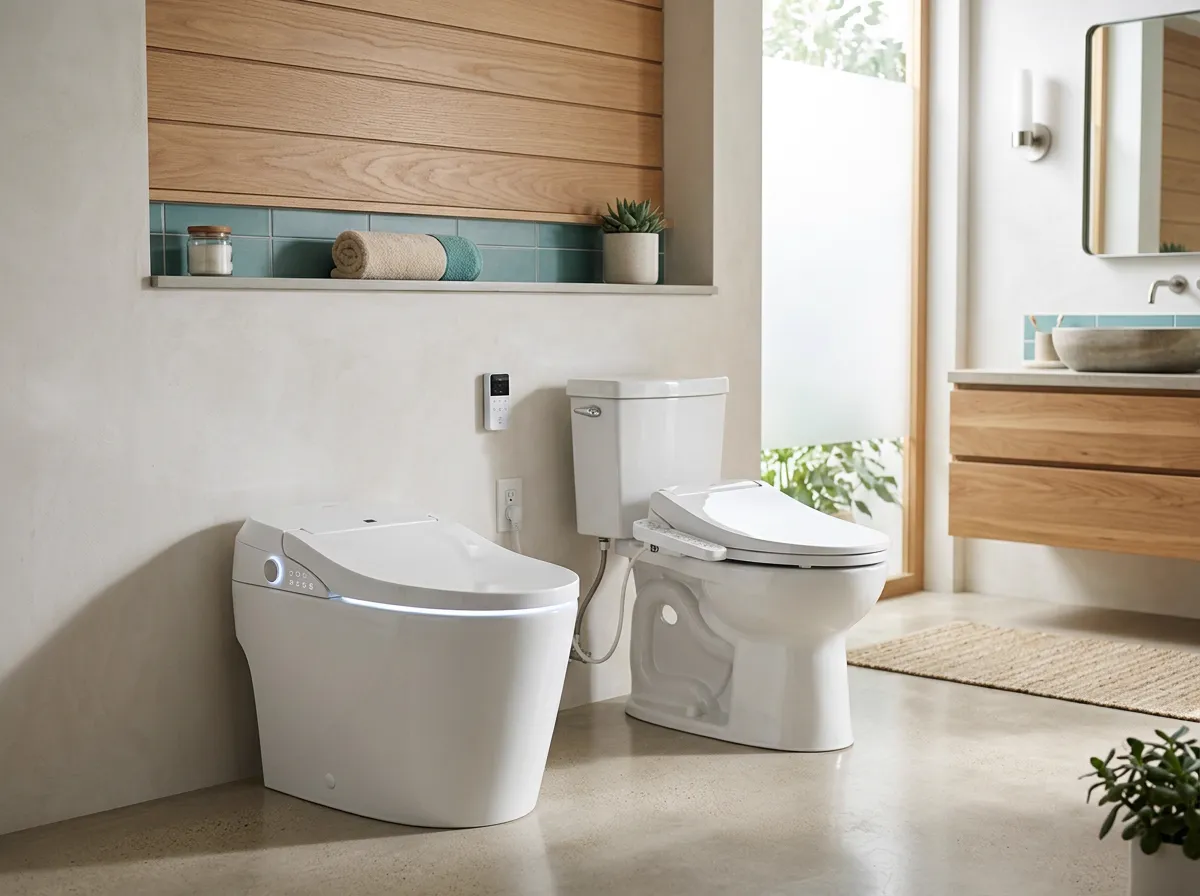
A smart toilet is an all-in-one fixture with the bidet, electronics, and bowl built together. Top features include a heated seat, warm-water wash with adjustable position and pressure, a warm-air dryer, a deodorizer, a night light, auto open/close lid, auto flush, and a self-cleaning nozzle (some even spray a foam shield to cut splashing and odor). A bidet seat is an electronic seat you bolt onto your existing toilet. The best bidet seats offer nearly the same wash, heated seat, dryer, and deodorizer. Where the smart toilet pulls ahead is the fully integrated, automated experience: hands-free lid and flush, a cleaner one-piece look, and tankless designs that save space. The bidet seat keeps your normal tank and flush, so it depends on your existing bowl's flushing power and looks slightly less seamless.
The Price Gap Is Usually Big, and It Matters
For most buyers, price is the biggest difference. Electric bidet seats start near $200, and mainstream models from Brondell, TUSHY, and Bio Bidet mostly cost $300 to $600. TOTO's higher-end WASHLET seats, such as the S5 and S7A, list at about $1,000 to $2,000, though TOTO promotes a showroom discount off list price on WASHLET seats, one that excludes its NEOREST toilets. Smart toilets begin near $550 with budget brands like HOROW, climb to roughly $1,600 to $2,700 for models from TUSHY, Brondell, and Bio Bidet, and pass $9,000 at list for TOTO's NEOREST AS and $10,000 for its NEOREST LS. Installation widens the gap, because a smart toilet replaces the whole fixture: TUSHY requires professional installation for its Eau, and Bob Vila's general estimate for a plumber to install a toilet is about $224 to $532, depending on the toilet type and the job. So at the budget end, a smart toilet's sticker price can overlap a mainstream seat's, and the plumber's bill is what separates them; that end is also where the warranty and U.S. service support deserve a close look. Against the big-brand and premium models, the extra money buys automation, design, and integration, not a dramatically better wash. Our bidet cost guide lists the model-by-model prices behind each tier.
Install and Electrical: One Is DIY, One Is Not
A bidet seat is genuinely DIY, and the makers quote short installs with no plumber: TUSHY says 10 minutes for its Cloud, and Bio Bidet about 30 minutes for the BB-2000 Bliss. The one catch shared by both options is power: electronic bidets and smart toilets need a 120V GFCI-protected outlet near the toilet, and many older bathrooms don't have one. The manuals differ on extension cords. Brondell's Swash installation guide allows one only if necessary, rated for at least 15 amps with a three-blade grounding plug; Bio Bidet's BB-2000 manual likewise allows only a three-prong cord, plugged into a GFCI outlet and rated at least as high as the seat's 10 amps; and Alpha's installation guide says a heavy-duty extension cord can reach a nearby GFCI outlet. A cord is still a workaround, not a substitute for an outlet behind the toilet (our guide to bidets without an outlet explains why). A smart toilet adds more steps: it often needs a plumber to set the bowl on a standard 12-inch rough-in, plus that nearby outlet. Check a tankless model's minimum water pressure against your home's supply (HOROW lists 20.3 psi for its T16, for example); a low-pressure home may need a model with a booster pump. Bob Vila, citing Angi, puts converting an existing outlet to GFCI at about $130 to $300; if there's no outlet near the toilet, the electrician has to run new wire to the spot, which costs more. Read the unit's electrical requirements on its spec sheet as well, and if the bathroom circuit already carries a hair dryer or heated floor, ask the electrician whether the toilet needs a circuit of its own.
Repair Complexity and Lifespan: The Hidden Cost
Both have electronics that eventually wear out, including heating elements and the control board (the 'brain'), and humidity or unstable power can shorten their life. The critical difference is repair-risk asymmetry. When a bidet seat fails, you unbolt it and replace just the seat, often cheaper than repairing it after several years. When a smart toilet's control board or pump fails, the failure can take down the whole unit, and a board replacement can cost enough that you start weighing it against buying a brand-new toilet. Both also need routine upkeep: replacing water and air filters, remote batteries, and topping up foam solution on models that use it. For lowest-stress, lowest-cost long-term ownership, the bidet seat usually wins.
Resale Value and the Power-Outage Caveat
On resale, don't expect a windfall: treat a $5,000 smart toilet as a comfort purchase, not an investment you'll get back when you sell. Where it does add real appeal is multi-generational and aging-in-place buyers, who value hands-free lid, flush, washing, and drying for mobility, arthritis, or recovery needs. One practical caveat for either option: in a power outage, electronic wash and dry stop working. Smart toilets usually keep a manual flush button or backup, and some include a battery backup, but a normal toilet with a bidet seat still flushes mechanically from the tank, which some buyers see as a reliability advantage.
Who Each Option Is Actually Right For
Choose a smart toilet if: you're remodeling anyway, you want a seamless modern look and full automation, you're planning long-term aging-in-place for someone with mobility or hygiene needs, and the higher price plus repair risk don't bother you. Choose a bidet seat on a normal toilet if: you want the core hygiene benefits for the least money, you rent or might move, you want easy DIY install and easy replacement, or you're simply not sure yet. The bidet seat is the smart starting point for most people. You can always upgrade to a full smart toilet later if you fall in love with the experience.
Tips & warnings
- Start with a mainstream bidet seat ($300–$600) before committing to a smart toilet and a plumber's install. It's a much cheaper way to find out if you'll actually use the features.
- Check for a nearby GFCI outlet first. Both options need power, and an electrician's visit (about $130–$300 to convert an existing outlet, more if new wire has to be run) is a hidden cost people forget to budget for.
- If you have low household water pressure, check a tankless smart toilet's minimum pressure rating before buying, or choose a model with a built-in booster pump; otherwise you may get weak flushes.
- Confirm the unit has a manual or battery-backup flush before buying, so a power outage never leaves you stuck.
Frequently asked questions
Are smart toilets worth the money over a bidet seat?
For most people, no, a bidet seat is the better value. A mainstream electric seat delivers the core benefits (warm-water wash, heated seat, dryer) for about $300–$600, versus about $550 to more than $10,000 at list price for a smart toilet before installation. The seat installs in about 30 minutes or less and is far easier and cheaper to replace when electronics fail. A smart toilet is worth it mainly for remodels, a seamless automated look, or long-term aging-in-place needs.
Do smart toilets and bidet seats need electricity?
Yes. Heated-seat, warm-water and dryer functions on both need a 120V GFCI-protected outlet near the toilet. Manuals differ on extension cords: Brondell and Bio Bidet allow a grounded, properly rated cord only if necessary, and Alpha says a heavy-duty one can reach a nearby outlet, but a cord is a workaround rather than a substitute for an outlet by the toilet. Many older bathrooms lack one, so an electrician is a common extra cost: about $130 to $300 to convert an existing outlet to GFCI, and more if new wire has to be run. Non-electric bidet attachments need no outlet. They spray tap-temperature water, or warm water on models such as the TUSHY Spa 3.0 that connect to the sink's hot-water line, but they can't heat the seat or dry you.
Will a smart toilet flush during a power outage?
Most smart toilets keep a manual flush button, a hidden mechanical override, or a battery backup, so you can still flush, but the wash, dryer, and auto functions stop until power returns. A normal toilet with a bidet seat still flushes mechanically from the tank, which is one reason some people prefer that setup for reliability.
How long do smart toilets and bidet seats last?
It depends on the model, how hard it's used, and the bathroom it's in; humidity and unstable power shorten the life of heating elements and control boards. Warranties vary widely, from one year on Bio Bidet's BB-500 seat to five years on its Discovery DLX smart toilet, so compare them before you buy. The key difference: when a bidet seat fails you just unbolt and swap the seat, but when a smart toilet's board or pump fails it can disable the whole unit, and the repair cost may rival buying a new toilet.
Does a smart toilet add resale value to my home?
Don't count on it. Buy a premium smart toilet as a comfort purchase, not as an investment you expect to recover when you sell. It can appeal to aging-in-place and multi-generational buyers, who value the hands-free lid, flush, washing, and drying for accessibility.
Sources
- Bio Bidet — BB-500 Series electric bidet seat (sale and regular price, 1-year warranty)
- Brondell — Swash SE400 electric bidet seat (price)
- TUSHY — Cloud heated bidet seat (price, 10-minute DIY install, grounded GFCI outlet requirement)
- Bio Bidet — BB-2000 Bliss electric bidet seat (price, about 30-minute setup, 3-year warranty)
- TOTO — WASHLET S5 elongated bidet seat (MSRP list price, showroom discount off list)
- TOTO — WASHLET S7A bidet seat (MSRP list price, showroom discount off list, NEOREST excluded)
- HOROW — T16 smart toilet with heated bidet (price, tankless design, 12-inch rough-in, minimum water pressure)
- TUSHY — Eau smart toilet (price, professional installation required, grounded GFCI outlet requirement)
- Brondell — Coit integrated smart bidet toilet (price, 3-year limited warranty)
- Bio Bidet — Discovery DLX smart bidet toilet (price, 5-year warranty)
- TOTO — NEOREST AS dual flush toilet (MSRP list price)
- TOTO — NEOREST LS dual flush toilet (MSRP list price)
- Bob Vila — How much does a GFCI outlet cost to install? (existing-outlet swap vs. new outlet)
- Bob Vila — How much does toilet installation cost?
- TUSHY — Spa 3.0 non-electric warm-water attachment (sink hot-water connection)
- Brondell — Swash S1000–S1400 installation guide (extension cord only if necessary: 15-amp minimum, three-wire, three-blade grounding plug)
- Bio Bidet — BB-2000 user manual (separate circuit recommended; extension cord only if necessary, three-prong, rated at least 10 amps, into a GFCI outlet)
- Alpha Bidet — Installation guide (15A GFCI outlet; heavy-duty extension cord to reach one nearby)