
Are bidets septic safe?

If you're on a septic system, you've learned to be suspicious of anything new that sends water or material down the drain — and that caution is well earned, because septic repairs are expensive and failures are miserable. So the question is fair: does adding a bidet put your system at risk?
The short answer is no. A bidet is septic-safe, and there's a decent argument it's actively good for your system. It adds only clean water, and very little of it — roughly an eighth of a gallon per wash, less than a cup. Meanwhile it reduces the two things that genuinely cause septic trouble in bathrooms: the volume of toilet paper reaching your tank, and the temptation to use wet wipes, which the EPA says should never be flushed at all.
That said, being accurate matters more than being reassuring. There are real septic risks in this picture — they're just not the ones people worry about. A bidet that develops a leak can quietly send hundreds of gallons a day into a system designed for a fixed daily flow, and that genuinely can cause a failure. And if your system is already marginal or failing, nothing here changes that. Below: the water math, the solids math, and the situations that actually deserve caution.
On a septic system? These simple attachments are the easy start.
See our picks →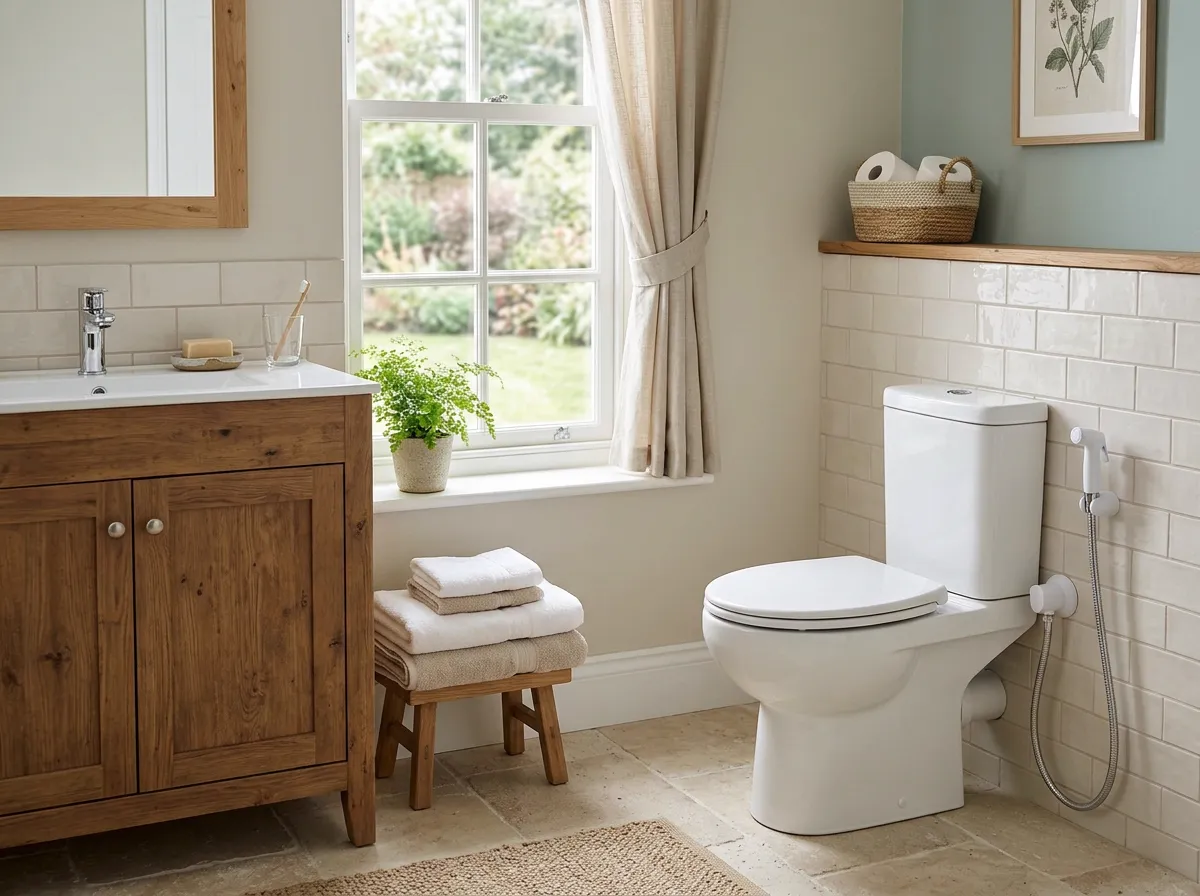
How a septic system decides what's too much
Understanding the design tells you why a bidet is a non-issue. A septic system is sized for a specific daily wastewater flow — NC State Extension notes conventional systems are designed around roughly 120 gallons per bedroom per day. Everything that drains from the house counts against that: showers, laundry, dishwashing, and toilet flushing. When incoming volume exceeds what the drainfield can absorb and treat, you get hydraulic overloading, and the excess backs up into the house or surfaces in the yard. So the real question isn't whether a bidet uses water — it's whether it uses enough to matter against a budget measured in hundreds of gallons a day. It doesn't come close.
The water a bidet actually adds
Scientific American puts a typical bidet wash at about one-eighth of a gallon — less than a cup. A family of four washing four times each adds roughly two gallons a day. Set that against a three-bedroom system's design flow of around 360 gallons a day and you're adding well under one percent, a smaller change than one extra load of laundry. It's also worth noting that the toilet flush accompanying each use — 1.6 gallons on a modern toilet, more on an older one — already dwarfs the wash. The bidet isn't adding a meaningful new load to your septic system; it's a splash on top of water your system was already handling.
The solids side: less toilet paper reaching your tank
This is where a bidet arguably helps. NC State Extension describes the septic tank's main purpose as stopping solids from entering the drainfield — and when solids escape, they clog the pores in the gravel and soil, which is a leading path to drainfield failure. Toilet paper is one of the steady solids streams entering that tank. Households that switch to a bidet typically cut paper use substantially, which means less material accumulating in the tank between pumpings. Be careful not to over-read this: it doesn't make your system maintenance-free, and it isn't a license to stretch your pumping schedule. But directionally, sending less paper into a tank whose job is capturing solids works in your favor.
The wipes problem a bidet solves outright
This may be the strongest septic argument for a bidet, and it's the one nobody leads with. The EPA is unambiguous that you should only flush human waste and toilet paper, and it lists wipes — including baby wipes and other wet wipes — among items that should never be flushed because they can clog your system and cause a failure. Plenty of people use wet wipes precisely because dry paper doesn't feel clean enough, and on a septic system that habit is a genuine hazard, since wipes don't break down the way paper does. A bidet delivers the clean feeling people are chasing without putting anything down the drain but water. If wipes are currently in your bathroom, replacing them with a bidet removes a real risk.
The actual septic risk: a bidet that leaks
Here's the part that deserves your attention, because it's the one scenario where a bidet can genuinely hurt a septic system. Normal use adds a couple of gallons a day; a leak runs continuously. The EPA notes that a single leaky or running toilet can add as much as 200 gallons of water per day — and a bidet T-valve that isn't fully seated, a worn washer, or a valve that doesn't shut can do the same kind of thing. That volume, against a system designed for a few hundred gallons a day total, is exactly the hydraulic overloading that causes backups and surfacing. So the septic-smart rule isn't 'don't get a bidet' — it's 'install it properly and check it for leaks,' which takes minutes.
How to install and live with one on septic
Nothing about the installation changes because you're on septic — the same T-valve, hose, and mounting. What changes is how carefully you verify it afterward. Check every connection for dampness over the first day or two, listen for a continuous hiss or trickle when the bidet isn't in use, and use your water meter as a leak test: note the reading, use no water for an hour, and confirm it hasn't moved. Then keep to normal septic maintenance regardless — the EPA recommends having the average household system inspected at least every three years by a professional, with tanks typically pumped every three to five years. A bidet doesn't extend those intervals, and treating it as if it does is how people get into trouble.
Electric or non-electric makes no difference
One question worth closing off: the type of bidet is irrelevant to your septic system. A heated electric seat, a cold-water attachment, and a handheld sprayer all send the same thing down the drain — clean municipal or well water, in similar small quantities. Nothing about a heating element, a dryer, or an electronic control affects what reaches the tank. Choose based on comfort, budget, and whether you have an outlet, not septic compatibility. The only distinction that matters slightly is how much water your habits push through: long, high-pressure washes use somewhat more than short ones, but even generous use stays trivial against your system's daily budget.
When to check with a septic professional first
Be honest with yourself about the state of your system before adding anything. If you're already seeing the warning signs of trouble — slow drains throughout the house, gurgling, sewage odors, soggy ground or unusually lush grass over the drainfield, or backups — then your system is already at or past its limit, and a bidet is not the issue but also not the time. Get it inspected and repaired first. The same goes if your system is undersized for the number of people now living in the house, or if you've never had it inspected and don't know its condition. For a healthy, properly maintained system, a bidet is a non-event; for a struggling one, every gallon matters and a professional should look at it before you make changes.
Tips & warnings
- Bidets are septic-safe: a wash adds about an eighth of a gallon against a system designed for roughly 120 gallons per bedroom per day.
- The bigger septic win is fewer solids — less toilet paper reaching the tank whose job is keeping solids out of the drainfield.
- If you currently use wet wipes, a bidet removes a real hazard: the EPA says never flush wipes, including 'flushable' ones.
- The genuine risk is a leak, not the washing — a running toilet can add up to 200 gallons a day, which is true hydraulic overloading.
- After installing, do the meter test: note the reading, use no water for an hour, confirm it hasn't moved.
- Keep your normal maintenance — EPA suggests inspection at least every three years and pumping typically every three to five. A bidet doesn't extend that.
Frequently asked questions
Are bidets safe for a septic system?
Yes. A bidet adds only clean water, and very little of it — roughly an eighth of a gallon per wash, less than a cup. Conventional septic systems are designed for a daily flow of about 120 gallons per bedroom, so a family adding a couple of gallons a day is well under a one-percent increase, less than one extra load of laundry. A bidet may also help on the solids side: the septic tank's main job is keeping solids out of the drainfield, and cutting toilet paper use means less material accumulating between pumpings. The one genuine risk is a bidet that leaks — the EPA notes a single leaky or running toilet can add up to 200 gallons a day, which really can hydraulically overload a system. Install it properly, check for leaks, and keep your normal inspection and pumping schedule.
Does a bidet help or hurt a septic tank?
On balance it helps, modestly. It adds a trivial amount of water, and it reduces the toilet paper entering your tank — and since the tank exists to stop solids from reaching the drainfield, where they can clog the soil pores and cause failure, less paper is a small point in your favor. The bigger benefit is behavioral: if a bidet replaces wet wipes in your household, you've eliminated something the EPA explicitly says should never be flushed. What a bidet does not do is reduce your maintenance obligations. You still need inspections and pumping on the normal schedule, and treating a bidet as a reason to stretch those intervals would be a mistake.
How much water does a bidet add to a septic system per day?
Very little. At about an eighth of a gallon per wash, a single person washing four times a day adds roughly half a gallon; a family of four adds about two gallons a day. Compare that with a conventional system's design flow of around 120 gallons per bedroom per day — a three-bedroom home is budgeted for roughly 360 gallons daily. Two gallons against that is a fraction of a percent, and it's dwarfed by the toilet flushes, showers, and laundry the system already handles. Even heavy bidet use in a large household doesn't approach a level that would concern a properly sized, healthy system.
Can a bidet cause a septic system to fail?
Normal use, no. A leaking bidet, potentially yes — and that's the scenario worth guarding against. Septic failures from water are caused by hydraulic overloading, where incoming volume exceeds what the drainfield can absorb, forcing effluent to back up indoors or surface in the yard. The EPA notes a single leaky or running toilet can add as much as 200 gallons per day, which against a system sized for a few hundred gallons total is enough to matter. A bidet T-valve that isn't fully seated or a valve that doesn't shut can leak the same way. Check connections after installation, listen for continuous trickling, and run a water-meter test with everything off. That five-minute habit is the whole precaution.
Do I still need to pump my septic tank if I use a bidet?
Yes, on the normal schedule. The EPA recommends that the average household septic system be inspected at least every three years by a septic service professional, with tanks typically pumped every three to five years. Reducing toilet paper does mean somewhat less solid material accumulating, but the tank still collects solids from everything else and still needs servicing on time. Stretching your pumping interval because you've switched to a bidet is exactly the kind of assumption that leads to solids escaping into the drainfield — the expensive failure mode. Follow your septic professional's recommendation and your state or local health department's guidance.
Is a non-electric bidet better for a septic system than an electric one?
No — the type makes no difference to your septic system. Electric seats, non-electric attachments, and handheld sprayers all send the same thing down the drain: clean water, in similar small quantities. Heating elements, dryers, and electronic controls have no effect on what reaches the tank. Choose based on comfort, budget, and whether you have an outlet near the toilet, not on septic compatibility. The only mild variable is usage habits — long, high-pressure washes use somewhat more water than brief ones — but even generous use remains trivial against a healthy system's daily capacity.
Sources
- EPA — How to Care for Your Septic System
- EPA — SepticSmart for homeowners
- NC State Extension — Why do septic systems fail?
- Scientific American — Do bidets save forest and water resources?