
Do bidets raise your water bill?
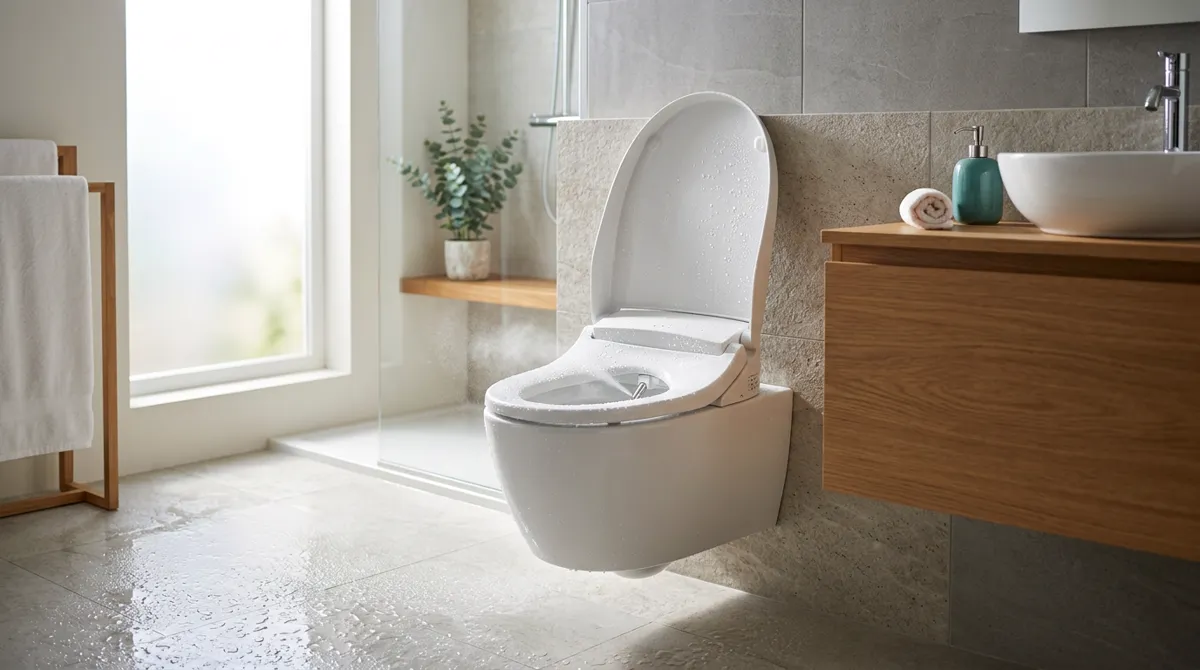
It's the most common objection to buying a bidet, and it sounds reasonable: you're adding a device that sprays water every time you use the toilet, so surely the water bill goes up. It does — technically. The honest question isn't whether a bidet uses any water, but whether it uses enough to notice on a bill, and the answer, for almost everyone, is no.
The reason is scale. A bidet wash uses roughly an eighth of a gallon of water — less than a cup. Your toilet uses somewhere between 1.6 and multiple gallons in the single flush that follows. So the bidet is adding a rounding error on top of the water you were already spending, and the water it adds costs a fraction of a cent. The math below works this out with real numbers, and it lands in the same place every time: a few dollars a year, not a few dollars a month.
There's a genuine exception worth flagging up front, because it's the one case where a bidet really can spike a bill — and it's not from normal use. A bidet that develops a slow leak or a valve that doesn't fully close can run continuously and quietly waste far more water than the washing ever would. That's a maintenance problem with a quick fix, not an argument against bidets, and we'll cover how to catch it. First, the numbers.
Convinced the water cost is trivial? See the bidets worth buying.
See our picks →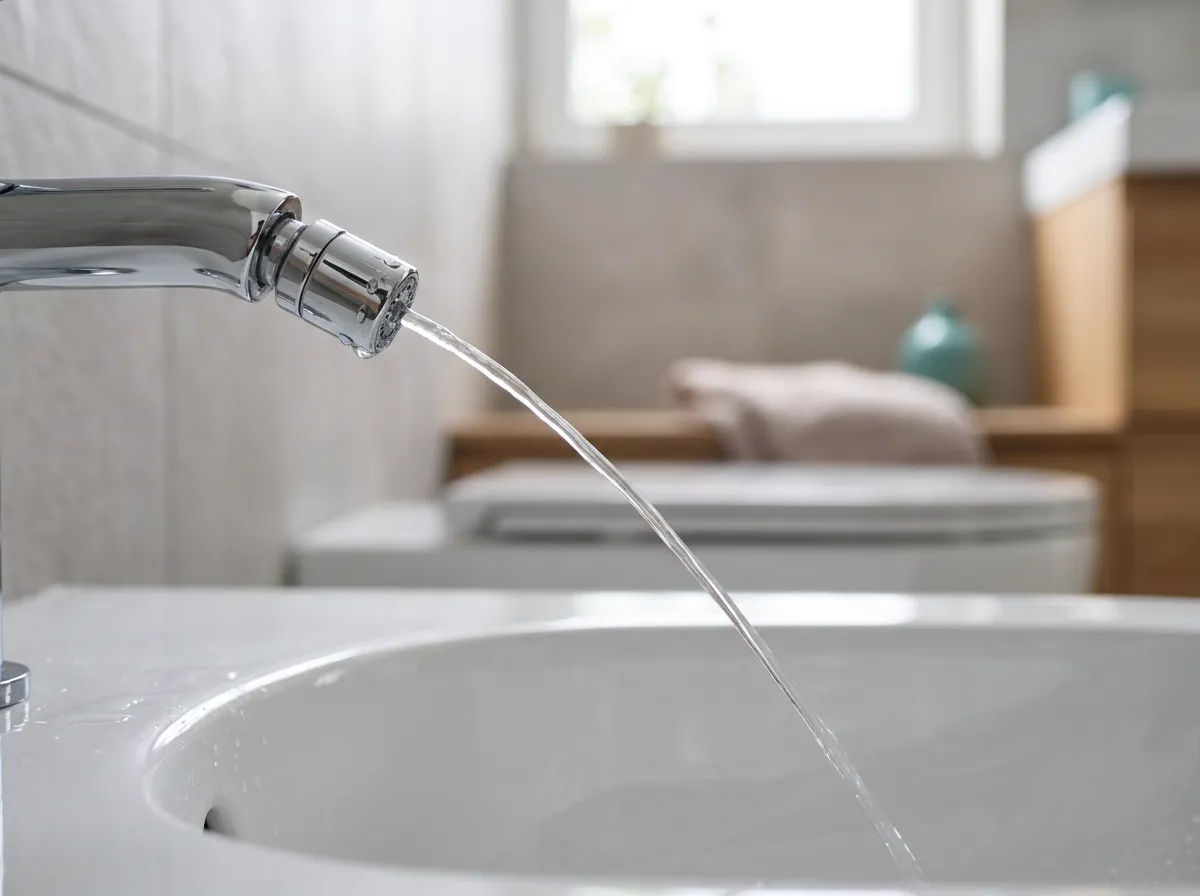
How much water a bidet actually uses per wash
Scientific American puts a typical bidet wash at about one-eighth of a gallon — less than a cup of water. A longer or higher-pressure wash might reach a quarter gallon, but that's the ceiling for a single session, not the norm. Set that against the toilet flush that happens anyway: modern low-flow toilets use 1.6 gallons per flush, and older toilets use 3.5 to 5. In other words, the flush you were always going to make uses roughly thirteen to forty times as much water as the bidet wash added to it. The bidet isn't a second toilet's worth of consumption; it's a splash on top of the flush you already pay for.
The math: what a bidet adds to a real bill
The EPA notes a sample water rate of about $0.00295 per gallon — roughly three cents for every ten gallons — though your combined water-and-sewer rate depends heavily on where you live and is often somewhat higher. Take a family of four, each washing four times a day: that's sixteen washes at an eighth of a gallon, about two gallons a day, or around 730 gallons a year. At a blended water-and-sewer cost of somewhere under a cent to about a cent and a half per gallon, that's roughly four to eleven dollars a year for the whole household. Even if you double the per-wash figure and assume expensive water, a heavy-use family tops out somewhere around twenty dollars a year. That's the realistic worst case — for most households it's less than a movie ticket annually.
Put it in the context of your total usage
The EPA estimates the average person uses about 82 gallons of water a day at home, which is roughly 10,000 gallons a month for a family of four. Adding two gallons a day of bidet use lifts that by well under one percent — a change smaller than the month-to-month noise in a normal bill from an extra load of laundry, a longer shower, or watering the yard. If you weren't tracking your water to the gallon before, a bidet will not be the thing that makes the bill jump. When people report a higher bill after installing one, the cause is almost always somewhere else, or it's the leak scenario below.
The toilet-paper trade nobody puts on the bill
There's a second half to the water story that never shows up on your statement, because it's spent at a factory instead of your house. Scientific American cites roughly 37 gallons of water to manufacture a single roll of toilet paper, alongside the wood and electricity. A household that switches to a bidet typically cuts its paper use dramatically, so the water saved upstream — in production — dwarfs the small amount added at your tap. You don't get a credit for that on your bill, and we won't pretend you do. But if the question behind the question is whether bidets waste water in some larger sense, the accounting runs the other way once manufacturing is included.
Electric warm-water seats: the cost moves to electricity, not water
A common mix-up: people assume a heated, warm-water bidet seat must use more water than a cold attachment. It doesn't — the volume sprayed is the same eighth of a gallon. What a warm-water seat adds is a small amount of electricity to heat the water and, on some models, warm the seat, not extra water. So if you're weighing a premium electric seat, the running-cost question is an electricity question, not a water one, and it's still modest. We cover that separately, because it's a genuinely different calculation from the water math on this page.
The one thing that really can spike your bill: a leak
This is the exception that proves the rule. Normal bidet use is trivial; a bidet that leaks is not. A T-valve that isn't fully seated, a worn washer, or a fill valve that doesn't shut can let water trickle continuously — and unlike a wash, a continuous leak runs 24 hours a day whether you're home or not. A slow, steady leak can waste hundreds of gallons before you notice, and that will show on a bill. The good news is it's easy to catch and usually a five-minute fix. If your bill genuinely jumped after installing a bidet, don't blame the washing — check for a leak first, because that's almost certainly what happened.
How to catch a leak before it costs you
Two habits cover it. First, right after installation, look and listen: check the T-valve and every hose connection for dampness or drips over the first day, and listen for a faint continuous hiss or trickle when the bidet isn't in use — that sound is water moving when none should be. Second, use your water meter as a leak detector: note the reading, avoid all water use for an hour or two, and check whether it moved. Any movement with everything off means a leak somewhere, and the freshly installed bidet is the first suspect. Catching it in week one turns a potential bill spike into a non-event, which is exactly where a bidet's water cost belongs.
Tips & warnings
- A bidet wash is about an eighth of a gallon — less than a cup. The flush that follows uses 1.6 to 5 gallons, so the wash is a rounding error on top.
- Realistic added cost for a family of four is a few dollars a year, and even heavy use on pricey water tops out around $20 a year.
- Bidet use adds well under 1% to a typical household's water consumption — smaller than the swing from an extra load of laundry.
- A warm-water electric seat sprays the same amount of water; its small extra cost is electricity for heating, not water.
- If your bill actually jumped after installing a bidet, suspect a leak, not the washing — a continuous drip wastes far more than any wash.
- Use your water meter as a leak test: note the reading, use no water for an hour, and confirm it hasn't moved.
Frequently asked questions
Do bidets increase your water bill?
Barely — for almost everyone the increase is a few dollars a year, not something you'd notice on a monthly bill. A bidet wash uses only about an eighth of a gallon of water, less than a cup, while the toilet flush that follows uses 1.6 to 5 gallons anyway. Running the math on a family of four washing four times a day comes to roughly 730 gallons a year, which at typical water-and-sewer rates works out to somewhere around four to eleven dollars annually for the whole household; even a heavy-use family on expensive water tops out near twenty dollars a year. That's well under a one-percent increase in a typical home's total water use. The one situation that genuinely raises a bill is a leaking bidet running continuously — but that's a maintenance issue with a quick fix, not normal use.
How much water does a bidet use per use?
About one-eighth of a gallon for a typical wash, according to Scientific American — less than a standard cup of water. A longer or higher-pressure session might use up to about a quarter gallon, but that's the upper end for a single use. For comparison, the toilet flush that accompanies each use consumes far more: 1.6 gallons on a modern low-flow toilet and 3.5 to 5 gallons on older models. The bidet's contribution is small enough that it's dwarfed by the flush you were already making.
Is a bidet cheaper than buying toilet paper?
Over time, usually yes, even after accounting for the water it uses. The added water costs a household on the order of a few dollars a year, while the toilet paper a bidet lets you skip costs considerably more than that — most households cut their paper use sharply once they switch. There's also a hidden environmental offset: Scientific American cites roughly 37 gallons of water to manufacture a single roll of toilet paper, so the water saved in production outweighs the small amount added at your tap. Our toilet-paper calculator can estimate what your household currently spends on paper, which is the figure a bidet actually offsets.
Why did my water bill go up after installing a bidet?
Normal bidet use can't account for a noticeable jump — it adds well under one percent to a typical household's water use. If your bill rose meaningfully, the most likely cause is a leak, not the washing. A T-valve that isn't fully seated, a worn washer, or a fill valve that doesn't shut can let water run continuously, 24 hours a day, wasting hundreds of gallons before you notice. Check every connection for drips, listen for a faint continuous hiss when the bidet isn't in use, and test your water meter with everything off. If the meter moves, you have a leak — and it's usually a quick fix. Other unrelated causes (a running toilet elsewhere, seasonal watering, a rate increase) are also worth ruling out.
Does a warm-water bidet use more water than a cold one?
No. A heated, warm-water bidet seat sprays the same volume of water as a cold attachment — about an eighth of a gallon per wash. The difference is that it uses a small amount of electricity to heat that water, and sometimes to warm the seat. So the running cost of a warm-water electric seat is an electricity question, not a water one, and it remains modest. If you're comparing a premium electric seat to a basic cold-water attachment, the water usage is identical; only the electricity differs.
How much does bidet water cost per year for a family?
For a family of four, realistically a few dollars a year. Working from about an eighth of a gallon per wash and four washes per person per day, that's roughly 730 gallons over a year. At the EPA's sample water rate of about three cents per ten gallons — with sewer charges typically added on top — the combined cost lands somewhere around four to eleven dollars annually for the household. Double the per-wash amount and assume expensive water and you still only reach the low twenties. Local rates vary widely, so treat these as the right order of magnitude rather than an exact figure for your city.
Sources
- EPA WaterSense — Understanding Your Water Bill
- Scientific American — Do bidets save forest and water resources?