
Why don't hotels have bidets?
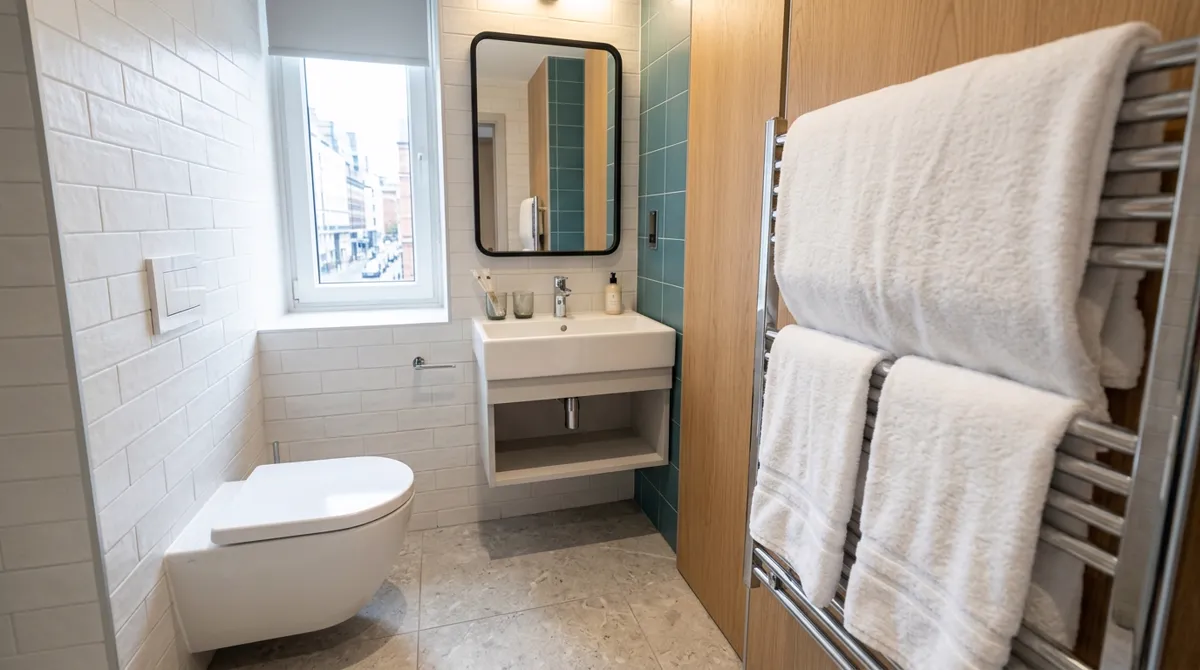
If you've used a bidet abroad and then checked into an American hotel, the absence is conspicuous. It isn't squeamishness, and it isn't that hoteliers have never heard of them — it's that the two ways to add one each run into a wall. A standalone bidet is a second plumbing fixture, needing its own supply, a drain with a trap and vent, and roughly the floor area of another toilet. A bidet seat needs none of that, because it uses the toilet already bolted to the floor, but the warm-water kind needs a grounded outlet beside the toilet — and in a typical US bathroom the only receptacle is over at the vanity. Then you multiply whichever answer you picked by every room in the building.
That second multiplication is the part people outside hospitality tend to underestimate. Hotels never buy one of anything: every fixture choice carries a decade of maintenance behind it, spare parts stocked across a portfolio, and a guest who can't work out the dial phoning the front desk at eleven at night. Standardization is close to the whole point — the same seat, the same valve, the same replacement part in every room of every property. Against that, a fixture many guests won't use has to justify itself on more than unit price. None of which means hotels are hostile to the idea; it means the idea has to survive arithmetic.
Below: which bidet the question is actually about, why each version stalls, why Italy and Japan get cited constantly and why they're not the same story, where hotels genuinely do install them and how to find those, and the thing that solves this for your trip next week rather than in a decade.
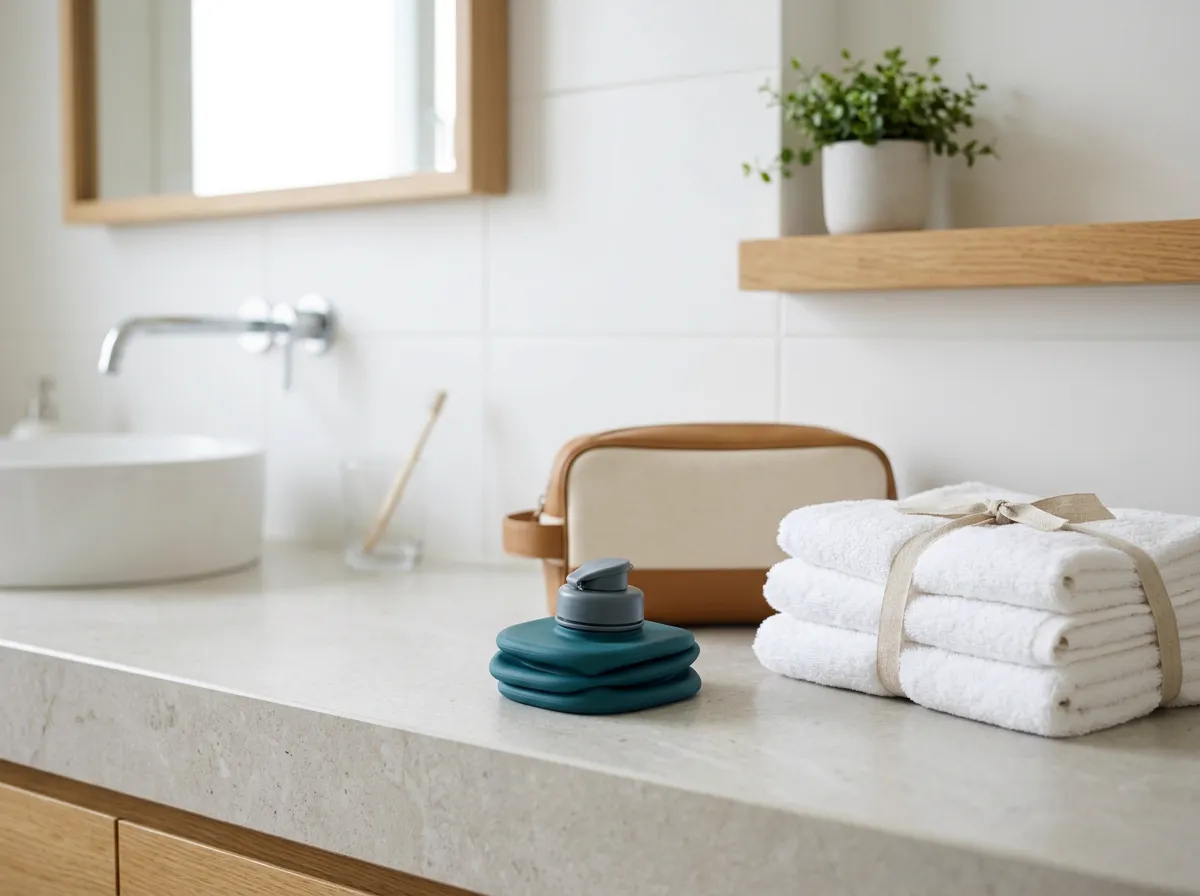
Traveling before hotels catch up? A portable bidet fits in a carry-on.
See our picks →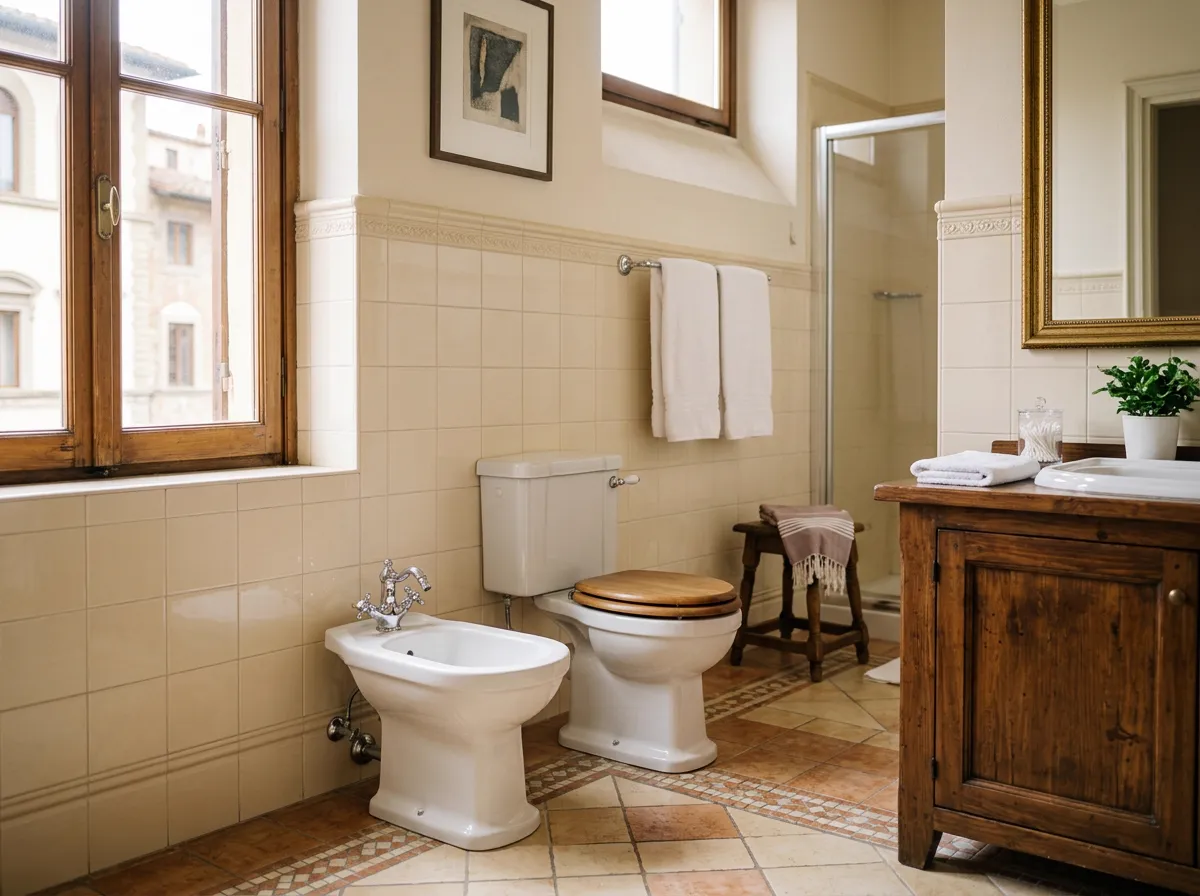
First, which bidet are we actually talking about?
The question quietly contains four different products. There's the standalone porcelain bidet beside the toilet; the bidet seat that replaces the existing toilet seat; the non-electric attachment that tucks under the seat you already have; and the handheld sprayer mounted on the wall. From a building's point of view these have almost nothing in common — one is a plumbing fixture that needs a drain, one is an appliance that needs an outlet, one is an inexpensive part that needs neither. Most people asking why hotels don't have bidets are picturing the first, because that's the one they met in Europe. The answer is different for each, which is why "American hotels are just behind" doesn't explain very much.
A standalone bidet is a second fixture, not an accessory
This is the genuinely expensive version. A floor-mounted bidet needs hot and cold supply lines, a drain with its own trap and vent, and clearance around it — in a bathroom where every square foot was allocated when the building went up. Adding one to an existing hotel bathroom means opening the floor, and in most layouts it means losing something else, because the room was never drawn with a second fixture in mind. Multiply the fixture, the rough-in and the lost floor area across a whole property and it stops being a bathroom decision and becomes a building decision. That's all before anyone asks how many guests would actually use it.
Bidet seats skip the plumbing and hit the electrical instead
The obvious workaround is a bidet seat or a non-electric attachment, which run off the toilet's existing supply and need no new pipework at all. Non-electric attachments are genuinely close to drop-in — for the hotel's own installers, at least. But the version guests actually remember is electric: warm water, heated seat, adjustable spray. An electric seat needs a grounded outlet beside the toilet, and in a typical US bathroom the only receptacle sits over at the vanity, so fitting one means running a new circuit into a finished, tiled room, one room at a time. That's the quiet reason the easy answer turns out not to be easy.
The multiplier nobody outside hospitality thinks about
Hotels never buy one of anything, and this is where the arithmetic bites hardest. Every fixture choice gets multiplied by the room count, then again by a decade of maintenance and housekeeping. A bidet seat is one more thing that can leak, one more nozzle to descale, one more item a guest phones the front desk about at eleven at night, and one more spare part a chain has to stock across every property. Standardization is close to the whole point — the same seat, the same valve, the same replacement part everywhere. Against that, a fixture many guests won't use and a few will misuse is a hard sell, even when it's cheap.
Why Italy and Japan are the two countries everyone cites
They get raised constantly, for completely different reasons. In Italy it's the law: a ministerial decree of 5 July 1975 requires that at least one bathroom in each home contain a toilet, a bidet, a bath or shower and a sink, and those fixtures are necessary for the issuance of the habitability certificate. That decree governs homes rather than hotels — but it's why the fixture is simply assumed in Italy, and why every plumber, layout and supply chain in the country already accounts for it. In Japan it's adoption instead of legislation. The Japan Sanitary Equipment Industry Association puts spray-seat penetration above 80% of two-or-more-person households as of March 2016, while Nippon.com, citing a Cabinet Office survey, reports 80.2% by March 2018.
Some hotels do have them — they're just clustered
It isn't true that no hotels have bidets, and it's worth saying plainly. Nippon.com notes that upscale hotels around the world continue to install Japanese high-tech toilets, which is the pattern in miniature: they appear where the room rate absorbs the cost and the guest already expects them. You'll also commonly meet them in Italy and across southern Europe, in parts of Latin America and the Middle East, and through much of Southeast Asia — sometimes as the standalone fixture, often as a handheld sprayer on the wall beside the toilet. Japan is its own case again, where the fixture is the electric spray seat rather than a second bowl. The absence is regional and price-tiered rather than universal.
What actually works when you're traveling
This is the practical part, because the hotel is not going to change before your trip. A portable or travel bidet — essentially a bottle with a proper nozzle, some of them collapsing flat enough to vanish into a carry-on — needs no plumbing, no outlet and nobody's permission. A plain peri bottle does the same job for less if you don't care about the nozzle angle. If the room happens to have a handheld sprayer beside the toilet, use it. What doesn't work is plumbing something into the room, and that includes fitting a bidet attachment to the hotel toilet's supply line — it takes two minutes at home, but it isn't your fixture, you can't see the condition of the valve or threads you're disturbing, and a slow leak you caused overnight is a genuinely bad end to a trip.
Is any of this likely to change?
Probably, but slowly, and from the home end first. Japan is the instructive precedent: Nippon.com reports that 14.2% of households owned one in 1992 when the figures were first compiled, against 80.2% of two-or-more-person households by March 2018 — so even an overwhelming success took decades to get there. Hotels tend to follow guest expectations rather than set them, and a fixture only becomes worth installing once enough guests actively notice its absence. New builds and gut renovations have by far the easiest route, because adding an outlet beside the toilet is nearly free while the walls are open and expensive once they're closed. That's also why change, when it comes, tends to arrive on renovation cycles rather than as a wave of retrofits.
Tips & warnings
- The question hides four different products — standalone fixture, bidet seat, attachment, handheld sprayer — and only the first one needs new drainage.
- For bidet seats in US hotels the blocker usually isn't plumbing at all, it's that the bathroom's only outlet is over at the vanity.
- Hotels multiply every fixture by room count and a decade of maintenance, which is why "it's cheap" isn't the argument it sounds like.
- Italy's bidets are a legal requirement rather than a preference — a 1975 decree ties them to the habitability certificate.
- Before booking, search a property's own guest reviews for "bidet" or "washlet" — people tend to mention it when it's there.
- Never plumb anything into a hotel's fixtures, including an attachment on the toilet supply. A travel bidet needs permission from nobody.
Frequently asked questions
Why don't hotels have bidets?
Mostly plumbing and arithmetic rather than squeamishness. A standalone bidet is a second plumbing fixture: it needs its own supply, a drain with a trap and vent, and roughly the floor area of another toilet, in a room where square footage is the product being sold. The cheaper route — a bidet seat — avoids the pipework entirely because it uses the existing toilet, but the warm-water electric versions guests actually remember need a grounded outlet beside the toilet, and in a typical US bathroom the only receptacle is over at the vanity. Fitting them means running a new circuit into a finished, tiled room, one room at a time. Then everything multiplies by every room in the building, plus a decade of maintenance, spare parts and late-night front-desk calls. Hotels standardize hard, so a fixture many guests won't use struggles to justify itself even when it's cheap.
Do any US hotels have bidets?
Some do, and they cluster at the top of the market. Nippon.com notes that upscale hotels around the world continue to install Japanese high-tech toilets, which matches the general pattern — you're most likely to find one in a luxury property, a recently built hotel, or somewhere catering to international travelers. To actually find one rather than guess: filter by bathroom amenities on the booking site, scan the room photo gallery for a second bowl or a sprayer beside the toilet, and search the property's own guest reviews for "bidet" or "washlet", since people tend to mention it when it's there. Then confirm by phone, because a listing that says "bidet" might mean a standalone fixture, a bidet seat, or a handheld sprayer, and those are quite different experiences. Don't assume a mid-range American chain will have anything.
Which countries have bidets in hotels?
Italy, Spain, Portugal and Greece are the classic European examples. In Italy a ministerial decree of 5 July 1975 requires at least one bathroom in each home to have a toilet, a bidet, a bath or shower and a sink — that decree covers homes rather than hotels, but it's why the fixture is standard throughout the country's plumbing and layouts, and why you'll routinely meet it in Italian hotel bathrooms too. Japan is the other country everyone names, though there it's the electric spray seat rather than a separate bowl, and the figures usually quoted are household adoption above 80% rather than any hotel measurement — hotel presence follows from the domestic norm rather than being counted directly. You'll also commonly encounter bidets or handheld sprayers across parts of Latin America and the Middle East and much of Southeast Asia.
Can I bring my own bidet to a hotel?
Yes, and it's by far the easiest solution. A portable or travel bidet is essentially a bottle with a nozzle — you fill it at the sink and use it — and some models collapse flat enough to disappear into a carry-on. It needs no plumbing, no electrical outlet and no permission from the hotel, and there's nothing to install or undo when you leave. A basic peri bottle does the same job more cheaply if you're not fussy about the nozzle angle. What you shouldn't do is fit a bidet attachment to the hotel toilet's supply line: it takes two minutes at home, but it isn't your fixture, you can't see the condition of the valve or the threads you're disturbing, and a slow leak you caused in a room you don't own is an expensive way to end a trip.
Why are bidets required by law in Italy?
A ministerial decree dated 5 July 1975 sets fixture requirements for Italian homes, specifying that at least one bathroom must contain a toilet, a bidet, a bath or shower and a sink. The requirement applies to the main bathroom rather than every bathroom in the property, so secondary or service bathrooms can be built without one. It has teeth because those fixtures are necessary for the issuance of the Certificato di Agibilità — the habitability certificate, broadly comparable to a certificate of occupancy in the US, which attests that a building and its fixtures meet the relevant health and safety regulations and that the property is safe to occupy. The practical effect after five decades is that the bidet is simply assumed in Italian bathrooms, which is why it feels ubiquitous to visitors.
Why don't hotels just install cheap bidet attachments?
It's the most reasonable question to ask, and non-electric attachments genuinely are the closest thing to a workable answer — they use the toilet's existing water supply, need no drain and no outlet, and cost little per unit. The obstacles are operational rather than technical. Every unit multiplies across the room count, adds a component that can leak or need descaling, creates a support call when a guest can't work out the dial, and adds another spare part to stock in every property. Hotels also standardize hard across a portfolio, so a change like this tends to arrive during a scheduled renovation rather than as a retrofit. It isn't that nobody has thought of it — it's that a small cost multiplied by a large number, with a maintenance tail attached, is a different proposition from buying one for your own bathroom.
Will hotels start adding bidets?
Slowly, and on renovation cycles rather than as retrofits. The economics only really work while the walls are already open — adding an outlet beside the toilet is nearly free during construction and expensive afterwards — so the realistic trigger is a property's scheduled refurbishment rather than a decision to add bidets as such. Guest demand is the other half of it: hotels tend to follow expectations rather than set them, and post-stay surveys are the lever guests actually have, because "no bidet" only becomes a line item once it shows up in the data. In the meantime the gap is easy to close yourself, since a travel bidet works in every room you'll ever stay in and needs nothing from the hotel.
Sources
- The Local Italy — are bidets legally required in Italian homes? (Ministerial Decree of 5 July 1975)
- Japan Sanitary Equipment Industry Association — spray seats and household penetration
- Nippon.com — high-tech toilets become standard household equipment in Japan