
Japanese Toilets: What They Are — and How to Get One
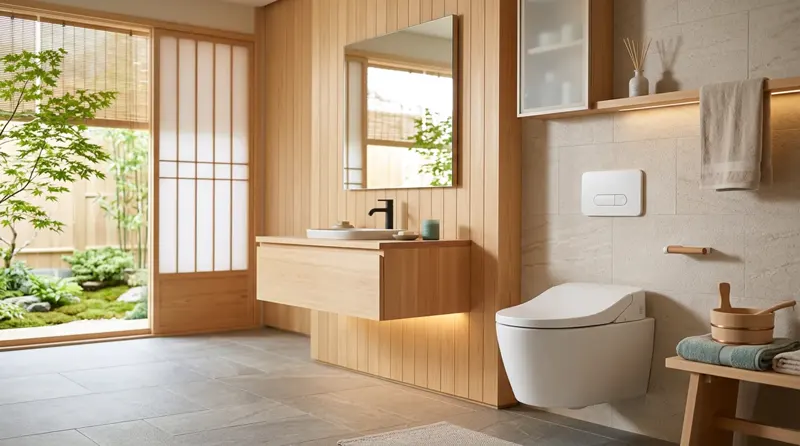
A "Japanese toilet" is a high-tech toilet that cleans you with a warm-water spray instead of paper and warms the seat. It is often called a washlet after TOTO's brand; many models add a warm-air dryer and a self-cleaning nozzle, and higher-end ones an automatic lid. You don't have to fly to Tokyo to get one: in the US you can either buy a full integrated Japanese-style smart toilet, or get most of the same features for far less by adding an electronic bidet seat (TOTO's Washlet is the original) to the toilet you already own.
These feel so different from a standard American toilet because in Japan they are ordinary. TOTO launched the Washlet there in 1980, and warm-water toilet seats are now in 82.5% of Japanese households of two or more people, according to the Cabinet Office's March 2026 consumer survey. TOTO notes the Washlet spread to hotels, commercial buildings, trains and airplanes, so the features that seem futuristic here are simply normal there.
This guide explains exactly what makes a toilet "Japanese," shows the two practical ways to get one in the US with our researched picks for each path, walks through the signature features and what they cost, and ends with the traditional squat toilets you may still meet in Japan.
See our top Japanese-style smart toilets
See our picks →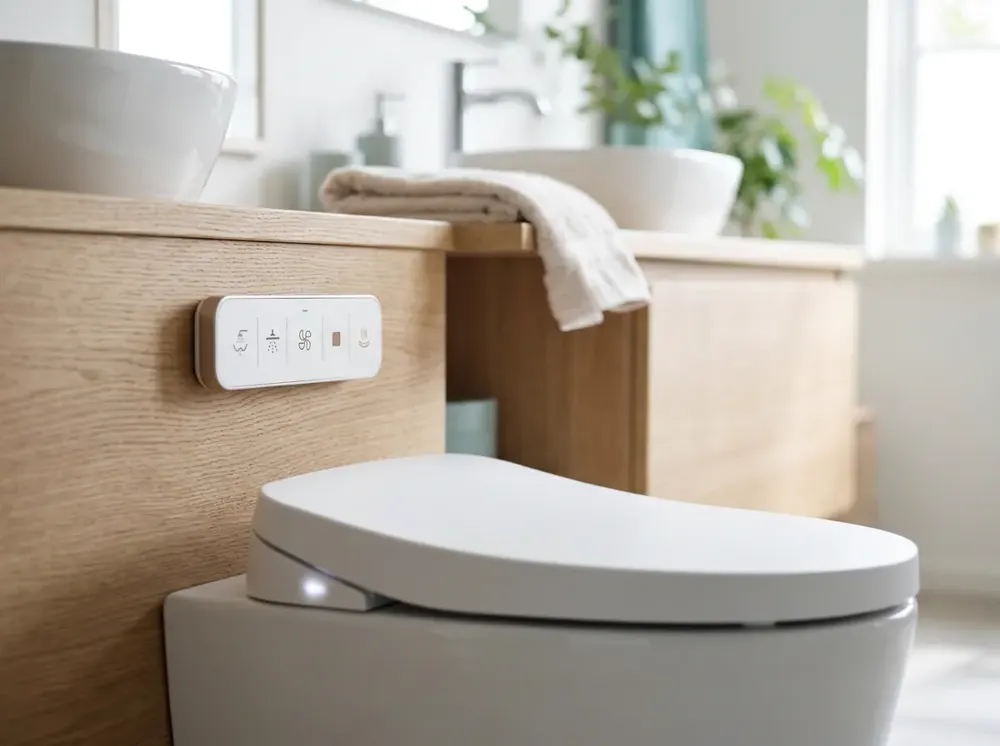
What makes a toilet "Japanese"?
It's the electronics, not the porcelain. A Japanese toilet (washlet) adds a set of features around cleaning and comfort: a warm-water bidet wash with adjustable pressure and position, a heated seat, a warm-air dryer that cuts down on paper, an automatic deodorizer, and, on higher models, an auto-opening lid, a night light, and automatic flushing. The premium units also self-clean: TOTO's EWATER+ mists the bowl and wand with electrolyzed water between uses. The common thread is that the toilet does the work that paper and scrubbing do on a standard toilet.
The washlet: where it comes from
"Washlet" is TOTO's brand name for its electronic bidet seat. TOTO introduced it in 1980 and calls it the world's first luxury toilet seat with electronic bidet functions; the name comes from reversing the English phrase "let's wash." TOTO has sold Washlets in the US since 1986 and says it has sold more than 70 million worldwide. That heritage is why, when Americans picture a "Japanese toilet," they're usually picturing a TOTO, though Brondell, Bio Bidet, TUSHY and others now make washlet-style seats too. The key point for a US buyer: the technology that defines a Japanese toilet lives in the seat, which is exactly why you don't need to replace your whole toilet to get it.
Two ways to get one in the US
Path 1, an integrated smart toilet: a one-piece unit with the washlet built in from the factory, such as TOTO's NEOREST line or integrated models from HOROW, TUSHY, Brondell and Bio Bidet. You get a seamless one-piece look, with features that scale with price (the cost section below has examples), and usually a plumber to install because you're swapping the whole fixture. TOTO's WASHLET+ sets sit in between: seat and toilet sold as one matched, cord-hidden set. Path 2, a washlet bidet seat: an electronic seat that replaces your existing seat and gives you a warm-water wash and heated seat, plus, depending on the model, a warm-air dryer and a self-cleaning wand. TOTO puts a Washlet install at under an hour on most North American toilets. For most people Path 2 delivers the Japanese-toilet experience at a fraction of the cost; Path 1 is for remodels, new builds, or buyers who want the seamless integrated look.
The signature features, explained
Warm-water wash: an adjustable nozzle sprays a warm stream; tankless models heat the water on demand instead of keeping a built-in reservoir warm, which TOTO says allows quick temperature adjustments. Heated seat: adjustable, genuinely appreciated in winter. Warm-air dryer: dries you hands-free, which TOTO says reduces the need for toilet tissue. Self-cleaning: the nozzle rinses before and after each use; TOTO's PREMIST and EWATER+ also mist the bowl to reduce sticking. Auto lid + auto flush: the lid opens as you approach and flushes when you leave, on higher models. Remote with memory: stores each user's pressure, temperature, and position presets.
What Japanese toilets cost in the US
The two paths sit at very different price points. On the seat path, washlet-style electric seats open at about $200 (Bio Bidet's BB-500 Series was $199 on sale), and the mainstream seats from Brondell, Bio Bidet and TUSHY cluster between roughly $300 and $600. TOTO's own higher-end Washlets list well above that band, the S5 at $974 and the S7A at about $2,000, though TOTO advertises showroom discounts off list. On the integrated path, the entry point is HOROW's T16 at $559, whose product page lists a warm-water wash, heated seat and self-cleaning nozzle but not a warm-air dryer or an automatic lid. Spending about $1,600 to $2,700 with TUSHY, Brondell or Bio Bidet adds a warm-air dryer, and the TUSHY Eau and Brondell's Coit open the lid for you as well. TOTO's NEOREST toilets list at about $9,000 for the AS and upward of $10,000 for the LS. An integrated unit also means paying a plumber and, if there's no outlet behind the toilet, an electrician. Because the seat holds the technology, the cheapest honest way to "own a Japanese toilet" is a mainstream washlet seat on the toilet you already have. If you want the integrated look, start with our smart toilet picks; our bidet cost guide has the full price and installation breakdown.
Do they need electricity? And installation
Yes. The warm water, heated seat and dryer all need power, so a Japanese toilet (whether an integrated unit or a washlet seat) needs a GFCI-protected, three-prong grounded outlet. Seat cords are short, about 4 feet by BidetKing's count, so plan for that outlet on the wall behind the toilet. Converting an outlet that's already there to GFCI is the cheaper case, and running wire to a spot with no outlet costs more; see our bidet cost guide for what an electrician charges. A washlet seat otherwise installs on your existing toilet. An integrated unit is a full fixture swap: TUSHY, for example, says its Eau smart toilet requires professional installation, plumbing and electricity. If wiring is off the table, our guide to bidets without an outlet covers the non-electric alternatives, which give up the heated seat and dryer.
Traditional Japanese toilets: the squat (washiki) style
Before the washlet, the traditional Japanese toilet was a squat toilet, called washiki (Japanese-style): a floor-level fixture you crouch over rather than sit on (some are set on a raised platform you stand on). Flushable washiki toilets were the dominant style in Japanese homes during the early postwar boom years, until sit-down toilets took over; TOTO's sales of sit-down toilets overtook washiki toilets in 1977, three years before the Washlet arrived. Public restrooms held on to squat toilets longer. After Tokyo won the 2020 Olympics in 2013, the city began replacing public toilets with Western-style sit-down models, most of them with warm-water bidet seats. Today almost all modern Japanese homes and hotels have Western-style toilets and squat toilets are gradually becoming a rarity, though you may still meet one in older establishments, some public parks and the occasional train station. If you do, face the curved end, or hood, which is the opposite of how you face a Western toilet, and squat with a foot on each side of the opening. In private homes and traditional inns (ryokan and minshuku) there is often a pair of slippers kept just for the toilet room: change into them at the door and back out when you leave. In Japan, the electronic washlet described above sits on an ordinary Western-style toilet.
Two ways to get a Japanese toilet in the US
| Path | What you get | Cost | Install |
|---|---|---|---|
| Integrated Japanese-style smart toilet (e.g. TOTO NEOREST) | Everything built in: a seamless one-piece unit; features scale with price | $550–$10,000+ at list price | Usually a plumber; needs a GFCI outlet |
| Japanese bidet seat / washlet (e.g. TOTO Washlet) on your toilet | Most of the experience: warm wash and heated seat, plus a dryer and self-cleaning wand on many models | $200–$2,000 at list price (most $300–$600) | DIY in under an hour (TOTO's figure); needs a GFCI outlet |
Tips & warnings
- Want the Japanese-toilet experience for the least money? Put a TOTO Washlet (or another brand's washlet-style seat) on your current toilet: it's the same core technology as a NEOREST for a fraction of the price.
- Check for a GFCI outlet behind the toilet before buying anything electric. If there isn't one, budget for adding it, and a new wire run costs more than converting an outlet that's already there.
- "Washlet" is TOTO's brand name; "bidet seat," "smart toilet" and "bidet toilet" are the generic terms for the same warm-water, heated-seat technology, so search all of them when you shop.
- For an integrated unit, confirm your rough-in (the distance from the wall to the drain bolts) before ordering.
Frequently asked questions
What is a Japanese toilet?
A Japanese toilet — called a washlet in Japan — is an electronic toilet that cleans you with a warm-water spray and adds a heated seat, a warm-air dryer, a deodorizer, and self-cleaning, plus (on higher models) an auto-opening lid and automatic flush. It replaces paper-based cleaning with water and is standard in Japanese homes.
What is a washlet?
"Washlet" is TOTO's brand name for its electronic bidet seat, introduced in Japan in 1980, which Nippon.com calls far and away the best known of Japan's warm-water bidet toilet seats. A washlet is the seat that holds the warm-water wash and heated-seat technology, which is why you can add one to a standard toilet without replacing the whole fixture.
Washlet vs bidet: what's the difference?
Washlet is TOTO's brand name for its electronic bidet seats. TOTO itself says a Washlet is neither a toilet nor a bidet but a toilet seat: it replaces the seat on most existing toilets and washes you with warm water from a wand underneath, with a heated seat and, on most models, a warm-air dryer. "Bidet" is the broader word. It covers the stand-alone fixture with its own faucet (TOTO lists these as conventional bidets), handheld sprayers, bidet attachments and bidet seats from any brand. The Washlet name covers TOTO's bidet seats and the WASHLET+ toilets built around them, which pair a Washlet seat with a matching TOTO toilet so no hoses or cords show. A bidet seat from another brand is the same kind of product under a different name, and an integrated smart toilet from HOROW, TUSHY, Brondell or Bio Bidet is the counterpart to TOTO's WASHLET+ and NEOREST toilets.
How much does a Japanese toilet cost?
In the US, a Japanese toilet costs from about $200 to more than $10,000, depending on which kind you buy. A washlet-style electric bidet seat for your existing toilet costs about $200 to about $2,000 at list price, and most mainstream models cost $300 to $600; higher-end seats such as TOTO's Washlet S5 ($974) and S7A (about $2,000) list well above that, though TOTO advertises discounts off list. A fully integrated Japanese-style smart toilet costs roughly $550 at the budget end and more than $10,000 at list price for TOTO's NEOREST line, with the big bidet brands' models in between at about $1,600 to $2,700. Both kinds need a GFCI outlet near the toilet, so add an electrician to the budget if you don't have one.
What is a traditional Japanese toilet?
A traditional Japanese toilet is a squat toilet, called washiki (Japanese-style): a floor-level fixture you crouch over instead of sitting on. TOTO's sales of sit-down toilets overtook squat toilets in 1977, and today almost all modern Japanese homes and hotels have Western-style toilets, many fitted with a washlet seat, so squat toilets are gradually becoming a rarity.
Can you get a Japanese toilet in the US?
Yes. TOTO, Brondell, Bio Bidet and TUSHY all sell both integrated smart toilets and washlet-style bidet seats in the US, and TOTO has sold Washlets here since 1986. The seat option is the easiest and cheapest way in: TOTO says a Washlet fits most North American toilets and installs about as easily as a regular toilet seat, in under an hour.
Do Japanese toilets need electricity?
Yes. The warm-water wash, heated seat and dryer all need power, so you need a GFCI-protected, three-prong grounded outlet close to the toilet, because seat cords only reach about 4 feet. If the outlet there isn't GFCI, expect roughly $130 to $300 to convert it; with no outlet at all, the electrician has to run new wire, which costs more. Non-electric bidet seats exist, and some, such as the TUSHY Oasis, get warm water from the sink's hot-water line, but without power there is no heated seat or warm-air dryer, which are part of what defines a Japanese toilet.
Sources
- TOTO USA — WASHLET bidet seats (1980 launch, fits most North American toilets, under-an-hour install, 70 million sold, model comparison table, instantaneous vs. tank water heaters, WASHLET vs WASHLET+)
- TOTO USA — What is a WASHLET bidet seat? (a toilet seat, not a toilet or a bidet)
- TOTO USA — WASHLET vs. WASHLET+: what's the difference? (WASHLET+ Integrated Bidet Toilet)
- TOTO USA — History of WASHLET (1980 launch, first US sales in 1986, spread to hotels, trains and airplanes)
- TOTO USA — Piedmont conventional bidet spec sheet (stand-alone vitreous china bidet with its own faucet)
- Brondell — hand-held bidet sprayers (bidet categories: seats and integrated bidets, attachments, sprayers, travel bidets)
- Cabinet Office of Japan (ESRI) — Consumer Confidence Survey, March 2026 (warm-water toilet seat ownership, households of two or more; in Japanese)
- Nippon.com — Learning about Japan's toilet culture at the Toto Museum (washiki toilets, 1977 sales crossover, Tokyo's public-toilet replacement, the Washlet name and standing among Japan's warm-water bidet seats)
- japan-guide.com — Japanese toilets (Western vs Japanese-style, how to use a squat toilet, toilet slippers)
- Tokyo Weekender — The ultimate guide to Japanese toilets (where squat toilets remain, which way to face)
- Bio Bidet — BB-500 Series electric bidet seat (sale and regular price)
- Brondell — Swash SE400 electric bidet seat (price)
- TUSHY — Cloud heated bidet seat (price)
- Bio Bidet — BB-2000 Bliss electric bidet seat (price)
- TOTO — WASHLET S5 elongated bidet seat (MSRP list price)
- TOTO — WASHLET S7A bidet seat (MSRP list price, showroom discount off list, EWATER+)
- TUSHY — Oasis warm-water non-electric bidet seat (sink hot-water connection)
- HOROW — T16 smart toilet with heated bidet (price and listed features)
- TUSHY — Eau smart toilet (price, dryer, auto open/close lid, professional installation required)
- Brondell — Coit integrated smart bidet toilet (price, warm-air dryer, auto-open/close lid)
- Bio Bidet — Discovery DLX smart bidet toilet (price, warm-air dryer)
- TOTO — NEOREST AS dual flush toilet (MSRP list price, integrated personal cleansing)
- TOTO — NEOREST LS dual flush toilet (MSRP list price)
- Bob Vila — How much does a GFCI outlet cost to install? (existing-outlet swap vs. new outlet)
- BidetKing — Bidet toilet seat electrical outlet FAQ