
Toilet seat that won't move
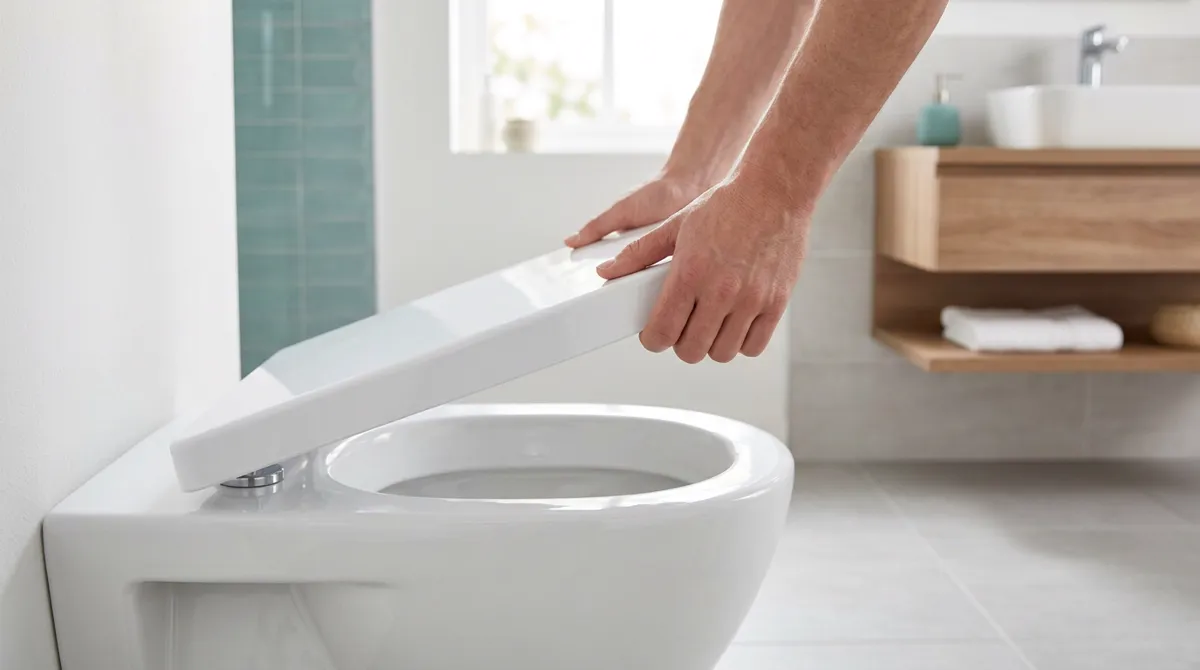
A toilet seat that wiggles under you or creeps sideways every few days feels like a cheap seat, but it almost never is. Seats move for mechanical reasons that have nothing to do with quality: the bolts have backed off, the mounting holes are deliberately oversized, or the hardware design was never meant to lock in the first place. The same premium seat that slides in one bathroom sits rock-solid in another — the difference is the fastening, not the plastic.
That's good news if you're shopping, because it means the fix is a feature you can look for rather than a brand you have to trust. A handful of fastening designs are built specifically so the seat can't loosen or shift, and once you know what they are, choosing a seat that stays put is straightforward. It's equally good news if you'd rather not replace anything — most moving seats can be locked down in ten minutes with hardware that costs a few dollars.
This guide covers both paths. First, why seats move — because the cause tells you whether you have a shopping problem or a five-minute fix. Then the fastening systems that genuinely stay tight, what to look for on a spec sheet, and how to lock down the seat you already own if replacing it isn't worth it yet.
Ready to replace it? See the seats that actually stay put.
See our picks →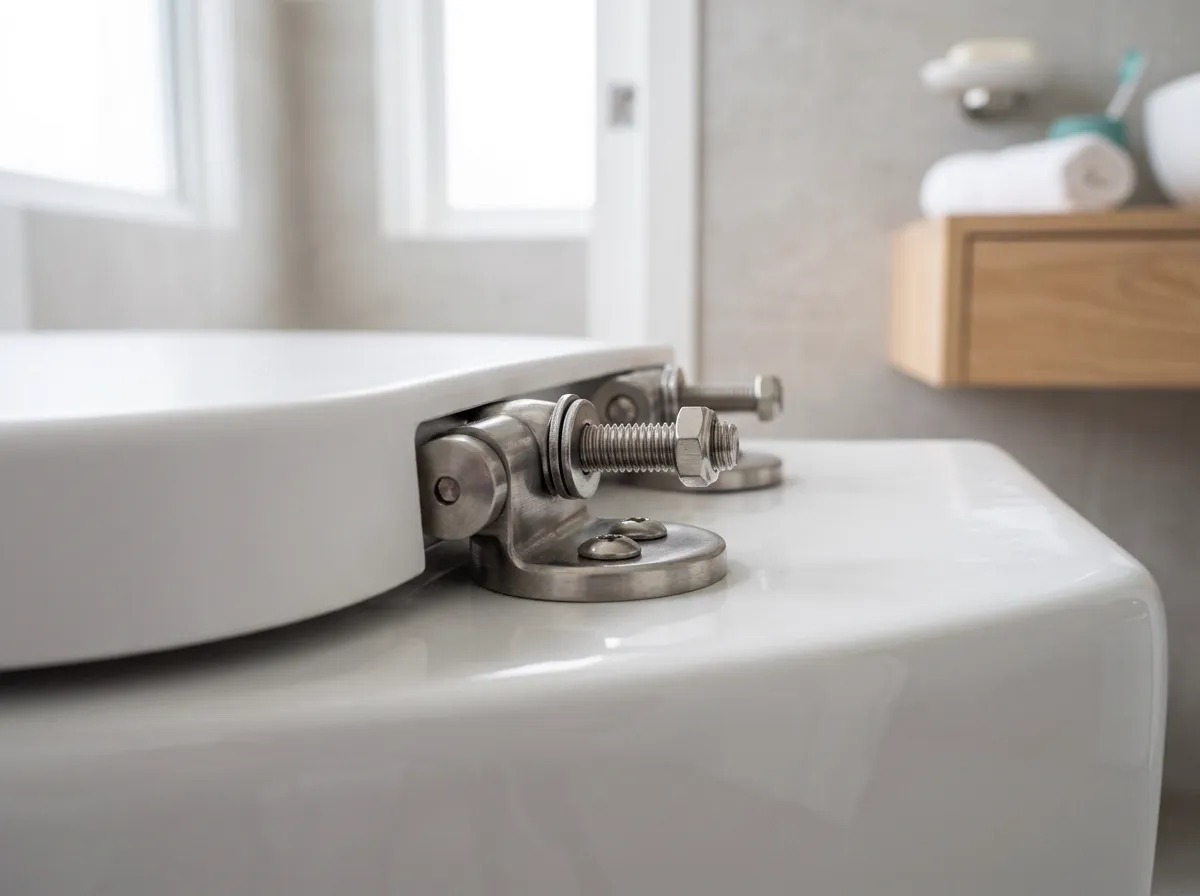
Why seats move: two different failures
It helps to separate two complaints that feel the same but have different causes. The first is loosening — the seat was tight, and over weeks of opening, closing, and sitting, the nuts gradually backed off until there's play. The second is sliding — the whole seat creeps sideways even though the bolts feel snug. Sliding happens because the seat's mounting holes are made larger than the bolts on purpose, so the plastic can't crack the porcelain when you tighten; that necessary slack is also room for the seat to shift. Knowing which one you have matters: loosening is solved by hardware that won't back off, while sliding is solved by hardware that fills the slack. The best fastening systems handle both at once, which is exactly why they're worth seeking out.
The feature that actually solves it: a locking top-tightening system
The single most effective thing you can look for is a fastening system designed not to loosen, installed from the top of the bowl. Bemis's Stay·Tite system is the best-known example: according to the manufacturer, the lower portion of the nut is designed to snap free during installation once proper tightness is reached, which sets a consistent, high clamp load and locks the seat to the bowl. Because you tighten from above until that nut releases, you can't under-tighten it the way you can with a hand-turned wing nut, and it isn't designed to work its way loose afterward. Seats built on a system like this are the direct answer to 'I tighten it and it's loose again next week' — that cycle is what the design exists to end.
Top-mount and quick-release hinges: cleaner and steadier
Many stay-put seats pair the locking nut with a top-mount hinge, where the bolts drop in from above rather than being reached from underneath the bowl. Two practical wins come with that. It installs and adjusts without contorting yourself under the tank, which means people actually tighten it correctly instead of giving up halfway. And many top-mount seats add a quick-release button that pops the seat off for cleaning and snaps it back into the same locked position — so you get a seat that lifts away for a proper clean yet returns to a firm, repeatable fit. If crud building up around the hinges is part of why your current seat feels loose and grimy, this is the design that fixes both.
Get the shape and size right, or nothing else matters
A seat that doesn't match the bowl will never sit stably no matter how good the hardware is. Toilet bowls come in two main shapes, and they aren't interchangeable: a round bowl runs roughly 16½ inches from the bolt holes to the front rim, an elongated bowl roughly 18½. Put a round seat on an elongated bowl and it perches short with the front unsupported; the reverse overhangs. Either way the seat rocks. Before you judge a seat as wobbly, confirm it's the right shape and that the bolt-hole spacing matches — our guides on measuring a seat and on round versus elongated walk through it. Buying the correct shape is the cheapest stability upgrade there is, because it costs nothing but attention.
Keeping your current seat: bushings and tightening kits
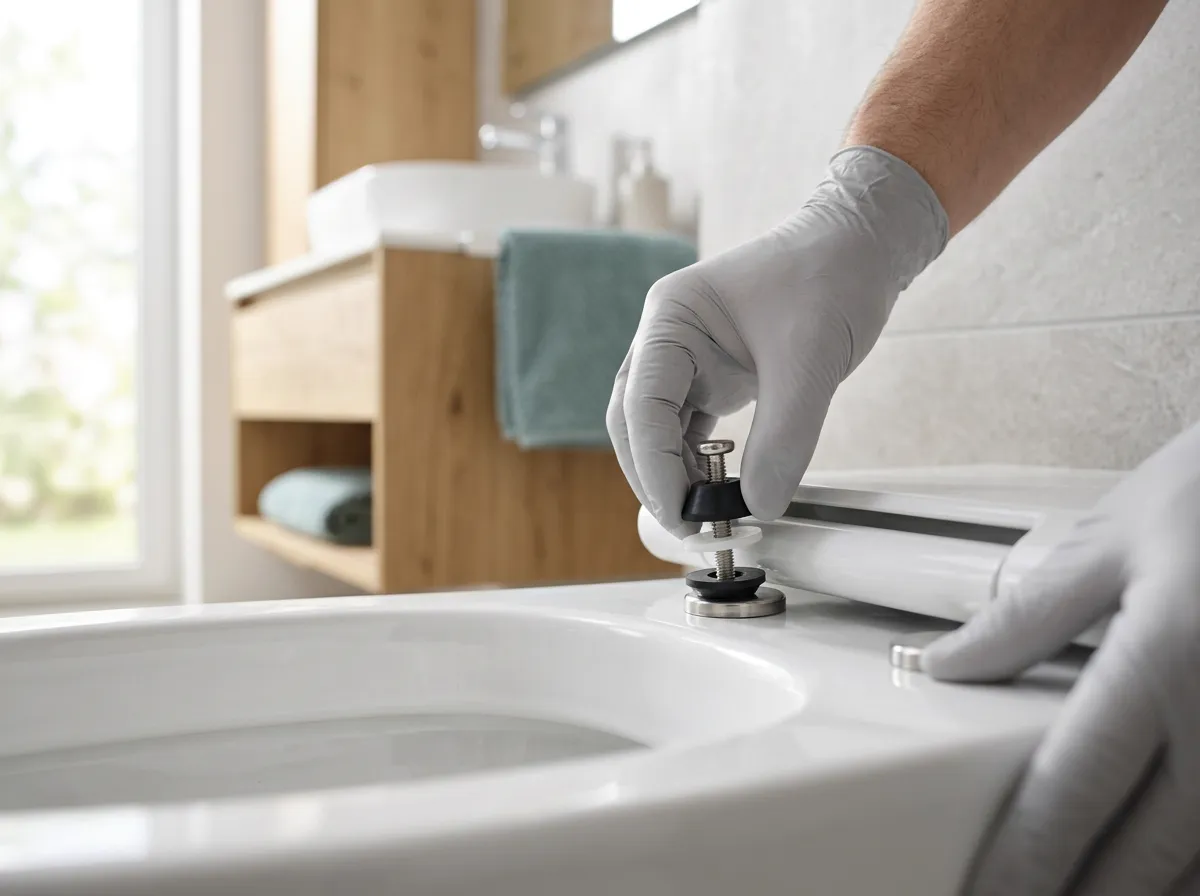
If the seat itself is fine and you'd rather not replace it, the moving problem is usually fixable for a few dollars. A tightening kit adds rubber washers or bushings that slide onto the bolts and fill the oversized-hole slack that lets the seat creep, while nylon-insert lock nuts resist backing off. The routine is quick: loosen the nuts, seat the rubber washers, refit loosely, align the seat square to the bowl, then tighten. This is genuinely a ten-minute job, and it's the right first move before spending on a new seat — many 'bad' seats are one $4 kit away from solid. Our dedicated loose-seat guide covers the step-by-step, including what to do when a bolt just spins.
A note on soft-close seats and side play
Soft-close seats — the ones that lower slowly instead of slamming — are worth having, but their hinges are more complex, and a low-quality one can develop side-to-side play at the hinge barrel even when the mounting bolts are tight. That feels like a loose seat but originates in the hinge, not the fastening. When shopping soft-close, the stability signal is a solid, metal or reinforced hinge with a locking top-tightening mount, not the cheapest unit on the shelf. When the play is in the hinge mechanism itself rather than the bolts, tightening won't cure it and replacement is the honest answer — which is a reason to buy a well-built one the first time. Our toilet seat hinge replacement guide covers which makers sell replacement hinges and when a new seat is the better buy.
Fix it or replace it: how to decide
The call is simpler than it looks. If the seat is sound and only the hardware has loosened or the seat slides, fix it — a tightening kit or a set of bushings is cheaper and faster than shopping, and it'll hold. Replace it when the seat is cracked, the hinges themselves have play you can't tighten out, the plastic is stained or worn, or you're simply tired of fighting it and want a locking top-tightening seat that ends the problem for good. The one thing not worth doing is repeatedly re-tightening a seat that won't hold — that's the signal the hardware design is the problem, and either a retrofit kit or a stay-put seat is the actual fix.
Tips & warnings
- Separate the symptom: a seat that loosens over time needs non-backing-off hardware; a seat that slides sideways needs the bolt-hole slack filled. The best seats do both.
- When buying, look for a locking top-tightening fastening system (Bemis's Stay·Tite is the well-known one) — it sets a consistent clamp and isn't designed to work loose.
- A top-mount, quick-release hinge lets you pop the seat off to clean and snaps it back to the same firm fit — steadier and more hygienic.
- Confirm shape and bolt-hole spacing first: a round seat on an elongated bowl (or vice versa) will always rock, regardless of hardware.
- Keeping your current seat? A $4 tightening kit with rubber bushings usually cures sliding in ten minutes — try that before replacing.
- Repeatedly re-tightening a seat that won't stay is the signal to change the hardware, not to tighten harder — overtightening can crack the bowl.
Frequently asked questions
How do I choose a toilet seat that won't wiggle or slide?
Look for a locking, top-tightening fastening system rather than a plain hand-turned wing nut. The best-known example is Bemis's Stay·Tite system, where the manufacturer designs the lower portion of the nut to snap free during installation once proper tightness is reached — that sets a consistent, firm clamp on the bowl and isn't designed to loosen afterward, which directly ends the 'tighten it and it's loose again' cycle. Pair that with a top-mount hinge (bolts drop in from above, so it's easier to install correctly and often includes a quick-release for cleaning), and make sure the seat matches your bowl shape and bolt-hole spacing — a round seat on an elongated bowl will rock no matter how good the hardware is. If you'd rather keep your current seat, a few-dollar tightening kit with rubber bushings fills the slack that causes sliding and usually solves it in ten minutes.
Why does my toilet seat keep sliding sideways?
Because the seat's mounting holes are deliberately made larger than the bolts. Manufacturers oversize those holes so that tightening the plastic seat can't crack the porcelain bowl — but that necessary slack is also room for the seat to creep sideways with use. Even with the bolts reasonably snug, the seat can shift within that gap. The fix is to fill the slack: a tightening kit adds rubber washers or bushings around the bolts so the seat can't move, and nylon-insert lock nuts keep the bolts from backing off. It's a quick, inexpensive repair, and it's a different problem from a seat that gradually loosens — though the better fastening systems address both.
What is the Stay·Tite seat fastening system?
It's Bemis's fastening design built to keep a toilet seat from loosening. Its distinguishing feature, per the manufacturer, is a nut whose lower portion is designed to snap free during installation once proper tightness has been achieved, securing the seat to the bowl. Because it installs from the top and the snap-off point sets the clamp load for you, it's hard to under-tighten and isn't designed to work its way loose over time — which is why seats using it are a common recommendation for anyone tired of a seat that won't stay put. Many of these seats also use a top-mount hinge with a quick-release for easier cleaning.
Can I make my existing toilet seat stop moving without replacing it?
Usually, yes, and it's the right first thing to try. If the seat itself is in good shape, a tightening kit — rubber washers or bushings plus lock nuts, a few dollars at any hardware store — fills the oversized-hole slack and stops both the sliding and the gradual loosening. Loosen the nuts, slide the rubber washers onto the bolts, refit loosely, square the seat to the bowl, then tighten firmly (but don't overtighten, which can crack the bowl). It's about a ten-minute job. Only step up to a replacement if the seat is cracked, the hinge itself has play you can't tighten out, or you'd simply prefer a locking stay-put seat.
Why does my soft-close toilet seat feel loose even when the bolts are tight?
Soft-close seats have more complex hinges, and on a lower-quality unit the hinge barrel itself can develop side-to-side play that feels exactly like a loose seat — but originates in the hinge mechanism, not the mounting bolts. Tightening the bolts won't cure play that lives in the hinge. First confirm where the movement actually is: hold the hinge and rock the seat. If the bolts are the source, a tightening kit fixes it; if the hinge barrel is worn or sloppy, that's not tightenable and the seat should be replaced. When buying a soft-close seat, a solid metal or reinforced hinge with a locking top-tightening mount is the feature that prevents this.
Will any toilet seat that won't move fit my toilet?
No — stability starts with the correct shape and mounting, so match those first. Bowls are generally round (about 16½ inches from the bolt holes to the front rim) or elongated (about 18½ inches), and the two aren't interchangeable; the wrong shape leaves the seat unsupported and rocking. You also need the seat's bolt-hole spacing to line up with your bowl's, and to know whether your bowl takes top-mount or bottom-mount hardware, since those aren't cross-compatible. Measure before you buy — our measuring guide and round-versus-elongated guide cover exactly what to check. A stay-put fastening system only delivers on a seat that's the right shape and mount for your toilet in the first place.
Sources
- Toiletseats.com (Bemis) — Stay·Tite Seat Fastening System
- Toiletseats.com (Bemis) — common toilet seat problems
- Family Handyman — round vs elongated toilets