
Toilet seat for hemorrhoids
No toilet seat treats hemorrhoids, and that's worth saying before anything else — this is a medical condition, not a furniture problem. The seat-adjacent thing that does matter appears in the National Institute of Diabetes and Digestive and Kidney Diseases' own list of causes: alongside straining during bowel movements, chronic constipation or diarrhea, a low-fiber diet, pregnancy and frequently lifting heavy objects, NIDDK lists sitting on the toilet for long periods of time. Not the seat you're sitting on. The sitting itself.
That has an awkward implication for anyone about to go shopping. If duration is the toilet-related risk factor the federal guidance actually names, then the obvious purchase — a softer, thicker, more comfortable seat — is at best beside the point, because comfort is exactly what makes a long sit easy to keep having. That isn't the same as saying a padded seat harms you; no source says that, and neither will this page. It means the seat is the wrong lever, and that the phone in your hand is a bigger variable than the cushion under you.
Below: what a seat genuinely can and can't change, where water helps more than the seat does, whether toilet stools belong in this conversation, and what NIDDK actually recommends. This is general information, not medical advice — and one criterion belongs up here rather than at the bottom: rectal bleeding is a see-someone symptom before it is a shopping question.
If wiping is the part you dread, a basic attachment is the cheapest way to try water instead.
See our picks →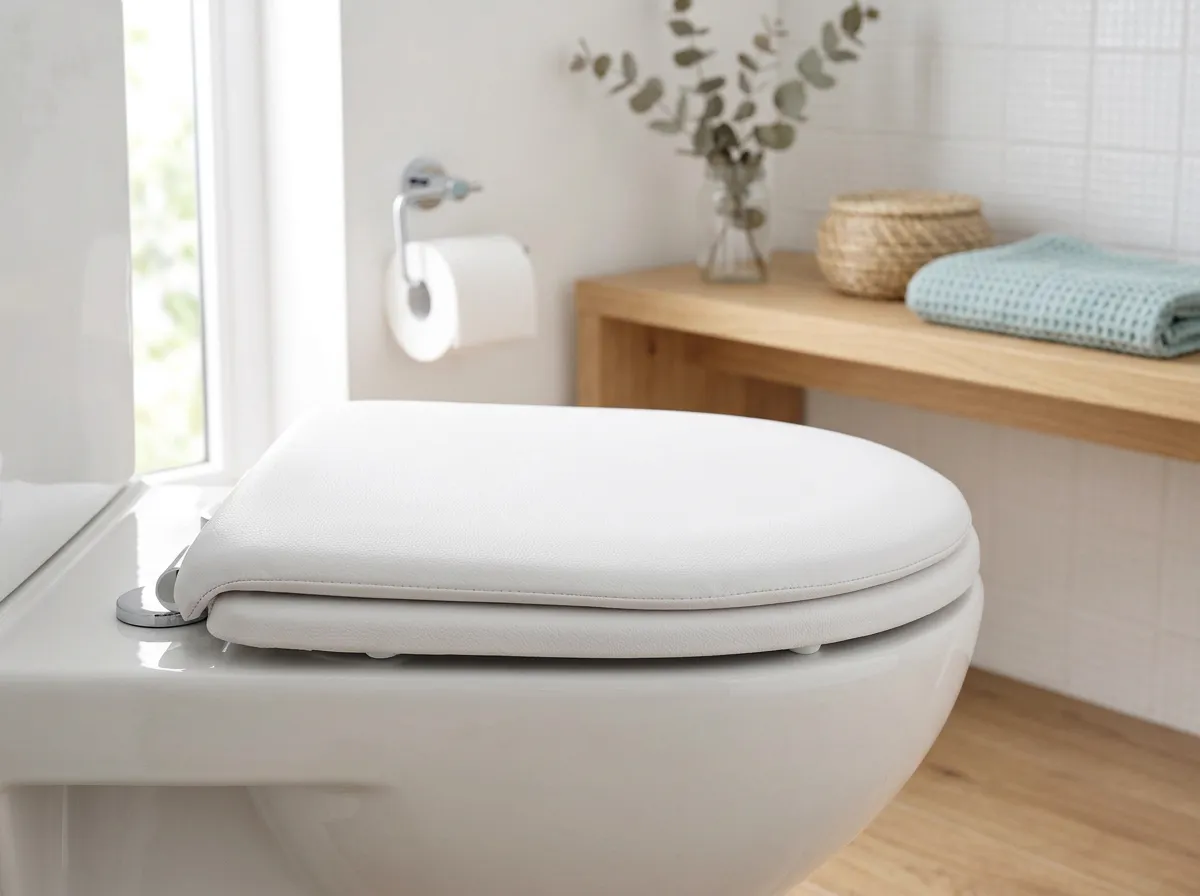
The short answer: no seat treats hemorrhoids
MedlinePlus describes hemorrhoids as swollen, inflamed veins around the anus or the lower part of the rectum, and says they happen when there is too much pressure on the veins around the anus. Nothing about a toilet seat acts on that. What a seat can influence is how comfortable you are while you're there, whether the rim digs into you, and — indirectly and importantly — how long you stay. So a seat is a comfort decision that sits near the problem rather than a treatment for it. Anyone selling one as a hemorrhoid remedy is overselling, and that holds on a page like this one that also links to seats.
What NIDDK actually lists as causes
It's a short list and worth reading in full, because most articles on this topic paraphrase it into something vaguer. NIDDK gives the causes of hemorrhoids as straining during bowel movements, sitting on the toilet for long periods of time, chronic constipation or diarrhea, a low-fiber diet, weakening of the supporting tissues in the anus and rectum that happens with aging, pregnancy, and often lifting heavy objects. MedlinePlus lists essentially the same set. Notice that exactly one item on that list is about the toilet at all — and it's about how long you're on it, not what you're on.
The uncomfortable part: a comfier seat can mean a longer sit
This is reasoning rather than a finding, and it should be labeled as such: there's no research we could find comparing toilet seat materials for hemorrhoid outcomes, and inventing one isn't an option. But the logic is hard to escape. Prolonged sitting is on the federal causes list. Comfort is what makes prolonged sitting sustainable. A thickly padded seat that makes twenty minutes pleasant isn't obviously helping with a risk factor defined by duration. The practical version isn't buy a harder seat — it's notice how long you're in there, and consider whether the seat is quietly enabling a habit the guidance specifically warns about.
What a seat can and can't change
A seat can change real things: how warm the surface feels, whether a thin plastic rim digs in, whether it slams, how easy it is to keep clean, and whether it fits your toilet properly. Those are genuine differences worth choosing well — we've written about wood versus plastic and about soft-close mechanisms elsewhere, and none of it is hemorrhoid-specific. What a seat cannot change is the venous pressure MedlinePlus describes as the underlying mechanism. So pick a seat for the reasons you'd pick one anyway: fit, material, cleanability, and how it feels. Just don't expect the purchase to do medical work.
Where water helps more than the seat does
If wiping is the part you dread during a flare-up, water is the change worth considering — and that's a comfort claim rather than a treatment one. Cleveland Clinic puts the mechanism plainly: wiping can cause chafing and tiny cuts, which a bidet washes away instead, and it notes bidets can be more comfortable to use if you have hemorrhoids and fissures. NIDDK separately lists warm water among its own at-home suggestions, in the form of sitting in a tub of warm water — a sitz bath — several times a day to help relieve pain. That's a bath rather than a bidet, and the two aren't the same thing. Our companion guide takes up that comparison and states the case more strongly than this page does; the modest version stands on its own, which is less friction on sore skin.
What about toilet stools and squatting posture?
They come up constantly here, so it's worth being straight about the sourcing. Footstools that raise your knees are widely marketed on the basis that they change defecation posture and reduce straining, and straining genuinely is on NIDDK's causes list. But posture, footstools and squatting appear nowhere in NIDDK's causes or prevention lists, and nowhere in MedlinePlus's either. That's a gap in the citation rather than proof of absence — it simply means this page can't hand you federal backing for the idea. Treat a stool as a cheap experiment rather than as guidance, and take the straining question itself to a clinician.
What NIDDK actually recommends
Relaying it rather than prescribing it, because this is their guidance and not ours. For prevention, NIDDK points to eating foods high in fiber, drinking water or other nonalcoholic liquids each day as recommended by your health care professional, not straining during bowel movements, not sitting on the toilet for long periods of time, and avoiding regular heavy lifting. For symptoms at home, it mentions stool softeners or fiber supplements, over-the-counter pain relievers, and the warm sitz bath. Every one of those is about what you do rather than what you buy for the bathroom — which is the real answer to the question this page is named after.
When to stop reading websites and see a doctor
This is the most important paragraph here. NIDDK says you should seek medical care right away if you have severe anal pain and bleeding from your rectum, particularly alongside discomfort or pain in your abdomen, diarrhea, or fever. MedlinePlus adds that you should see a health care provider if symptoms persist after about a week of at-home treatment, and it's explicit that rectal bleeding warrants evaluation because other conditions — it names Crohn's disease, ulcerative colitis, colorectal cancer and anal cancer — can cause bleeding too. Don't let a shopping decision become the reason you postpone that appointment. No toilet seat is worth self-diagnosing over.
Tips & warnings
- NIDDK lists sitting on the toilet for long periods among the causes of hemorrhoids. Duration is the toilet-related factor, not the seat.
- A more comfortable seat makes a long sit easier — which is the opposite of what that guidance points toward.
- Choose a seat for fit, material, cleanability and comfort, the same reasons you'd choose one anyway. No seat is a treatment.
- Many people find water gentler than dry paper — Cleveland Clinic notes wiping can cause chafing and tiny cuts. Comfort, not a cure.
- Toilet stools are widely marketed for this, but posture doesn't appear in NIDDK's causes or prevention lists. Treat it as an experiment.
- Rectal bleeding is a see-someone symptom, not a shop-for-something symptom. MedlinePlus notes other conditions can cause it.
Frequently asked questions
What kind of toilet seat is best for hemorrhoids?
There isn't one, in the sense people usually mean — no toilet seat treats hemorrhoids, and choosing a particular seat won't act on the underlying problem. MedlinePlus describes hemorrhoids as swollen, inflamed veins around the anus or lower rectum that happen when there's too much pressure on the veins around the anus, and a seat doesn't change that pressure. The toilet-related factor that does appear in the federal guidance is duration: NIDDK lists sitting on the toilet for long periods of time among the causes, alongside straining, chronic constipation or diarrhea, a low-fiber diet, aging, pregnancy and heavy lifting. So the useful move is to pick a seat on ordinary grounds — fit, material, comfort, how easy it is to clean — and put your attention on how long you're sitting and on the guidance NIDDK actually gives. If symptoms persist, that's a conversation with a doctor rather than a shopping decision.
Do padded or cushioned toilet seats help hemorrhoids?
They can feel more comfortable, and that's a real benefit on its own terms, but no source we can point to shows they help hemorrhoids specifically — there's no research we could find comparing seat materials for this. There's also a reasonable argument that runs the other way. NIDDK names sitting on the toilet for long periods of time as one of the causes of hemorrhoids, and a plusher seat is precisely what makes a longer sit comfortable. That doesn't make padded seats harmful, and nothing cited here says it does; it means they're addressing comfort rather than the risk factor. If a padded seat makes an unavoidable situation more bearable, fine — just don't count it as treatment, and keep an eye on how long you're staying.
Does sitting on the toilet too long cause hemorrhoids?
It's on the list. NIDDK includes sitting on the toilet for long periods of time among the causes of hemorrhoids, and includes not sitting on the toilet for long periods among its prevention recommendations. MedlinePlus lists the same factor, and it's the source that explains why: it describes hemorrhoids as happening when there is too much pressure on the veins around the anus. NIDDK's pages simply list the causes without setting out a mechanism. What neither source gives you is a number of minutes, so there's no threshold to quote here. The practical reading is that the toilet isn't a place to linger, and that reading a phone in there is worth reconsidering if you're prone to this. Your doctor can tell you how much it matters in your specific case.
Is a heated toilet seat good for hemorrhoids?
A heated seat is a comfort feature, and no source cited here connects one to hemorrhoid relief. It's worth separating it from something that does appear in the guidance: NIDDK suggests sitting in a tub of warm water, called a sitz bath, several times a day to help relieve pain. That's immersion in warm water, which is a different thing from a warm dry surface underneath you, and nothing in these sources links the two. If a heated seat makes your bathroom more pleasant in winter, that's a perfectly good reason to own one. It just isn't a hemorrhoid intervention, and it shouldn't be the reason you delay asking a clinician about symptoms.
Does a bidet help with hemorrhoids?
Many people find cleaning with water gentler than repeated wiping during a flare-up, and Cleveland Clinic gives the reason: wiping can cause chafing and tiny cuts, and it notes bidets can be more comfortable to use if you have hemorrhoids and fissures. That's comfort rather than treatment, and the distinction is worth keeping. If you want to try it, a basic non-electric attachment is the cheapest route and needs no outlet or electrician. Our companion guide on bidets and hemorrhoids goes further into how warm-water rinsing compares with the sitz bath NIDDK mentions, and puts that case more strongly than this page does — the conservative version here is simply that less friction on sore skin is easier. Persistent symptoms still need a doctor regardless of what you buy.
Do toilet stools help with hemorrhoids?
If you want to try one, judge it on your own experience rather than on the marketing — a stool is inexpensive, and whether it changes anything for you tends to become obvious fairly quickly. What this page can't do is point you at a source. Footstools are sold on the basis that raising your knees changes defecation posture and reduces straining, and straining genuinely is on NIDDK's list of causes, but posture, squatting and footstools appear nowhere in NIDDK's causes or prevention lists, and nowhere in MedlinePlus's. So the honest position is that this is plausible and cheap to test, not that it's established guidance. If straining is your main problem, raise it with a clinician — the sourced advice around it covers fiber, fluids and not forcing things, which is more than furniture can address.
When should I see a doctor about hemorrhoids?
This guide is general information, not medical advice, and the symptoms below are the point at which a website stops being useful. NIDDK says to seek medical care right away if you have severe anal pain and bleeding from your rectum, particularly along with discomfort or pain in your abdomen, diarrhea, or fever. MedlinePlus advises seeing a health care provider if symptoms don't improve after about a week of at-home treatment, and is explicit that rectal bleeding should be evaluated because other conditions can cause it too — it names Crohn's disease, ulcerative colitis, colorectal cancer and anal cancer. Nothing you buy for your bathroom substitutes for that appointment, and no purchase on this site is a reason to put it off.
Sources
- NIDDK (NIH) — Symptoms & Causes of Hemorrhoids
- NIDDK (NIH) — Treatment of Hemorrhoids
- MedlinePlus (NIH) — Hemorrhoids
- Cleveland Clinic — Is using a bidet healthy?