
The best toilet stools for 2026
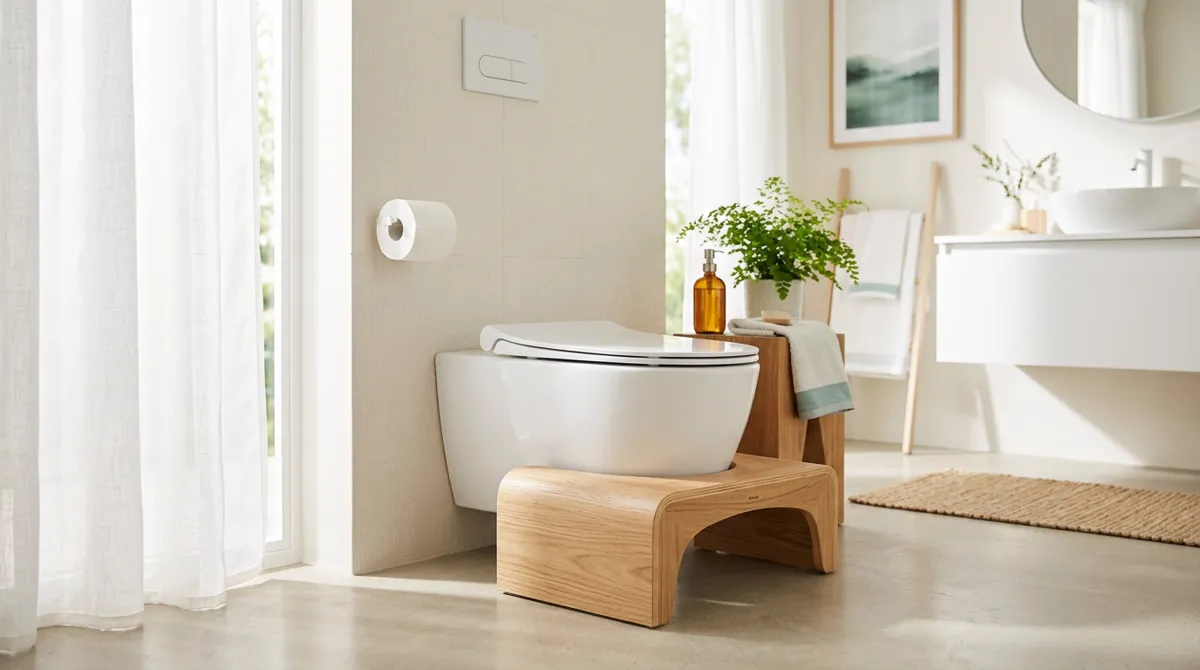
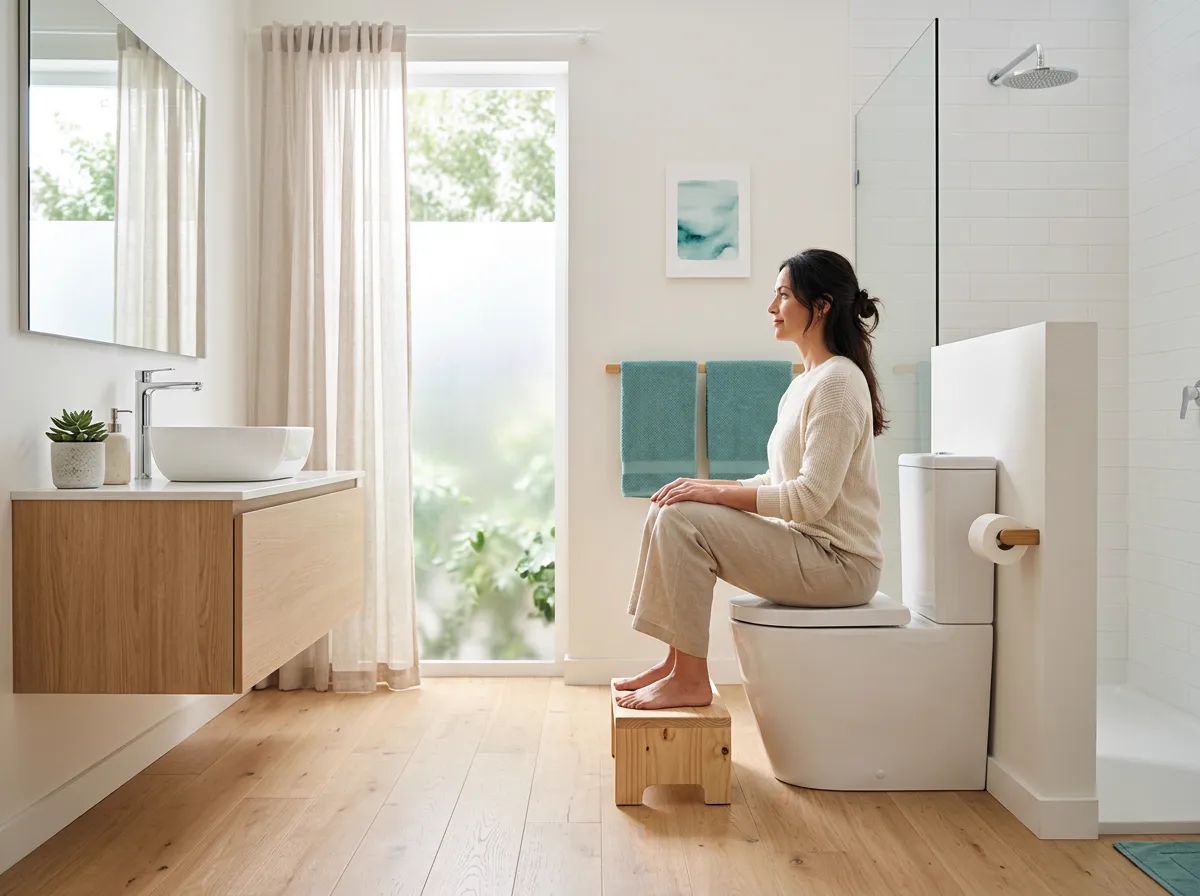
A toilet stool does exactly one thing: it raises your feet while you sit, which tips you from a 90-degree sitting posture toward a squat. That small change straightens the angle between rectum and anal canal — the anorectal angle — which is the position the human body evolved to eliminate in. Small clinical studies of these devices have reported less straining and faster, more complete-feeling bowel movements for many users, which is consistent with what millions of buyers describe.
Let's be equally clear about what a stool is not: it is not a treatment for constipation, hemorrhoids, or any digestive condition. It's a posture aid — cheap, low-risk, and mainstream, in the same category as drinking more water or adding fiber gradually. If Bristol Types 1–2 are your everyday reality despite those basics, that conversation belongs with a doctor, not a footstool. Our interactive Bristol stool chart covers when a pattern is worth medical attention.
The market is simple once you see its shape: Squatty Potty invented the category and still makes the most refined versions, while dozens of near-identical imports compete on price. Our picks below cover the five buying situations that actually differ — the default, households needing two heights, bathrooms where looks matter, travel, and the budget option that does the same job for half the price.
| # | Pick | Price | Rating | |
|---|---|---|---|---|
| 1 | Best toilet stool overall Squatty Potty The Original Bathroom Toilet Stool, 7 The category-defining 7-inch stool: one piece, no compromises, 63,000+ reviews. |
$23–$27 | ★★★★★ 4.5 | Check price |
| 2 | Best for households that disagree on height Squatty Potty Adjustable 2.0 (7" or 9") The 7-or-9-inch convertible — buy this when one height won't fit everyone. |
$27–$33 | ★★★★★ 4.5 | Check price |
| 3 | Best looking (the one that stays out of the closet) Squatty Potty Oslo Folding Bamboo Stool Bamboo, folding, 4.7 stars — the stool for bathrooms where looks decide what survives. |
$36–$42 | ★★★★★ 4.5 | Check price |
| 4 | Best for travel Squatty Potty Porta Traveler Foldable Stool Folds to briefcase size — for people whose routine travels with them. |
$27–$32 | ★★★★☆ 4.0 | Check price |
| 5 | Best budget toilet stool AZEN Wood Toilet Stool, 7 Same 7 inches of lift for half the money — the sensible way to test the idea. |
$13–$17 | ★★★★☆ 4.0 | Check price |
Squatty Potty The Original Bathroom Toilet Stool, 7
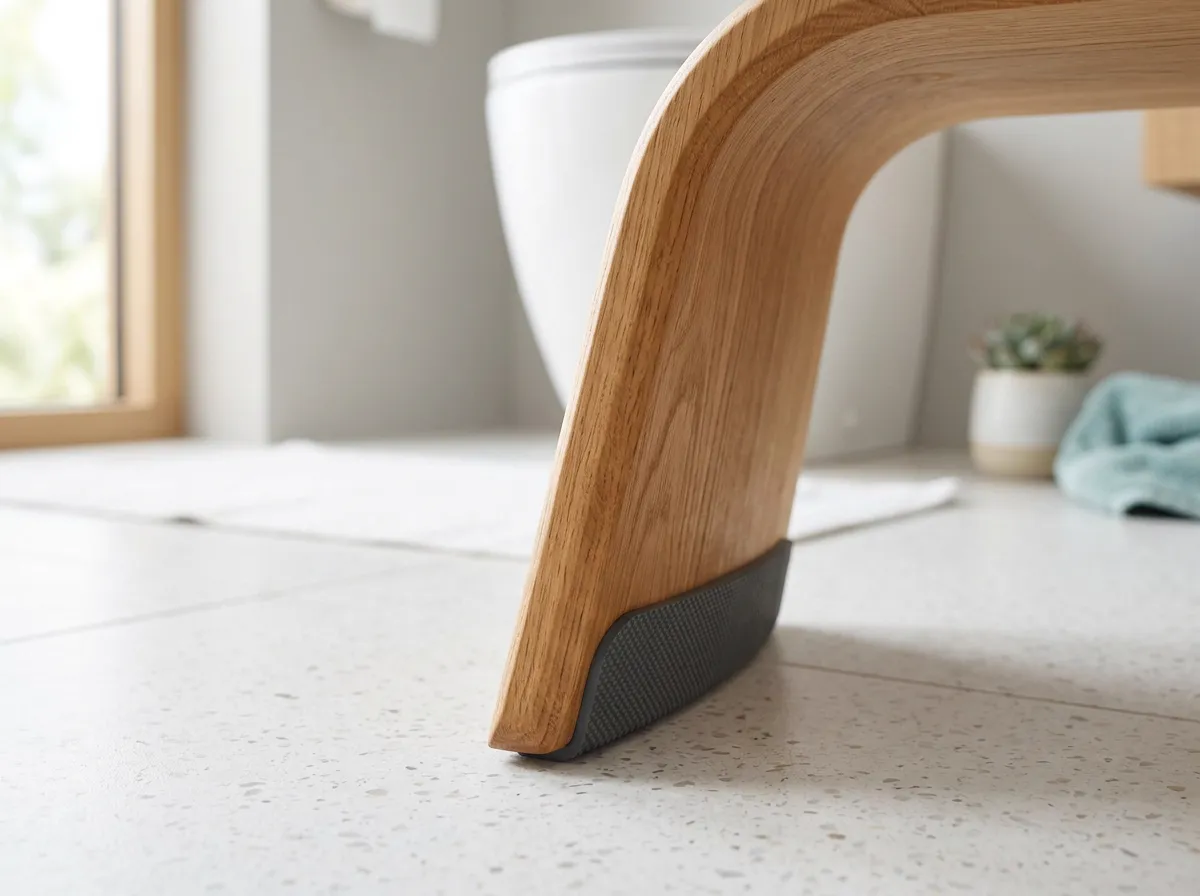
Key features: 7-inch height — the right default for standard toilets · One-piece molded plastic; no assembly, nothing to fold or fail · U-shape wraps a standard two-piece toilet base and tucks under the bowl · Textured foot surface and stable, flat-footed stance · The category original — 63,000+ Amazon ratings at 4.6 stars · Wipes clean; fully waterproof
Pros
- The reference design every competitor copies, refined over a decade
- Sturdiest option here — one piece, no hinges, no flex underfoot
- Tucks neatly out of the way on standard toilets
- Massive, consistent review base across years of production
- Easiest to clean of any pick
Cons
- White plastic looks clinical in a styled bathroom
- Fixed 7-inch height — households wanting 9 inches need the adjustable
- May not tuck fully under skirted toilet bases
- Costs more than functionally identical imports
Who it's for: Anyone who wants the standard, proven version of this product with zero moving parts — the right first stool for most bathrooms.
Squatty Potty Adjustable 2.0 (7" or 9")
Key features: Converts between 7 and 9 inches via removable topper · Same U-shape wrap-the-base design as the original · One stool serves adults and kids at different squat depths · 15,000+ Amazon ratings at 4.6 stars · Molded plastic, wipe-clean
Pros
- Settles the 7-vs-9 question without buying twice
- Good for comfort-height toilets, where 9 inches often works better
- Kids using the same bathroom get a usable height
- Build quality matches the original
Cons
- Two-piece design is inherently a little less rigid than the one-piece
- Costs a few dollars more than the fixed original
- Same clinical-white looks
- Topper is one more part to misplace
Who it's for: Shared bathrooms where users differ in height or preference, and comfort-height toilet owners unsure which height they need.
Squatty Potty Oslo Folding Bamboo Stool
Key features: Bamboo construction — reads as furniture, not equipment · Folds flat for storage or small bathrooms · 7-inch squat height · 4,100+ Amazon ratings at 4.7 stars — the best-rated pick here · Non-slip pads on feet
Pros
- The one toilet stool that genuinely looks good in a styled bathroom
- Highest owner rating of any pick in this guide
- Folding is smooth and the hinges have held up well in long-term reviews
- Bamboo surface is comfortable underfoot
Cons
- Costs roughly double the budget picks
- Folding designs give up a little rigidity vs. one-piece plastic
- Wood needs its non-slip pads intact — check them occasionally
- Doesn't wrap the toilet base as closely as the U-shaped models
Who it's for: Anyone whose real obstacle is aesthetic — if a white plastic stool would end up hidden in a closet, this is the version that stays in use.
Squatty Potty Porta Traveler Foldable Stool
Key features: Folds flat to roughly briefcase size for packing · 7-inch height when deployed · Lightweight molded plastic (~2 lbs) · 3,600+ Amazon ratings at 4.6 stars · Sets up and collapses in seconds
Pros
- The practical answer for people whose routine genuinely depends on the stool
- Packs into a suitcase without meaningful weight
- Surprisingly stable deployed, for a folder
- Long production run — this model has been sold for years
Cons
- Not as rigid as any fixed stool — it's a travel compromise
- Overkill if you just want folding for home storage (the Oslo is nicer)
- Smaller foot platform than full-size models
- Costs as much as the full-size original
Who it's for: Frequent travelers who've become dependent on the posture change and don't want hotel bathrooms to reset their routine.
AZEN Wood Toilet Stool, 7
Key features: 7-inch fixed height, wood-look construction · Around half the price of the name-brand equivalents · 1,700+ Amazon ratings at 4.5 stars · Simple assembled-panel design · Non-slip pads on the feet
Pros
- Does the one job — raising your feet 7 inches — for the least money here
- Wood look is a step up from white plastic at a budget price
- Solid owner ratings for a value product
- Cheap enough to try the concept or outfit a second bathroom
Cons
- Panel construction requires assembly and isn't as rigid as molded one-piece
- Shorter track record than the Squatty Potty models
- Fit around the toilet base is less tailored than the U-shape originals
- Check the foot pads periodically — wood on tile without them is slippery
Who it's for: First-time buyers testing whether the squat posture helps them, and anyone outfitting guest bathrooms without paying flagship prices.
What matters before you buy
- Height: 7 inches is the default, 9 for deeper squats and shorter users. Stool height determines how deep the squat is. Seven inches is the right starting point for most people on a standard toilet — enough lift to matter, not so much that getting up is awkward. Nine inches produces a deeper squat that shorter users often prefer, but it can feel cramped if you're tall. One interaction people miss: on comfort-height (ADA, 17–19 inch) toilets, a 7-inch stool produces a shallower effective squat, so people on tall toilets sometimes go 9. If your household disagrees, that's what the adjustable and flip models are for — they convert between 7 and 9.
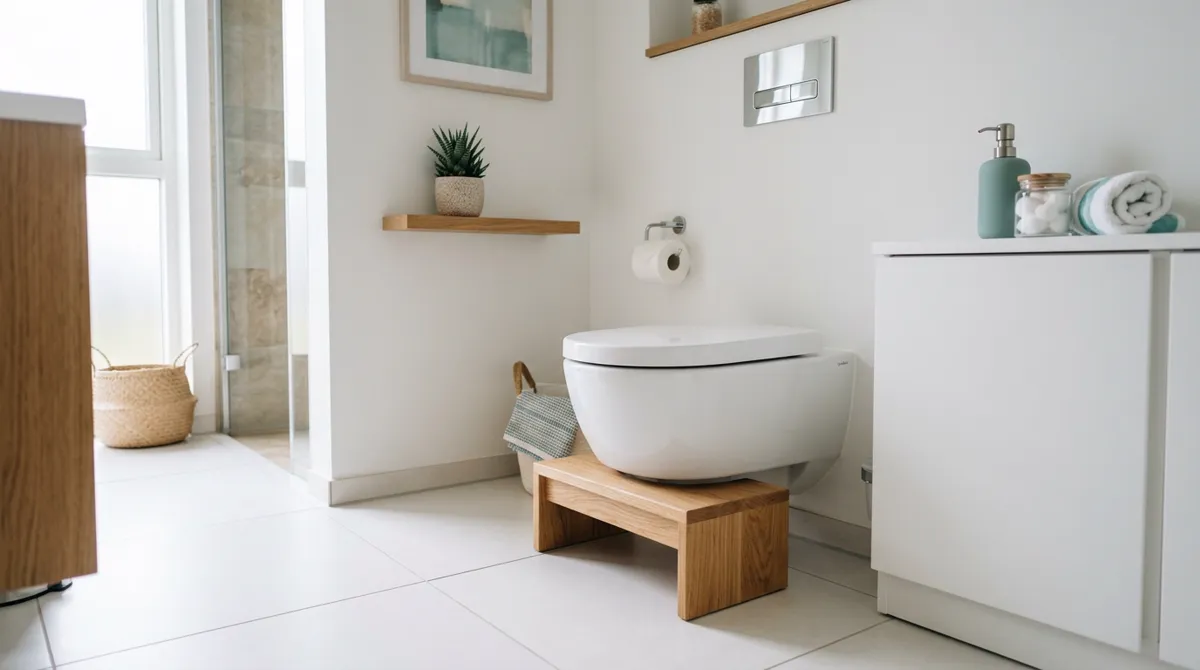
- The fit-around-the-base question. A toilet stool lives wrapped around the toilet base, tucked under the bowl's front overhang when not in use. The classic U-shaped designs (Squatty Potty and its imitators) are shaped for standard two-piece toilets and fit nearly all of them. Skirted and wall-hung toilets have wider or flatter bases where a rigid U may not tuck as neatly — measure the base width before buying, and favor two-piece or foldable designs if your toilet is skirted. A stool that doesn't tuck away becomes a toe magnet, and that's the #1 reason these end up in closets.
- Fixed vs. folding vs. adjustable. Fixed one-piece stools are the sturdiest and the cheapest — nothing to fold means nothing to wobble or pinch. Folding stools collapse flat for travel or tiny bathrooms, at the cost of some rigidity and a modest price premium. Adjustable and flip designs convert between 7 and 9 inches, which settles the height debate in multi-person households. Our advice runs contrary to the gadget instinct: unless you specifically need folding or adjustability, the plain fixed stool is the better product — fewer moving parts, more stable underfoot, easier to clean.
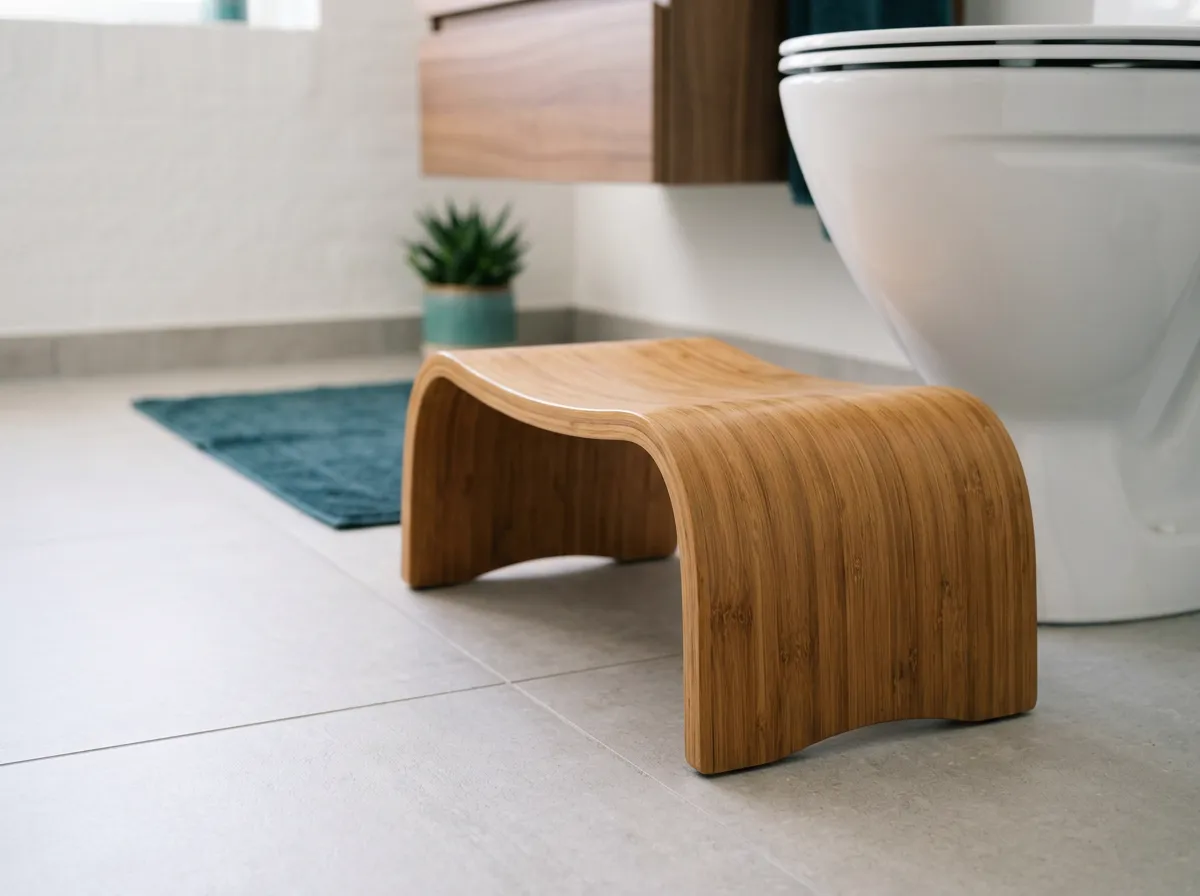
- Material: plastic does the job, bamboo looks better doing it. Molded plastic is light, waterproof, cleans with a wipe, and is what the classic versions use — there's no functional argument against it. Bamboo and wood versions exist for one honest reason: a white plastic stool wrapped around your toilet looks like medical equipment, and a bamboo one looks like bathroom furniture. If the stool's appearance determines whether it stays in the bathroom or migrates to a closet, the $15–$20 premium for bamboo is money well spent. Wood-look models need their non-slip pads intact — bare wood on tile is a skating rink.
- Grip and stability, especially for older users. You step on and around this thing barefoot, sometimes at 3 a.m., so the floor grip and the top surface texture both matter. Look for rubberized feet and a textured footbed. For older adults there's a second consideration: rising from a deeper squat requires more leg strength, so a 7-inch stool is the right call over a 9, and anyone with significant balance or mobility concerns should think about whether a footstool in front of the toilet is a trip hazard at night — for some households a raised toilet seat is the safer direction entirely, and we cover those separately.
- What the evidence actually supports. Worth being precise, because this category attracts overclaiming. The mechanics are real: raising the feet straightens the anorectal angle, and small studies of defecation-posture devices have reported reduced straining and improved sense of complete evacuation in a majority of participants. That is meaningful for comfort, particularly if straining aggravates hemorrhoids. What no stool does is treat the underlying cause of chronic constipation, and a persistent Type 1–2 pattern despite fluids, fiber, and activity deserves a provider's attention. Buy the stool for easier, lower-strain bathroom visits — not as therapy.
How we ranked these
This guide is built from manufacturer specifications, large-sample owner reviews across major retailers (the flagship models here carry 15,000–63,000+ reviews each), and the published research on defecation posture devices. We test these stools ourselves, but ours is not a clinical lab and we do not claim these products treat any medical condition — the health framing above is deliberately conservative and the standard next step for persistent symptoms is a healthcare provider, not a different stool. Squatty Potty models dominate our picks because in this category the originator genuinely does execute better, but we've included the budget alternative that delivers the same core function for less. No brand paid for placement. Prices reflect U.S. retail as of mid-2026 and shift over time — confirm current pricing before you buy.
Frequently asked questions
Do toilet stools actually work?
For the specific thing they claim to do — yes. Raising your feet while seated straightens the anorectal angle toward a squat position, and small clinical studies of these posture devices have reported less straining and a more complete-feeling bowel movement for a majority of users, which matches the pattern in owner reviews at scale. What they don't do is treat constipation's underlying causes: a stool changes your position, not your gut. Think of it as the bathroom equivalent of better ergonomics — real, modest, and worth $25, but not medicine. If hard, difficult stools persist for weeks despite fluids, fiber, and activity, see a healthcare provider.
Should I get a 7-inch or 9-inch toilet stool?
Seven inches for most people, most of the time — it produces a meaningful posture change on a standard-height toilet without making it awkward to get up. Nine inches suits shorter users, people who want the deepest squat, and — counterintuitively — some people on comfort-height (17–19 inch) toilets, where the taller bowl shallows out what a 7-inch stool achieves. Tall users on standard toilets usually find 9 inches cramped. If one bathroom serves people with different answers, the adjustable and flip models convert between both heights and end the argument.
Is the Squatty Potty worth it over cheap alternatives?
Functionally, a $15 import raises your feet exactly as well as the $25 original — the physics doesn't know the brand. What the Squatty Potty versions buy you is better execution of details: a shape that reliably tucks around standard toilet bases, sturdier molding with no flex underfoot, textured surfaces where feet actually land, and a company that has made this one product for over a decade with tens of thousands of reviews behind each model. Our budget pick does the job for half the price. If the stool will live in a guest bathroom or you're just trying the idea, start cheap; if it's going to be used daily for years, the original's build quality is worth the difference.
Will a toilet stool fit my toilet?
Almost certainly, if you have a standard two-piece toilet — the U-shaped designs are made to wrap that base and tuck under the bowl's front overhang. The exceptions are skirted toilets (the smooth-sided kind) and wall-hung designs, whose wider or flatter bases can prevent a rigid stool from tucking in fully. It still works in front of the toilet; it just won't stow as neatly. If your toilet is skirted, measure the base width where the stool would sit, and favor folding models or two-piece designs you can position freely. Height compatibility matters more than base shape — see the 7-vs-9-inch question.
Can toilet stools help with hemorrhoids?
Indirectly, and it's worth being precise. Straining against hard stool is a major contributor to hemorrhoid flare-ups, and the squat posture reduces straining for many people — so a stool can remove some of the aggravation. It does not treat hemorrhoids: existing ones won't shrink because your knees are higher. The comfort combination many people land on is a stool to reduce the strain going in, and water cleanup instead of dry wiping afterward, which is gentler on irritated skin — our hemorrhoid bidet guide covers that half. Bleeding, persistent pain, or hemorrhoids that don't settle belong with a doctor.
Are toilet stools safe for elderly people?
Generally yes, with two honest cautions. First, rising from a deeper squat takes more leg strength — a 7-inch stool is the right height for older users, not 9. Second, a stool that lives in front of the toilet is one more thing to navigate during a nighttime bathroom trip; for anyone with balance problems or a fall history, that trade-off deserves real thought, and a night-light in the bathroom helps. For users whose bigger challenge is getting down to and up from the toilet at all, the better tool is usually a raised toilet seat or safety frame rather than a squat stool — those solve the opposite problem, and we review them separately.