
Plastic vs. wood toilet seats
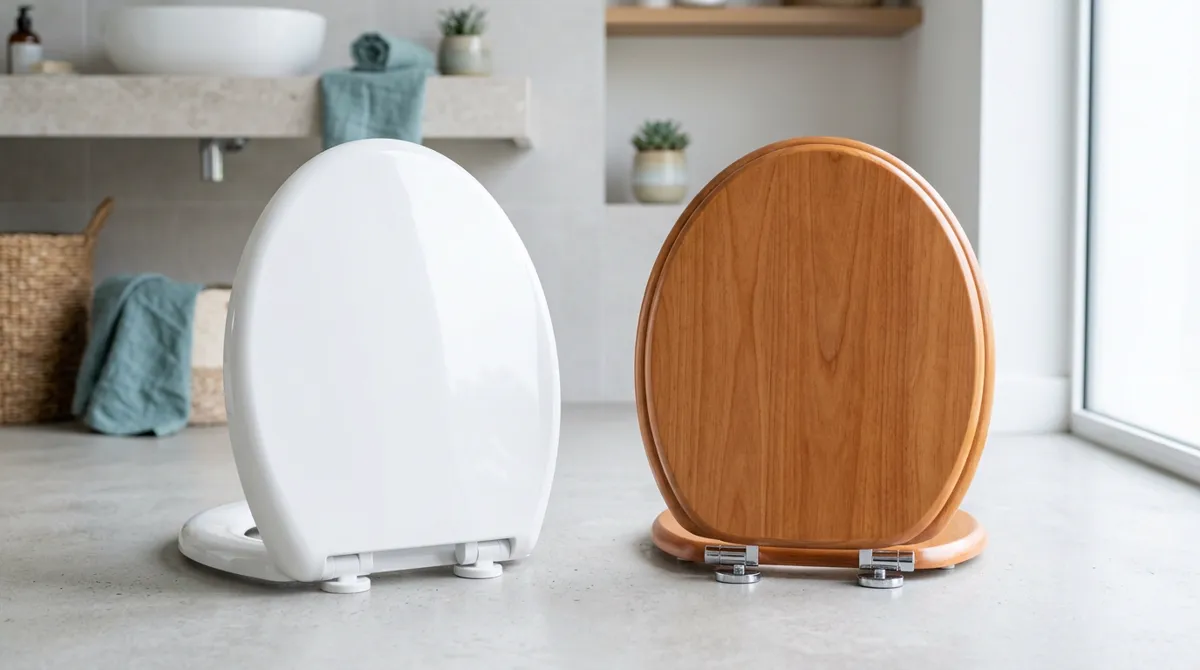
Plastic or wood is the first fork in every toilet seat purchase, and most advice treats it as a coin flip. It isn't. The two materials genuinely differ on the things you live with daily — how cold the seat is at 6 a.m., how it handles cleaning chemicals, how it ages, and how much weight it takes without flexing — and which one wins depends on which of those you care about most.
The short version: plastic is easier to keep clean, lighter, cheaper, and shrugs off moisture, which is why it dominates modern bathrooms. Enameled wood is warmer to the touch, more substantial under you, and quieter, but its painted surface chips, and once water gets into the wood core at a chip or at the hinge holes, the seat is on borrowed time. Hinges don't have to decide it, either: Bemis offers slow-close and lift-off hinges on enameled wood as well as plastic.
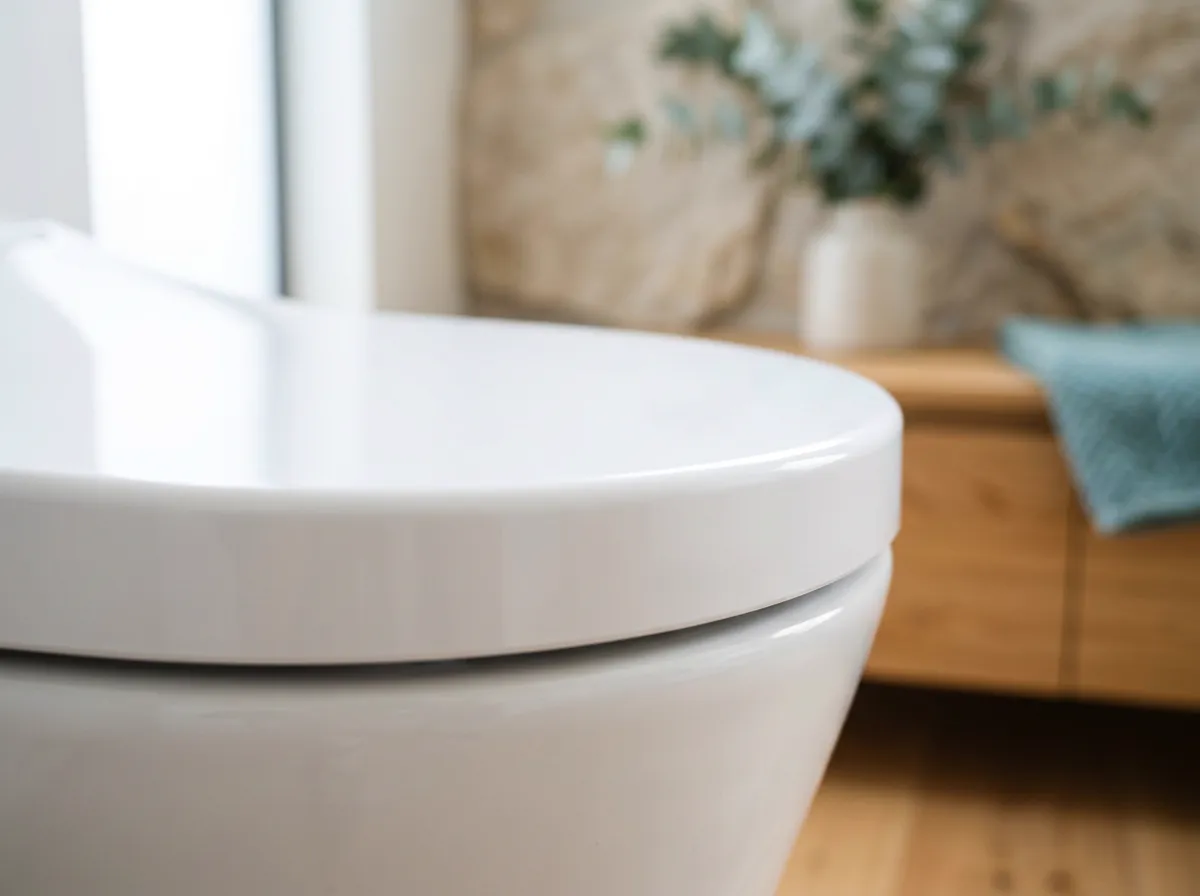
There is also a third option most buyers never hear about: duroplast, the thermoset plastic standard on better European seats. It looks and feels closer to porcelain, resists scratches and UV yellowing far better than ordinary polypropylene, and splits the difference on nearly every trade-off below. This guide compares all three honestly, then tells you which buyer each one actually suits.
Decided on a material? See the best seats we've researched.
See our picks →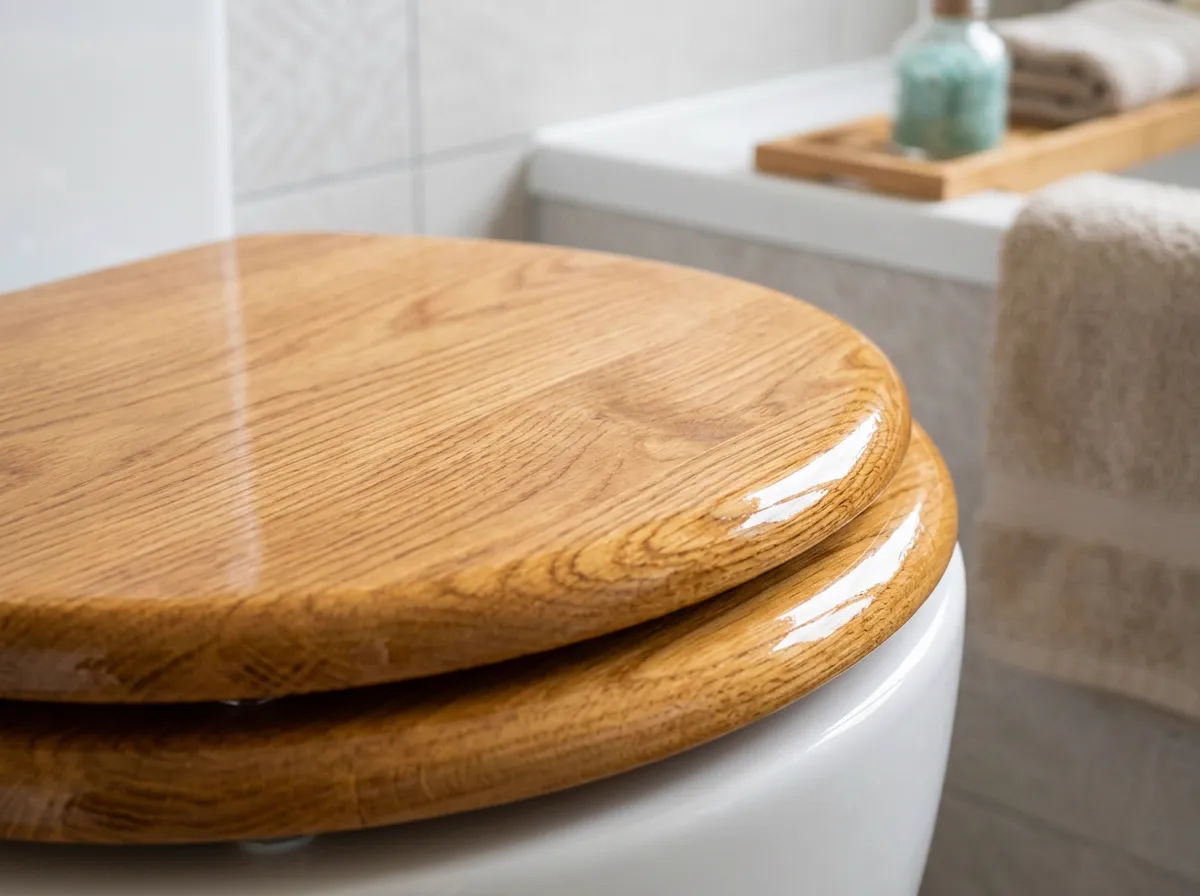
Durability: how each material actually fails
The materials don't just last different lengths of time — they fail differently. Ordinary plastic (polypropylene) seats flex under load, and their failure mode is cracking at the hinges or stress-whitening where they bend; a light user can get 5–10 years, a heavy-use household less. Enameled wood seats are rigid and feel sturdier, but their weakness is the surface: the enamel paint chips at edges and around bumpers, moisture wicks into the wood core, and the seat swells, stains, and eventually delaminates from the inside. Duroplast is the most durable of the three for its price — it's a hard thermoset that doesn't flex like polypropylene or chip like enamel, which is why it holds up best in bathrooms with kids. No seat material outlasts its hinges, though: on cheap seats of any material, the hinge is what fails first.
Cleaning and hygiene: plastic wins, with one caveat
Plastic is non-porous, tolerates frequent cleaning, and has no painted surface to wear through — this is the biggest practical reason it dominates. Wood's enamel coating is also cleanable, but every chip is an entry point where moisture and grime get under the paint, and the underside edges of wood seats (often less thoroughly sealed) are where discoloration starts. The caveat that applies to both: harsh chemicals are the enemy. Bemis, which makes both kinds, says harsh chemicals and abrasives dull a plastic seat and rub away the paint on enameled wood, and it asks for mild hand, antibacterial or dish soap only on either material; bleach, vinegar, acids, disinfectants and scouring powders are all on its do-not-use list. Kohler's seat instructions likewise call for mild dish soap and warm water, then drying the seat completely, and its care page singles out painted wood seats as needing only a mild detergent such as dishwashing soap. TOTO's SoftClose seat manual is just as strict, ruling out bleach and any cleaner with acids or alkaline detergents. Our guide to which cleaners are safe on a seat compares other makers' rules. If easy hygiene is your top priority, plastic or duroplast with a quick-release hinge (pop the seat off, clean the mounting area) beats any material difference.
Comfort: the cold-seat problem and the wobble problem
Wood wins the first-touch test. An enameled wood seat sits noticeably warmer than plastic in a cold bathroom because wood conducts heat away from your skin more slowly — this is the single biggest reason people who grew up with wood seats stay loyal. Wood's rigidity also means no flex under you, which reads as quality. Plastic seats, especially thin budget ones, feel colder and can flex or shift slightly on their bumpers. That said, the gap narrows with better plastic: duroplast is denser and less cold-feeling than polypropylene, and a heated seat (Brondell lists its LumaWarm at about $165 to $180) makes the material's thermal behavior irrelevant. If winter cold is your actual complaint, a heated seat solves it better than switching materials ever will.
Weight capacity and stability
Enameled wood and duroplast seats are the stronger choices for bigger users. Wood cores are rigid and don't flex under load the way molded polypropylene can, and most dedicated heavy-duty seats — like the Big John line, rated to 800+ pounds — use either reinforced resin or substantial molded construction rather than thin plastic. If anyone in the household is above roughly 250 pounds, prioritize a seat with a published weight rating over the plastic-vs-wood question entirely; our heavy-duty seat guide covers the specific models. For everyone else, stability comes down less to material than to the hinge system — look for seats with locking or 'never loosen' hinge hardware, which stay put regardless of what the ring is made of.
Noise, weight, and daily handling
Wood seats are heavy, and that cuts both ways: they close with an authoritative, damped-feeling motion but hit harder if dropped, and they put more strain on hinges over years of lifting. Plastic is light enough that a slam is sharp and loud — which is why soft-close hinges matter more on plastic seats and are now standard on anything decent. Don't assume a wood seat means giving that up. In its own comparison of the two materials, Bemis lists slow-close, lift-off hinges for cleaning, and a fastening system it says never loosens among the features found on both its enameled wood and plastic seats. The hinge you want doesn't rule out wood.
Appearance and how each material ages
New, a quality enameled wood seat looks and feels more premium — glossier, more substantial, closer to painted furniture. Five years in, the picture often reverses: enamel shows chips and wear at the front edge and around bumpers, while a decent plastic seat mostly just looks slightly duller. Cheap polypropylene has its own aging problem — UV yellowing near sunny windows and a surface that micro-scratches and traps grime (our yellowing guide covers which damage is cleanable and which isn't). Duroplast ages best: it resists both UV shift and scratching, which is why it's the default on European seats that are expected to stay white for a decade. Color matching matters too — 'white' varies by manufacturer, so match the seat brand to your toilet brand if an exact match bothers you.
Price: what you actually pay for each
Material alone doesn't set the price; brand and hinge features move it more. For reference, Bemis lists its slow-close enameled-wood Mayfair Cassel at $38.99 (round) and $43.99 (elongated) MSRP, while TOTO lists its polypropylene SoftClose seat (SS154, elongated) at $175 in Cotton. So plastic isn't automatically the cheap option, and at under $45 list, the Cassel is a wood seat that closes slowly, lifts off for cleaning, adjusts for fit, and uses a fastening system Bemis says never loosens. For a duroplast seat, compare the price against a polypropylene seat with the same hinge features. Read the hinge and fastening specs before you compare price tags, whichever material you're shopping.
The verdict by buyer
Choose plastic (ideally duroplast) if you clean frequently, have kids, share the bathroom among many users, want soft-close and quick-release features with maximum selection, or the bathroom gets humid — it's the practical default, which is why we mostly recommend plastic seats in our roundups. Choose enameled wood if first-touch warmth and a substantial, furniture-like feel matter most, the seat's users are gentle on hardware, and you accept refinishing your choice every 5–7 years as the enamel wears. Choose duroplast specifically if you want plastic's practicality but hate how budget plastic looks and ages — it's the closest thing to a no-trade-offs answer this category has. And if your real complaint is a cold seat in January, buy a heated seat and skip the material debate entirely.
Tips & warnings
- Duroplast is the option most US buyers never hear about — plastic's practicality with far better scratch and UV resistance.
- If winter cold is your actual complaint, a heated seat beats switching to wood.
- Never use bleach or scouring powder on either material. Bemis, Kohler and TOTO all specify mild soap and water, and Bemis names vinegar on its do-not-use list.
- Anyone in the house over ~250 lbs? Shop by published weight rating, not material — see our heavy-duty guide.
- Want slow-close or lift-off hinges? Wood is still on the table: Bemis's Mayfair Cassel is enameled wood with slow-close, lift-off and never-loosen hardware.
- Whichever material: measure first. Bolts-to-front-lip of about 16.5 inches is round, 18.5 is elongated.
Frequently asked questions
Which is better, a plastic or wood toilet seat?
Plastic is the better all-around choice for most bathrooms: it's non-porous, easier to keep clean, unaffected by moisture, lighter on its hinges, and it's where nearly all soft-close and quick-release innovation lives. Enameled wood is warmer to sit on and feels more substantial, but its painted surface chips with use, and moisture entering at chips or hinge holes eventually swells and degrades the wood core. If you want the best of both, duroplast — a hard thermoset plastic standard on better European seats — offers plastic's practicality with much better scratch, stain, and UV resistance. Wood earns its place mainly in low-traffic bathrooms where first-touch warmth and a premium feel matter more than longevity.
Do wood toilet seats hold more weight than plastic?
Generally yes — a wood core is rigid and doesn't flex under load the way molded polypropylene does, which is why wood and reinforced-resin seats feel sturdier to bigger users. But for anyone above roughly 250 pounds, the material question is the wrong lens: shop by published weight rating instead. Dedicated heavy-duty seats like the Big John line are rated to 800+ pounds and are engineered for it — thicker material, wider ring, stainless hinge hardware — which no standard seat of either material matches. Hinges, not the ring, are usually what fails under load.
Why do wood toilet seats wear out faster?
Because their weak point is the surface, and the surface takes all the abuse. Enameled wood seats are a wood or wood-composite core wrapped in painted enamel — every chip at the edges, around the bumpers, or at the hinge holes is an opening for moisture. Once water wicks into the core, the seat swells slightly, the paint lifts further, and staining sets in from the inside where no cleaner can reach. Bathroom humidity accelerates all of it. A quality wood seat in a gentle, dry-ish bathroom can look good for many years; the same seat in a busy family bathroom with enthusiastic cleaners usually shows chips inside two or three.
Are plastic toilet seats more sanitary than wood?
Modestly, yes — and mostly because of maintenance rather than the material itself. Plastic is non-porous and has no coating to wear through, so its surface stays cleanable for its whole life, and plastic seats far more often come with quick-release hinges that let you remove the seat entirely to clean the mounting area, which is where grime actually accumulates. An intact enameled surface on a wood seat is also non-porous — the problem is 'intact': chips and worn edges give grime and moisture somewhere to live. With either material, clean with mild soap and water, which is what Bemis and Kohler specify. Bemis's do-not-use list includes bleach, vinegar, disinfectants and scouring powders, and it says harsh chemicals leave a plastic seat dull and wear the paint off enameled wood.
What is a duroplast toilet seat?
Duroplast is a thermoset plastic — resin cured hard rather than melted into shape like ordinary polypropylene. The practical differences: it's significantly harder and more scratch-resistant, it resists UV yellowing far better (relevant if your toilet sits near a window), it has a denser, more porcelain-like look and feel, and it doesn't flex underneath you like thinner molded plastic. It's the standard material on better European seats and is why those seats stay white for a decade. Compare its price against a polypropylene seat with the same hinge features; for most buyers weighing plastic against wood, it's the answer that skips the trade-off.
How long do plastic and wood toilet seats last?
A decent plastic seat lasts about 5–10 years; what usually ends it is hinge failure or accumulated micro-scratching and yellowing rather than breakage. Enameled wood typically shows visible wear sooner — chips and edge wear within 2–5 years in a busy bathroom — though a gently used one can go much longer. Duroplast tends to outlast both cosmetically. Treat any seat as a consumable: when hinges wobble despite tightening, the surface is chipped or yellowed beyond the cleanable kind, or bumpers have compressed, a replacement with modern soft-close and quick-release hinges is a better bathroom upgrade than fighting the old seat.
Sources
- Bemis (ToiletSeats.com) — FAQs: best products for cleaning a toilet seat, and products not to use
- Bemis (ToiletSeats.com) — Enameled Wood vs. Plastic Toilet Seats (both cleaned with mild soap only)
- Kohler — Toilet seat installation guide with care and cleaning instructions (K-4636, K-4639)
- Kohler — Toilet seat care and cleaning (painted wood seats: mild detergent only)
- TOTO — SoftClose seat (SS124) installation manual: care and cleaning (no bleach, acids or alkaline detergents)
- Brondell — LumaWarm heated toilet seat with nightlight (price)
- Mayfair by Bemis — Cassel Round Enameled Wood Toilet Seat (847SLOW), MSRP
- Mayfair by Bemis — Cassel Elongated Enameled Wood Toilet Seat (1847SLOW), MSRP
- TOTO USA — Traditional SoftClose Toilet Seat, Elongated (SS154): polypropylene, MSRP list price by color