
Heavy-duty toilet seats for heavy people: the best picks for home
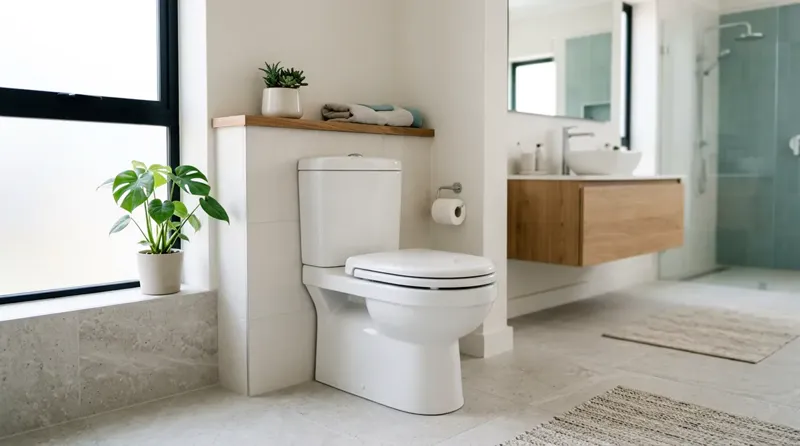
Standard toilet seats are engineered for a 250-pound static load — a spec set decades ago when average body weights were lower and liability standards were looser. For people who weigh 300, 400, or 500 pounds — or households where multiple large adults share one bathroom — that spec is a starting point, not a safety margin. Cracked seats, popped hinges, and seats that wobble the moment you sit down are not just annoying; they're a real fall risk.
This guide is for the home bathroom: closed-front seats with a lid that look like an ordinary seat, fit the toilet you already own, and carry a published weight rating, from 400 pounds for a reinforced residential seat to 1,000 pounds for the Bemis Paramont. Two of the four are slow-close. All four are standard-height replacement seats — not raised risers, not bidet seats. If you are equipping a hospital, care home or a caregiver's bathroom, or want the open-front clinical design, our bariatric toilet seats guide covers that setting, and landlords and high-traffic facilities should see the best commercial toilet seats.
We synthesized manufacturer specifications, verified owner reviews at scale, third-party plumbing and medical supply sources, and published spec sheets to arrive at these recommendations. We test these seats ourselves. Where we cite a weight rating, it comes directly from the manufacturer's published documentation. Where we describe how a seat feels, that is our own observation; where we describe how it performs over years, we're drawing on patterns from verified owner reviews.
| # | Pick | Price | Rating | |
|---|---|---|---|---|
| 1 | Best commercial-grade heavy-duty seat for residential use Bemis 1000CPT Paramont Heavy Duty Toilet Seat The commercial hotel-grade pick — 1,000 lb capacity with a hinge that will never spin loose. |
$85–$110 | ★★★★☆ 4.4 | Check price |
| 2 | Best for users who want the Big John width with a closed-front lid Big John 6-W Oversized Toilet Seat with Cover Big John's wide-body seat with a cover — 800 lb capacity, 19-inch width, universal fit. |
$100–$120 | ★★★★☆ 4.2 | Check price |
| 3 | Best slow-close heavy-duty seat for non-standard bolt spacing Bath Royale Executive Series Slow Close Elongated Toilet Seat BR501-00 A heavy-duty polypropylene soft-close seat that Bath Royale says is tested to 400 lb, with hinges that fit non-standard bolt spacing. |
$75–$90 | ★★★★☆ 4.4 | Check price |
| 4 | Best heavy-duty seat that looks and feels like a standard residential seat Bath Royale MasterSuite BR237-00 Toilet Seat The residential upgrade — slow-close, stiff Eurocast build, 400 lb manufacturer-rated, no clinical look. |
$55–$80 | ★★★★☆ 4.1 | Check price |
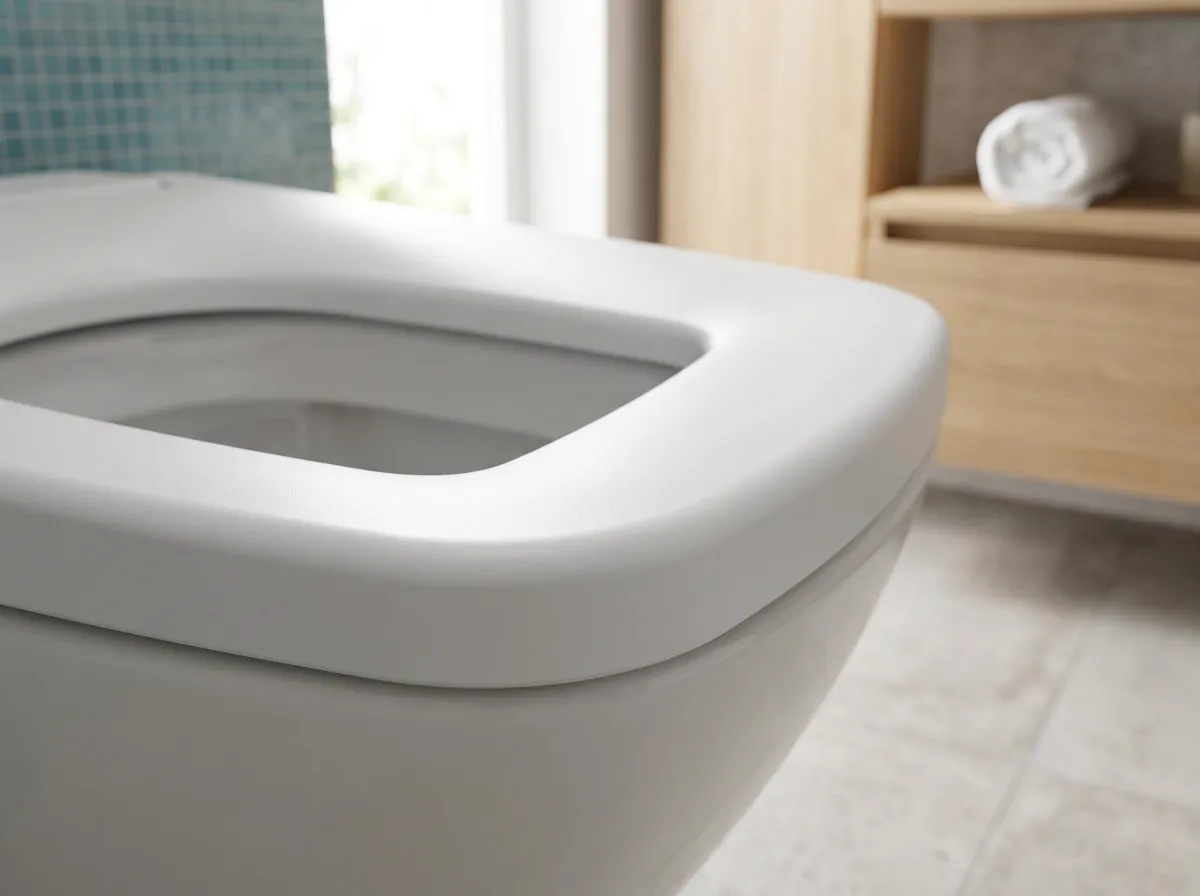
Bemis 1000CPT Paramont Heavy Duty Toilet Seat
Key features: 1,000 lb weight capacity (manufacturer-stated) · Closed-front design with cover · Stay·Tite commercial fastening system — never loosens · Chrome metal hinges with 300-series stainless steel posts and pintles · 16.5 inches wide x 18.875 inches deep · Molded-in color (not painted) polypropylene — resists chips and stains · Four ring bumpers for load distribution
Pros
- Stay·Tite fastening system is the commercial standard — hinges lock from below and require a tool to remove, eliminating the wobble problem entirely
- Universal fit eliminates guesswork on bowl shape
- 1,000 lb capacity with chrome metal hinges and stainless steel hardware, not plastic
- Closed-front with cover — cleaner appearance than open-front seats
- Widely deployed in healthcare and hospitality settings, meaning the durability claim has been tested in the field
Cons
- At roughly 16.5 inches wide, not as broad as the Big John oversized seats — users who need maximum seat width may prefer a wider option
- Priced well above the American Standard commercial option, which covers most heavy users for a fraction of the cost
- Closed-front design is less preferred in some clinical bariatric settings where open-front is standard hygiene practice
- Some owner reviews note the plastic surface can feel cool in winter without a cushion
Who it's for: Users in the 300–500 pound range who want a seat that looks like a residential toilet seat but carries commercial-grade hardware. Also suited for anyone frustrated by seats that wobble and loosen over time — the Stay·Tite system solves that specifically.
Big John 6-W Oversized Toilet Seat with Cover
Key features: 800 lb weight capacity (manufacturer-stated) · Closed-front design with cover included · 19.43 inches long x 19.2 inches wide · ABS plastic construction with nylon hinges · Stabilizing synthetic rubber bumpers · 1.5-inch seat rise · Fits over existing bolt holes — no toilet modification needed
Pros
- 19-inch width is one of the broadest sitting surfaces available in a standard toilet seat — roughly 75% more sitting area than a typical seat by manufacturer claim
- Includes a cover, unlike the 7W open-front model
- 800-pound capacity covers most heavy users without stepping up to the higher-rated 7W
- Wide rubber bumpers prevent lateral shifting on the bowl
- Universal fit — no need to confirm elongated vs. round
Cons
- Nylon hinges rather than stainless steel — adequate for the stated capacity but not quite the hardware quality of the Bemis commercial seats
- The seat overhangs the bowl noticeably due to its 19-inch width, which may look out of place in a smaller or visually minimal bathroom
- 800 lb rating, below the 7W's 1,000 lb listing — meaningful difference for users above 600 pounds
- The 1.5-inch rise is slight but measurable — users who need a precise seated height should account for it
Who it's for: Users in the 300–600 pound range who prefer a covered seat and want the wide sitting surface that Big John is known for. Also a reasonable family compromise when multiple users of different sizes share a toilet — the oversized seat is comfortable for all but looks less clinical than the open-front 7W.
Bath Royale Executive Series Slow Close Elongated Toilet Seat BR501-00
Key features: 100% non-recycled polypropylene, which Bath Royale describes as heavier and thicker than most plastic seats · Slow-close and quick-release both included · Four slip-resistant bumpers on seat and lid underside for stability · Tested to 400 lb on the seat and closed lid (per Bath Royale) · 2-year limited warranty (original buyer, residential installs) · Low-profile stainless steel mounting bases · Elongated: 18-1/4 in L (adjusts about 1 in either way) x 14-1/4 in W
Pros
- Slow-close and quick-release hinges, uncommon on seats with a published load figure
- Hinges fit mounting holes from 4.5 to 6.5 inches apart, not just the standard 5.5 inches
- Bath Royale publishes a 400 lb test figure for the seat and closed lid
- 2-year limited warranty, longer than many residential seats
Cons
- 400 lb is the joint-lowest rating in this guide, so it suits users up to roughly 300 lb with margin, not higher
- Standard width, not an oversized seat
- Elongated only; skirted toilets need top-mount anchors sold separately
- Not compatible with risers or grab bars installed between the seat and the bowl
Who it's for: Heavier users up to roughly 300 pounds who want a quiet slow-close seat with a published load figure, or whose toilet has non-standard bolt spacing. Bath Royale pitches the Executive as its seat for heavy-use bathrooms.
Bath Royale MasterSuite BR237-00 Toilet Seat
Key features: 400 lb weight capacity (manufacturer-stated, tested on seat and closed lid) · Slow-close soft-close hinges · Eurocast polymer construction — harder and stiffer than standard polypropylene · Quick-release hinges for cleaning · Scratch and stain resistant surface · Four non-slip bumpers for weight distribution · 2-year manufacturer warranty
Pros
- Slow-close hinges are uncommon in heavy-duty seats at this price point
- Eurocast polymer is measurably stiffer than polypropylene — less flex under load than many residential seats
- Quick-release hinges make it easy to remove and clean under the seat
- Looks identical to a standard residential seat — no visible overhang or clinical aesthetic
- 2-year warranty is above average for this category
Cons
- 400 lb is the joint-lowest rating in this guide, so it is not appropriate for users over about 300 pounds without a meaningful safety buffer
- Standard seat width — not an oversized design, so no extra lateral sitting room
- Elongated only in this model; the round version (BR283-00) is a separate ASIN
- The slow-close mechanism can feel stiff or sluggish in cold temperatures according to some owner reviews
Who it's for: Users in the 250–350 pound range who want a seat that is clearly more durable than a bargain model but don't need the clinical-grade capacity of the Big John 6-W or Bemis Paramont. Good for households where the primary concern is hinge durability and a seat that won't crack or flex, rather than extreme bariatric loads.
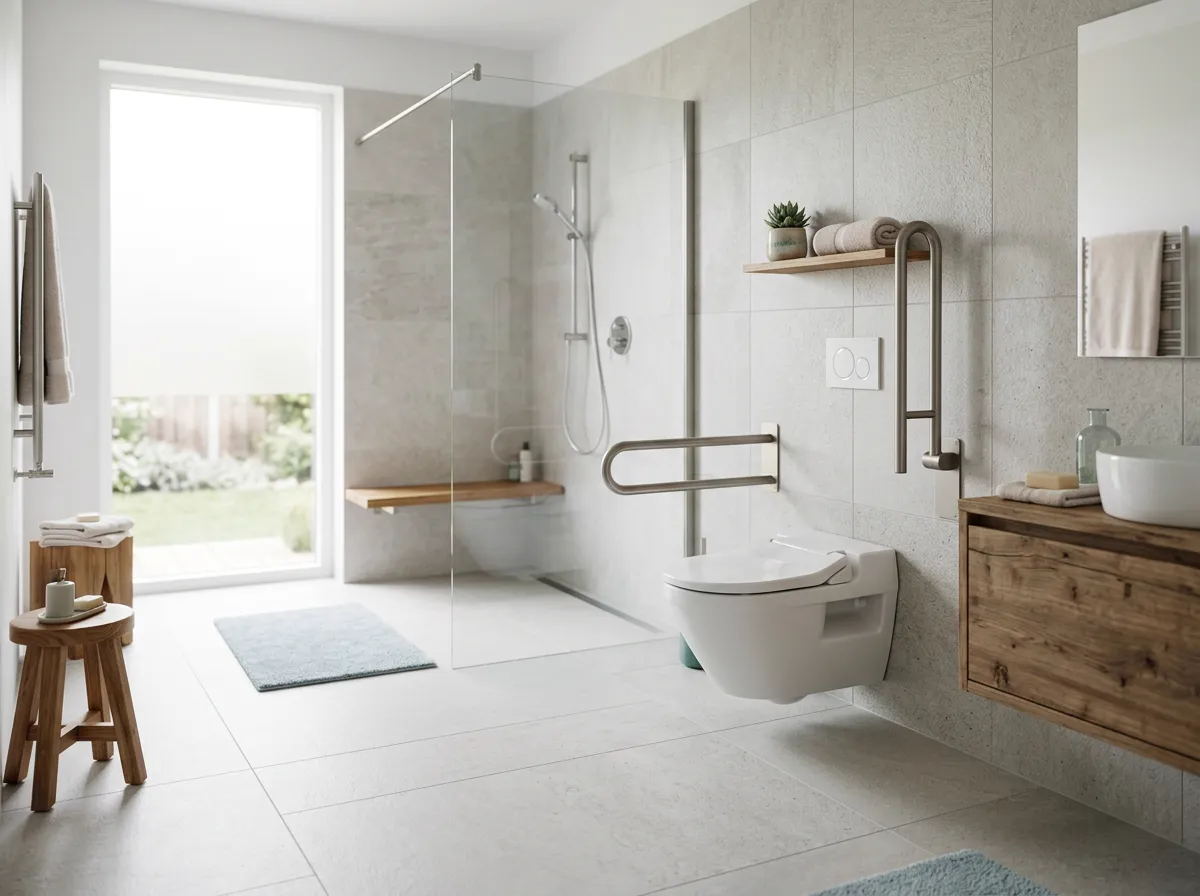
Heavy-duty toilet seats compared
| Seat | Capacity | Front / lid | Width | Hinges | Fit | Price |
|---|---|---|---|---|---|---|
| Bemis 1000CPT Paramont | 1,000 lb | Closed-front, lid included | 16.5 in | Chrome, stainless posts + Stay·Tite | Universal (round + elongated) | $85–$110 |
| Big John 6-W | 800 lb | Closed-front, lid included | ~19.2 in (oversized) | Nylon | Universal (round + elongated) | $100–$120 |
| Bath Royale Executive BR501-00 | 400 lb (seat + closed lid) | Closed-front, lid, slow-close | ~14.25 in (standard) | Quick-release, slow-close; fits 4.5–6.5 in bolt spacing | Elongated | $75–$90 |
| Bath Royale MasterSuite BR237 | 400 lb | Closed-front, lid, slow-close | Standard | Quick-release, slow-close | Elongated (round is BR283-00) | $55–$80 |
All capacities are manufacturer-stated; Bemis notes its 1,000 lb rating is subject to the weight limit of the toilet itself. Prices are typical U.S. retail ranges and shift over time. Looking for open-front clinical seats, like the 1,000 lb Big John 7-W, or equipment for a care setting? See our bariatric toilet seats guide.
Watch: hands-on guidance
What matters before you buy
- Published weight capacity. Every seat in this guide has a manufacturer-stated capacity. Look for at least 400 lb for a 300-pound user — the extra margin accounts for the dynamic force of sitting down, which briefly exceeds static body weight. For users over 400 pounds, choose a seat rated 800 lb or higher.
- Hinge and hardware material. Cheap zinc or painted-steel hinges corrode and fatigue fast. Stainless steel pintles and posts are the standard in commercial seats and hold up to repeated daily use for years. ABS plastic hinges (used on some Big John models) are reinforced to a high strength rating but should be inspected annually for hairline cracks.
- Seat width and opening size. A standard toilet seat is roughly 14 inches wide. Heavy-duty oversized seats like the Big John models run 16 to 19 inches wide. A wider seat reduces lateral pressure on the thighs and makes use more comfortable. Verify your toilet's bolt-hole spread (almost always 5.5 inches) and rough dimensions before ordering.
- Mounting system stability. The number-one complaint in owner reviews of any toilet seat is a seat that shifts or spins. Look for a fastening system that locks from below — commercial options like Bemis Stay·Tite and Centoco Fast-N-Lock click into place and require a tool to remove, meaning they stay put under real use.
- Bowl shape compatibility. Elongated bowls (about 18.5 inches front to back) and round bowls (about 16.5 inches) require different seats — or a universal-fit seat that bridges both. Confirm your bowl shape before purchasing. Several picks here, including the Bemis Paramont and Big John 6W, fit both shapes without adapters.
- Surface durability and cleanability. Heavier users put more wear on seat surfaces. Look for molded-in color (not painted) and a smooth, non-porous finish. Polypropylene and ABS plastic resist most household cleaners. Antimicrobial surface treatments (like Bemis DuraGuard and American Standard EverClean) inhibit bacterial growth, which matters in shared bathrooms.
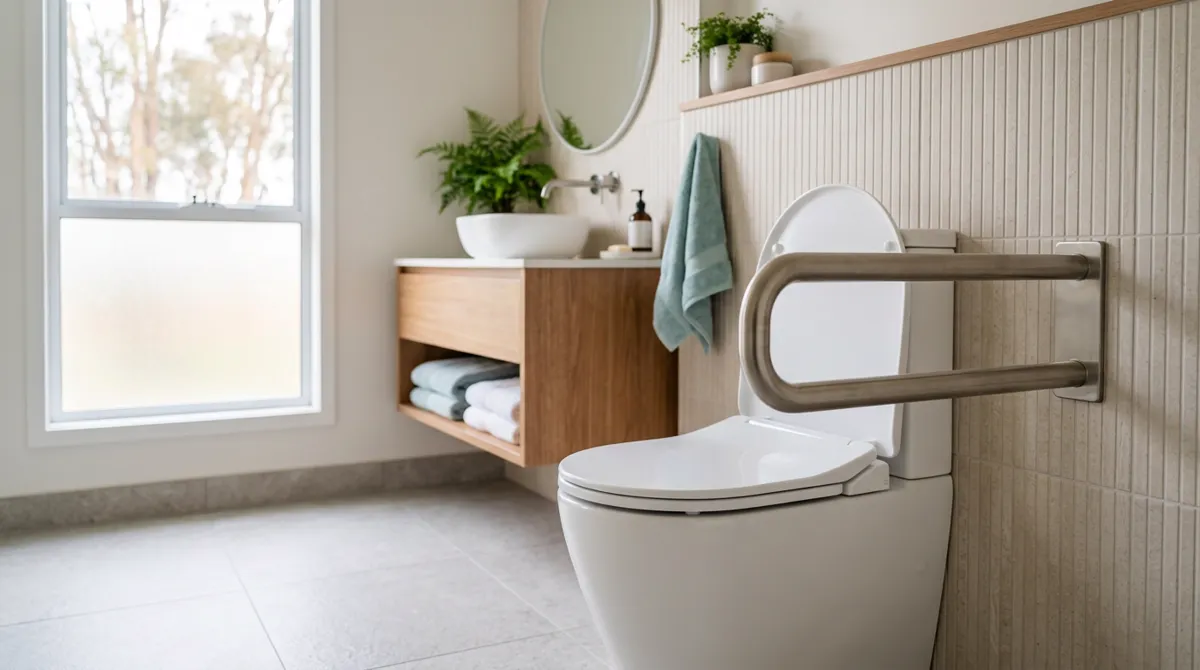
How we ranked these
We ranked these seats for home use: stated weight capacity matched to realistic household users first, then hinge material, seat width, bowl-fit versatility, whether the seat has a lid and looks residential, and the quality signal from verified buyer reviews at scale. Open-front clinical seats were left to our bariatric guide, because most home buyers want a lid. Price was considered but not the deciding factor — a seat that holds for years beats a cheaper one that cracks in months.
Frequently asked questions
What is the best toilet seat for heavy people?
For most home bathrooms, the Bemis 1000CPT Paramont is the best toilet seat for heavy people: it is rated to 1,000 pounds by Bemis, has a closed front and a lid, fits both round and elongated bowls, and uses Bemis's Stay·Tite fastening so it does not work loose. If you want a wider, oversized surface, the 800 lb Big John 6-W is the comfort pick. If you are under about 300 pounds and want a quiet slow-close seat, the Bath Royale Executive or MasterSuite (both rated 400 lb) look like ordinary residential seats. Whatever you choose, pick a rating at least 100 pounds above the heaviest user.
What weight capacity toilet seat do I need?
A general guideline used by occupational therapists and medical supply vendors: choose a seat rated at least 100 pounds above your body weight. This buffer accounts for the dynamic load of sitting — the brief spike in force when you lower yourself onto the seat can exceed your static body weight by 50 to 100 pounds depending on how quickly you sit. For users around 300 pounds, a 400-pound-rated seat is the minimum. For users 400 pounds and up, a seat rated 800 pounds or more provides meaningful safety margin.
How much weight can a toilet support?
A seat's weight rating covers the seat only, not the porcelain bowl or how the toilet is fixed to the floor. Bemis, for example, states that its 1,000 lb Paramont rating is subject to the weight limit of the toilet it is installed on. Most toilet makers do not publish a load figure for residential bowls, so if you are well above 400 pounds, check your toilet maker's documentation or ask a plumber about a commercial or bariatric fixture. Facilities can specify whole bariatric toilets with published 1,000 lb ratings, covered in our bariatric guide.
What is the strongest type of toilet seat?
For heavy users, a heavy-wall injection-molded plastic seat (polypropylene or a stiffer polymer like Bath Royale's Eurocast) with metal hinge posts and a locking fastener is the strongest practical choice, and it is what every seat here uses. Molded wood (an MDF core with an enamel shell) feels solid and warm, but it is heavier, the enamel chips and then absorbs moisture, and few wood seats publish a high weight rating. Look for a published capacity, stainless or chrome-plated metal hinges, and a fastening system that clamps from below, like Bemis Stay·Tite.
Will a heavy-duty toilet seat fit my toilet?
Most standard toilet bowls share a 5.5-inch bolt spread, so the mounting hardware is almost universally compatible. The main variable is bowl shape: elongated or round. Elongated bowls run roughly 18.5 inches from the front edge to the bolt holes; round bowls run about 16.5 inches. Several heavy-duty seats, including the Bemis Paramont and the Big John 6W, are designed as universal-fit and work on both shapes. Measure your bowl or check the toilet model number before ordering if you are unsure.
Do any heavy-duty toilet seats have soft-close hinges?
Yes. Two picks here are slow-close: the Bath Royale Executive BR501-00 and the MasterSuite BR237-00, both of which Bath Royale says are tested to 400 lb on the seat and closed lid. The higher-capacity Bemis Paramont (1,000 lb) and Big John 6-W (800 lb) are standard-close. If you need both slow-close and a rating above 400 pounds, none of the picks in this guide offers that combination.
What is the difference between a heavy-duty and a bariatric toilet seat?
There is a lot of overlap — both are high-capacity replacement seats — but the terms usually signal different buyers. Heavy-duty seats are sold for home bathrooms: closed-front with a lid, residential-looking, often 400 to 1,000 lb. Bariatric seats are the healthcare and facility version: frequently open-front for easier hygiene, specified for hospitals, rehab and care homes, and sometimes paired with commodes or rated bariatric toilets. Our bariatric toilet seats guide covers that setting.
Related guides & comparisons
- Big John toilet seats: 7-W vs 6-W
- Bariatric toilet seats for care settings
- Best commercial toilet seats
- Best toilet seats (overall)
- Best soft-close seats
- Best elongated seats
- Best round seats
- Best raised seats
Sources
- Big John Products — Big John Classic Toilet Seat 7W
- Big John Products — Big John toilet seat range: capacity, rise, width, hinge material and ADAAG / ANSI Z124.5 listings
- Big John Products — Toilet seat comparison specification sheet (Original, Classic 7W, Standard 6W)
- Bemis — Paramont 1000CPT 000 universal plastic toilet seat with Stay·Tite Commercial Fastening System
- Bemis — Paramont 1000CPT plastic toilet seat specification sheet
- Bemis — Toilet size guide: round vs. elongated bowl measurements
- Bath Royale — MasterSuite toilet seat (BR237-00 elongated, BR283-00 round)
- Bath Royale — Toilet seats: 2-year limited warranty
- American Standard — Commercial Heavy Duty Open Front Elongated Toilet Seat with EverClean Surface (5901110T.020)
- American Standard — 5901 commercial toilet seats specification sheet
- Centoco — FAST-N-LOCK mounting system