
Bariatric toilet seats for healthcare and care settings
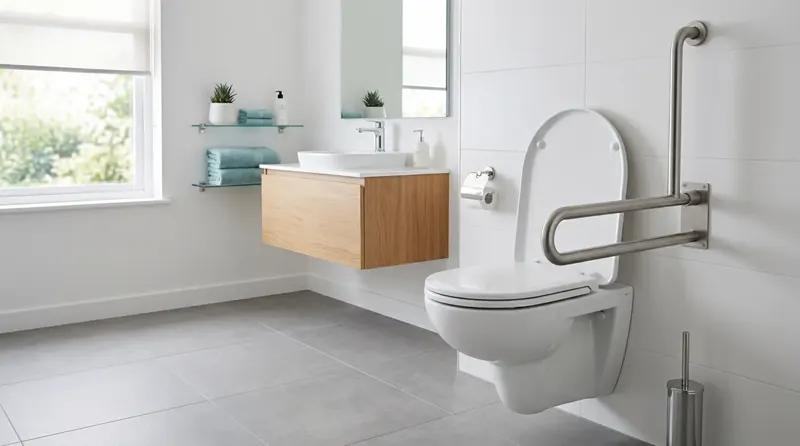
A bariatric toilet seat is a heavy-duty seat built for larger individuals — typically rated between 500 and 1,200 pounds, wider than a standard seat, and frequently open-front, the same design hospitals, rehab units and care homes specify. It bolts onto an existing toilet in place of the standard seat and sits at normal height. That last point matters: a bariatric toilet seat adds weight capacity and a wider surface, not extra height or help with transfers.
This guide is written for healthcare and care settings: facility managers, care homes, home-health teams, and family caregivers fitting a bathroom for a bariatric user. The reason the category exists is that a standard toilet seat is engineered for a 250-pound static load; for someone who weighs 300, 400, or 500-plus pounds, that is a crack, a popped hinge, or a fall waiting to happen. Bariatric seats fix that with thick injection-molded plastic, stainless or reinforced hinges, wide load-spreading bumpers, and published capacity ratings you can check. If you are simply buying a sturdier seat for your own home bathroom, our heavy-duty toilet seats for heavy people guide is the better fit.
Below are the clinical-style picks — the 1,000-pound open-front Big John 7-W, a budget open-front commercial seat, a 1,000 lb closed-front option — plus a 1,000 lb drop-arm commode for users who cannot safely get to the toilet. Every rating we cite comes from the manufacturer's own documentation, and we explain when the toilet fixture itself needs a rating too.
| # | Pick | Price | Rating | |
|---|---|---|---|---|
| 1 | Best overall bariatric seat (highest capacity) Big John 7-W Classic Toilet Seat The bariatric benchmark — the seat rehab facilities reach for first. |
$110–$130 | ★★★★★ 4.5 | Check price |
| 2 | Best budget bariatric-capacity seat under $40 American Standard 5901110T.020 Commercial Toilet Seat The value pick — 500 lb commercial-grade capacity with EverClean, under $40. |
$30–$45 | ★★★★☆ 4.0 | Check price |
| 3 | Best commercial closed-front bariatric seat Bemis 1000CPT Paramont Heavy Duty Toilet Seat Hotel-grade closed-front bariatric seat — 1,000 lb and a hinge that never spins loose. |
$85–$110 | ★★★★☆ 4.4 | Check price |
| 4 | Best bariatric commode for bedside use and lateral transfers Drive Medical Deluxe Bariatric Drop-Arm Commode (11135-1) A 1,000 lb bariatric bedside commode with drop arms for sideways transfers. |
About $200–$250 (varies by seller) | ★★★★☆ 4.3 | Check price |
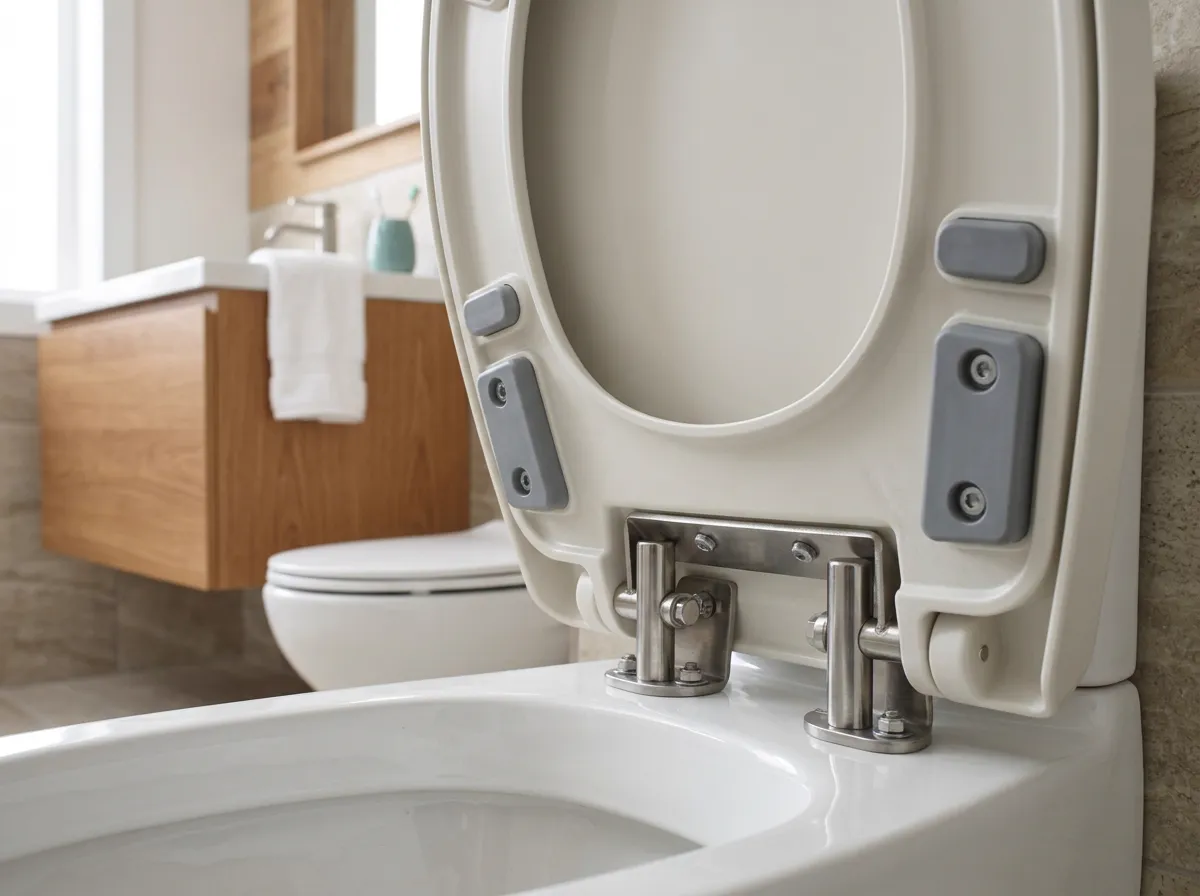
Big John 7-W Classic Toilet Seat
Key features: 1,000 lb weight capacity per Big John's seat category listing and its printed comparison flyer — the 7-W product page separately claims over 1,200 pounds, so the manufacturer's own figures conflict and we cite the lower one · Open-front design (clinical bariatric standard), no lid · High-impact ABS plastic with stainless steel hinges · Large stabilizing rubber bumpers on the underside · ADA compliant; meets ASME/ANSI/IAPMO standards · Roughly 14.5 in wide x 17.7 in deep; universal fit
Pros
- A four-figure published capacity from a brand that has supplied healthcare and rehab settings for decades — roughly four times what a standard seat is built for
- Open-front is what hospitals and rehab facilities specify for bariatric hygiene and transfers
- Universal fit removes the round-vs-elongated question
- Wide rubber bumpers grip the rim so the seat won't spin under a heavy transfer
- A decades-long track record supplying healthcare and rehab settings
Cons
- No lid — some households want a cover for odor control
- Sits slightly wider than the bowl rim (intentional, but looks different from a standard seat)
- Close to a standard seat width at roughly 14 inches — the 6-W and the Original line are far wider if sitting area is the priority
- No soft-close
Who it's for: Individuals at or above 400 pounds who want the widest safety margin, and caregivers outfitting a home for a bariatric family member. The open-front design reflects how larger users actually transfer on and off a toilet.
American Standard 5901110T.020 Commercial Toilet Seat
Key features: 500 lb static weight capacity (manufacturer-stated) · Open-front design, no cover · Injection-molded polypropylene with stainless steel check hinges · Permanent EverClean antimicrobial surface · Large molded-in bumpers; 18 9/16 in long x 14 3/8 in wide · Deployed in schools, airports, and hospitals
Pros
- 500 lb capacity at a fraction of the Big John or Bemis price
- Stainless check hinges stop the seat flopping back against the tank
- EverClean antimicrobial surface inhibits bacteria and mildew — a real hygiene edge for shared use
- Open-front, commercial hygiene design at a budget price
- Slim, standard appearance that doesn't stand out in a home bathroom
Cons
- Standard 14.4-inch width — no oversized sitting room
- 500 lb suits users up to ~400 pounds, not heavier individuals
- No cover, no soft-close, no cushion — a true no-frills seat
- Elongated only
Who it's for: Budget-conscious buyers in the 250–400 pound range who want commercial-grade capacity and an antimicrobial surface without a commercial price — and a solid pick for a rental or second bathroom.
Bemis 1000CPT Paramont Heavy Duty Toilet Seat
Key features: 1,000 lb weight capacity (manufacturer-stated) · Closed-front design with cover · Stay·Tite commercial fastening — clamps from below, never loosens · Chrome hinges with 300-series stainless steel posts and pintles · 16.5 in wide x 18.875 in deep; molded-in color polypropylene · Four ring bumpers for load distribution
Pros
- 1,000 lb with genuine stainless steel hardware, not plastic hinges
- Stay·Tite is the commercial anti-wobble standard — locks from below and needs a tool to remove
- Universal fit; closed-front with cover looks like a residential seat
- Proven in hotels and hospitals, so the durability claim is field-tested
- Molded-in color resists chips and stains under heavy use
Cons
- At ~16.5 inches wide, narrower than the oversized Big John seats
- Closed-front is less preferred in some clinical bariatric settings where open-front is standard
- Costs more than the American Standard option for users who don't need 1,000 lb
- Plastic surface can feel cool in winter without a cushion
Who it's for: Users in the 300–500 pound range who want commercial-grade hardware in a seat that still looks like a normal residential toilet seat — and anyone whose previous seats kept working loose, which the Stay·Tite system specifically solves.
Drive Medical Deluxe Bariatric Drop-Arm Commode (11135-1)
Key features: 1,000 lb weight capacity (manufacturer-stated) · Drop arms release for lateral transfers to and from a bed or wheelchair · Powder-coated steel frame; padded armrests and backrest · Seat 23.25 in wide x 18.5 in deep; seat height adjusts from 17.5 to 22 in · 12-quart commode bucket with cover · Limited lifetime warranty (per Drive Medical)
Pros
- Rated to 1,000 lb, the same figure as the highest-rated seats here
- Drop arms make sideways transfers possible, which a fixed toilet seat cannot offer
- Very wide seat compared with any bolt-on toilet seat
- Drive Medical lists it under HCPCS code E0168, which helps when asking a supplier or insurer about coverage
Cons
- It is a bedside commode, not a seat that bolts onto your toilet
- Bulky to store and needs emptying and cleaning after each use
- Price varies a lot between sellers
Who it's for: Caregivers and care settings where the user cannot safely walk to the bathroom at night or needs a sideways transfer from a bed or wheelchair, and where a 1,000 lb rating is required.
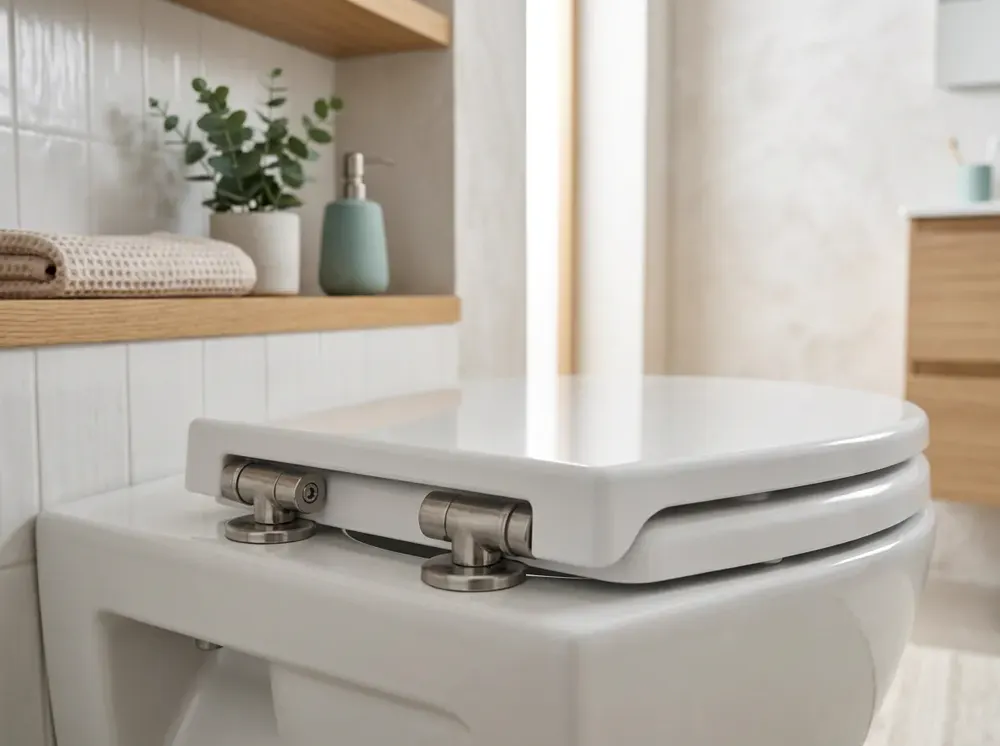
Bariatric toilet seats compared
| Seat | Capacity | Front / lid | Width | Hinges | Fit | Price |
|---|---|---|---|---|---|---|
| Big John 7-W Classic | 1,000 lb | Open-front, no lid | ~14.5 in (standard) | Stainless steel | Universal (round + elongated) | $110–$130 |
| Bemis 1000CPT Paramont | 1,000 lb | Closed-front, lid included | 16.5 in | Chrome, stainless posts + Stay·Tite | Universal (round + elongated) | $85–$110 |
| American Standard 5901110T | 500 lb | Open-front, no lid | ~14.4 in (standard) | Stainless check hinges | Elongated only | $30–$45 |
| Drive Medical Bariatric Drop-Arm Commode | 1,000 lb | Free-standing commode, drop arms | 23.25 in seat | Steel frame | Free-standing (not bolted to a toilet) | About $200–$250 |
All capacities are manufacturer-stated. Big John's own documents give the 7-W two different ratings (1,000 lb on its category listing and comparison flyer, over 1,200 lb on the product page); we cite the conservative figure. Prices are typical U.S. retail ranges and shift over time. Shopping for a closed-front seat with a lid for a home bathroom? See our heavy-duty toilet seats for heavy people guide.
What matters before you buy
- Weight capacity — match it to the user, with margin. Choose a rating at least 100 pounds above the user's body weight to absorb the dynamic force of sitting down, which briefly spikes well past static weight. For a 300-pound user, 400 lb is the floor; for 400-plus pounds, step up to 800 lb or more. Bariatric seats publish these numbers because the whole point is verifiable safety — never assume, always check the stated rating.
- Open-front vs. closed-front. Open-front seats (a U-shaped gap at the front) are the clinical bariatric standard — they ease hygiene and self-care for larger individuals and are what most facilities specify. Closed-front seats with a lid look more residential and offer odor control. Both are valid; the choice is between clinical function (open) and a standard-bathroom look (closed).
- Seat width and sitting area. A standard seat is about 14 inches wide. Oversized bariatric seats run about 16 to 19 inches, spreading load and giving noticeably more room. A wider seat is more comfortable and reduces lateral thigh pressure, but it overhangs the bowl — more noticeable on a round bowl than an elongated one.
- Hinges, hardware, and mounting stability. The number-one owner complaint about any seat is one that spins or shifts. Bariatric-grade seats use stainless steel or heavily reinforced hinges and locking commercial fasteners (Bemis Stay·Tite, for example) that clamp from below and won't work loose. Wide rubber bumpers that grip the rim keep the seat from moving under a heavy transfer.
- Commercial bariatric toilets: the fixture is rated, not just the seat. If you are fitting out a hospital, clinic or other commercial restroom, a bariatric seat may not be the whole answer. Manufacturers also make bariatric toilets: whole fixtures, usually type 304 stainless steel, whose load rating covers the bowl and the way it is mounted. Zurn says its Z5693 wall-hung bariatric toilet is load tested to withstand 1,000 lb under ASME/ANSI A112.19.12, and that the performance is guaranteed when it is installed on Zurn's XB-series bariatric carrier (the steel support frame inside the wall that holds a wall-hung toilet). Whitehall rates its off-floor bariatric toilet to 1,000 lb when combined with a fixture support, and Jay R. Smith rates its stainless 9901 wall-mounted bariatric toilet at 1,000 lb. Floor-standing designs exist too: Whitehall says its tank-style on-floor bariatric toilet, supported by both the floor and the wall and fitted with a Big John seat, withstands loads up to 5,000 lb. The practical point is that a seat's rating covers the seat, not the bowl or how the toilet is fixed. For a facility, specify the toilet and its carrier or supports together; for a home, the seats on this page are the practical upgrade.
- Fit: bolt spread and bowl shape. Almost every toilet uses a 5.5-inch bolt spread, so mounting is nearly universal. The variable is bowl shape — elongated (~18.5 in) vs. round (~16.5 in). Several bariatric picks (the Big John 7-W and Bemis Paramont) are universal-fit and work on both, which removes the guesswork; others are elongated-only, so confirm your bowl before ordering.
- Is it HSA/FSA eligible?. Because a bariatric toilet seat can be a medically necessary item, it is often reimbursable through an HSA or FSA, sometimes with a doctor's letter of medical necessity. Rules vary by plan and change over time, so confirm with your administrator — but keep the receipt, since many buyers can recover the cost pre-tax.
How we ranked these
We prioritized published, manufacturer-stated weight capacity first, then the factors that decide whether bariatric equipment is safe and durable in a care setting: hinge and hardware material, sitting-surface width, mounting stability (a seat that shifts is a fall risk), open- vs. closed-front design, and support for safe transfers. We gave extra weight to models with a documented track record in healthcare and rehab settings, because those environments expose weak equipment fast. We synthesize manufacturer spec sheets, medical-supply and plumbing sources, and verified owner reviews at scale — we test these seats ourselves, and every weight rating we cite comes from the manufacturer's own documentation, never from our own testing.
Frequently asked questions
What is a bariatric toilet seat?
It's a heavy-duty toilet seat designed for larger individuals — rated for high weight (commonly 500–1,200 lb), usually wider than a standard seat, and often open-front like the seats used in hospitals and rehab facilities. It replaces your existing seat on a standard toilet and sits at normal height. It adds capacity and width, not extra height.
What is the difference between a bariatric toilet seat, a raised toilet seat, and a bedside commode?
A bariatric toilet seat replaces your seat and adds weight capacity and width at standard height. A raised (or elevated) toilet seat adds 2–6 inches of height to make sitting and standing easier for limited hip/knee mobility — some are also bariatric-rated. A bedside commode is a free-standing chair-style toilet used next to the bed. If you need capacity only, get a bariatric seat; if you also need height, look for a bariatric raised seat; if you need to avoid walking to the bathroom, a bariatric commode. For a heavier person shopping for a standard closed-front seat with a lid for their own bathroom, see our heavy-duty toilet seats for heavy people.
What is a commercial bariatric toilet?
It is a whole toilet, not just a seat, built and load-rated for bariatric users in hospitals, clinics and other commercial restrooms. Most are stainless steel and are rated together with their mounting: Zurn load tests its Z5693 wall-hung bariatric toilet to 1,000 lb when it is installed on Zurn's bariatric carrier, Whitehall rates its off-floor bariatric toilet to 1,000 lb with a fixture support, and Whitehall says its floor-and-wall-supported tank-style bariatric toilet withstands up to 5,000 lb. A bariatric seat is the simpler alternative for a home: it bolts onto an existing toilet, and its rating covers the seat only.
How much weight can a bariatric toilet seat hold?
The seats in this guide range from 500 pounds (American Standard commercial) to 1,000 pounds (the Big John 7-W and the Bemis Paramont), and the Drive Medical drop-arm commode is also rated to 1,000 lb. Pick a rating at least 100 pounds above the user's body weight to account for the extra force of sitting down. For users above 400 pounds, choose 800 lb or higher. If you need more than 1,000 lb, Big John's Original line is rated 1,200 lb.
Do bariatric toilet seats fit a standard toilet?
Yes. Standard toilets share a 5.5-inch bolt spread, so the mounting hardware is nearly universal. The only fit variable is bowl shape — elongated vs. round. Several picks here (the Big John 7-W and Bemis Paramont) are universal-fit and work on both; others are elongated-only, so measure or check your toilet model if you're unsure. Installation is the same as any seat and takes under 10 minutes.
Why are bariatric seats often open-front?
The U-shaped open front is the standard in clinical and bariatric care because it makes personal hygiene and self-care easier for larger individuals, and it's an established hospital hygiene practice. Closed-front seats with a lid are also available and look more like a residential seat — the trade-off is clinical function versus a standard-bathroom appearance.
Are bariatric toilet seats covered by insurance or HSA/FSA?
Often, yes — a bariatric toilet seat can qualify as a medically necessary item and be reimbursable through an HSA or FSA, sometimes with a letter of medical necessity from a doctor. Coverage and rules vary by plan and change over time, so confirm with your plan administrator and keep your receipt.
Related guides & comparisons
- Big John toilet seats: 7-W vs 6-W
- Heavy-duty toilet seats for home bathrooms
- Best commercial toilet seats
- Best raised toilet seats (for extra height)
- Best toilet seats (overall)
- Best elongated toilet seats
- Best round toilet seats
Sources
- Big John Products — Big John Classic Toilet Seat 7W (product page)
- Big John Products — toilet seat category listing: per-model capacity, width, hinge material and ADAAG listings
- Big John Products — Toilet seat comparison flyer, Rev3 0519 (Original 1,200 lb / Standard 6W 800 lb / Classic 7W 1,000 lb)
- Bemis — Paramont 1000CPT 000 universal plastic toilet seat with Stay·Tite Commercial Fastening System
- Bemis — Paramont 1000CPT plastic toilet seat specification sheet
- Bemis — Toilet size guide: round vs. elongated bowl measurements
- American Standard — Commercial Heavy Duty Open Front Elongated Toilet Seat with EverClean Surface (5901110T.020)
- American Standard — 5901 commercial toilet seats specification sheet
- Zurn — Z5693 extra heavy-duty 1,000 lb bariatric wall-hung toilet specification sheet (load tested to ASME/ANSI A112.19.12; XB-series bariatric carrier)
- Zurn — Z1202-N-XB EZCarry bariatric water closet carrier (1,000 lb)
- Jay R. Smith — Model 9901 stainless steel bariatric wall-mounted toilet (rated at 1,000 lb)
- Whitehall Manufacturing — Bariatric plumbing fixtures (off-floor toilet to 1,000 lb with fixture support; tank-style on-floor toilet to 5,000 lb)
- Drive Medical — Deluxe Bariatric Drop-Arm Commode 11135-1 (1,000 lb, 23.25 x 18.5 in seat, 17.5–22 in height, limited lifetime warranty)