
Why toilet seats turn yellow
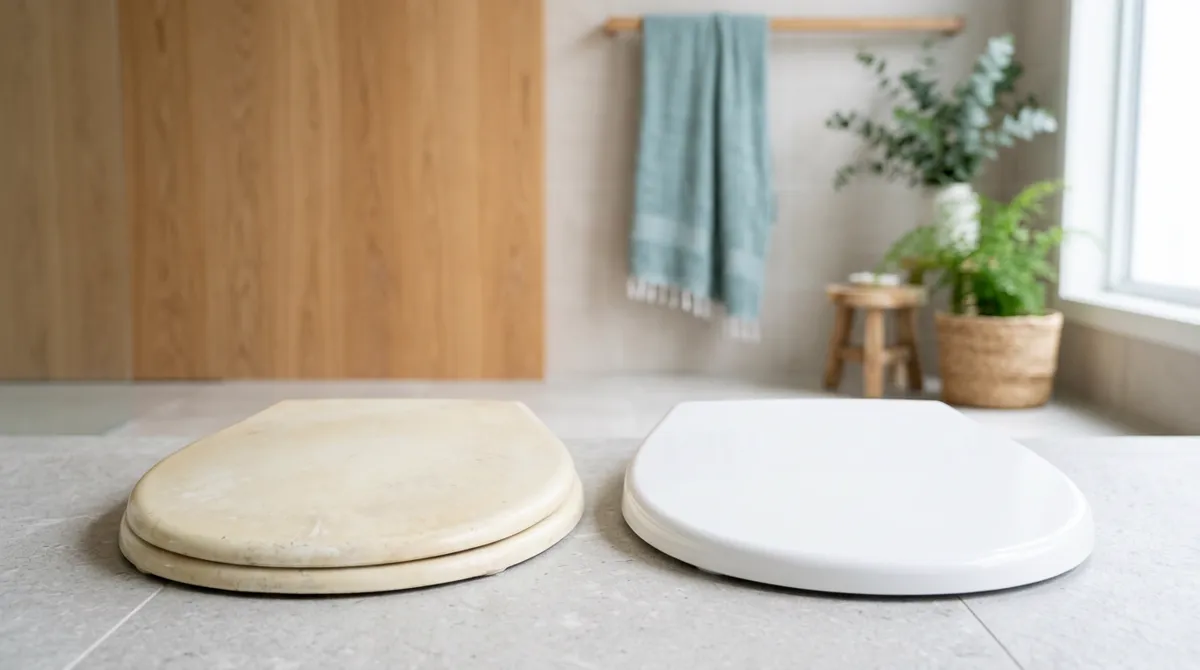
A yellowing toilet seat is one of those household problems that generates endless scrubbing advice, most of which fails — because 'yellow' is actually three different problems, and only one of them is a stain. Surface staining from urine minerals and hard water sits on top of the plastic, where cleaning can reach it. UV yellowing from sunlight and chemical yellowing from harsh cleaners happen inside the plastic itself, and no product removes a color change that goes all the way through the material.
That distinction is the whole game. If you know which yellow you have, you either clean it off or stop wasting weekends on it and buy a seat that looks new because it is new. The test is simple, and it's in the first section below.
This guide covers how to tell surface stains from plastic degradation, the cleaning method that removes the removable kind, the cleaner mistakes that cause yellowing (bleach on plastic seats is the big one, which surprises everyone), and an honest framework for the replace-or-scrub decision — including when an old seat isn't worth saving even if you could.
Seat past saving? See the best replacements we've researched.
See our picks →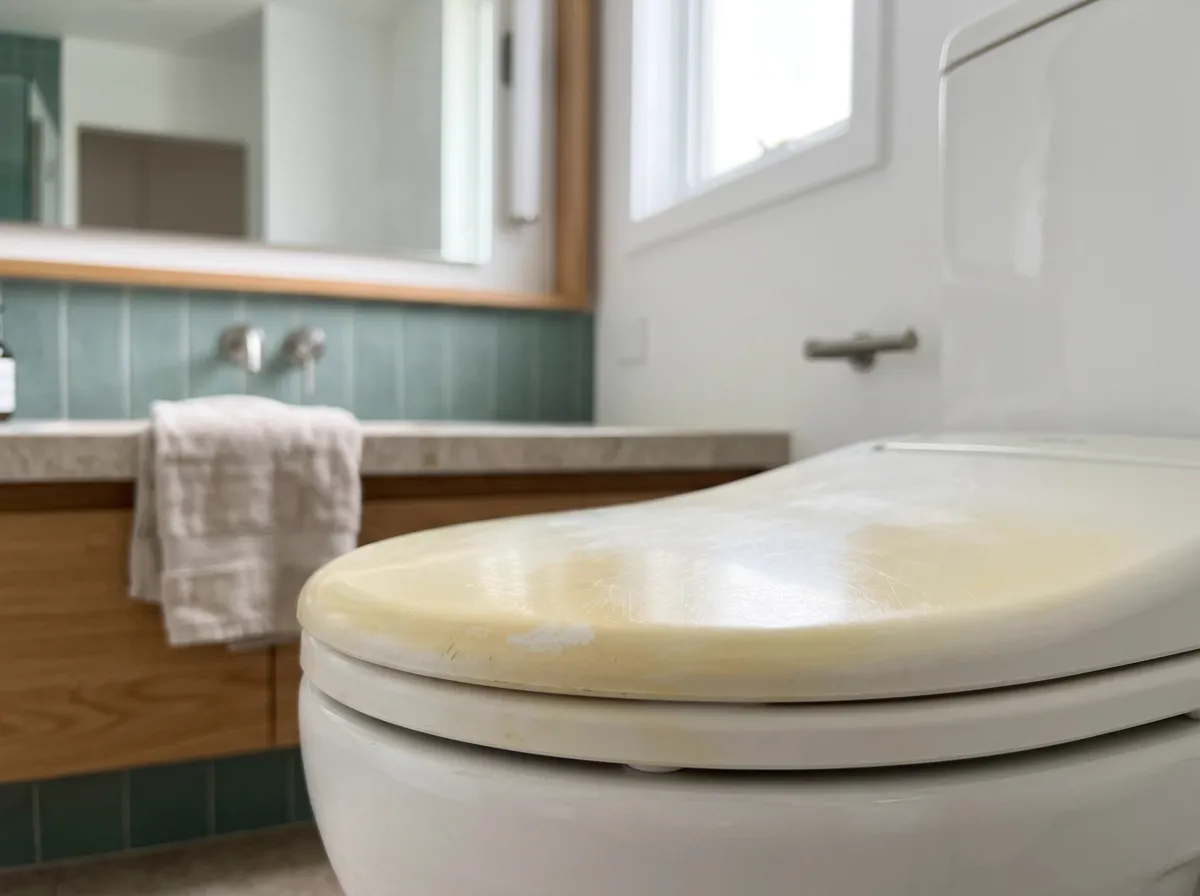
The quick test: stain or degraded plastic?
Pick one small yellowed patch and give it the makers' treatment: a little dish soap in warm water, a soft cloth, a rinse, a dry. If the patch comes up noticeably lighter than its surroundings, the yellow was residue sitting on the plastic, and the same method will handle the rest of the seat. If it looks exactly the same, there are two possibilities: the color change is in the plastic itself, from UV exposure or chemical damage, or it's a deposit that soap won't lift. The test can't always tell those apart, but the next step is the same for both. The makers' care guides list nothing more aggressive to try, and Bemis warns that what harsh cleaners do to a seat can't be undone, so a stronger product risks adding damage rather than removing color. Your realistic options are to live with it or fit a new seat. Check the underside of the lid too — plastic degradation usually yellows evenly across sun-exposed surfaces, while staining concentrates where liquid actually lands: the front of the ring, around the hinges, and the bowl-facing surfaces.
Cause 1: Urine and hard-water mineral staining (removable)
The most common cause, and the only one that sits on the surface rather than in the plastic. Urine splash — routine in any household, dramatically worse in ones with young boys — leaves mineral deposits as it dries, and hard tap water adds its own calcium film with every cleaning. The buildup is gradual and patchy, worst at the front of the ring, near the hinges, and on the seat's underside. Fresh residue is what the weekly soap-and-water wipe is for; an old, hardened deposit may not budge, and the seat makers don't approve anything harsher to shift it. It also comes back on a schedule, which is why the maintenance habit at the end matters more than any single deep clean.
The cleaning method the seat makers specify
Bemis, Kohler and TOTO give essentially the same instructions for their seats: a mild soap such as dish soap in water, a soft cloth or sponge, then a thorough dry. Bemis also accepts antibacterial hand soap or wipes. If your seat has lift-off hinges, take it off and clean between the bolts too, where splash collects. That is the whole method, for plastic and enameled (painted) wood seats alike. Baking-soda scrubs and vinegar soaks are common advice, but none of the three makers approves them: Bemis lists vinegar, acid and scouring powders among the products not to use, TOTO's SoftClose seat manual rules out acids, alkaline detergents and polishing powders, and Kohler says abrasive cleaners scratch and dull a seat and that no cleaner should be left to soak. Bemis adds that staining, fading or scratching from harsh or abrasive cleaners is permanent. If someone in the house reaches for vinegar anyway, never let it meet bleach: Washington State's health department warns that bleach mixed with an acid such as vinegar gives off chlorine gas. If a mark survives soap and water, stronger products risk exactly the permanent damage Bemis describes, so the choice is between living with it and replacing the seat.
Cause 2: UV yellowing from sunlight (permanent)
If your toilet sits near a window, the culprit may be the sun. UV light slowly breaks down the polymers and brighteners in white plastic, shifting it yellow — the same chemistry that yellows old computer cases and window blinds. The tells: the yellowing is even rather than patchy, it's worst on the surfaces that face the light (often the lid top), and it ignores every cleaner. This change is inside the material and is effectively permanent — the retrobright-style peroxide treatments hobbyists use on vintage electronics are impractical on a seat you sit on, temporary anyway, and not worth the effort against the cost of a new seat. If the bathroom gets strong sun, the practical fix is choosing your next seat smartly: duroplast/thermoset seats resist UV meaningfully better than cheap polypropylene, and enameled wood seats don't UV-yellow the way plastic does.
Cause 3: Your cleaner did it (also permanent — and preventable)
The one that surprises people: the aggressive cleaning meant to keep the seat white is a major cause of permanent yellowing. Undiluted bleach and strong chlorine cleaners chemically attack plastic — repeated exposure breaks down the surface and leaves a yellowish or dingy cast that no amount of further cleaning fixes, because the surface itself is damaged. Bemis says it takes hundreds of calls a year from owners who used harsh chemicals on a seat that then lost its luster, stained or yellowed, and Kohler's seat instructions rule out disinfectants and aerosol cleaning products as well as abrasives. What the makers ask for instead is the soap-and-water method above. Save the bleach for the porcelain, and keep it off the seat even as overspray.
When replacement is simply the right answer
Replace without guilt when: the quick patch test leaves the yellow unchanged; the seat is old enough that the hinges keep loosening, the surface is micro-scratched or the bumpers have compressed; the yellowing sits alongside cracks, pitting, or wobble; or you're cleaning aggressively every week just to hold the line. A replacement doesn't have to cost much: Bemis lists its slow-close, lift-off Mayfair Cassel enameled-wood seat at $38.99 (round) and $43.99 (elongated) MSRP, and top-mount hinges such as Kohler's ReadyLatch install from above the bowl with only a household screwdriver. The newer designs are genuinely nicer, with soft-close, quick-release hinges that pop off for cleaning, and never-loosen mounting. Measure before you buy: bolt centers to front lip, roughly 16.5 inches is round, 18.5 is elongated. There is no prize for winning a multi-year war against an inexpensive part.
Keeping the next seat white
Three habits and one purchase decision. Wipe the seat (top and underside) weekly with mild soap and water, then dry it — staining you remove every week never builds to the scrubbing stage. Keep bleach and chlorine sprays off the plastic entirely, including overspray from cleaning the bowl. Put the lid down before flushing, which cuts the fine spray that settles minerals onto the underside. And when buying: duroplast or enameled-wood seats hold their color better than budget polypropylene, which makes them worth considering if yellowing keeps coming back. If your seat yellows near a sunny window, that's also your cue to favor duroplast specifically, which shrugs off UV far better.
Tips & warnings
- Run the quick patch test before committing a weekend. If soap and water leaves the test spot unchanged, stop there: a stronger product risks damage Bemis calls permanent, and a new seat is the surer fix.
- Skip vinegar soaks and baking-soda scrubs; the seat makers' own care guides stop at soap and water.
- Bleach on a plastic seat causes yellowing — it doesn't cure it. Porcelain only.
- Never use scouring powder on a seat: micro-scratches make every future stain grip harder.
- Old, yellow and loose on its hinges? Replace it: Bemis lists its slow-close, lift-off Mayfair Cassel at under $45 MSRP.
- Buying near a sunny window: duroplast resists UV yellowing far better than cheap polypropylene.
Frequently asked questions
Why does my toilet seat turn yellow?
Three causes, and telling them apart matters. Urine splash and hard-water minerals leave patchy deposits on the surface, worst at the front of the ring and around the hinges. UV light from a sunny bathroom yellows the plastic itself, evenly, especially on the lid. And repeated cleaning with bleach or other harsh chemicals damages the surface for good: Bemis says staining and fading from harsh cleaners is permanent. To narrow it down, wash one small patch with dish soap and warm water, the method Bemis, Kohler and TOTO all specify, then dry it. If the patch lightens, keep going with the same routine. If it doesn't, the yellow is either in the plastic or a deposit soap won't lift. None of those makers suggests a stronger stain remover, and a harsher cleaner can do lasting harm of its own, so at that point you either live with the color or replace the seat.
How do I get yellow stains off a toilet seat?
Use the method the seat makers specify: dish soap or mild hand soap and warm water on a soft cloth, then rinse and dry thoroughly. Lift-off hinges let you remove the seat and get at the bolts as well. Enameled seats get the same treatment; Kohler says painted wood seats need only a mild detergent such as dish soap. Don't escalate to baking soda, vinegar or scouring powder: the makers' care guides rule out acids and abrasives, and TOTO warns that such cleaners will scratch, damage or discolor a seat. If soap and water doesn't lighten the yellow, there's no maker-approved next step, and replacing the seat is the real fix.
Does bleach whiten a yellow toilet seat?
No — bleach is one of the causes. Strong chlorine cleaners chemically attack the plastic's surface, and repeated use produces exactly the permanent yellowish, dingy cast people are trying to remove; seat manufacturers explicitly warn against it. Bleach also can't touch the two other causes, UV yellowing and mineral staining. Keep bleach on the porcelain bowl and clean the seat with mild soap and water, the makers' method above — and never follow bleach with vinegar on the same surface, because bleach mixed with an acid gives off chlorine gas.
Why is the underside of my toilet seat yellow?
The underside catches the two things the top doesn't: urine splash-back and the fine mist a lid-up flush throws, both of which dry into mineral deposits in a spot nobody wipes weekly. That's why underside yellowing is patchy and concentrated toward the front — it's staining, which is what the cleaning method above is for. Two habits keep it from coming back: include the underside in a weekly wipe (quick-release hinges make this easy on modern seats), and close the lid before flushing to cut the mist.
Should I clean my yellow toilet seat or just replace it?
Run the patch test above on one spot first. If it lightens, clean the seat — soap and water costs pennies. If the spot stays yellow, the color is in the plastic (UV or chemical damage) or stuck fast as a deposit, and with nothing harsher approved for the seat, replacement is the practical fix. Also just replace it if the seat wobbles, is cracked or pitted, or its hinges won't stay tight. A better seat needn't be expensive: Bemis lists its slow-close, lift-off Mayfair Cassel at $38.99 (round) and $43.99 (elongated) MSRP. Measure bolt-to-front-lip first: ~16.5 inches is round, ~18.5 is elongated.
Which toilet seat material doesn't turn yellow?
Duroplast (thermoset plastic) is the yellowing-resistant choice — it's harder, less porous, and far more UV-stable than the polypropylene used in budget seats, which is why it's standard on better European seats. Enameled wood seats also hold their white color well, since the enamel surface doesn't UV-shift like bare plastic, though they can chip. Cheap polypropylene yellows fastest on every front: UV, chemicals, and staining. If your bathroom gets direct sun or you're tired of the yellow cycle, an upgrade to duroplast or enameled wood is the fix that lasts.
Sources
- Bemis (ToiletSeats.com) — FAQs: best products for cleaning a toilet seat, and products not to use
- Bemis — Toilet Seat Use & Care Guide
- Bemis (ToiletSeats.com) — Cleaning Your Toilet Seat Is Easier Than You Think
- Kohler — Toilet seat installation guide with care and cleaning instructions (K-4636, K-4639)
- Kohler — Toilet seat care and cleaning (painted wood seats: mild detergent only)
- TOTO — SoftClose seat (SS124) installation manual: care and cleaning (no bleach, acids, alkaline detergents or polishing powders)
- Washington State Department of Health — Bleach mixing dangers
- Mayfair by Bemis — Cassel Round Enameled Wood Toilet Seat (847SLOW), MSRP
- Mayfair by Bemis — Cassel Elongated Enameled Wood Toilet Seat (1847SLOW), MSRP
- Kohler — ReadyLatch Toilet Seat Collection installation guide (installs from the top of the bowl with a household screwdriver)