
How to remove a toilet bowl ring
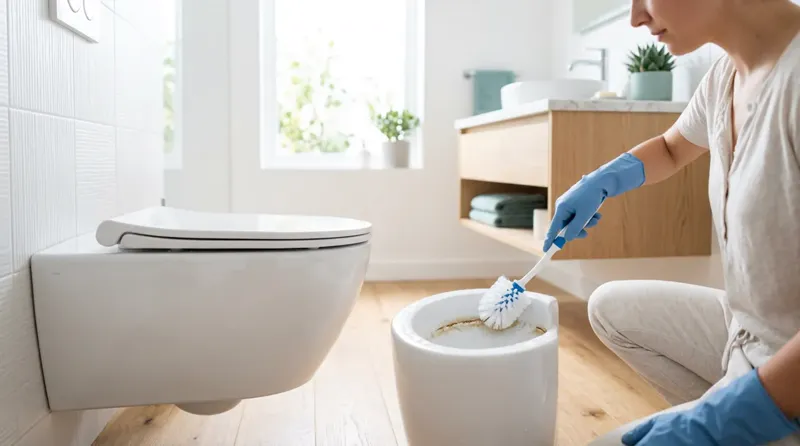
That stubborn brown, pink, or black ring around your toilet's water line is one of the most common bathroom eyesores. It's almost always caused by one of two things: hard-water minerals (calcium, magnesium, and iron) baking onto the porcelain, or a layer of mold, mildew, and bacteria that thrives where the water sits all day. The good news is you rarely need harsh chemicals or a plumber to get rid of it.
This guide walks you through three proven, escalating methods: a foaming vinegar and baking soda treatment for light rings, a borax paste that clings overnight for tougher buildup, and a wet pumice stone for the truly stubborn mineral crust that won't scrub off. Start with the gentlest option and work up only if you need to.
What you'll need
- Distilled white vinegar (about 1 to 2 cups)
- Baking soda (about 1 cup)
- Borax powder (1/4 to 1 cup)
- A pumice stone made for toilets (with a handle if possible)
- A stiff toilet brush or non-scratch scrub pad
- Rubber gloves and a small cup or bowl for mixing
Step by step
- Lower the water and identify the ring. Turn off the toilet's water supply valve and flush to drain most of the water out of the bowl, exposing the ring at the water line. A pink or black ring usually means mold or bacteria, while a brown, orange, or chalky white ring points to hard-water minerals. Knowing which you have tells you how aggressive to be.
- Start with the vinegar and baking soda method. Pour about 1 cup of vinegar around the bowl, focusing on the ring, and let it sit for several minutes to soften the deposits. Sprinkle 1 cup of baking soda over the wet area, add another splash of vinegar to create a fizzing reaction, and let it bubble for 5 to 10 minutes.
- Scrub and rinse. Work the foam into the ring with your toilet brush, paying extra attention to the water line and just under the rim. Turn the water back on and flush to rinse. For light rings, this single treatment often does the job.
- Move up to a borax paste for tougher rings. If the ring survives, mix about 1/4 cup of borax with just enough vinegar to form a spreadable paste. Apply it directly onto the ring so it clings to the slanted porcelain, then let it work for at least 15 to 20 minutes (overnight for heavy buildup).
- Scrub the borax away. After the paste has had time to dissolve the deposits, scrub firmly with the toilet brush or a non-scratch pad until the ring lifts. Flush to rinse, then inspect the water line in good light to see whether any mineral crust remains.
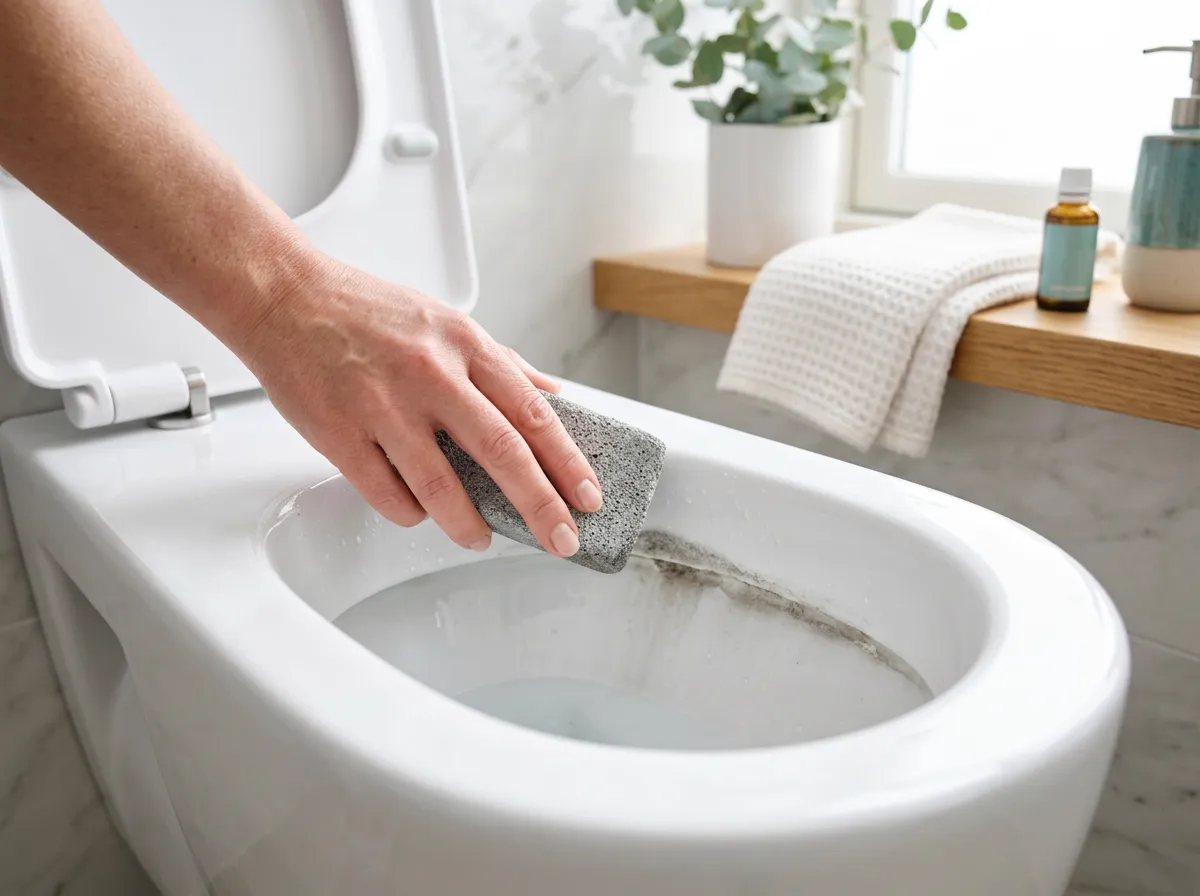
- Use a wet pumice stone on stubborn mineral buildup. For hardened deposits that scrubbing can't remove, soak a pumice stone in warm water for a minute so it softens. Keep both the stone and the porcelain wet at all times and rub the ring with light, even pressure until it disappears. A dry stone or hard scrubbing can scratch the glaze.
- Do a final rinse and prevent the next ring. Flush to clear away any pumice grit and loosened residue, then wipe the bowl with your brush to check for missed spots. To keep the ring from coming back, clean the water line weekly and pour a cup of vinegar in once a week to slow mineral and bacteria buildup.
Tips & warnings
- Never mix vinegar (or any acid) with bleach or bleach-based toilet cleaners. The combination creates toxic chlorine gas that is dangerous to breathe.
- Only use a pumice stone on standard white porcelain. It can scratch colored porcelain, marble, plastic seats or tank parts, and any enamel surface.
- Always keep the pumice stone fully wet while you scrub. A dry stone gouges the glaze and creates grooves where future stains will cling even faster.
- If a pink or black ring keeps returning quickly, it's likely mold or bacteria fed by a slow leak or constant moisture. Disinfect regularly and check that the bowl isn't refilling or weeping water.
- Work in the order shown: vinegar/baking soda first, then borax, then pumice. Reaching for the abrasive stone on a stain that would have wiped off saves wear on your porcelain.
Frequently asked questions
Will a pumice stone scratch my toilet bowl?
Not if you use it correctly. Pumice is soft, porous volcanic rock that is safe on standard white porcelain as long as both the stone and the bowl stay wet and you use light pressure. A dry stone, hard scrubbing, or use on colored or enameled surfaces can leave scratches.
What actually causes the ring around the water line?
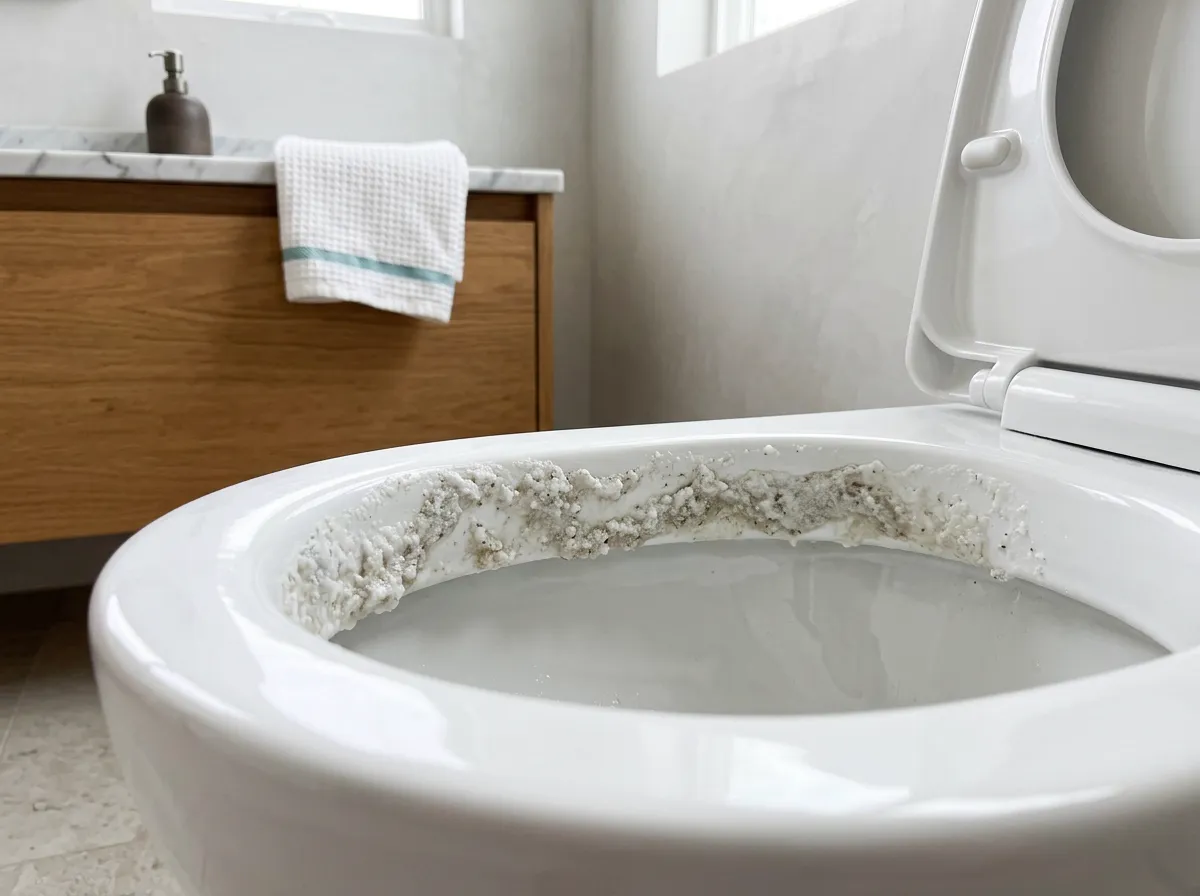
Most rings come from one of two sources. Hard-water minerals like calcium, magnesium, and iron leave brown, orange, or chalky deposits, while mold, mildew, and bacteria growing in the damp bowl create pink or black rings. The water line is where buildup concentrates because that's where the water sits.
Can I just pour bleach in to remove the ring?
Bleach can lighten the look of a stain and kill bacteria, but it doesn't dissolve hard-water mineral deposits, so the ring often comes back. Vinegar, borax, and a pumice stone physically remove the buildup. If you do use bleach, never combine it with vinegar or other acidic cleaners.
How do I keep the ring from coming back?
Clean the water line about once a week and pour a cup of vinegar into the bowl weekly to slow mineral and bacteria buildup before it hardens. In hard-water areas, a water softener or a periodic vinegar soak makes the ring far easier to prevent than to remove.