
Bidets for Postpartum Recovery

Yes, bidets are a gentle, hygienic way to care for sensitive tissue after birth. A warm, low-pressure spray rinses the perineal area without the friction of wiping, which protects stitches, tears, and swelling while you heal. Both a peri bottle and a bidet seat work for vaginal birth and C-section. Rinse front to back, then pat dry.
After childbirth, the skin around the vagina and perineum is often swollen, stitched, or torn, and ordinary toilet paper can feel like sandpaper on it. Doctors routinely recommend rinsing with warm water instead of wiping. MedlinePlus episiotomy aftercare instructions say to "spray warm water over the area and pat dry" and to "not use toilet paper" until healing is underway.
A bidet or peri bottle simply makes that warm-water rinse easier and more comfortable. This guide explains when to start, how to do it safely, and how to choose between a simple peri bottle and a more permanent bidet seat or attachment. This is general education, not medical advice. Always follow the instructions from your own doctor or midwife.
See compact peri-care picks (portable bidets).
See our picks →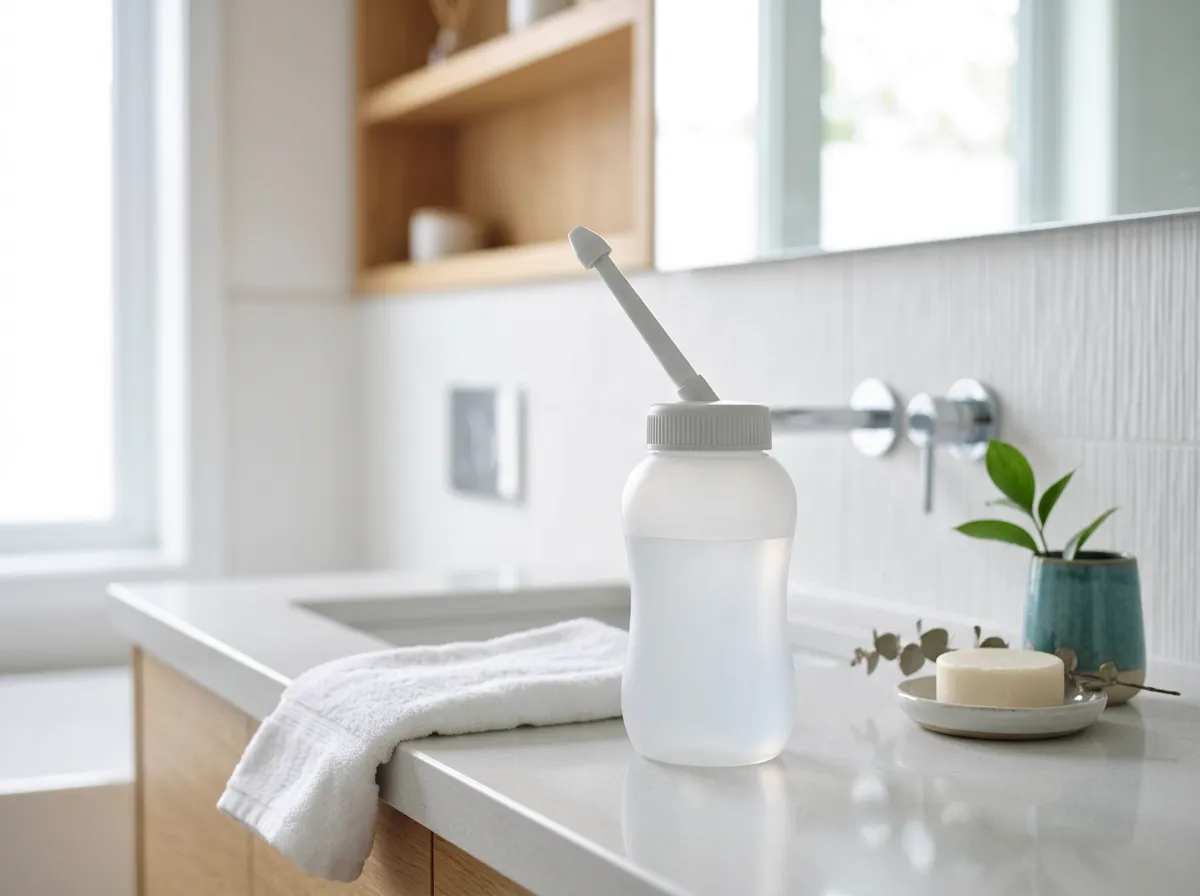
Why Warm Water Beats Wiping After Birth
In the first days and weeks postpartum, healing tissue is tender, and every wipe can pull at stitches or irritate a tear. A directed stream of warm water cleans the area without rubbing. It rinses away blood and discharge, soothes burning when you urinate, and lowers the risk of irritating the wound. The American College of Obstetricians and Gynecologists (ACOG) notes that some patients find it helpful to use a bottle with a spout to squirt warm water on the perineum, and that it is a good alternative to toilet paper. After rinsing, pat the skin dry rather than wiping.
Safe for Vaginal Birth and C-Section
Gentle external rinsing works for every type of delivery. A peri bottle or bidet cleans only the outside (the vulva and perineum). It is not a douche and should not be aimed inside the vagina. ACOG specifically warns against vaginal douching after birth. For a C-section, the same warm-water rinse keeps the perineal area clean while you recover from surgery, since you are still passing lochia (postpartum bleeding) for weeks. Keep your separate abdominal incision clean and dry per your surgeon's instructions, and do not spray water directly at it unless your care team says it is okay.
How to Use It: Front to Back, Low Pressure
Use warm (not hot) water and a gentle stream. While you urinate or right after a bowel movement, aim the water at your perineum and rinse from front to back, the same direction ACOG recommends for cleaning the vulva, so nothing is carried toward the urethra or healing stitches. Then pat dry with a clean towel, soft tissue, or a baby wipe instead of wiping. Change your pads every 2 to 4 hours, and keep the area around any stitches clean and dry between rinses.
When to Start and How Long to Keep Going
You can start gentle warm-water rinsing right away after birth, including your first trips to the bathroom in the hospital. Many hospitals hand new mothers a peri bottle before discharge. Sitz baths are usually held off until about 24 hours after delivery, and ice packs in the first 24 hours help with swelling and pain, per episiotomy aftercare guidance. There is no fixed end date for the rinse itself, use it for as long as it feels helpful and your tissue is healing. Many people keep a peri bottle or bidet long after recovery simply because it is more comfortable than paper.
Peri Bottle vs. Bidet Seat or Attachment
A peri bottle is a small squeeze bottle, often with an angled or upside-down nozzle, that you fill with warm water and aim where you need it. It is inexpensive, portable, and the standard tool hospitals provide, ideal for the first weeks and for travel. A bidet seat or attachment installs on your toilet and sprays warm water hands-free. Look for adjustable, low water pressure and warm-water temperature control, and a front or feminine wash setting that uses a softer, lower-pressure stream aimed at the front area. For a permanent upgrade you will keep using long after recovery, a bidet seat or attachment is the more comfortable long-term option.
When to Call Your Doctor
A bidet helps with comfort and hygiene, but it does not treat complications. Contact your provider if your pain gets worse instead of better, the wound seems to break open, you have discharge with a bad odor, you pass a blood clot larger than a walnut, you develop a fever, or you go four or more days without a bowel movement. These can be signs of infection or another problem that needs medical care. When in doubt, call, healing should trend toward less pain and less bleeding over time.
Tips & warnings
- Fill the bottle or set the bidet to warm, never hot, before you rinse, hot water can sting healing tissue.
- Always rinse and clean front to back to keep bacteria away from your urethra and stitches.
- Pat dry, do not wipe, a clean towel, soft tissue, or baby wipe is gentler than dragging toilet paper.
- On a bidet seat, start at the lowest pressure with the front or feminine wash setting and rinse for just a few seconds.

Frequently asked questions
Can I use a bidet after a C-section?
Yes. A bidet or peri bottle cleans the external perineal area, which still needs gentle care after a C-section because you keep bleeding (lochia) for weeks. Use warm water and rinse front to back. Keep your abdominal incision separate, clean, and dry, and follow your surgeon's instructions about that wound.
When can I start using a peri bottle or bidet after giving birth?
Right away. Many hospitals give new mothers a peri bottle for their first bathroom trips, and gentle warm-water rinsing is encouraged from day one. Sitz baths are usually started after the first 24 hours, and ice packs help in that first day. Always follow your own care team's guidance.
Is a bidet safe with stitches or a perineal tear?
Yes, when used gently. A low-pressure, warm-water rinse is kinder to stitches and tears than wiping, which is why doctors recommend spraying warm water and patting dry instead of using toilet paper. Keep the water warm (not hot), the pressure low, and aim front to back. Call your provider if pain worsens or the wound opens.
Peri bottle or bidet seat, which is better for postpartum?
A peri bottle is cheap, portable, and the hospital standard, perfect for the first weeks and for travel. A bidet seat or attachment is hands-free and gives you adjustable warm water and pressure, which is more convenient long term. Many people start with a peri bottle and add a bidet for lasting comfort.
How long should I use a bidet for postpartum recovery?
There is no set time limit. Use the warm-water rinse for as long as it feels helpful while your tissue heals, which is often several weeks. Plenty of people keep using a bidet or peri bottle well past recovery simply because it is more comfortable and hygienic than toilet paper.