
Toilet seat after hip replacement
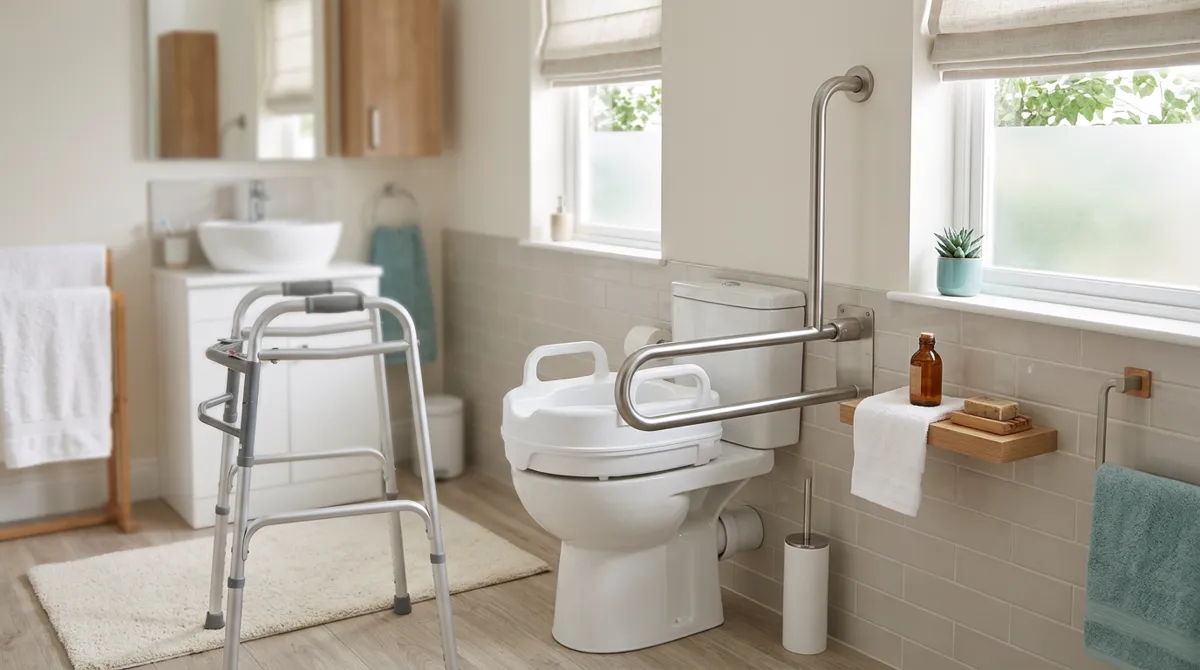
After a hip replacement, the bathroom item most people are told to add is a raised toilet seat or riser — because a standard American toilet sits low, and lowering yourself onto something low is exactly the motion that closes up a hip angle. The American Academy of Orthopaedic Surgeons lists one among the things to put in place at home, advising that if possible you install a shower chair, gripping bar and raised toilet seat in the bathroom. MedlinePlus, from the National Institutes of Health, gives the purpose plainly: use an elevated toilet seat to keep your knees lower than your hips when you are using the toilet, if you need one.
That last phrase — "if you need one" — is why this guide leads with a caveat rather than a product. Hip precautions are not universal. AAOS states directly that both the specific precautions you need to take and the amount of time you need to follow them will vary depending on which surgical technique your surgeon used, and that not all surgeons recommend the same precautions. So this page explains the equipment and the geometry behind it. Your surgeon and physical therapist decide what actually applies to you, and if anything here conflicts with what they have told you, follow them and not us.
Below: why toilet height is the specific problem, what "knees lower than hips" means in a real bathroom, the products sold for this and what each one actually does, why nobody online can give you your height number, and the setup and fit details that matter more than the number anyway. This is general information about bathroom equipment, not medical advice.
Once your care team has told you what you need, here are the raised seats and risers.
See our picks →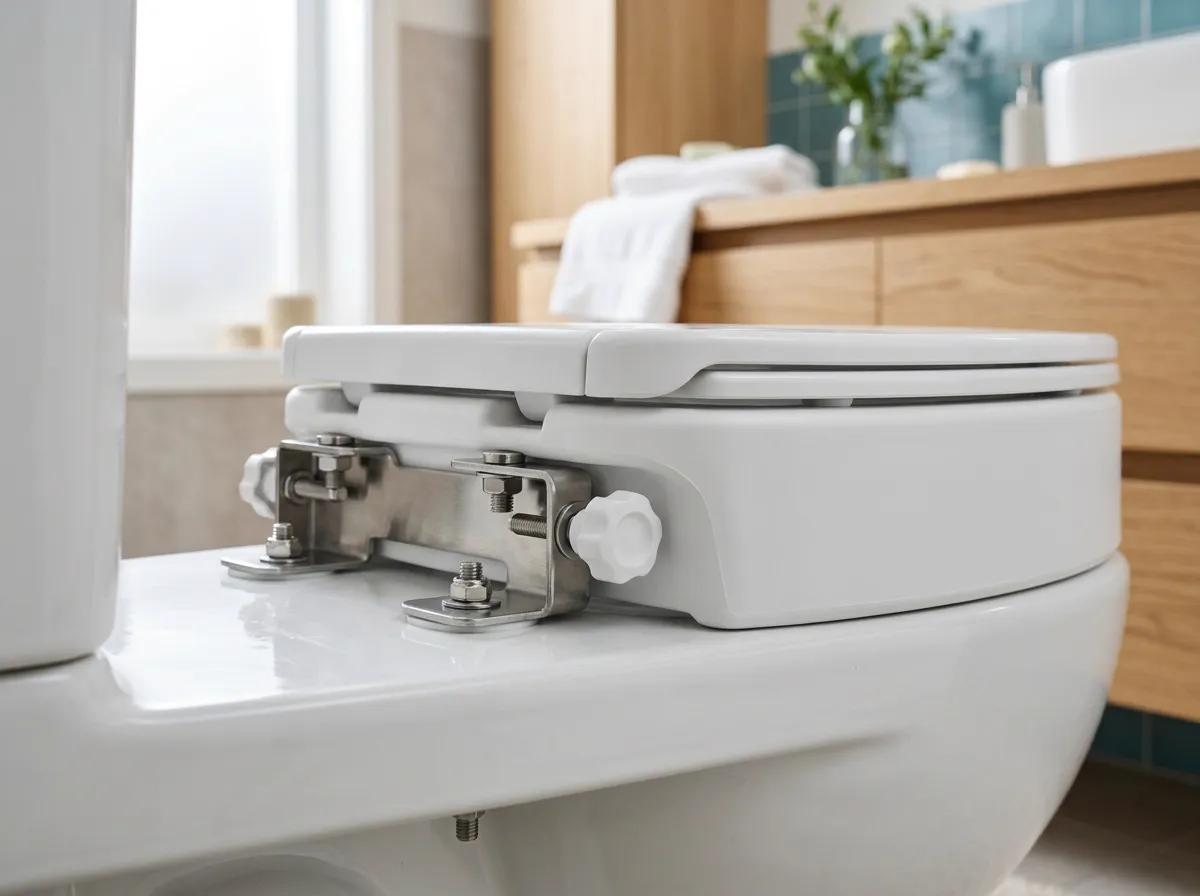
Why a standard toilet is the problem
The lower the seat, the more your hip has to close up to reach it — and hip flexion is what most precaution lists are built around. AAOS's general list of don'ts after a total hip replacement includes not bending at the waist beyond 90 degrees, and MedlinePlus puts it the same way: avoid hip flexion greater than 90 degrees. A low toilet is one of the harder places in the house to avoid doing exactly that. For a sense of what "higher" means in practice, the US Access Board's ADA standard for an accessible water closet specifies a seat 17 to 19 inches high measured to the top of the seat — though the same standard permits a lower seat height in residential dwelling units. That figure is an accessibility requirement rather than a medical recommendation, and it is not necessarily a target your surgeon has set for you.
What 'keep your knees lower than your hips' actually means
MedlinePlus gives the clearest working description: an elevated toilet seat is there to keep your knees lower than your hips while you're sitting. That's the geometry in one sentence. If your knees end up higher than your hip joint when you sit down, the hip has closed further than the guidance describes — and the lower the surface, the more that happens. It's the same reason soft sofas and low chairs turn up on precaution lists while firm, straight-backed chairs with armrests do not. A taller seat keeps the angle more open with no effort on your part.
The products sold for this, and what each one does
They are not interchangeable, and the distinction matters more than the branding. A raised toilet seat or riser fits onto the bowl and adds height, nothing else. A raised seat with arms adds height plus something to push up from. Most toilet safety frames are rails surrounding the toilet that add support and push-up points without adding height — though combined units with an integrated raised seat are also sold, so read the specification rather than inferring from the name. A bedside commode can often be placed over the toilet as an adjustable-height frame with arms. The honest question isn't which is best, but whether your difficulty is the hip angle on the way down, the effort of standing back up, or both.
How much height — and why nobody online can tell you
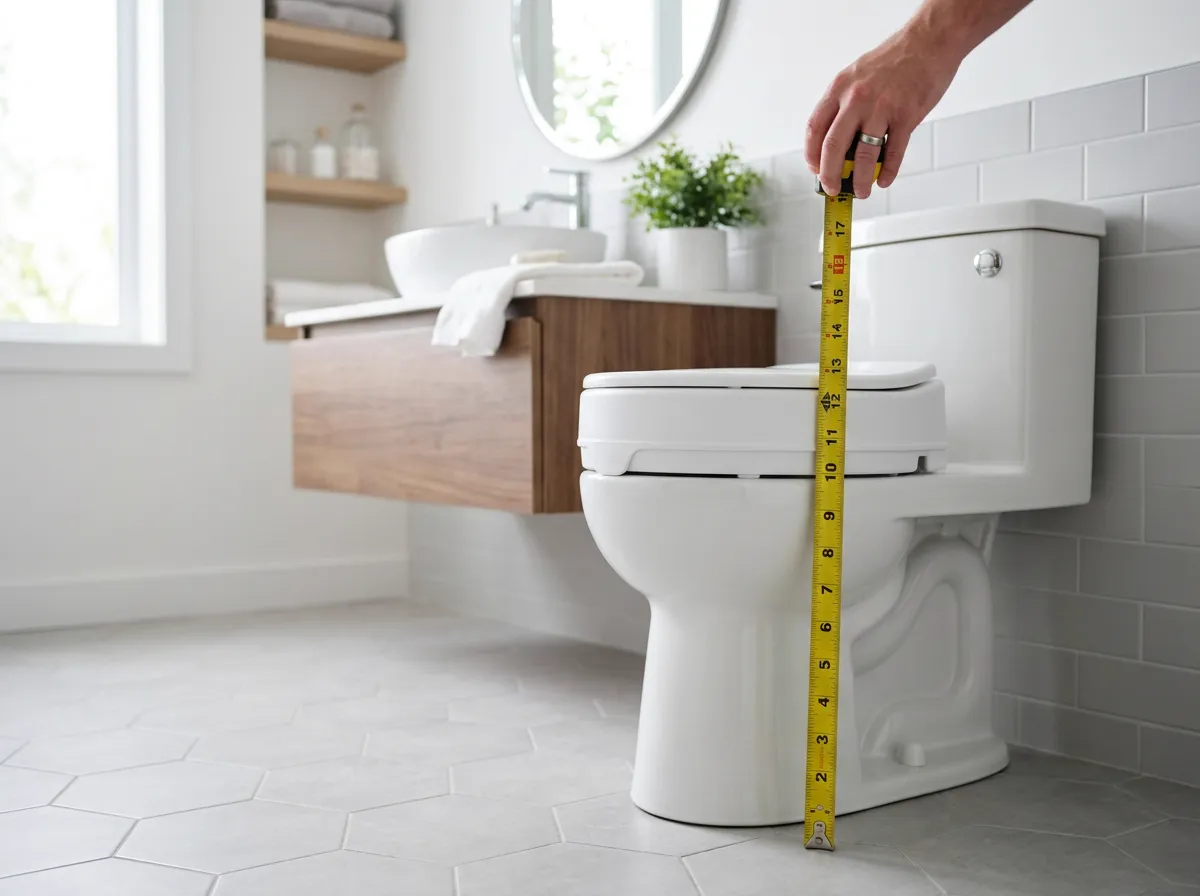
No website can give you your number, and any that names one confidently is guessing about you specifically. It depends on your height and leg length, which hip was operated on, the surgical approach used, and what your physical therapist observed you actually doing. AAOS is explicit that precautions and their duration vary by surgical technique, and that surgeons differ on what they recommend — which is exactly why a figure written for everybody isn't much use to you. What you can usefully do is arrive prepared: measure the height of your current toilet seat from the floor before your pre-op appointment and bring that number with you. Your surgeon's team, which may include an occupational or physical therapist, is where the question belongs.
Set the bathroom up before surgery, not after
AAOS frames home preparation as something done in advance, and the logic is obvious once you've thought about it: the day you come home is the worst possible day to be measuring a toilet, opening packaging, or discovering that a riser doesn't fit your bowl. Fit is the part that catches people. Toilet bowls come in round and elongated shapes, and a riser sized for the wrong one won't seat properly — our guide to measuring a toilet seat covers how to check which you have. Do the fitting while you can still bend comfortably, and have whoever installs it confirm it sits square and doesn't move. Then leave it in place, so it's simply there when you get back.
Stability and fit matter more than the height number
Stability comes from how a riser mounts, not from what it costs. Risers attach in different ways — some bolt through the existing seat-bolt holes, some clamp onto the rim, some sit inside the bowl — and the question worth asking is whether that method holds firm on your particular bowl, since round and elongated shapes behave differently. Confirm the weight rating covers you comfortably rather than marginally, and have whoever fits it check that it doesn't rock or slide, ideally before you come home. If a riser does shift in use, it isn't doing its job — MedlinePlus describes an elevated seat as keeping your knees lower than your hips, and it can only do that if it stays where you put it. Stop using it, get it refitted or replaced, and tell your therapist rather than working around it.
How long will you actually need it?
For most people this is temporary equipment, but it's worth being precise about what the published figures actually cover. AAOS says that in general, no matter which surgical approach is used, most patients should be able to do most of its listed "don'ts" after six to eight weeks without any impact on the implant, and it separately advises against crossing your legs at the knees for at least six to eight weeks. Neither of those is a figure for how long to use a raised toilet seat — none of the sources here gives one. Your care team makes that call. If it turns out you simply prefer sitting higher afterwards, keeping the height is a preference rather than a medical matter.
Where a bidet does and doesn't fit in
Reaching behind yourself is one of the movements that gets awkward under hip precautions, and a bidet seat or attachment removes some of that reaching. We sell bidets around here, so take the rest with appropriate salt: a bidet is a comfort and independence upgrade, not a medical device, and it does nothing for your hip itself. There's setup to weigh too — electric seats need a grounded outlet near the toilet, which many bathrooms don't have, while non-electric attachments run off the existing water supply and need no power. One practical wrinkle worth raising with your surgeon's team rather than deciding alone: a bidet seat replaces the seat itself, so it may interact with a riser you've been told to use.
Tips & warnings
- Precautions differ by surgical approach and by surgeon. If anything here conflicts with your surgeon or physical therapist, follow them.
- Height and support are different problems — risers add height, most safety frames add support, and some combined units do both.
- Measure your current toilet seat height from the floor before your pre-op appointment, so you can ask a specific question.
- Set the bathroom up before surgery. Coming home is the worst possible time to discover a riser doesn't fit your bowl.
- Round and elongated bowls are different shapes — a riser sized for the wrong one won't seat properly.
- Have whoever fits the riser confirm it doesn't rock or slide. If it shifts later, stop using it and tell your therapist.
Frequently asked questions
What toilet seat do you need after hip replacement?
Usually a raised toilet seat or riser, which fits onto the existing bowl and adds height so your hip doesn't have to close as far when you sit down. MedlinePlus, from the NIH, describes the purpose as keeping your knees lower than your hips while you're on the toilet, and the American Academy of Orthopaedic Surgeons lists a raised toilet seat among the things to install at home, alongside a shower chair and a gripping bar. Some people need height only; some need something to push up from and do better with a raised seat with arms or a toilet safety frame; some need both. The important qualifier is that none of this is automatic — MedlinePlus frames the elevated seat as something to use if you need one, and AAOS notes that precautions vary with the surgical technique and between surgeons. Your surgeon and physical therapist should be the ones to specify what you need.
How high should a toilet seat be after hip replacement?
No website can give you your number — it depends on your height and leg length, which hip was replaced, the surgical approach used, and what your physical therapist has observed. For general context on what a taller seat means, the US Access Board's ADA standard for an accessible water closet specifies a seat 17 to 19 inches high measured to the top of the seat, though the same standard permits a lower seat height in residential dwelling units. That is an accessibility requirement rather than a medical target, and it isn't necessarily what your surgeon wants for you. The useful preparation is to measure your existing toilet seat height from the floor and take that number to your pre-op appointment, where your surgeon's team can tell you what lift, if any, you actually need.
How long do you need a raised toilet seat after hip replacement?
For most people it's temporary, but it's worth knowing that none of the sources cited here gives a duration for the equipment itself. What AAOS provides is a figure for its activity restrictions: in general, it says, no matter which surgical approach is used, most patients should be able to do most of its listed "don'ts" after six to eight weeks without any impact on the implant, and it separately advises against crossing your legs at the knees for at least six to eight weeks. Those describe the shape of a recovery rather than a date to stop using a raised toilet seat. Your care team makes that call, and AAOS also notes that both the precautions you are given and how long you follow them vary by surgical technique and by surgeon. If you find you simply prefer a higher seat afterwards, keeping it is a comfort preference rather than a medical matter.
Do you need a raised toilet seat after anterior hip replacement?
That depends on what your surgeon told you, and it's exactly the kind of question that has to go to them rather than to a website. AAOS is direct that both the specific precautions you need and how long you follow them vary depending on which surgical technique your surgeon used, and that not all surgeons recommend the same precautions. What AAOS does not do is sort its precautions by approach — its list of don'ts, including not bending at the waist beyond 90 degrees, is given generally rather than assigned to one technique, and MedlinePlus states the 90-degree guidance without any approach qualifier either. So nothing here is permission to skip equipment you were told to use, and nothing here means you need something you weren't told to use. The team that performed your operation is the only reliable source on which precautions are yours.
What's the difference between a raised toilet seat and a toilet safety frame?
They solve different problems and get confused constantly. A raised toilet seat or riser fits onto the bowl and adds height, which opens up the hip angle when you sit down — but it gives you nothing to hold. A toilet safety frame is a set of rails or arms around the toilet that gives you something to push up from and steady yourself with; most add support without adding height, though combined units with an integrated raised seat are also sold, so check the specification rather than the product name. If your difficulty is the descent and the hip angle, you want height. If it's standing back up or feeling steady on your feet, you want support. Plenty of people need both, which is why raised seats with arms and adjustable over-toilet frames exist. Working out which problem you actually have is a good question for your physical therapist.
Can you use a regular toilet after hip replacement?
Many people return to a standard toilet, but when that happens is a clinical judgment rather than something to decide by feel or by reading online. The concern with a standard-height toilet during early recovery is how far the hip has to close to reach it, which is the same reason low chairs and soft sofas appear on precaution lists. AAOS indicates that in general, no matter which surgical approach is used, most patients should be able to do most of its listed don'ts after roughly six to eight weeks without any impact on the implant — though that figure describes its activity list rather than bathroom equipment specifically. Your surgeon or physical therapist should be the one to confirm when you can stop using the raised seat.
Should I ask my surgeon or physical therapist about this?
Yes. This guide is general information about bathroom equipment, not medical advice, and nothing here is specific to your operation. Hip precautions are not universal — AAOS states that both the precautions you need and how long you follow them vary depending on which surgical technique your surgeon used, and that not all surgeons recommend the same precautions. That means the only useful version of anything on this page is the version your own care team confirms. Ask before you buy if you can, ideally at a pre-op appointment where home setup is discussed, and follow their instructions over anything you read here, including this page.
Sources
- AAOS OrthoInfo — Activities After Total Hip Replacement
- MedlinePlus (NIH) — Taking care of your new hip joint
- US Access Board — ADA Chapter 6: Toilet Rooms (§604 water closet seat height)