
Bathroom upgrades for aging in place
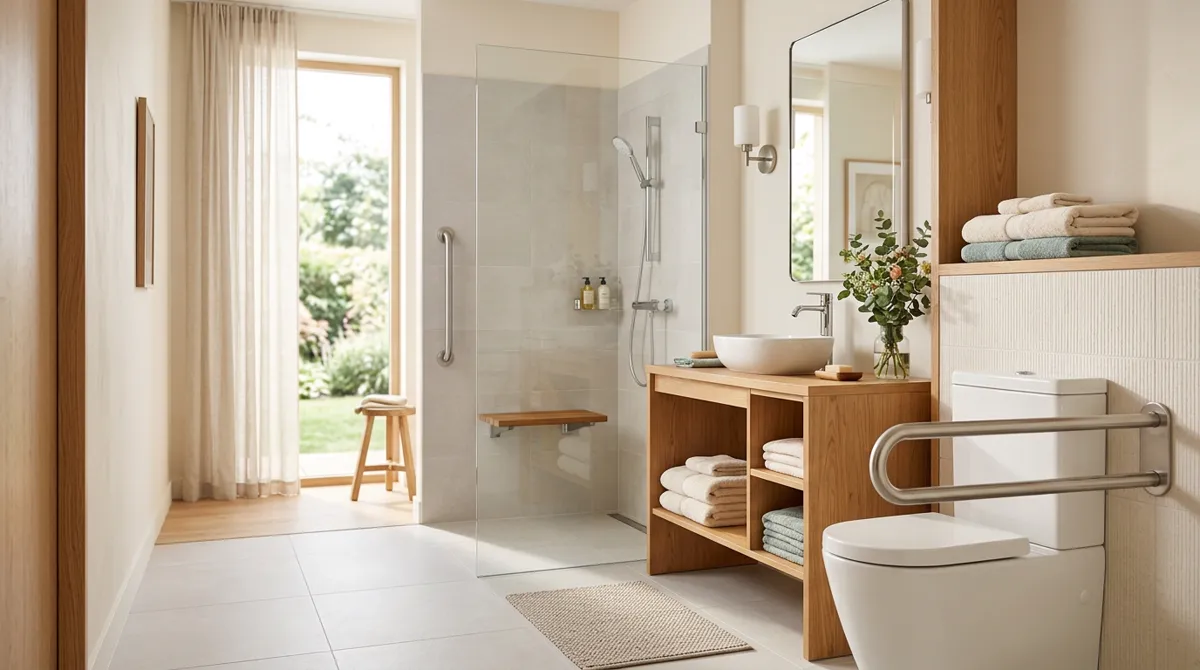
Most people arrive at this question the same way: a parent had a scare, or nearly did, and the bathroom is suddenly the room everyone is worried about. It is a reasonable worry. The bathroom asks someone to stand up from a low seat, turn around in a small space, step over a tub wall, and do it all on a hard, sometimes wet floor — often at night, often in a hurry.
This guide is about what actually helps, in the order it helps. Some of it is hardware you can install on a Saturday. Some of it is not hardware at all: the National Institute on Aging puts medication side effects, uncorrected vision, and rushed trips to the bathroom on the same list of fall risks as home hazards, and no grab bar fixes a prescription that causes dizziness. The most useful thing on this page might be the paragraph telling you to book a doctor's appointment first.
One note on honesty before we start. You will see confident-sounding percentages online about how many falls happen in the bathroom. We could not verify the primary sources behind the most-repeated versions of those figures, so we do not repeat them here. The case for these changes does not need a scary statistic — it rests on what the room physically demands of someone with less strength and balance than they used to have.
See our bidet picks for older adults and limited mobility.
See our picks →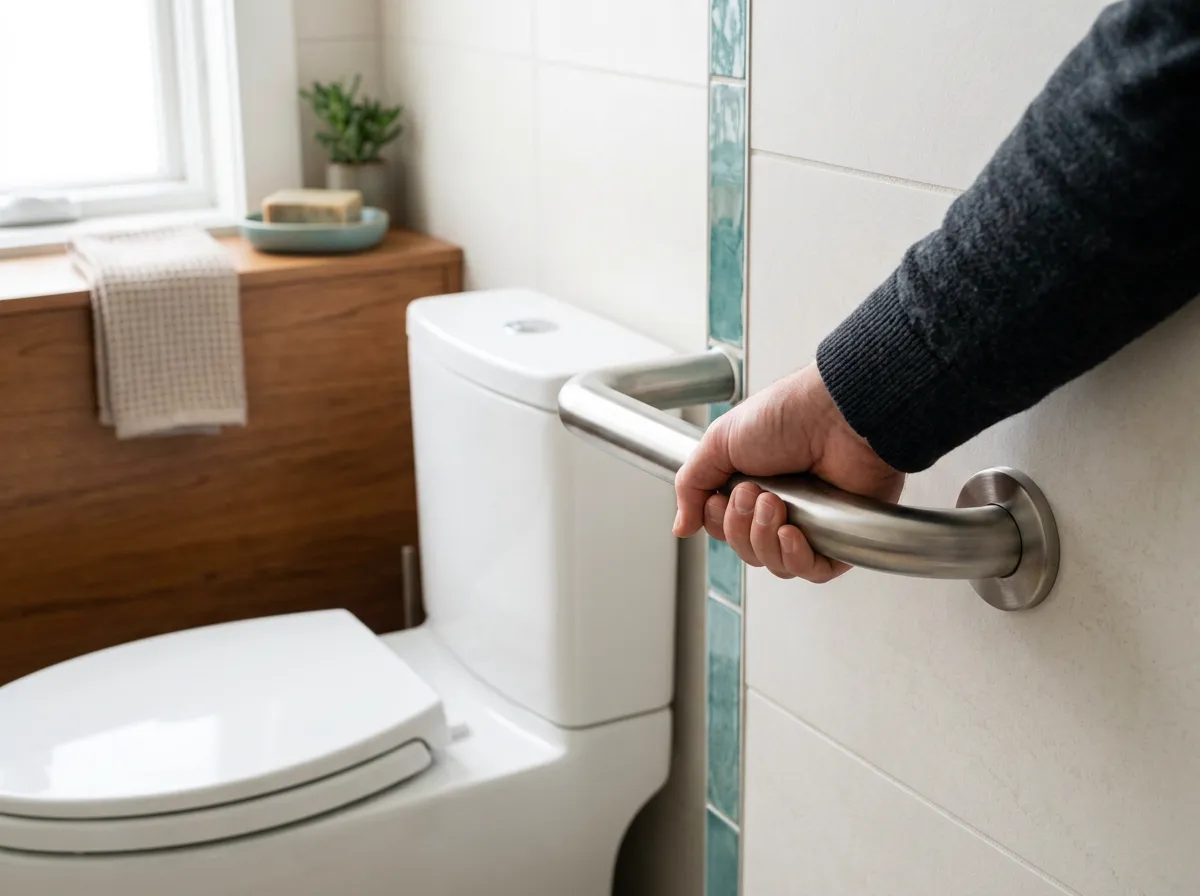
1. Start with the person, not the product list
Before you buy anything, get three things checked. First, medications: the NIA is explicit that some drugs cause dizziness or confusion, and that the more medications someone takes, the more likely they are to fall. A pharmacist or physician can review the whole list at once, which nobody does by default. Second, vision and hearing — the NIA notes that even small changes in either are linked to increased fall risk. Third, ask the doctor about a home visit from an occupational or physical therapist; the NIA specifically suggests this after a fall. An OT will spot things a catalog cannot, like the fact that your parent has been bracing on the towel bar for two years. None of this costs what a renovation costs, and it addresses causes rather than consequences.
2. Grab bars are the highest-value thing you can install
The NIA's room-by-room guidance for bathrooms is short and specific: mount grab bars near the toilet and on both the inside and the outside of the tub and shower. That outside bar is the one people forget, and it covers the moment of stepping out onto a wet floor with wet feet. For dimensions, the ADA standards are a sound residential benchmark even though they are written for public facilities: bars mounted horizontally 33 to 36 inches above the floor, a gripping surface 1¼ to 2 inches in diameter, and a 1½-inch gap between the bar and the wall so a hand can wrap around it. That gap matters more than it sounds — a bar mounted flush to the wall can only be palmed, not gripped.
3. A grab bar is only as good as what it is screwed into
This is the part that gets done wrong. The ADA structural requirement is that the bar, the fastener, the mounting device and the supporting structure all withstand 250 pounds of force applied at any point. Drywall alone does not do that. Anchor into studs, or use hollow-wall anchors explicitly rated for grab-bar loads and install them exactly as the instructions specify. A bar that pulls out of the wall is worse than no bar, because the whole point is that someone trusts it with their full weight at the worst possible moment. Suction-cup bars are a related trap: they are convenient and they are not anchored to anything structural. Treat one as a light steadying aid at most, never as something that will catch a fall, and never as a substitute for a fastened bar.
4. Toilet height is the second thing to fix
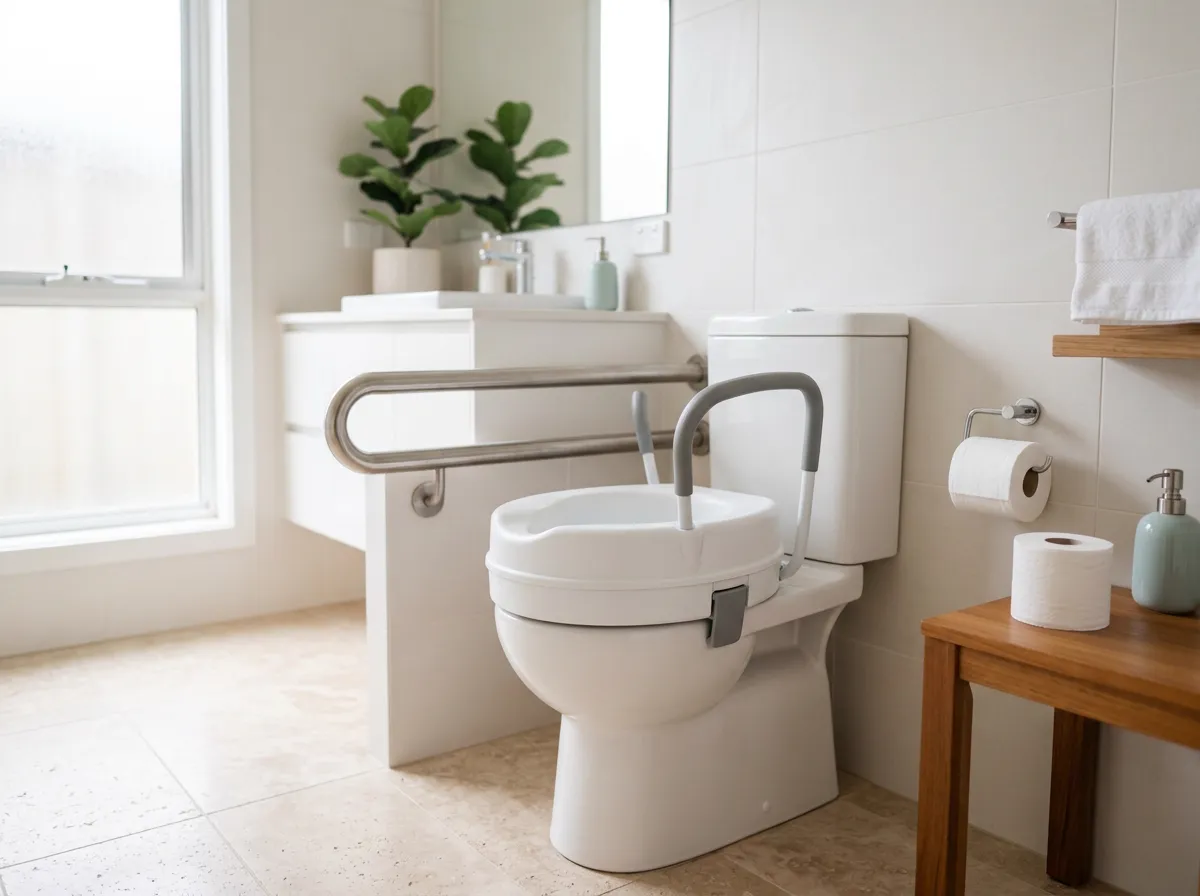
Standing up from a low toilet is a squat, and it is the single most repeated demand the room makes. The ADA seat-height range is 17 to 19 inches to the top of the seat, which is roughly two to four inches taller than the older standard-height toilets still in most homes. You have two ways to get there. Replacing the toilet with a comfort-height model is the permanent fix and the expensive one. A raised toilet seat adds a couple of inches for a fraction of the price and installs in minutes, which makes it the right first move in almost every case — try the cheap version, confirm the height actually helps, and only then decide whether to replace the fixture. Measure what you have before ordering anything; our toilet height finder walks through it.
5. A bidet is an independence upgrade — be clear about what it is and isn't
We sell bidets around here, so take this with the appropriate salt: a bidet is not a fall-prevention device and we are not going to pretend otherwise. What it does address is a different problem, and a real one. Wiping requires reaching behind yourself, twisting at the trunk, and balancing on one hand while the other works — a combination that gets genuinely difficult with arthritis, limited shoulder range, a recent hip or back surgery, or reduced grip strength. A bidet replaces that whole motion with a button. For a lot of families the honest benefit is dignity and privacy: it can be the difference between managing on your own and needing another person in the room. A basic attachment mounts under the existing seat with no electrician and comes off when you move, so it is a low-commitment thing to try. Look for a side control panel or a remote rather than tiny buttons, since small, stiff controls defeat the purpose for hands that struggle with small, stiff things.
6. Light the path, not just the room
The NIA lists conditions that cause rushed movement to the bathroom — incontinence among them — as a fall risk in their own right, which reframes what nighttime lighting is for. The hazard is not the dark bathroom so much as the hurried trip to it. So light the route: a motion-activated night light that plugs into an outlet and turns on automatically, one near the bed and one in the bathroom, plus whatever the hallway needs. The NIA suggests leaving a light on in the bathroom overnight or using a night light that comes on automatically in the dark. Avoid the overhead-light-only setup, which forces a choice between navigating dark and taking a jolt of glare at 3 a.m. This is a $15 to $30 fix and it is one of the few upgrades that pays off the same night you install it. If the toilet itself is hard to find in the dark, a battery-powered nightlight toilet seat puts a soft glow right at the bowl with no outlet needed; our Kohler Nightlight toilet seat review covers one, including the catch that its light runs on a nightly timer rather than a motion sensor.
7. Floors, mats, and the throw-rug rule
The NIA is blunt on this one: don't use throw rugs or small area rugs. The bath mat is the standard offender — it slides, it bunches at the edge, and it is exactly where wet feet land. Replace it with a mat that has a proper rubber backing that grips, or skip the mat and use a towel you put down and pick up. Inside the tub or shower, use nonskid mats, strips, or textured surfacing on anything that gets wet. Then walk the route from the bed to the toilet and clear it: cords along the wall and out of the path, nothing on the floor, and furniture arranged so the walk is straight rather than around a corner in the dark.
8. Water temperature, reach, and controls
Two smaller changes worth making while you are in there. First, scald risk rises when skin thins and reaction time slows; the ADA standards cap shower spray units in accessible facilities at 120°F, which is a sensible ceiling to set at the water heater at home too, and an anti-scald valve is worth asking a plumber about if the temperature swings when another fixture runs. Second, a hand-held shower on a long hose — the standards specify a minimum 59-inch hose — lets someone wash while seated on a shower chair instead of standing and turning under a fixed head. A shower chair plus a hand-held is often a bigger practical gain than any single grab bar, because it removes the balance demand rather than supporting it.
9. What to skip, and when to stop doing it yourself
Walk-in tubs get marketed hard to exactly this audience and deserve real scrutiny: they are a major plumbing job, the door means you sit in the tub while it fills and again while it drains, and for many people a curbless or low-threshold shower with a seat and a hand-held is both cheaper and easier to use. Get the shower quote before you get the tub quote. Beyond that, the line for calling a pro is straightforward — anchoring grab bars if you are not certain what is behind the wall, anything involving the water heater or an anti-scald valve, new outlets, and any change to the floor. And if the person you are doing this for is uneasy about the room looking clinical, that is a solvable objection: current grab bars come in finishes that match the fixtures, and some double as a towel bar or a toilet-paper holder. A bar that gets accepted and installed beats a better bar that gets refused.
Tips & warnings
- Do the medication review first. It is free, it addresses a named fall risk, and no piece of hardware compensates for a drug that causes dizziness.
- Buy the raised toilet seat before you price a new toilet. If two extra inches solves it, you have saved several hundred dollars and an afternoon of plumbing.
- Never mount a grab bar into drywall alone — the design target is 250 pounds of force, and only studs or properly rated anchors get there.
- Put a bar on the outside of the tub or shower as well as the inside. Stepping out onto a wet floor is the moment the inside bar can't help with.
- Involve the person in choosing the finish and location. Bars installed over someone's objection get avoided, and avoided bars prevent nothing.
- If they're already using a towel bar or the sink edge to steady themselves, that is the map — put a real grab bar exactly where their hand already goes.
Frequently asked questions
What bathroom upgrades should I make for aging parents?
In rough order of value: get medications and vision reviewed by a doctor first, since the National Institute on Aging lists both as fall risks that no hardware fixes. Then install grab bars — near the toilet and on both the inside and outside of the tub or shower, mounted 33 to 36 inches above the floor and anchored into studs or grab-bar-rated anchors, because the standard is that the bar and its mounting withstand 250 pounds of force. Next, raise the toilet height toward the 17-to-19-inch range with a raised seat, which is far cheaper than replacing the toilet. Then add motion-activated night lights along the route from the bed to the bathroom, replace sliding throw rugs and bath mats with grippy-backed ones or none at all, and add nonskid surfacing in the tub. A shower chair with a hand-held shower head removes more balance demand than almost anything else, and a bidet makes toileting manageable without twisting and reaching. Ask the doctor about an occupational therapist home visit — they will spot hazards specific to that house.
Where should grab bars be installed in a bathroom?
The National Institute on Aging's guidance is to mount them near the toilet and on both the inside and the outside of the tub and shower. The outside bar covers stepping out onto a wet floor, which is the transition people most often overlook. For height, the ADA standards call for horizontal mounting 33 to 36 inches above the finished floor measured to the top of the gripping surface, with a 1½-inch gap between bar and wall so a hand can close around it. A practical shortcut for placement: watch where the person already braces — a towel bar, the sink edge, the tub surround — and put a real bar there.
Are suction-cup grab bars safe?
Not as a substitute for a fastened one. The relevant benchmark is the ADA structural requirement that the bar, fastener, mounting device and supporting structure together withstand 250 pounds of force applied at any point, and a suction cup is not attached to structure at all — it depends on a seal against a smooth, clean, non-porous surface that can fail with soap film, temperature change, or time. Treat a suction bar as a light steadying aid for someone who is otherwise steady, and never as something that will catch a fall. If a bar is going to be trusted with someone's full body weight, it needs to be screwed into studs or into hollow-wall anchors specifically rated for grab bars.
How high should a toilet be for an elderly person?
The ADA standards set the accessible seat height at 17 to 19 inches measured to the top of the seat, which is a good target for someone who struggles to stand up. Many existing home toilets sit noticeably lower than that. You can get there two ways: replace the toilet with a comfort-height model, which is permanent and costs the most, or add a raised toilet seat that lifts the existing seat a couple of inches for a small fraction of the price and installs without tools in most cases. Start with the raised seat — it tells you whether height is genuinely the problem before you commit to a new fixture. Measure the current height from the floor to the top of the seat first so you know how much you need to add.
Is a bidet worth it for an elderly parent?
It can be, for a specific reason: it removes the reaching, twisting and one-handed balancing that wiping requires, which is the part that becomes difficult with arthritis, limited shoulder range, reduced grip strength, or recovery from hip or back surgery. For some households the real benefit is that it preserves privacy and independence — managing alone rather than needing a caregiver present. Be clear on what it is not: a bidet does not prevent falls and does not address balance. A basic attachment fits under the existing seat, needs no electrician, and is fully reversible, so it is inexpensive to try. Choose one with a side control panel or a remote rather than small, stiff buttons, and check the reach to the controls from a seated position before buying.
Should I install a walk-in tub for aging in place?
Get a quote for a low-threshold or curbless shower before you commit to one. Walk-in tubs are a significant plumbing and installation job, and the door creates an inherent inconvenience: you sit inside while the tub fills and again while it drains, since the door can't open with water in it. A shower with a seat, a hand-held head on a long hose, and grab bars is usually cheaper, easier to use day to day, and easier for a caregiver to assist with. Walk-in tubs make sense for people who specifically want to bathe rather than shower and who can tolerate the fill-and-drain wait. They are heavily marketed to this exact audience, so compare the alternatives before signing anything.
How do I convince a parent to accept bathroom safety changes?
The resistance is usually about what the changes signify rather than the changes themselves — a bathroom that looks like a hospital room is a daily reminder of decline. Two things help. First, let them choose: grab bars come in finishes that match existing fixtures, and some double as a towel bar or toilet-paper holder, so the room does not have to announce anything. Second, frame it around what it preserves rather than what it prevents — a bidet and a higher seat are about handling things without help, which is usually the thing they actually care about. It also helps to have the recommendation come from a clinician: if the doctor arranges an occupational therapist home visit, the suggestions arrive as professional advice rather than as a family member deciding they need looking after.
Sources
- National Institute on Aging — Preventing Falls at Home: Room by Room
- National Institute on Aging — Falls and Fractures in Older Adults: Causes and Prevention
- U.S. Access Board — ADA Standards, Chapter 6: Plumbing Elements and Facilities
- U.S. Access Board — Guide to the ADA Standards, Chapter 6: Toilet Rooms