
How dirty are toilet seats?
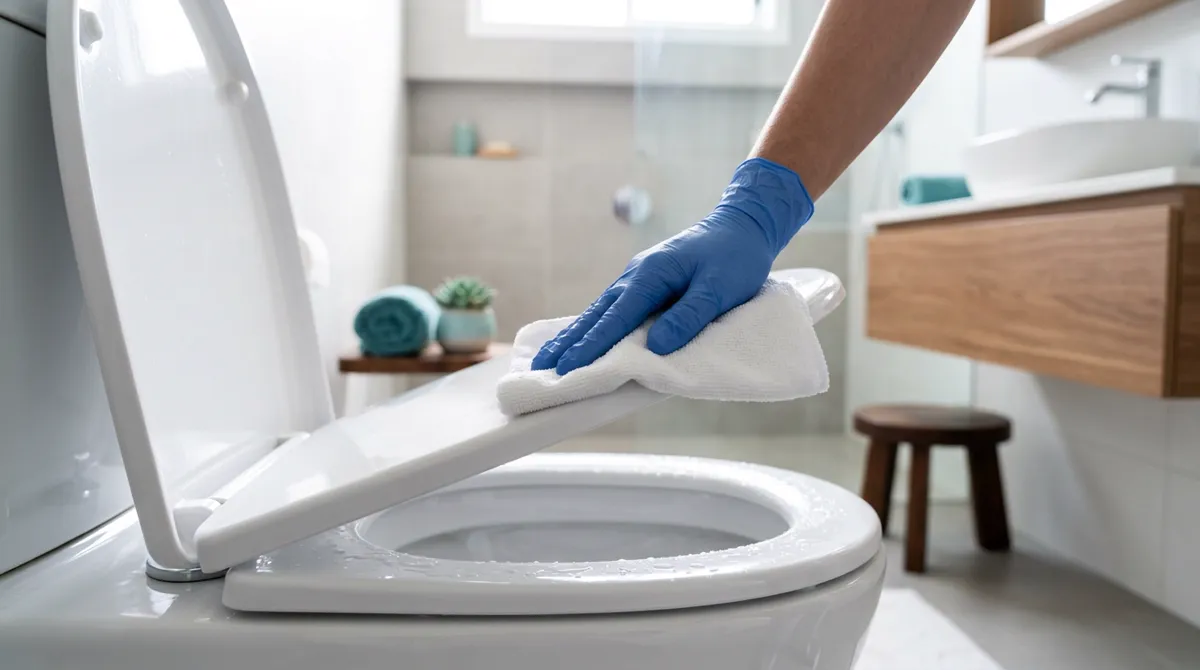
The toilet seat is the most feared surface in the house and one of the least deserving of it. Repeated sampling by university and industry microbiologists keeps landing on the same counterintuitive result: the seat is among the cleaner things you touch in a normal day, and several objects you press against your face or prepare food on carry far more bacteria.
The reason is mundane. Toilet seats are smooth, dry, and non-porous — a bad home for bacteria, which need moisture and organic material to multiply — and they get cleaned more often than almost anything else, precisely because everyone assumes they're filthy. Your phone, by contrast, is warm, textured, rarely disinfected, and travels everywhere with you.
None of this means bathrooms are clean. It means the germs aren't where people look. This guide covers what the research actually found, the surfaces in your bathroom that genuinely deserve attention (the flush handle, the toothbrush holder, and the toilet plume), whether you can catch anything from a seat, and how to clean sensibly without the bleach that damages both seats and bidets.
Want the most hygienic setup? See our bidet seat picks.
See our picks →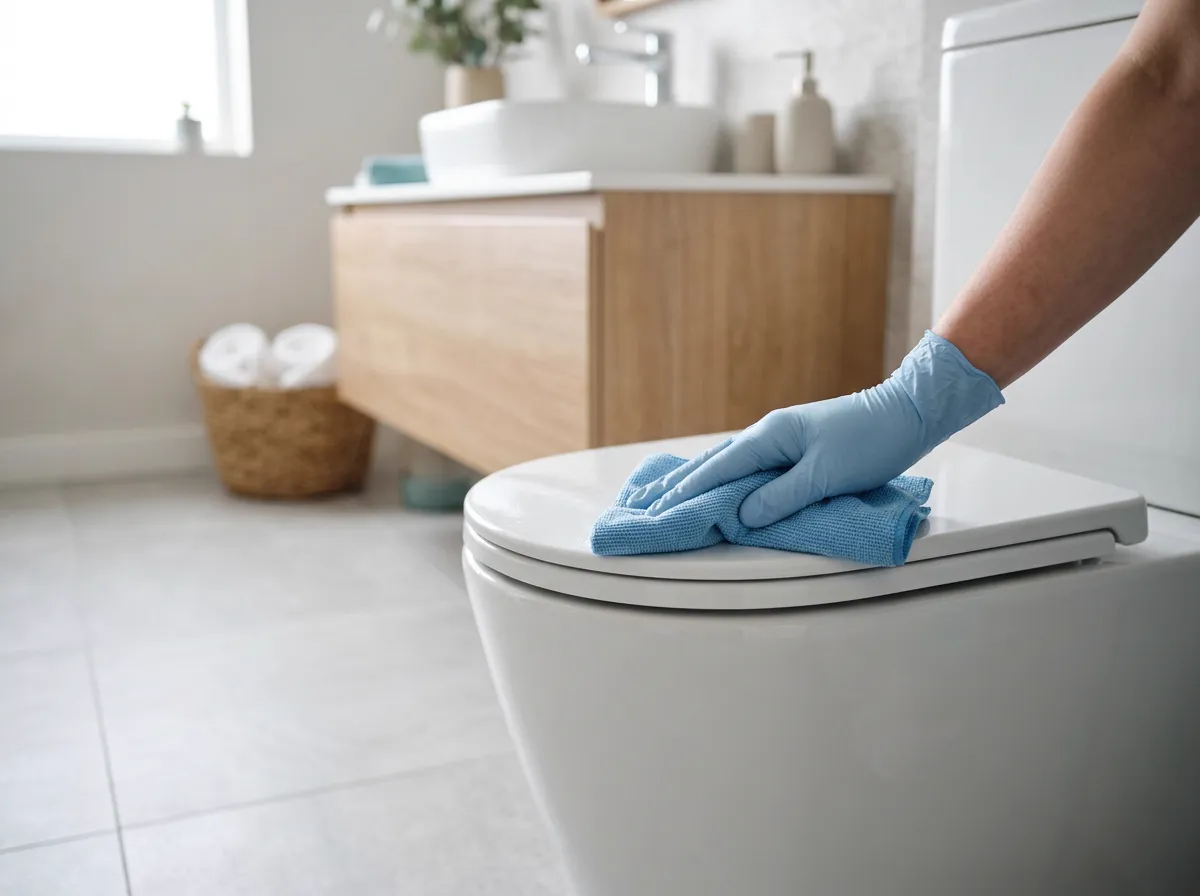
What the bacteria counts actually show
The comparisons that get quoted most come from University of Arizona microbiologist Charles Gerba, whose sampling work is the source of the familiar rankings. Mobile phones have been measured carrying on the order of ten times more bacteria than a typical toilet seat. Kitchen sponges are the extreme case — roughly ten million bacteria per square inch, orders of magnitude beyond a seat, because they're permanently damp and full of food residue. Cutting boards used for raw meat have been found with far more fecal bacteria such as E. coli than the seat. NSF International's household sampling adds the same shape of finding: coliform bacteria turned up in a substantial share of toothbrush holders and the large majority of kitchen sponges and dish rags. The number to hold onto is not any single count — those vary hugely between homes and studies — but the ranking, which has been stable across decades of sampling.
Why the seat is cleaner than it feels
Three properties do the work. Toilet seats are non-porous, so there's nowhere for organisms to lodge. They're dry, and most bathroom-relevant bacteria need moisture to survive more than a short time on a surface. And they're cleaned frequently — the seat is the first thing anyone wipes. Compare that to a kitchen sponge, which is textured, permanently wet, fed with food residue, and often used for weeks. The seat also isn't where the toilet's own contamination concentrates: that's the bowl water, the underside of the rim, and the flush handle. Fear tracks the idea of the object rather than the properties that actually drive microbial growth.
The bathroom surfaces that genuinely deserve attention
Redirect your effort to these. The flush handle is touched with hands that have not yet been washed, every single time, which makes it the highest-value wipe in the room. Door handles and light switches follow, for the same reason. The toothbrush holder is a genuine problem surface — damp, rarely cleaned, and NSF's sampling found coliform in a meaningful share of them. Faucet handles get touched pre-wash too. And the areas around a toilet — the floor immediately surrounding it and the base — accumulate more than the seat does. If you clean four things in a bathroom, make them the flush handle, the toothbrush holder, the faucet handles, and the floor around the toilet, not another pass over the seat.
Toilet plume: the real reason to close the lid
Flushing an uncovered toilet aerosolizes bowl contents into a fine mist — 'toilet plume' — that disperses into the room and settles on nearby surfaces, which is one of the better-supported findings in toilet-hygiene research and a focus of ongoing study into how far and how long particles travel. The practical implication isn't about the seat at all: it's that everything within a few feet of an open flush catches some of it, including toothbrushes stored in the open. Two cheap habits address it: close the lid before flushing, and don't store toothbrushes uncovered beside the toilet. This is also a small argument for a soft-close lid — a lid you can close without a slam is one you'll actually bother to close.
Can you catch anything from a toilet seat?
Realistically, no. Transmission of infection from intact skin contacting a dry toilet seat is extremely unlikely: most bathroom-relevant organisms don't survive long on a dry, non-porous surface, and infection generally requires entry via mucous membranes, broken skin, or the hands-to-mouth route rather than skin contact with the back of your thighs. Sexually transmitted infections in particular do not spread this way — the organisms involved are fragile outside the body. The genuine bathroom transmission route is the hands: touching a flush handle or door handle before washing, then touching your face or food. Which is why hand-washing, not seat-avoidance, is the intervention that matters. Public restrooms are a reasonable place for a paper cover or a quick wipe if it makes you comfortable — the value is mostly psychological, and that's a legitimate reason.
How to clean a toilet seat without wrecking it
Weekly is plenty for a household seat: mild soap and warm water on a soft cloth over the top, the underside, the hinges, and the area where the seat meets the porcelain, then dry it. That's the method Bemis and Kohler both give. Bemis also accepts antibacterial wipes, but its do-not-use list includes bleach, vinegar, disinfectants, scouring powders and aerosol cleaners, and Kohler says to avoid disinfectants and abrasive cleaners on its seats. Bleach and abrasive powders damage plastic seat surfaces, and repeated use is a major cause of the permanent yellowing people then scrub at harder. Save chlorine cleaners for the porcelain bowl and keep overspray off the seat. A bidet seat has its own rules, so follow its manual; our guide to which cleaners are safe on toilet and bidet seats compares what the makers say. A quick-release hinge, standard on most modern seats, makes the one genuinely useful deep-clean easy — pop the seat off and clean the mounting area underneath, which is the spot that actually accumulates grime.
Where a bidet fits into this
Worth separating two questions. The seat's cleanliness is a non-issue, as above. Personal cleanliness after using the toilet is a real one, and it's where a bidet genuinely helps: rinsing with water removes more residue than dry paper and does it without the friction that irritates skin, which is why health systems including Cleveland Clinic treat bidets as a safe, gentle hygiene aid. On the question people ask next — whether the nozzle is sanitary — it sprays clean supply-line water, sits behind a guard above the splash zone, and self-rinses on most electric seats. So the honest summary of this whole topic: the seat you're worried about is fine, your phone is worse, and the upgrade that actually improves hygiene is the washing method, not the seat material.
Tips & warnings
- Wipe the flush handle, not just the seat — it's touched by unwashed hands every single time.
- Close the lid before flushing, and don't store toothbrushes uncovered near the toilet (toilet plume).
- Mild soap and water only on seats, then dry them. Bemis lists bleach, vinegar and disinfectants among the products not to use.
- Your phone likely carries far more bacteria than your toilet seat — wipe it as often as you wipe the seat.
- Quick-release hinges let you lift the seat off to clean the mounting area — the spot that actually gets dirty.
- Kitchen sponges dwarf every bathroom surface for bacteria. Microwave them damp or replace them weekly.
Frequently asked questions
How dirty are toilet seats really?
Much cleaner than their reputation. Repeated sampling by microbiologists — most famously Charles Gerba at the University of Arizona — consistently finds that mobile phones carry roughly ten times more bacteria than a typical toilet seat, that kitchen sponges hold vastly more (on the order of ten million bacteria per square inch), and that cutting boards used for raw meat carry far more fecal bacteria such as E. coli than the seat does. The reason is straightforward: toilet seats are dry, smooth, non-porous, and cleaned frequently, while sponges and phones are damp or warm, textured, and rarely disinfected.
Can you get an infection or STD from a toilet seat?
Realistically, no. Most bathroom-relevant organisms survive poorly on a dry, non-porous surface, and infection typically requires entry through mucous membranes, broken skin, or the hands-to-mouth route rather than skin contact with the back of your thighs. Sexually transmitted infections specifically do not spread this way — the organisms involved are fragile outside the body. The genuine transmission risk in a bathroom runs through your hands: touching the flush handle or door handle before washing, then touching your face or food. Hand-washing is the intervention that matters; seat-avoidance mostly isn't.
What is the dirtiest thing in the bathroom?
Not the seat. The strongest candidates are the flush handle — touched by unwashed hands every single use — followed by door handles, light switches, and faucet handles for the same reason, plus the toothbrush holder, which NSF International's household sampling found harboring coliform bacteria in a meaningful share of homes because it stays damp and almost never gets cleaned. The floor immediately around the toilet also accumulates more than the seat. If you clean four things, make them the flush handle, the toothbrush holder, the faucet handles, and the floor around the toilet.
Should I close the toilet lid before flushing?
Yes, and this is the one bathroom-hygiene habit that's genuinely worth adopting. Flushing an uncovered toilet aerosolizes bowl contents into a fine mist — 'toilet plume' — that disperses and settles on nearby surfaces, a well-supported finding and an active area of toilet-hygiene research. Closing the lid contains most of it. The companion habit is not storing toothbrushes uncovered within a few feet of the toilet. It's also a modest argument for a soft-close lid: a lid that closes quietly is one you'll actually bother to close.
How often should I clean my toilet seat, and with what?
Once a week is plenty for a household seat — a wipe with mild soap and warm water, covering the top, the underside, the hinges, and where the seat meets the porcelain, then a thorough dry. That's what Bemis and Kohler both specify; Bemis also accepts antibacterial wipes, but not bleach, vinegar, disinfectants or abrasive powders. Bleach and abrasives degrade plastic surfaces and are a leading cause of the permanent yellowing people then attack with even harsher cleaners, so keep chlorine products on the porcelain bowl. If your seat has quick-release hinges, lift it off every couple of months and clean the mounting area underneath, which collects far more than the seat surface does.
Are public toilet seats dangerous?
Not meaningfully more than private ones from an infection standpoint — the same reasoning applies, since dry, non-porous surfaces are poor homes for bacteria and skin contact isn't an effective transmission route. The higher-risk surfaces in a public restroom are the ones your hands touch before washing: the door handle, the flush lever, and the faucet. Use a paper cover or a wipe on the seat if it makes you more comfortable — that's a perfectly reasonable preference — but the step that actually reduces risk is washing your hands properly afterward and using a towel or your sleeve on the exit door handle.
Sources
- Abney et al. — Toilet hygiene: review and research needs (NSF Public Access Repository)
- TIME — the dirtiest things you touch every day
- Cleveland Clinic — is using a bidet healthy?
- Bemis (ToiletSeats.com) — FAQs: best products for cleaning a toilet seat, and products not to use
- Kohler — Toilet seat installation guide with care and cleaning instructions (K-4636, K-4639)